Artwork
The Judgment of Paris
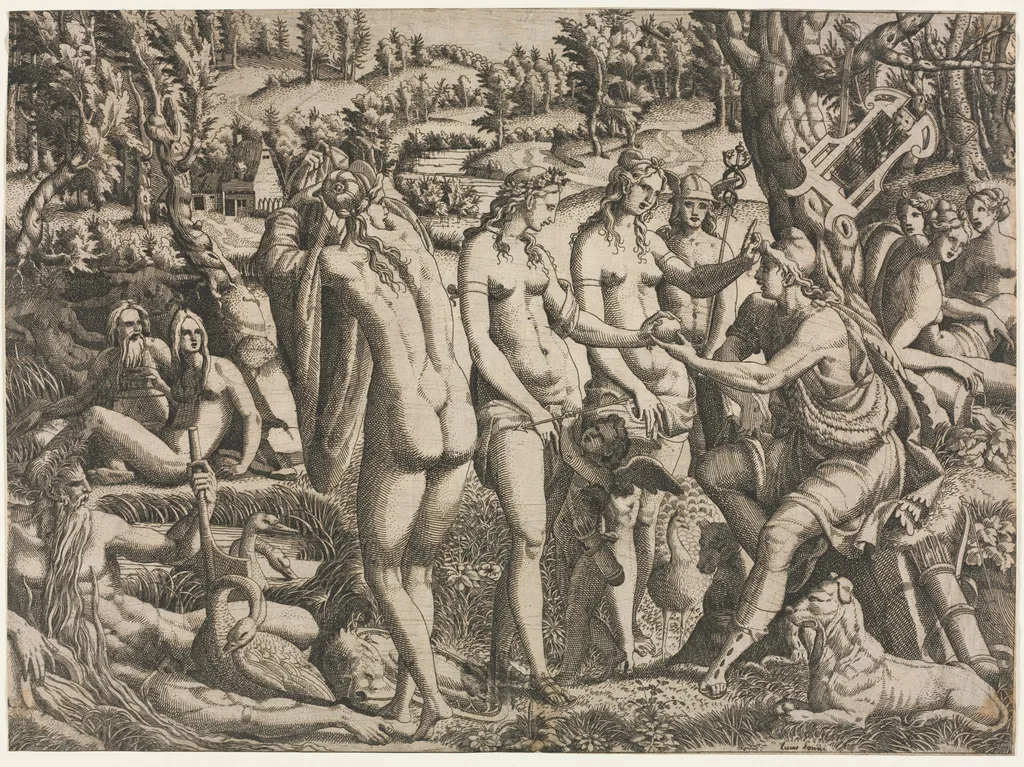
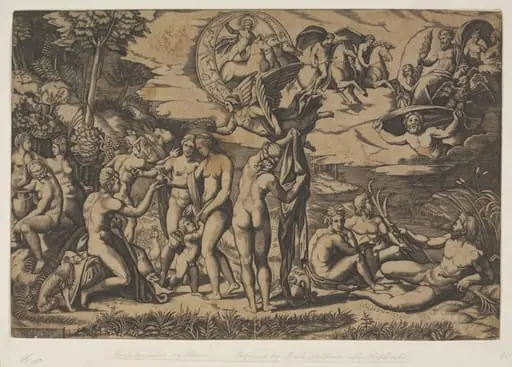
The Judgment of Paris is a print by the Renaissance artist Jean Mignon. It dates from 1545 and is held in the collection of the Cleveland Museum of Art. Printmaking at the Palace of Fontainebleau reached a brief peak in the 1540s before declining by 1547.
About this work
Overview
Jean Mignon, one of its principal etchers, produced works largely based on drawings by Luca Penni, an Italian artist employed at the court.
Printmaking at the Palace of Fontainebleau reached a brief peak in the 1540s before declining by 1547. Jean Mignon, one of its principal etchers, produced works largely based on drawings by Luca Penni, an Italian artist employed at the court. Mignon’s etching of The Judgment of Paris exemplifies the workshop’s reliance on Italian models, adapting compositions that traveled across Europe through reproductive prints.
Subject & Meaning
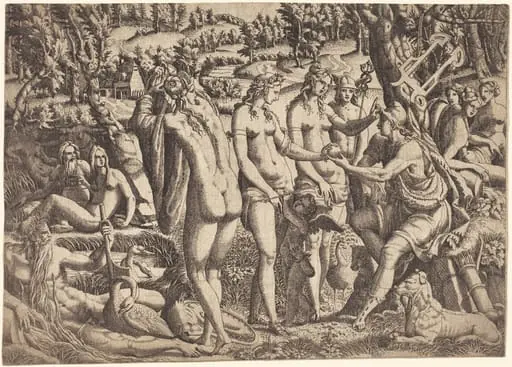
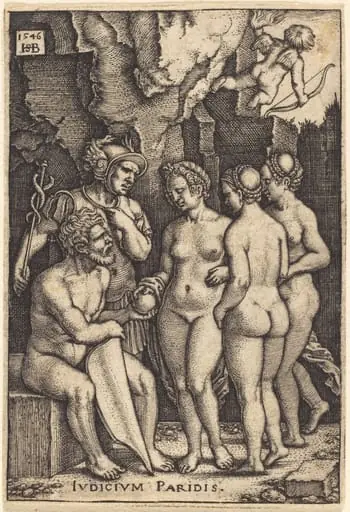
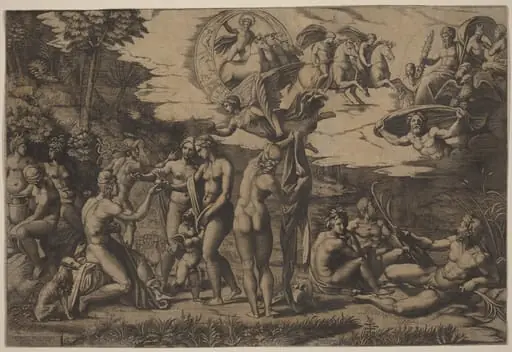
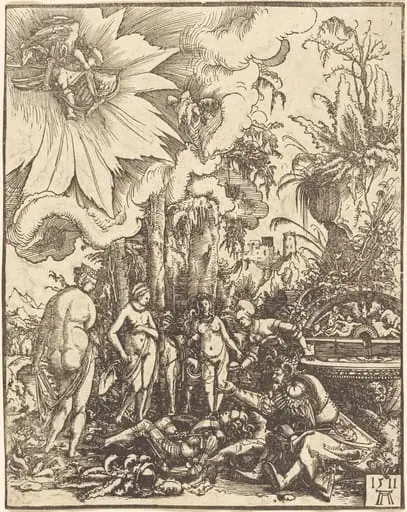
The scene depicts Paris, a Trojan shepherd, tasked with awarding a golden apple to the most beautiful of three goddesses: Hera, Athena, and Aphrodite. Each offers him a bribe—power, wisdom, or love—setting in motion the events leading to the Trojan War. The composition captures the moment of decision, framed by a wooded landscape and a hovering winged figure, likely Hermes, observing the fateful choice.
Technique & Style
Mignon employed etching to translate Penni’s linear drawings into print, preserving delicate contours and subtle tonal gradations. His handling reflects the Fontainebleau style’s refinement, blending Italian Mannerist elegance with northern European precision. The figures are rendered with soft modeling, echoing the sfumato effects of Raphael’s tradition, though adapted to the constraints of the etching medium.
History & Provenance
The composition originates in a lost painting by Raphael, transmitted through Marcantonio Raimondi’s engraving, then reinterpreted by Penni in drawing, and finally rendered by Mignon in etching. This chain of transmission illustrates the movement of artistic ideas from Rome to the French court. Mignon’s version, though derivative, became a key example of Fontainebleau’s print output during its short-lived flourishing.
Context
The Fontainebleau workshop operated under royal patronage, aiming to elevate French art through Italianate models. Prints like Mignon’s served both decorative and pedagogical functions, circulating designs among artists and collectors. The choice of mythological subjects aligned with humanist interests at court, reinforcing cultural prestige through classical allusion and refined technique.
Legacy
Mignon’s etching stands as a testament to the transnational exchange of artistic ideas in the 16th century. Though Fontainebleau’s printmaking phase ended abruptly, its prints influenced later French and northern European graphic traditions. The work’s layered origins—Raphael to Penni to Mignon—highlight how reproductive prints preserved and transformed visual culture across borders.
Artist & collection

Artist
Jean Mignon was a French artist in painting and printmaking in the 16th century, active from 1537 to the mid-1550s.