Artwork
Diana of Ephesus
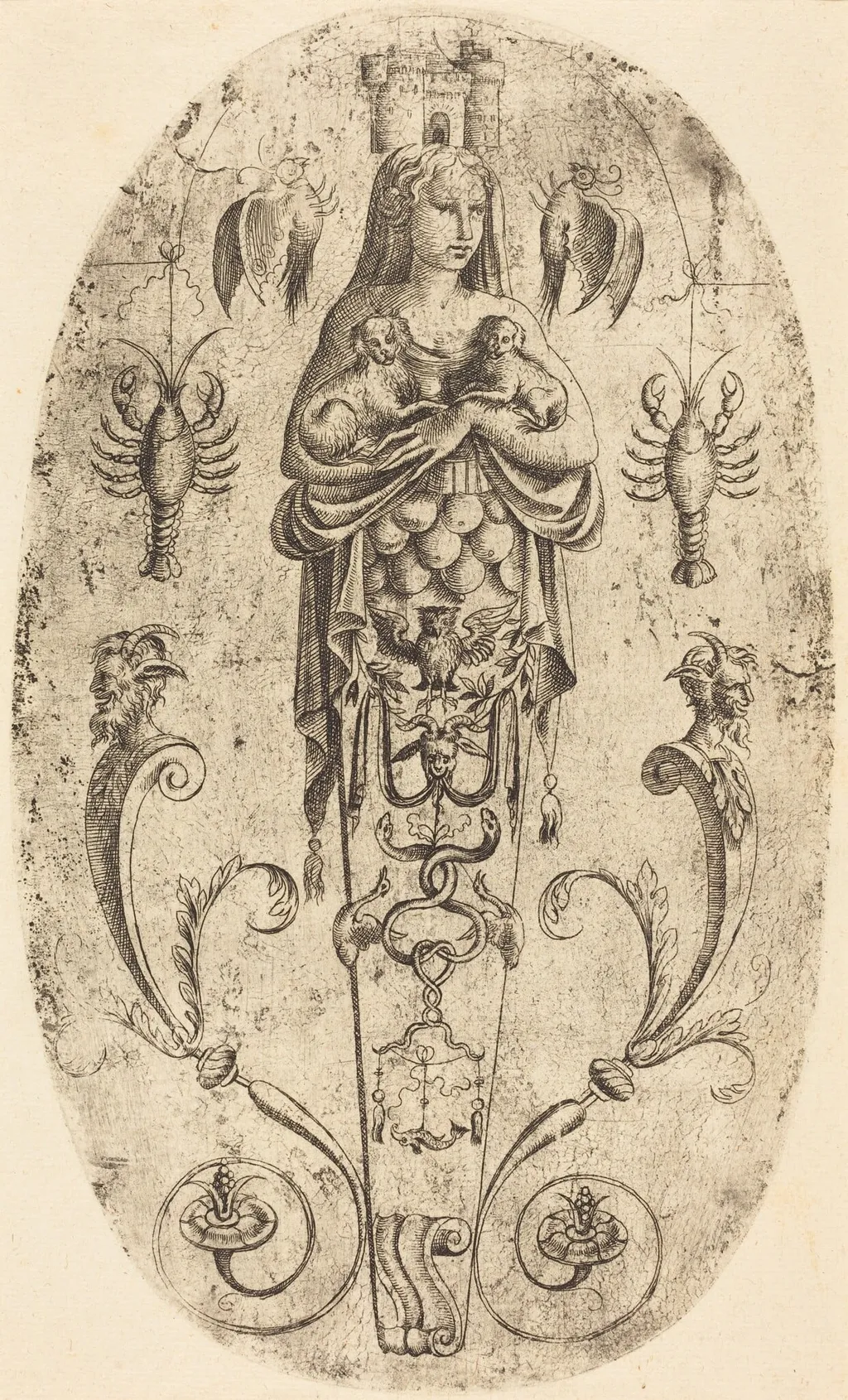
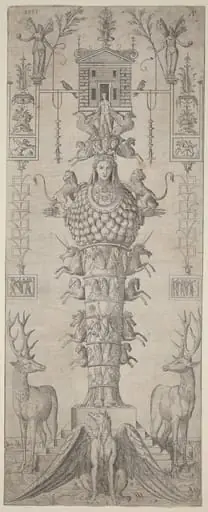
Diana of Ephesus is an ink print by the Renaissance artist Jean Mignon. It is held in the collection of the National Gallery of Art.
About this work
Overview
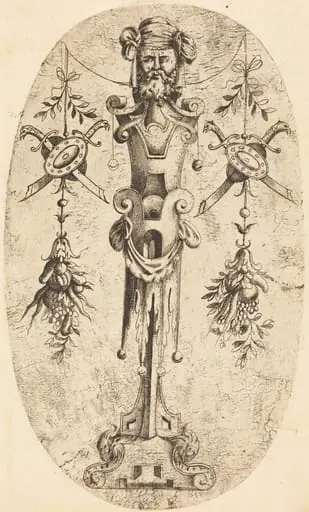
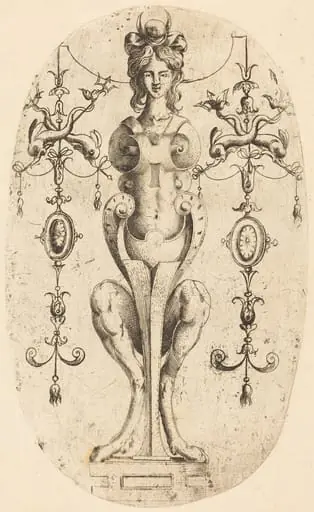
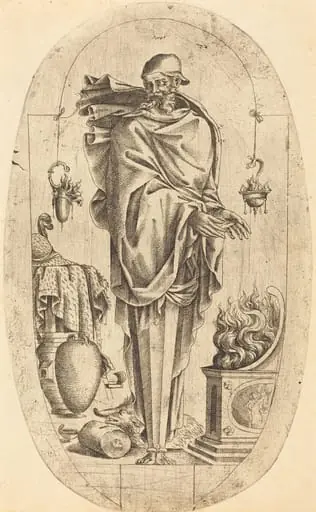
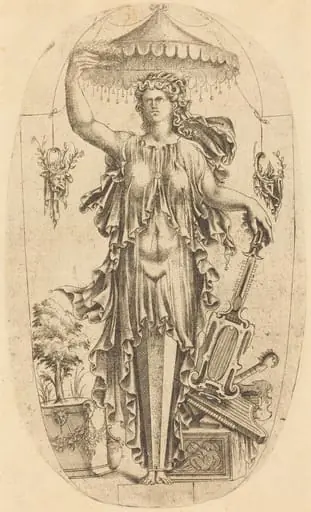
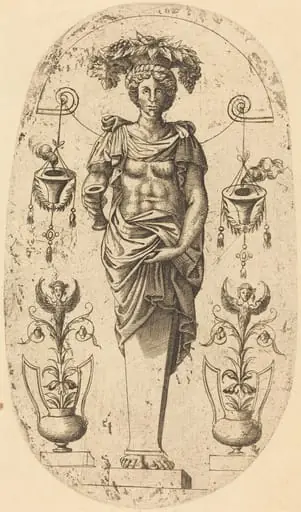
Jean Mignon’s 1563 etching presents a figure identified as Diana of Ephesus, the Roman goddess of the moon and hunt, rendered with an exaggerated number of breasts. The image is a small, black‑and‑white print that combines the goddess with a child and a surrounding array of symbolic elements.
Subject & Meaning
The many‑breasted depiction follows a long artistic convention for representing fertility deities, linking the goddess to abundance and nourishment. Holding a child reinforces the maternal aspect, while the surrounding winged creatures and marine motifs add layers of mythic reference.
Technique & Style
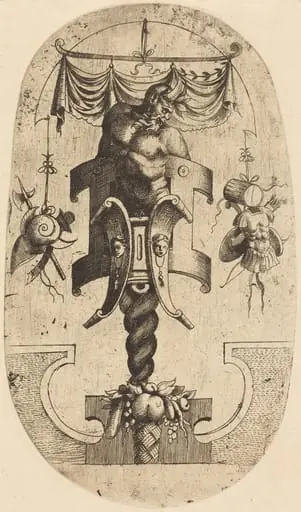
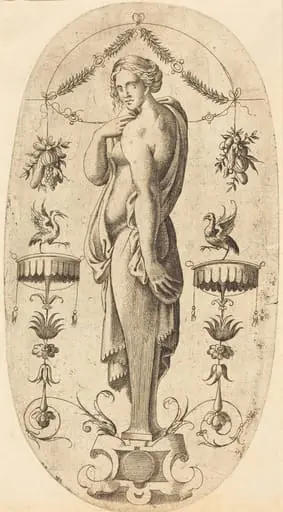
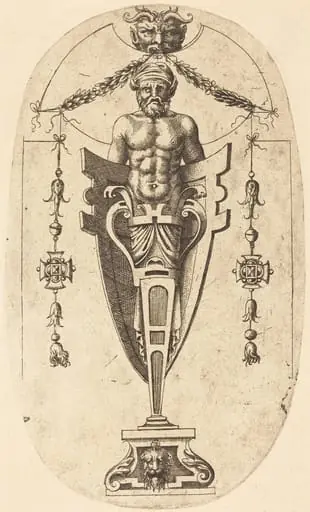
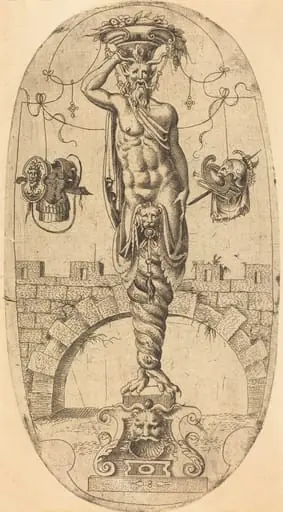
Executed in copperplate etching, the work shows Mignon’s early mastery of the medium, a technique newly introduced to French printmaking in the mid‑16th century. The line work is fine and intricate, allowing detailed foliage, architectural fragments, and the complex anatomy of the central figure to be rendered with clarity.
History & Provenance
Mignon, a French painter‑printmaker active in the 1540s‑1560s, was associated with the First School of Fontainebleau. He frequently adapted designs by Italian artists such as Luca Penni and Francesco Primaticcio, and this print follows that collaborative practice. The etching is catalogued among his mythological series.
Context
The image belongs to the Renaissance revival of classical mythology, a period when artists revisited ancient narratives for decorative and allegorical purposes. The inclusion of exotic elements like lobsters and a shield with a cross reflects the eclectic visual vocabulary of Fontainebleau workshops, which blended French, Italian, and Northern influences.
Artist & collection

Artist
Jean Mignon was a French artist in painting and printmaking in the 16th century, active from 1537 to the mid-1550s.