Artwork
La Halte des Bohémiens
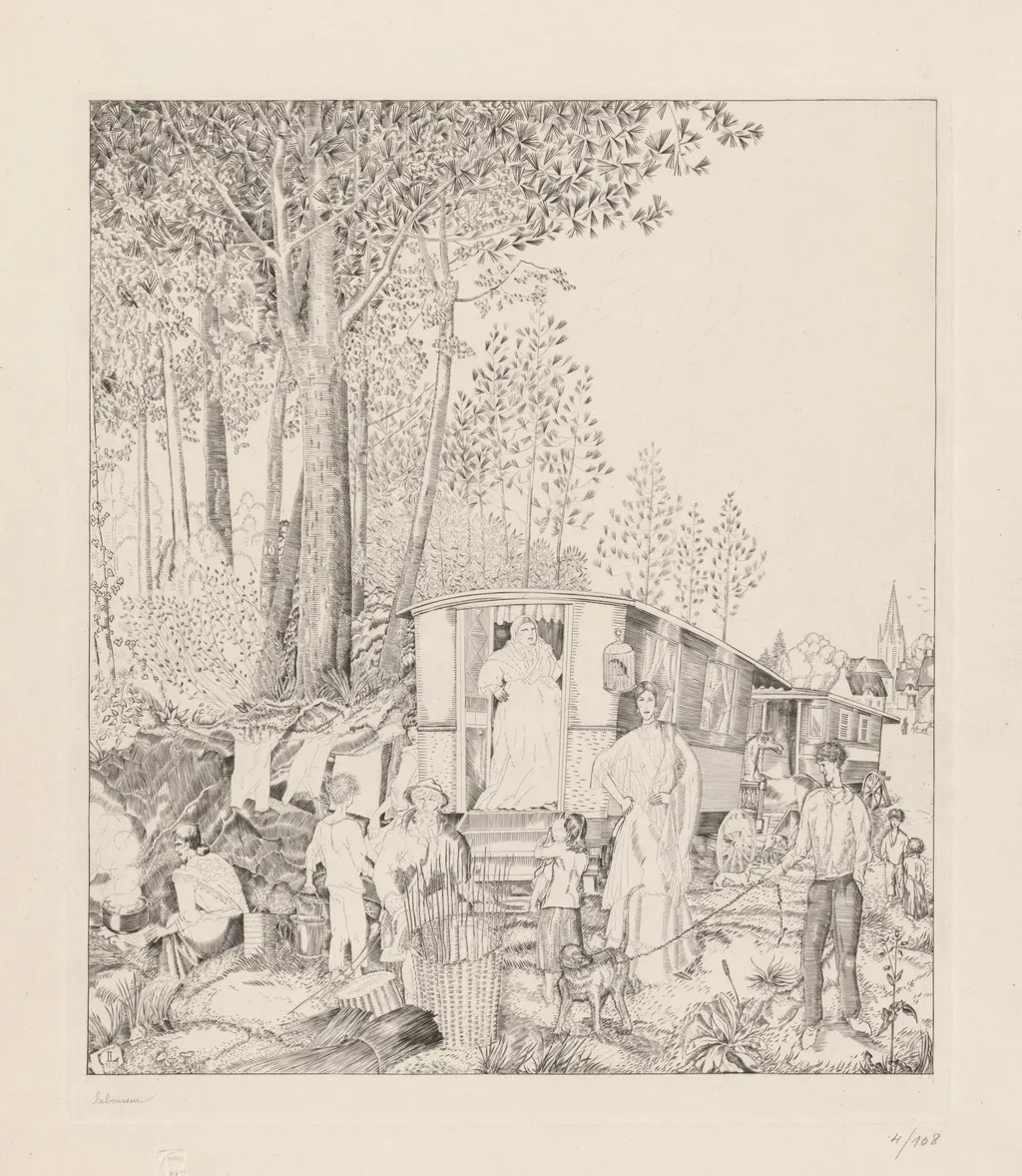
La Halte des Bohémiens is a print by Jean-Émile Laboureur. It dates from 1938 and is held in the collection of the Cleveland Museum of Art.
About this work
Overview
Laboureur, active in multiple mediums including engraving and illustration, often focused on human narratives.
Created in 1938 by French artist Jean-Émile Laboureur, *La Halte des Bohémiens* is a detailed drawing that captures a moment of pause among a group of travelers. Laboureur, active in multiple mediums including engraving and illustration, often focused on human narratives. This work exemplifies his interest in everyday scenes, rendered with precision and atmospheric sensitivity, reflecting his broader engagement with figurative subjects during the late 1930s.
Subject & Meaning
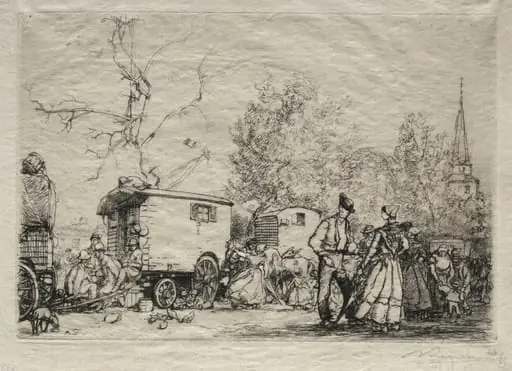
The scene portrays a transient community resting beside a horse-drawn wagon in a forest clearing. Figures are engaged in quiet, routine activities—some carry belongings, others observe from the periphery. A woman sits inside the wagon while a man stands beside it, suggesting a temporary halt in travel. The depiction avoids romanticization, instead presenting a grounded, unembellished view of itinerant life, emphasizing dignity in stillness rather than spectacle.
Technique & Style
Laboureur employed fine linear detail and subtle tonal gradations to render the figures and environment. Light filters through dense foliage, casting soft, uneven shadows that define form without harsh contrast. Clothing and facial features are carefully outlined, even in shadowed areas, demonstrating his mastery of draftsmanship. The composition uses the trees as natural frames, directing attention to the group while preserving the quiet depth of the woodland setting.
History & Provenance
The work was produced in 1938, near the end of Laboureur’s life, during a period when he increasingly turned to intimate, observational subjects. Though specific ownership history is not widely documented, the drawing aligns with his known body of graphic work from the 1930s. It was likely created as a standalone piece, reflecting his personal interest in marginal communities rather than commissioned illustration.
Context
In late 1930s France, societal attitudes toward itinerant groups were often marked by suspicion or neglect. Laboureur’s depiction avoids political commentary, instead offering a quiet, empathetic gaze. His choice to focus on such subjects reflects a broader artistic trend among contemporaries who sought authenticity in ordinary life, contrasting with the rising tide of ideological art in Europe at the time.
Legacy
Laboureur’s graphic works, including *La Halte des Bohémiens*, remain less widely known than those of his peers, but they contribute to a nuanced record of early 20th-century French drawing. His attention to light, texture, and human presence influenced later illustrators interested in narrative realism. The piece endures as a quiet testament to his commitment to observing the overlooked moments of daily existence.
Artist & collection
Artist
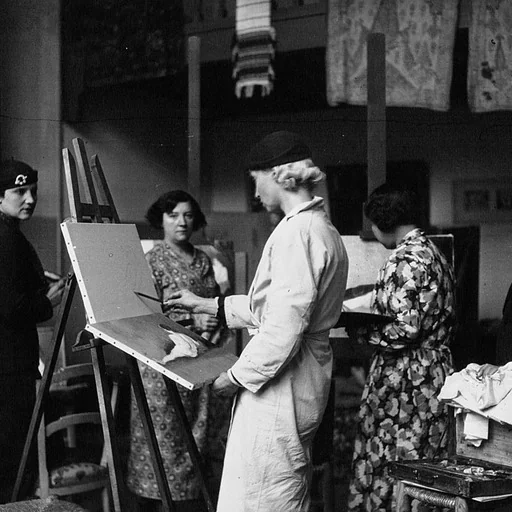
Émile Laboureur, known as Jean Émile (16 August 1877, Nantes – 16 June 1943, near Pénestin) was a French painter, designer, engraver, watercolorist, lithographer, and illustrator.

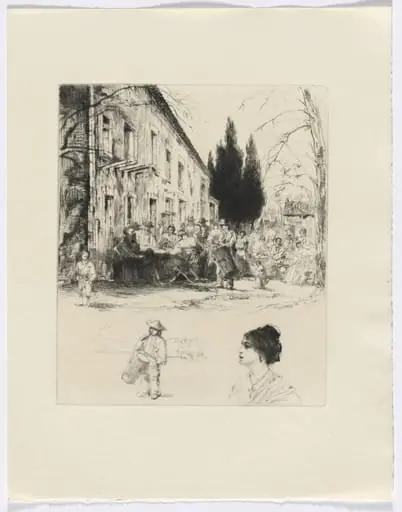 Frédéric Mistral: Mémoires et Recits by Frédéric Mistral: figures at outdoor table/ man playing drum and bust of a woman (insert after p. 136)
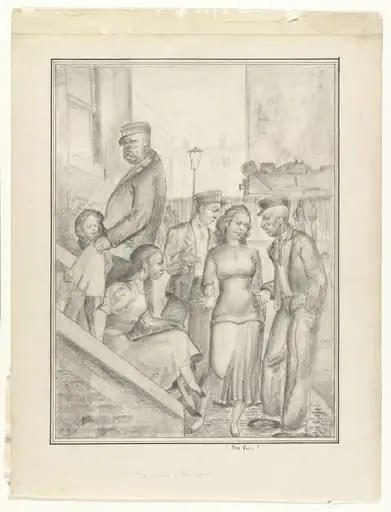 Untitled
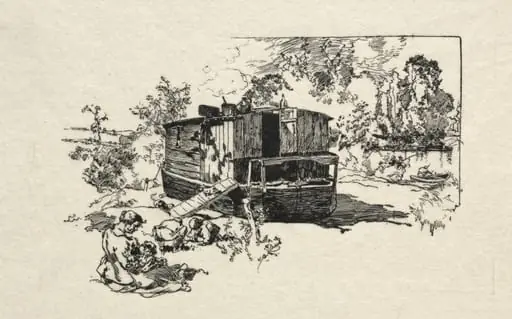 Bateau logement
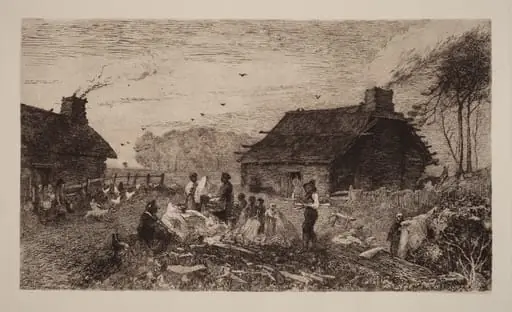 Washing Morning Down South
 Untitled
 Untitled
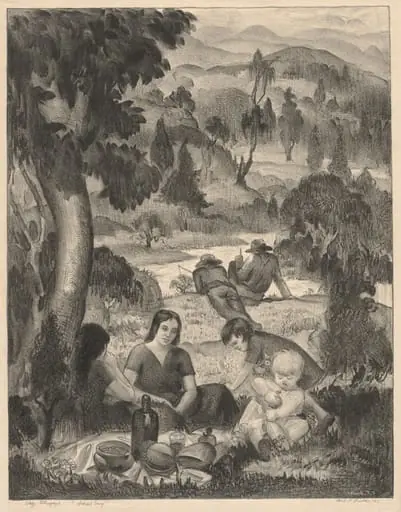 Ideal Day
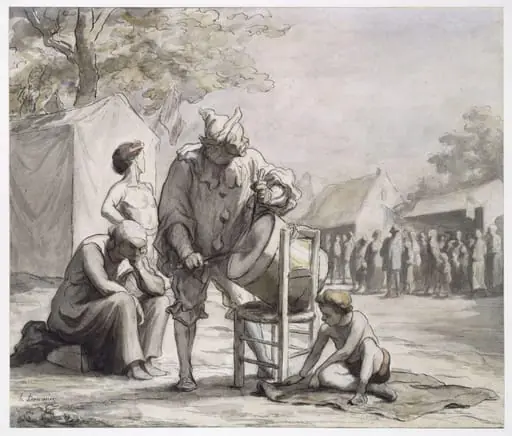 Les Saltimbanques
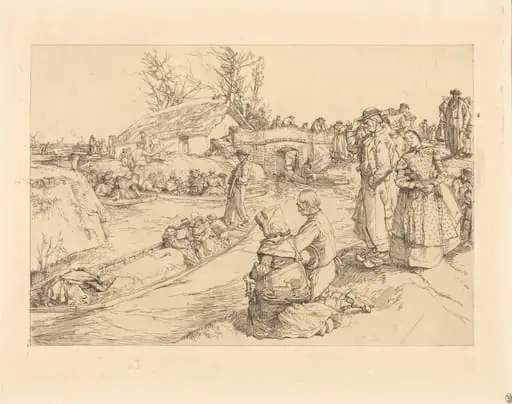 Burial in the Vendeen Marsh (Un enterrement dans le marais Vendeen)
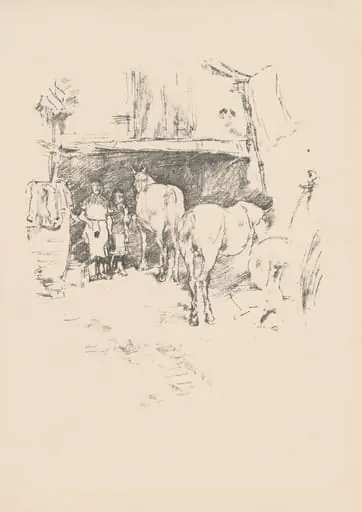 The Smith's Yard
 The Boat Trip: Heritage of the Cart (The Children with the Cart)
 At the Fair St. Jean de Mont