Artwork
The Boat Trip: Heritage of the Cart (The Children with the Cart)
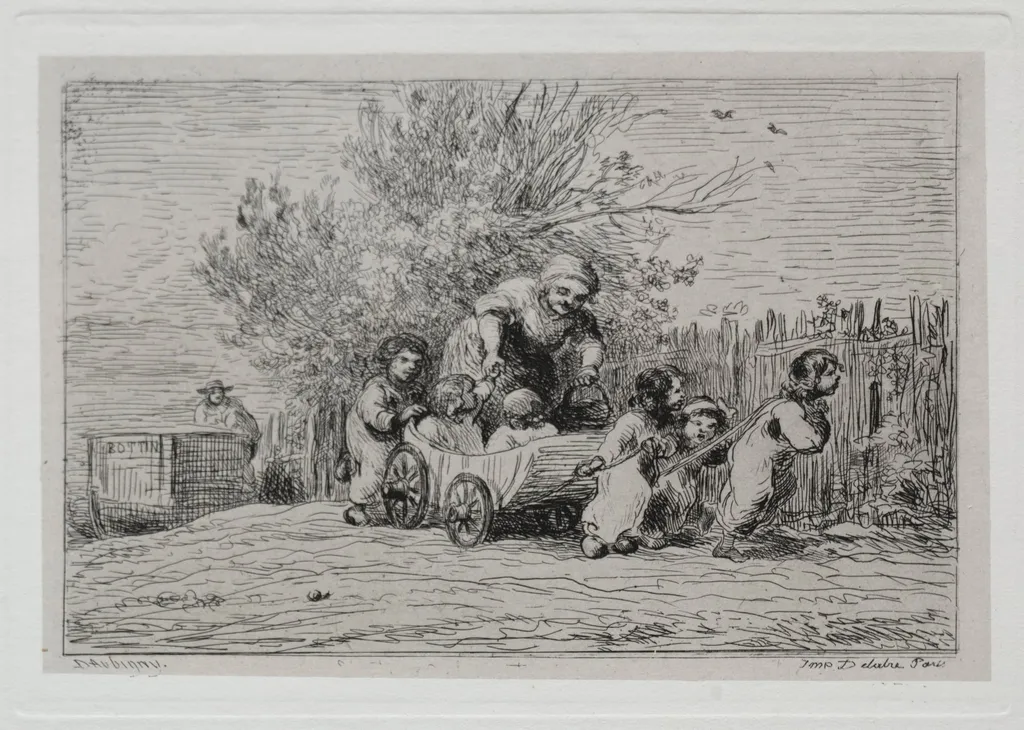
The Boat Trip: Heritage of the Cart (The Children with the Cart) is a work on paper by the Impressionist artist Charles François Daubigny. It dates from 1861 and is held in the collection of the Cleveland Museum of Art.
About this work
Overview
Created in 1861, this sketch by Charles François Daubigny is part of a portfolio capturing rural life along the Oise River.
Created in 1861, this sketch by Charles François Daubigny is part of a portfolio capturing rural life along the Oise River. Executed in a spontaneous, fluid manner, it reflects the artist’s shift toward direct observation of everyday moments. Though not a finished painting, the work reveals his commitment to recording transient scenes with immediacy, bridging the Barbizon tradition and emerging approaches to landscape.
Subject & Meaning
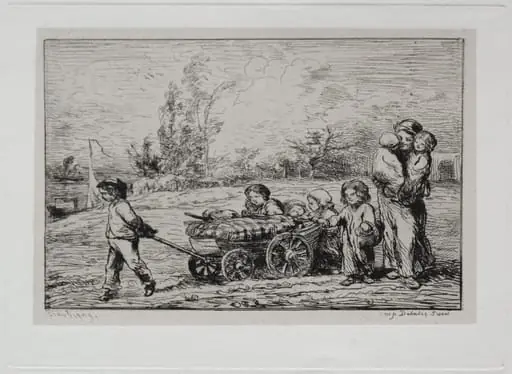
The scene depicts a group of children and a woman with a baby gathered around a wooden cart on a muddy path. A man tends to a barrel in the distance, suggesting modest labor. The figures are engaged in quiet, unremarkable activity—no narrative climax, no idealization. Daubigny elevates the ordinary, presenting rural existence without sentimentality, emphasizing dignity in routine.
Technique & Style
Daubigny employed loose, rapid strokes to convey movement and atmosphere. The forms are suggested rather than defined, with minimal detail in clothing or facial features. The sketchlike quality, achieved through fluid ink or wash, captures the fleeting effects of light and weather. This method prioritizes sensory impression over precision, aligning with emerging trends in plein air practice.
History & Provenance
The work originates from a series of sketches Daubigny made during his travels along the Oise, often used as preparatory studies. It remained in his personal collection until his death, later entering institutional holdings through family or estate distribution. Its survival as part of a portfolio underscores its role as a working document rather than a public-facing artwork.
Context
In the 1860s, French artists increasingly turned from historical or mythological subjects to contemporary rural life. Daubigny’s focus on peasants and laborers reflected broader cultural interest in authenticity and social realism. His sketches, though informal, contributed to a visual language that later Impressionists would refine, particularly in their treatment of light and transient moments.
Legacy
Though lesser known than his finished paintings, this sketch exemplifies Daubigny’s influence on the transition toward modern landscape practice. His emphasis on direct observation and informal composition paved the way for artists like Monet and Pissarro. The work stands as a quiet testament to the value of the sketch as a legitimate artistic record of everyday reality.
Artist & collection
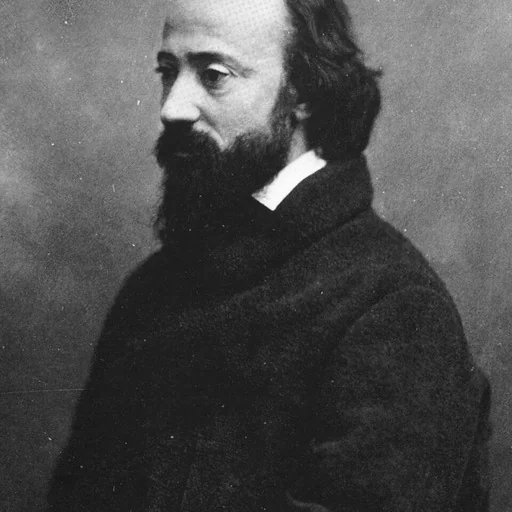
Artist
Charles-François Daubigny ( DOH-bin-yee, US: DOH-been-YEE, doh-BEEN-yee, French: ; 15 February 1817 – 19 February 1878) was a French painter, one of the members of the Barbizon school, and is considered an important precursor of…

 The Boat Trip: Cabin Boy Hauling the Tow-Rope or Hauling by Rope
 Hedging and Ditching
 The Boat Trip: The Lunch before Going Aboard at Asnières
 Untitled
 The Dozing Fishmonger (Le marchand de poissons endormie)
 The Deciding Throw
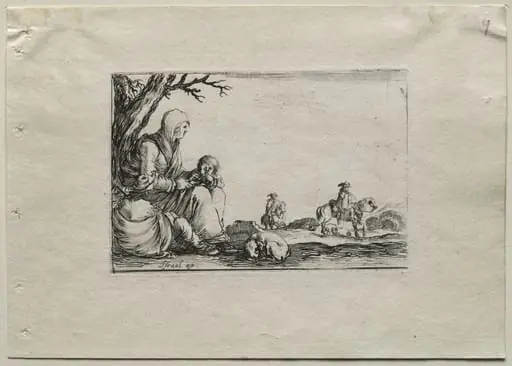 Caprices: Seated Beggar Woman with Two Children
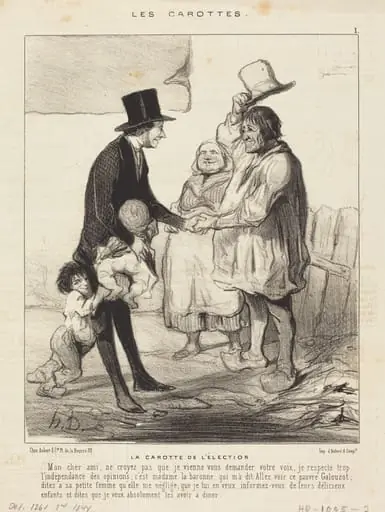 La Carotte de l'élection
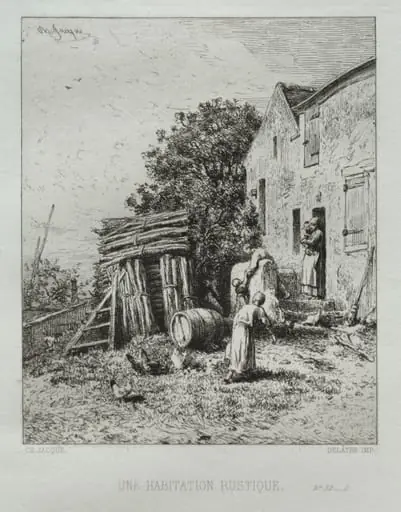 Rustic House
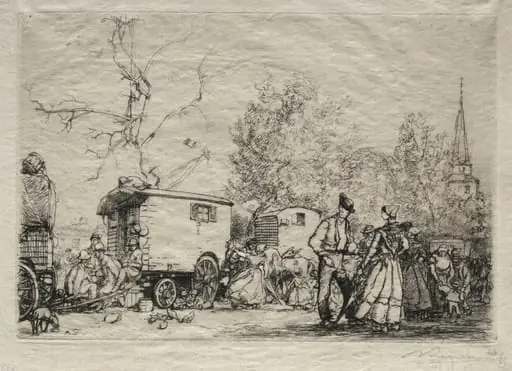 At the Fair St. Jean de Mont
 A Roadside in Spain
 The Boat Trip: Moving into "Le Botin" (The Ship's Furnishings) or Moving to the Boat