Artwork
Les Saltimbanques
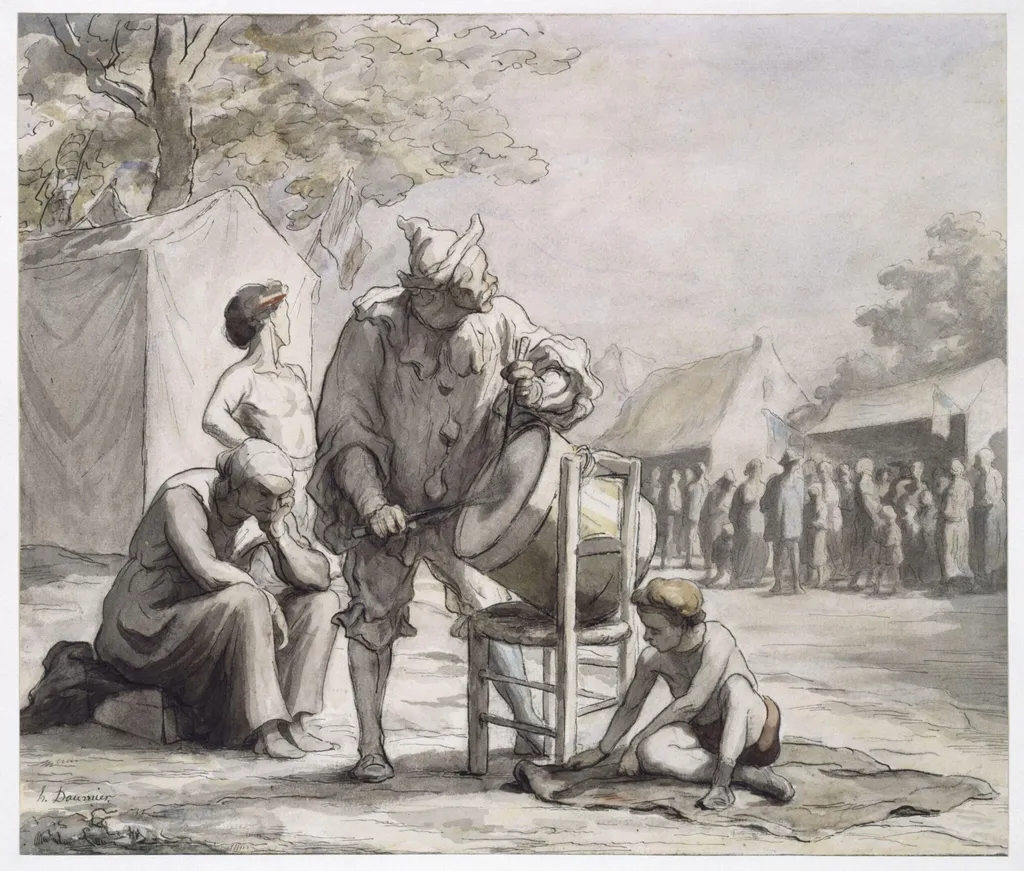
Les Saltimbanques is a watercolor work on paper by the Impressionist artist Honoré Daumier. It dates from 1866 and is held in the collection of the Victoria and Albert Museum.
About this work
Overview
Honoré Daumier created this watercolor depicting a family of itinerant performers, known as saltimbanques, in a moment of quiet exhaustion. Rendered in delicate washes, the scene captures their fragile existence on the margins of urban society. Daumier, long fascinated by street entertainers, portrays them not as spectacle but as individuals burdened by economic hardship and social neglect.
Subject & Meaning
Together, they convey a silent narrative of endurance amid indifference, reflecting the precarious lives of itinerant artists in 19th-century France.
The composition centers on an aging clown attempting to drum up attention, his instrument balanced on a chair. One son gazes toward an unseen crowd, hopeful yet futile; the other supports the unstable chair, embodying quiet duty. The mother, slumped and withdrawn, embodies resignation. Together, they convey a silent narrative of endurance amid indifference, reflecting the precarious lives of itinerant artists in 19th-century France.
Technique & Style
Daumier employed loose, fluid watercolor washes to suggest form and atmosphere without detail. Subtle tonal shifts define figures against a sparse background, emphasizing their isolation. Delicate linework outlines gestures and postures, heightening emotional weight. The medium’s transparency mirrors the fragility of their circumstances, avoiding theatricality in favor of restrained realism.
History & Provenance
This work belongs to a series Daumier produced over decades, documenting street performers he observed in Parisian suburbs and fairgrounds. Though not widely exhibited in his lifetime, these drawings were personal studies, later recognized for their social insight. The watercolor’s survival reflects its status as a private record rather than a commissioned piece, preserved through family or collector networks.
Context
In mid-19th-century France, saltimbanques were common yet marginalized figures, often living in poverty and subject to legal restrictions. Daumier, himself from a modest background, identified with their struggle. His depictions countered romanticized portrayals in popular culture, offering instead unvarnished observations of labor, aging, and familial duty under economic strain.
Legacy
Daumier’s saltimbanque drawings influenced later realist and socially engaged artists, establishing a precedent for depicting the working poor with dignity. Though not celebrated in his day, these watercolors are now valued for their empathy and visual economy. They remain key to understanding how art could bear witness to everyday hardship without sentimentality.
Artist & collection

Artist
Honoré-Victorin Daumier was a French painter, sculptor, and printmaker, whose many works offer commentary on the social and political life in France, from the Revolution of 1830 to the fall of the Second French Empire in 1870.









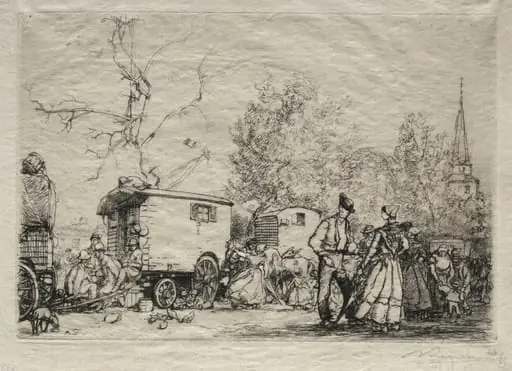 At the Fair St. Jean de Mont
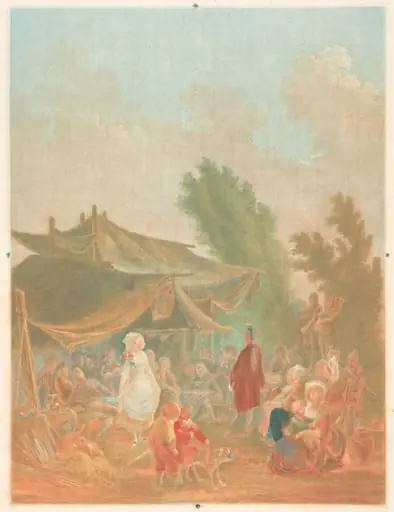 Noce de Village (Village Wedding)
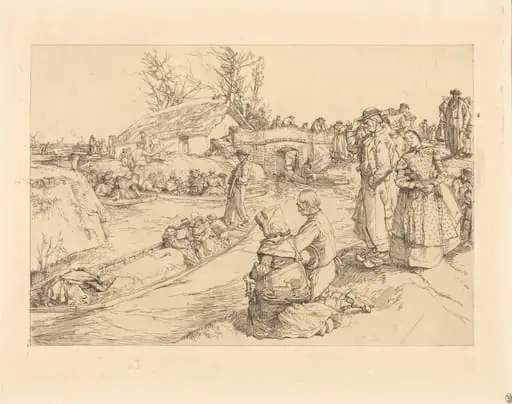 Burial in the Vendeen Marsh (Un enterrement dans le marais Vendeen)
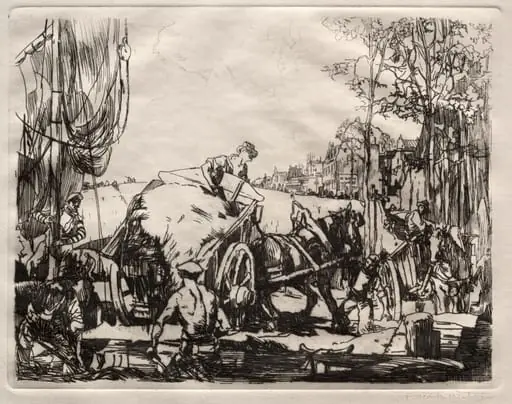 Port at Low Tide
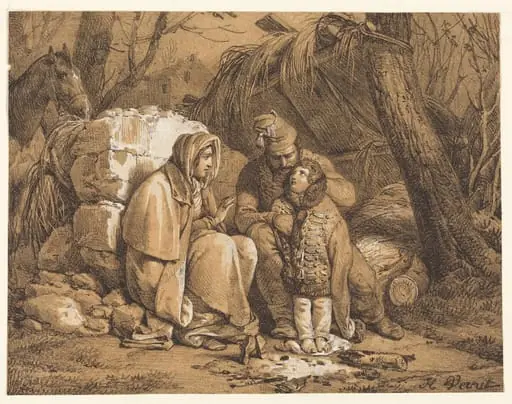 Soldier's Family Encamped
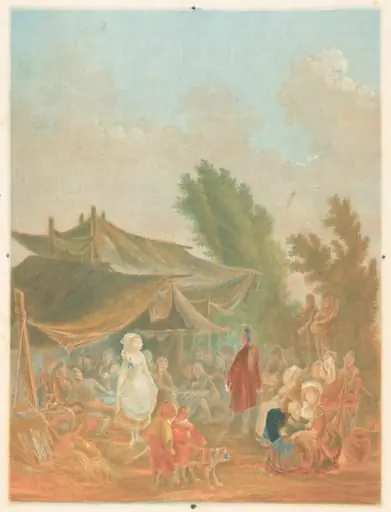 Noce de Village (Village Wedding)
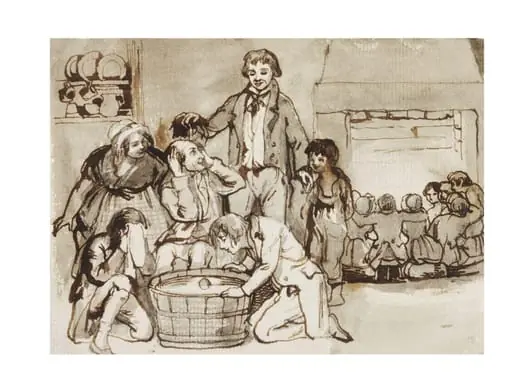 Snapp Apple Night
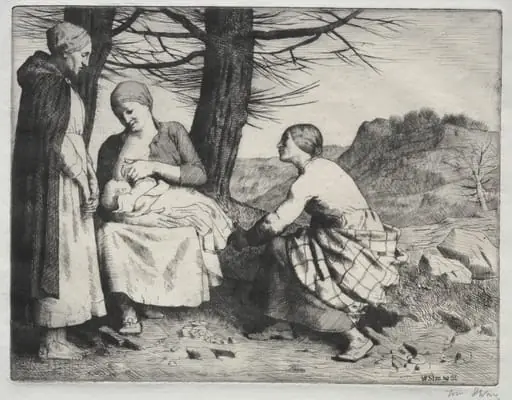 Woman and Child
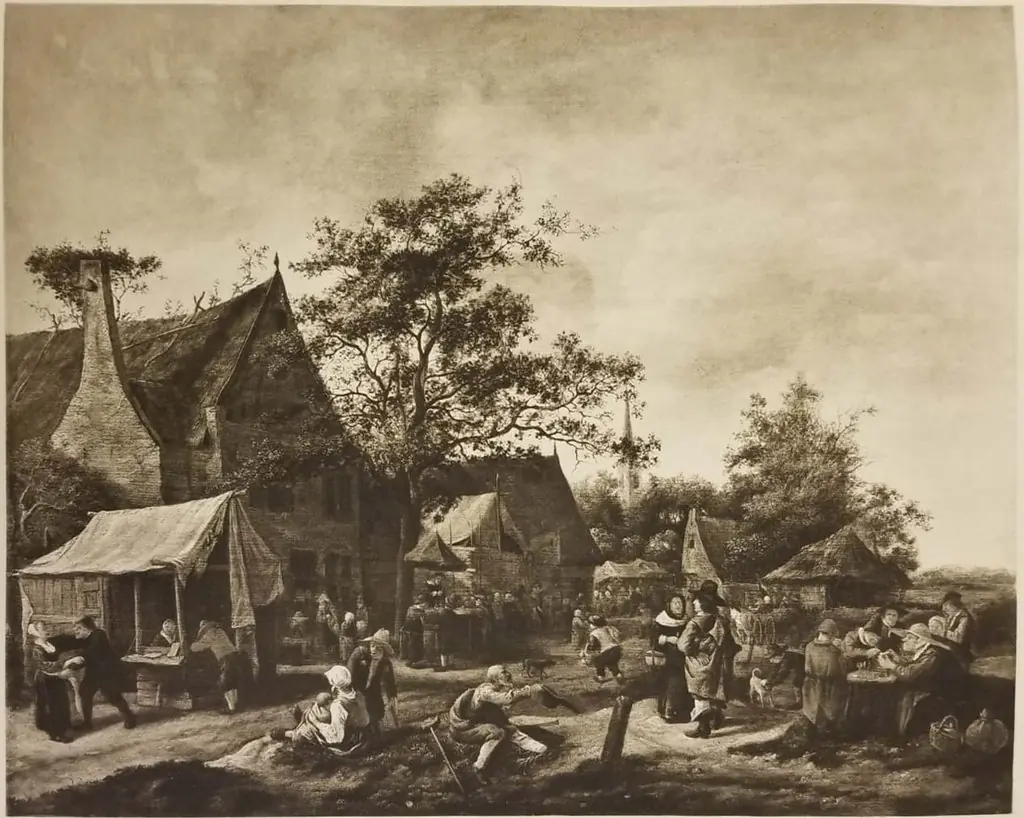 A Village Festival
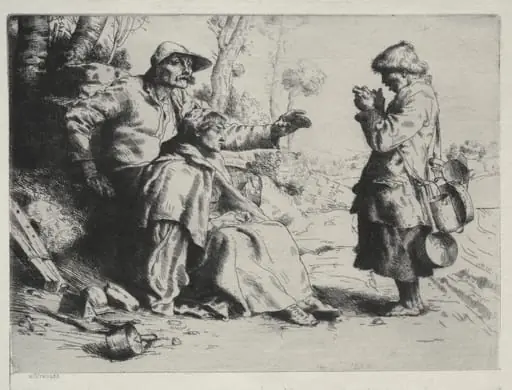 Tinkers
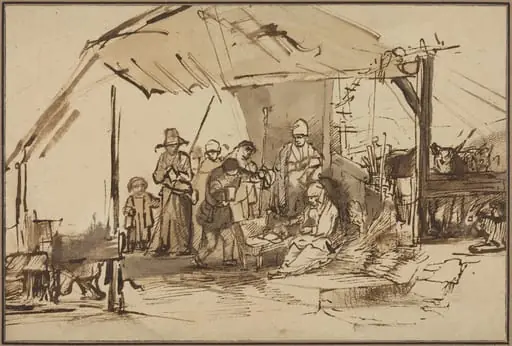 The Adoration of the Shepherds
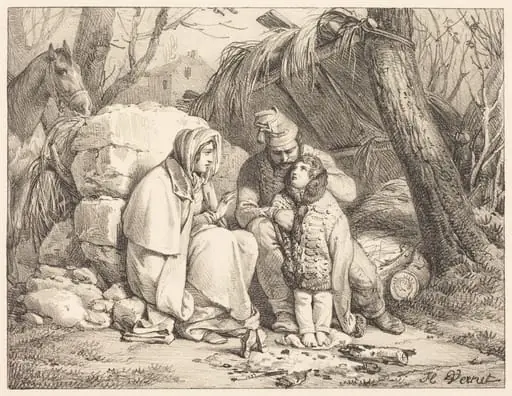 Soldier's Family Encamped