Artwork
Flore des Jardiniers, Amateurs et Manufacturiers: Maurandia semperflorens
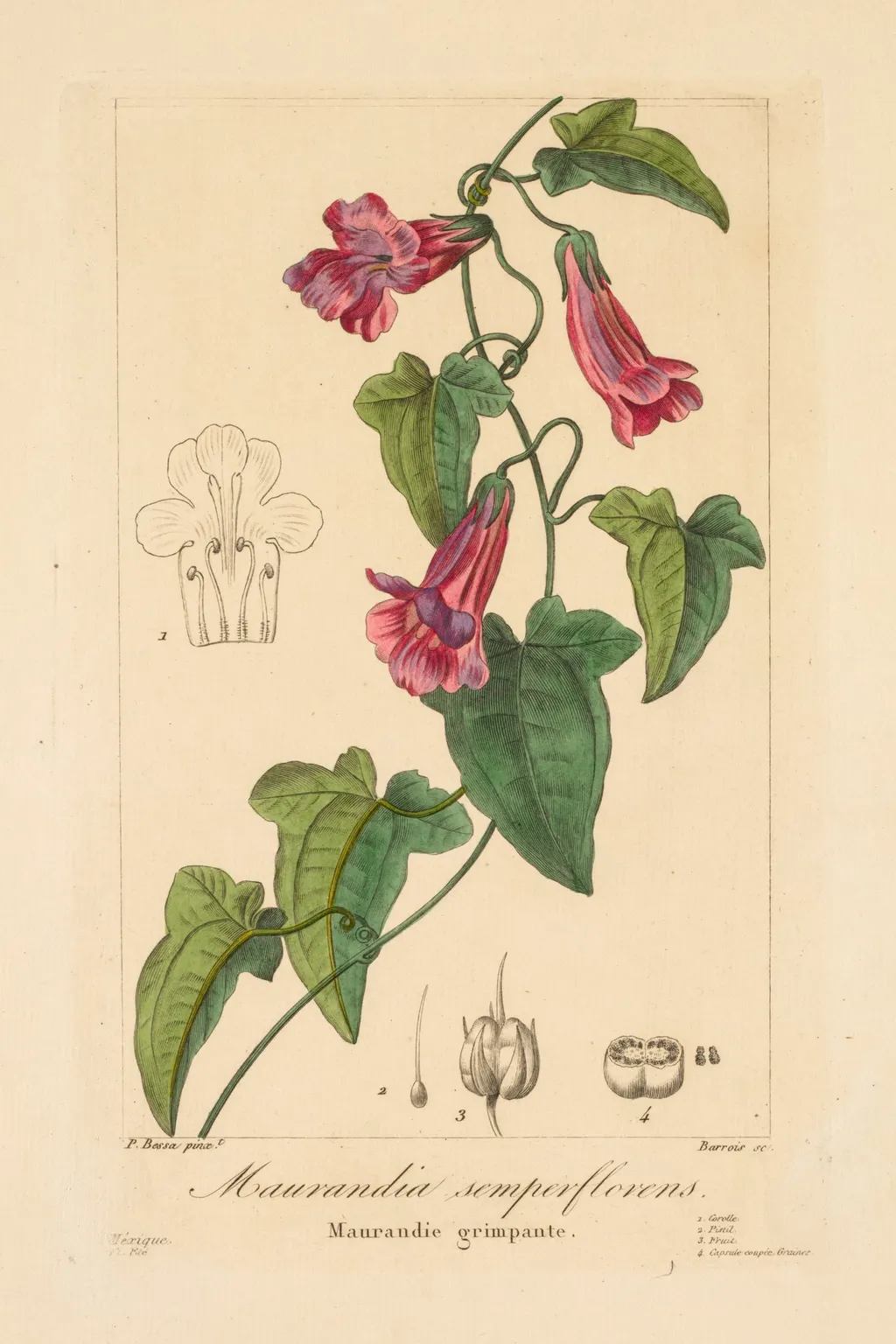
Flore des Jardiniers, Amateurs et Manufacturiers: Maurandia semperflorens is a print by the Romanticist artist Jean Pierre Frederic Barrois. It dates from 1836 and is held in the collection of the Cleveland Museum of Art.
About this work
Overview
Jean‑Pierre Frédéric Barrois produced the botanical print titled *Flore des Jardiniers, Amateurs et Manufacturiers: Maurandia semperflorens* in 1836.
Jean‑Pierre Frédéric Barrois produced the botanical print titled *Flore des Jardiniers, Amateurs et Manufacturiers: Maurandia semperflorens* in 1836. The work depicts a climbing vine of Maurandia, showing its characteristic bell‑shaped blossoms and glossy foliage. It is part of the collection of the Cleveland Museum of Art, where it is displayed as an example of early nineteenth‑century plant illustration.
Subject & Meaning
The image records the perennial species Maurandia semperflorens, a vine valued for its ornamental pink‑purple flowers and deep‑green leaves. By presenting the plant in full bloom, the print serves both a scientific purpose—documenting morphology—and an aesthetic one, reflecting the era’s interest in the beauty of cultivated garden species.
Technique & Style
Executed as a print, the work employs fine line work and subtle washes to render the delicate petals and veined leaves with a high degree of realism. The palette is restrained, dominated by muted greens and soft pinks, which enhances the naturalistic appearance while avoiding the vivid coloration typical of later horticultural illustrations.
History & Provenance
Created in 1836, the print was likely produced for inclusion in a horticultural publication aimed at gardeners and plant manufacturers. It entered the Cleveland Museum of Art’s holdings through acquisition in the twentieth century, joining a broader assemblage of botanical artworks that document the development of plant science and garden culture in Europe.
Artist & collection

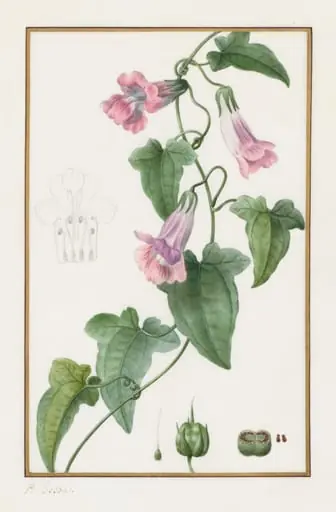 (Botanical: Maurándia semperflorens)
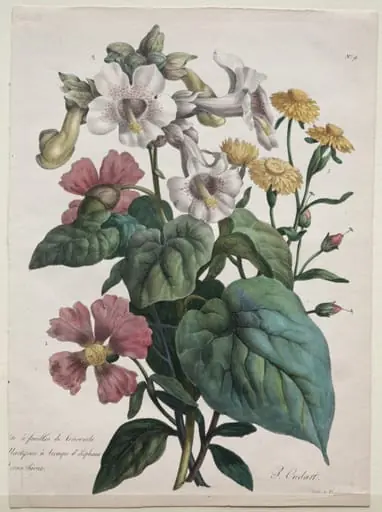 Cours d'Histoire Naturelle, contenant les principales espèces du règne animal, classées methodiquemenet: Martynia or Unicorn Plant
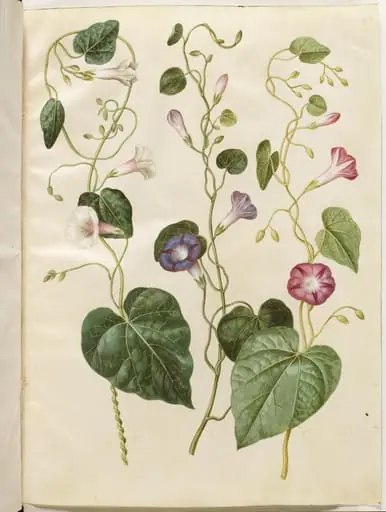 Ipomoea purpurea (purpur-pragtsnerle)
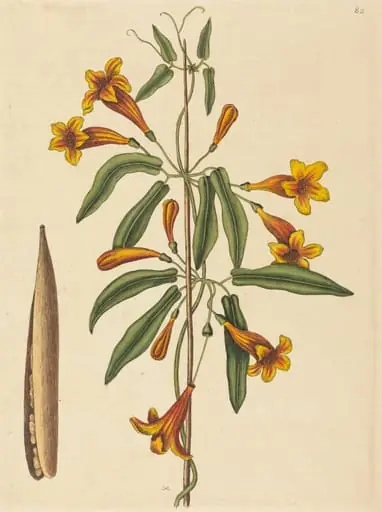 Cross-vine (Bignonia capreolata)
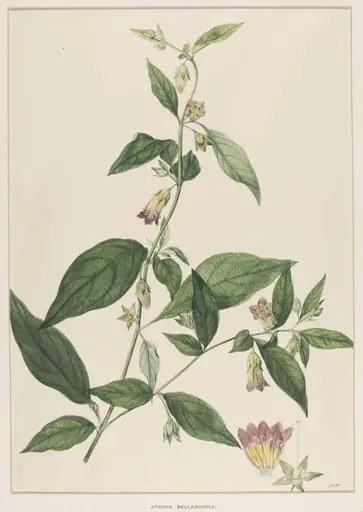 Atropa Belladonna
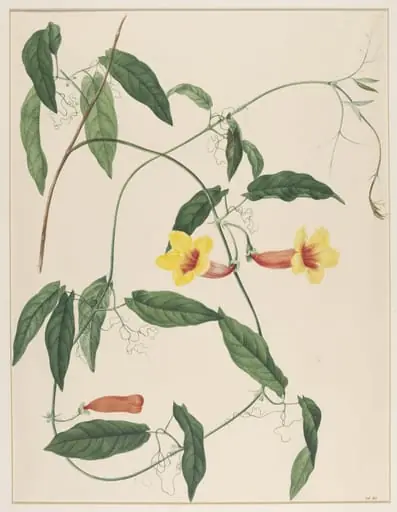 Bignonia Capreolata
![The Botanical Magazine or Flower Garden Displayed: Plate 929, Symphyum Asperrim. Prickley Comfrey. [Symphytum asperum], by Francis Sansom](https://artifactworldgallery.com/img/francis-sansom--the-botanical-magazine-or-flower-garden-displayed-plate-929--35fcf24fe6d7acee-w320.webp) The Botanical Magazine or Flower Garden Displayed: Plate 929, Symphyum Asperrim. Prickley Comfrey. [Symphytum asperum]
The Botanical Magazine or Flower Garden Displayed: Plate 929, Symphyum Asperrim. Prickley Comfrey. [Symphytum asperum]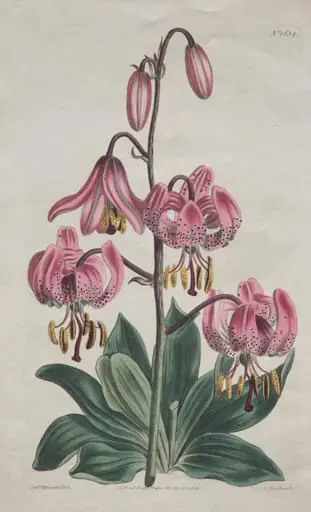 The Botanical Magazine or Flower Garden Displayed: Smooth-stalked Martagon, Turk's Cap Lily
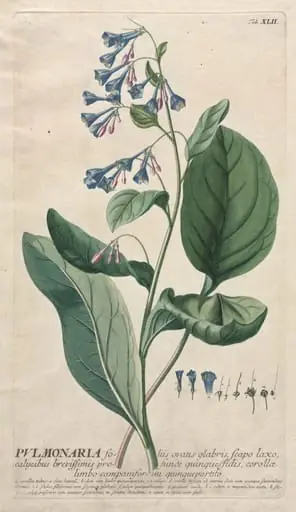 Plantae Selectae: No. 42 - Pulmonaria
![The Botanical Magazine or Flower Garden Displayed: Plate 892, Althaea Flexuosa. Seringapatam A Hollyhock . [Althea rosea], by Francis Sansom](https://artifactworldgallery.com/img/francis-sansom--the-botanical-magazine-or-flower-garden-displayed-plate-892--4abb4a5b7cb4bcd5-w320.webp) The Botanical Magazine or Flower Garden Displayed: Plate 892, Althaea Flexuosa. Seringapatam A Hollyhock . [Althea rosea]
The Botanical Magazine or Flower Garden Displayed: Plate 892, Althaea Flexuosa. Seringapatam A Hollyhock . [Althea rosea]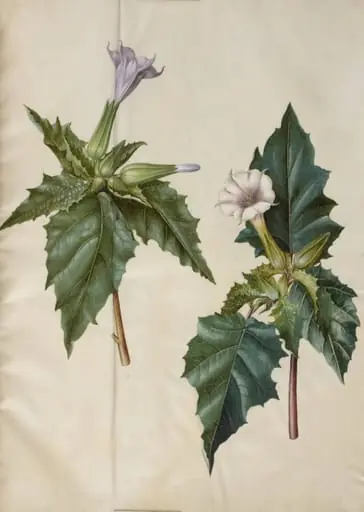 Datura stramonium (almindelig pigæble)
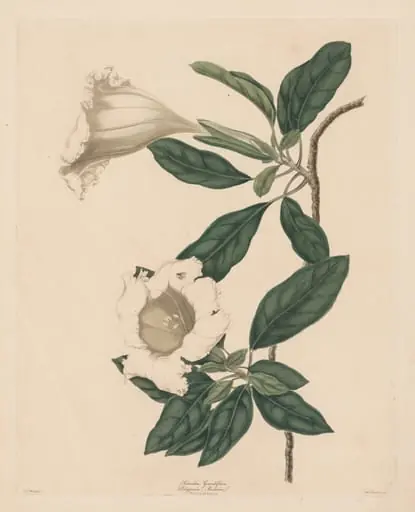 Chalice Vine