Artwork
Chez Durand
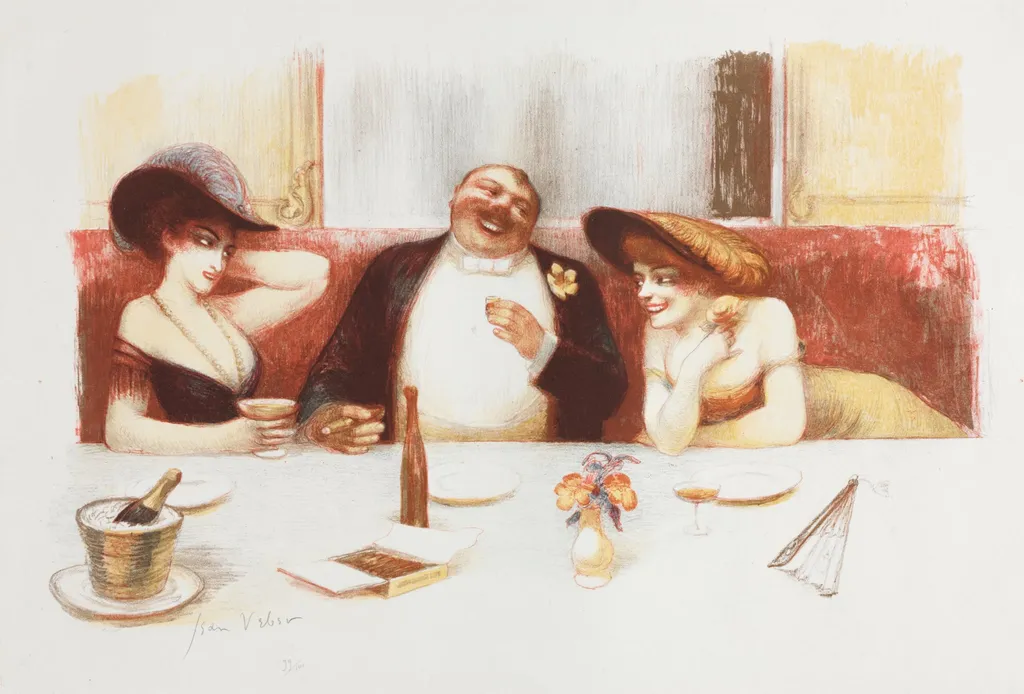
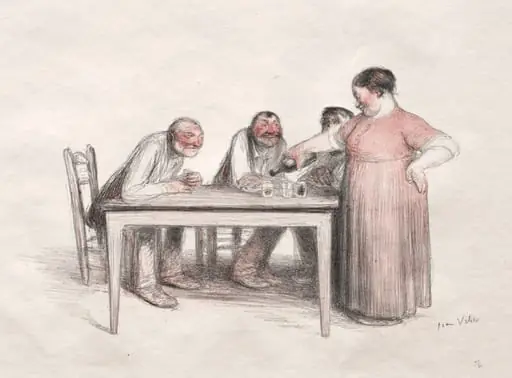
Chez Durand is a print by Jean Veber. It dates from 1904 and is held in the collection of the Cleveland Museum of Art.
About this work
Overview
Chez Durand is a 1904 print by French artist Jean Veber, rendered in a tonal, intimate style. It depicts a quiet interior scene featuring three figures seated at a table, engaged in casual conversation. The work is part of the collection at The Cleveland Museum of Art, where it is preserved as an example of early 20th-century graphic art that captures everyday social moments with subtle detail.
Subject & Meaning
The composition centers on a man flanked by two women, all dressed in formal attire, suggesting a social gathering in a private setting.
The composition centers on a man flanked by two women, all dressed in formal attire, suggesting a social gathering in a private setting. Their relaxed postures and mutual attention imply familiarity and ease, rather than ceremony. The absence of overt narrative or symbolic elements invites interpretation as a candid moment of bourgeois leisure, reflecting the quiet rhythms of domestic life at the time.
Technique & Style
Veber employed a restrained tonal palette and fine linework characteristic of printmaking traditions of the period. The figures are rendered with soft modeling, while the red wall and window provide spatial depth without distraction. The interplay of light and shadow, particularly on the man’s white shirt and the women’s hats, adds texture and volume, emphasizing the quiet realism of the scene over dramatic effect.
History & Provenance
Created in 1904, Chez Durand entered the collection of The Cleveland Museum of Art at an unspecified date, likely through acquisition or donation in the 20th century. Its provenance prior to museum ownership is not publicly documented, but its preservation in a major institution underscores its recognition as a representative work of Veber’s graphic output during the Belle Époque.
Context
Veber worked during a period when printmaking experienced a revival in France, often used to depict modern life with nuance. Chez Durand aligns with contemporaneous interest in domestic interiors and social rituals, echoing the quiet realism of artists like Degas and Toulouse-Lautrec, though without their theatricality. The scene reflects the private, gendered spaces of upper-middle-class leisure in early 1900s Paris.
Legacy
Though not widely exhibited outside institutional collections, Chez Durand remains a quiet example of Veber’s skill in capturing psychological subtlety through print. It contributes to the broader understanding of how graphic arts documented everyday social dynamics in France, offering a counterpoint to more overtly political or decorative works of the era.
Artist & collection

 Boeuf sur le Toit
 Irish and American Bar, rue Royale
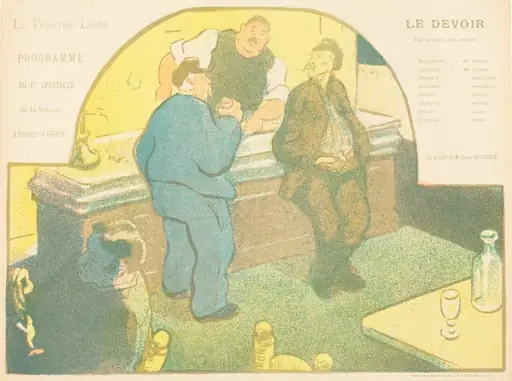 Le Devoir
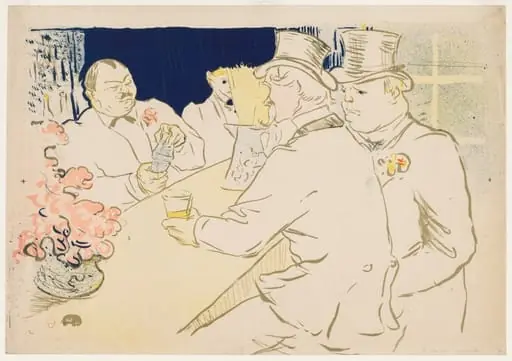 The Irish and American Bar, Rue Royale
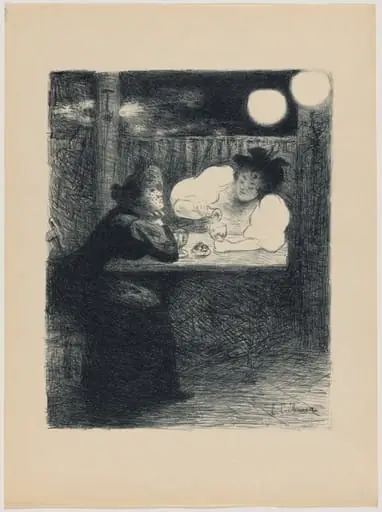 Les femmes à l'absinthe (Women with Absinthe)
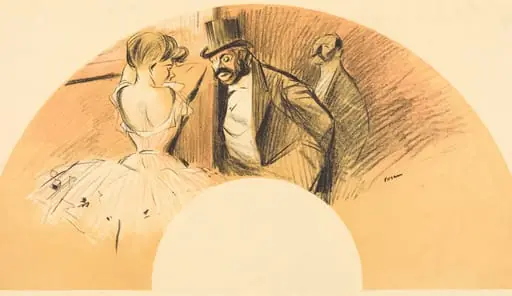 Eventail (pour le bal Gavarni) (Fan (for the Gavarni Ball))
 In the Skating Professional Beauty
 Artists Evening
 Salle de jeu (Gambling Room)
 Artist's Evening
 Oh! Monsieur, quel talent possède ...
 Chez Maxime