Artwork
The Savant
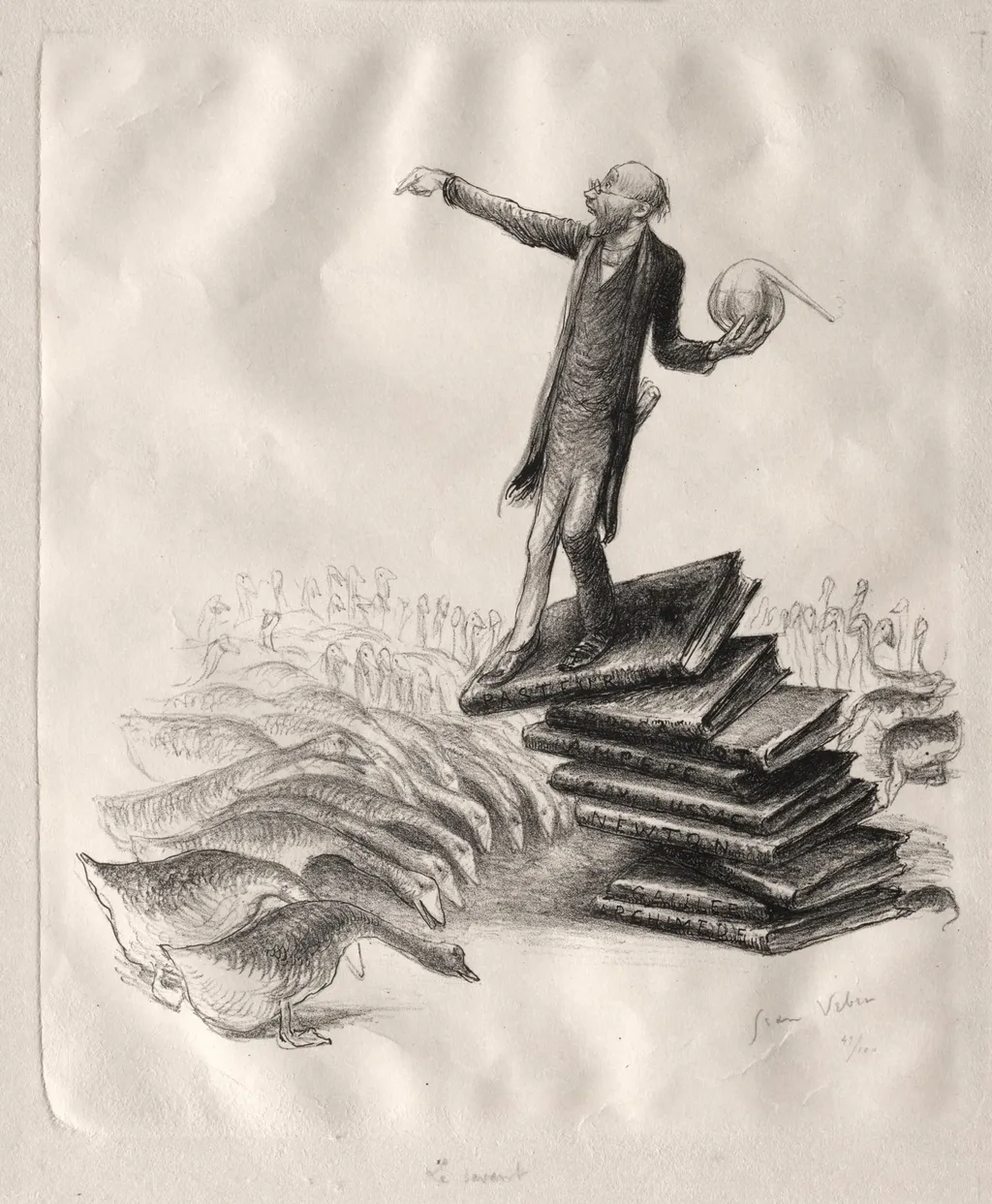
The Savant is a print by the Impressionist artist Jean Veber. It dates from 1906 and is held in the collection of the Cleveland Museum of Art.
About this work
Overview
The work is part of the permanent collection at The Cleveland Museum of Art, where it is valued for its wit and visual economy.
Created in 1906 by French artist Jean Veber, The Savant is a monochrome ink drawing on paper. It depicts a lone figure perched precariously atop a towering stack of books, holding a globe and gesturing outward. The composition is rendered in loose, energetic lines without color, emphasizing movement and spontaneity. The work is part of the permanent collection at The Cleveland Museum of Art, where it is valued for its wit and visual economy.
Subject & Meaning
The figure, dressed in a long coat, appears as a scholar or intellectual, elevated by knowledge yet disconnected from its content. The books, labeled with academic terms like 'encyclopedia,' are merely a platform rather than a source of engagement. His focus on the globe suggests a broader, perhaps abstract, ambition. The ducks below, unperturbed and mundane, contrast sharply with the figure’s gravity, introducing irony and questioning the value of intellectual pretension.
Technique & Style
Veber employed swift, unrefined ink strokes to construct the image, avoiding detail in favor of expressive gesture. The absence of color and shading heightens the drawing’s immediacy, resembling a spontaneous sketch. The figure’s fluttering coat and unstable stance convey motion, while the ducks’ simple outlines add a quiet, humorous counterpoint. The technique reflects a deliberate rejection of polish, aligning with early 20th-century satirical illustration traditions.
History & Provenance
The drawing was produced in 1906 during Veber’s active period as a caricaturist and illustrator for French periodicals. It entered The Cleveland Museum of Art’s collection through a donation or acquisition in the 20th century, though specific provenance details prior to its museum acquisition are not widely documented. It remains one of the few surviving works by Veber in a North American public collection.
Context
In early 1900s France, satirical drawings often critiqued intellectualism and societal pretensions. Veber, known for his work in journals like L’Assiette au Beurre, used visual wit to question authority and expertise. The Savant fits within this tradition, mirroring contemporary skepticism toward academic elitism. The inclusion of domestic animals in an otherwise lofty scene echoes broader cultural trends favoring absurdity as a tool for social commentary.
Legacy
The Savant endures as a quiet example of early modern graphic satire, notable for its economy of form and layered irony. While Veber is not widely remembered today, this work continues to be studied for its blend of humor and critique. Its presence in a major museum underscores its significance as a representative piece of illustrated social observation from the pre-war era.
Artist & collection

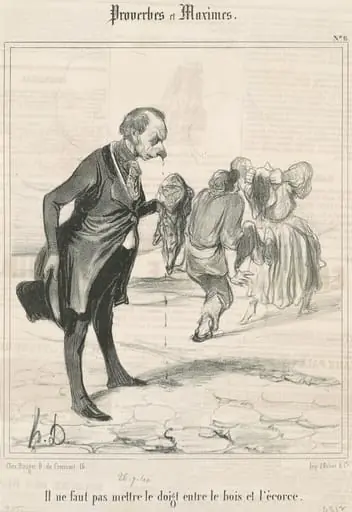 Il ne faut pas mettre le doigt ...
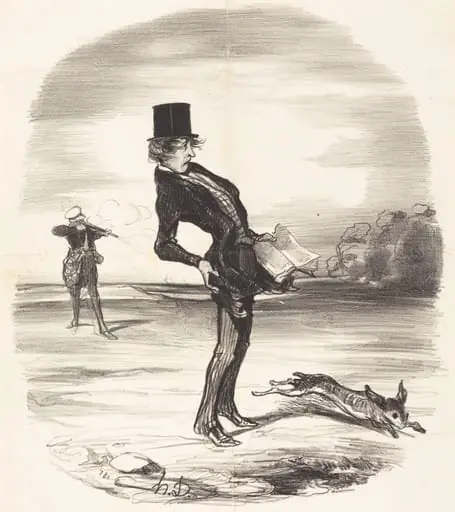 Une Charge déplacée
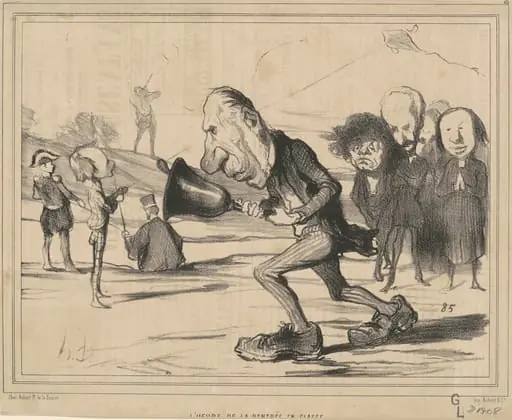 L'heure de la rentrée en classe
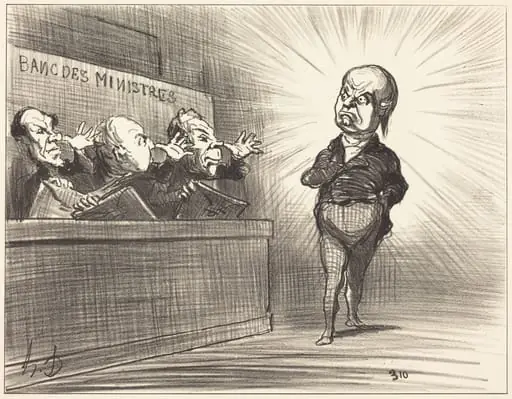 Ce n'est pas encore cette fois-ci...
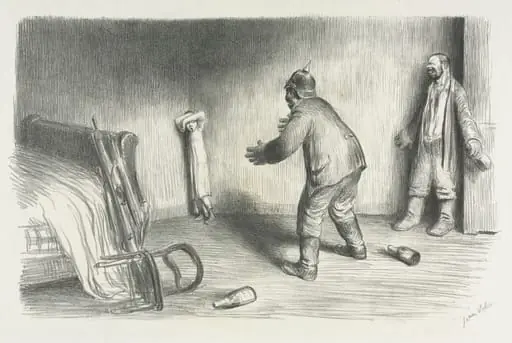
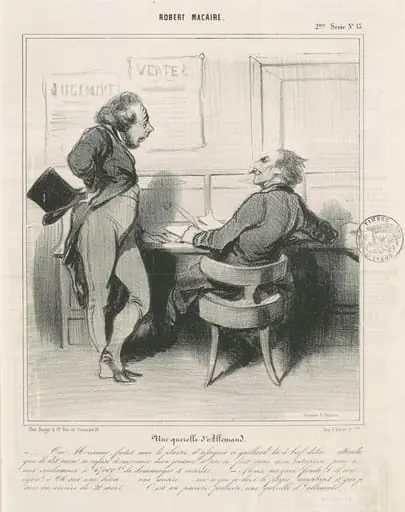 Une querelle d'allemand
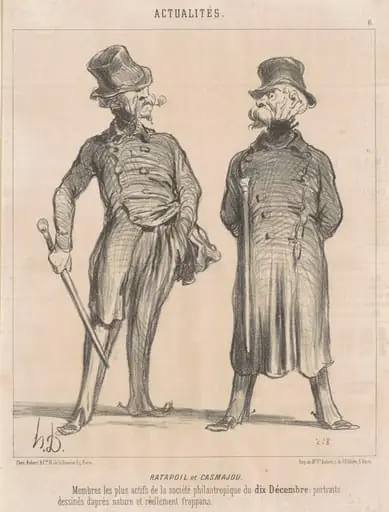 Ratapoil et Casmajou
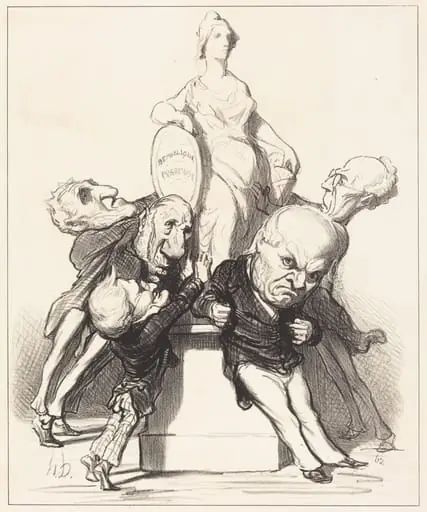 Ils prétendent qu'ils la soutiennent
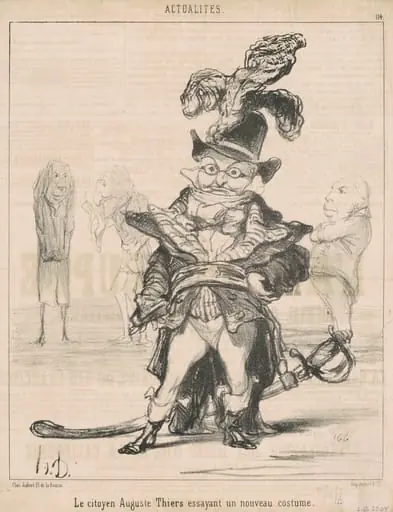 Le Citoyen ... Thiers essayant un nouveau costume
![Aux Champs-Elysées, Ratapoil. Par suite d'une délibération philantropique [sic] du Comité du dix Décembre...à deux sous à club...deux sous..., by Honoré Daumier](https://artifactworldgallery.com/img/honore-daumier--aux-champs-elysees-ratapoil-par-suite-d-une-deliberation-phi--62ca0cc774af3945-w320.webp) Aux Champs-Elysées, Ratapoil. Par suite d'une délibération philantropique [sic] du Comité du dix Décembre...à deux sous à club...deux sous...
Aux Champs-Elysées, Ratapoil. Par suite d'une délibération philantropique [sic] du Comité du dix Décembre...à deux sous à club...deux sous...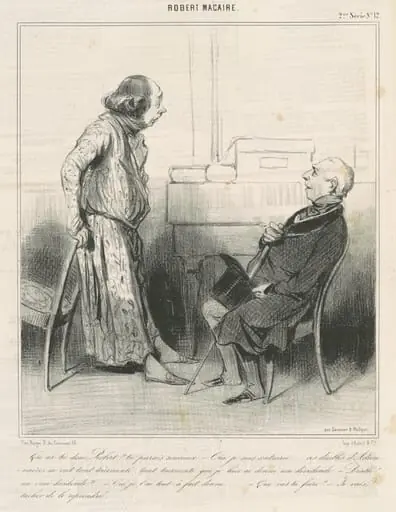 Qu'as-tu donc, Robert? ...
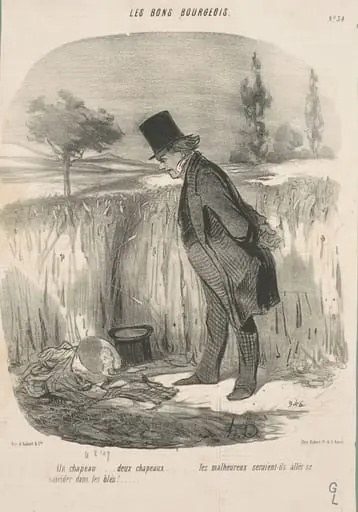 Un chapeau ... deux chapeaux ... les malheureux ...
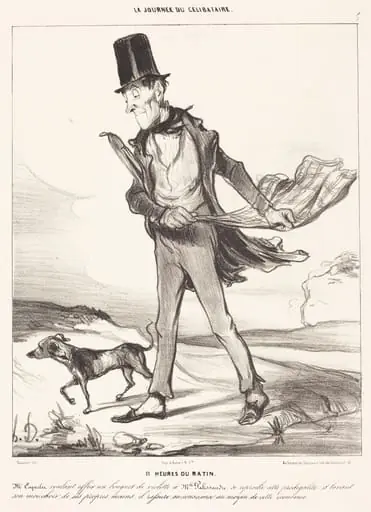 11 heures du matin