Artwork
Busto de niña
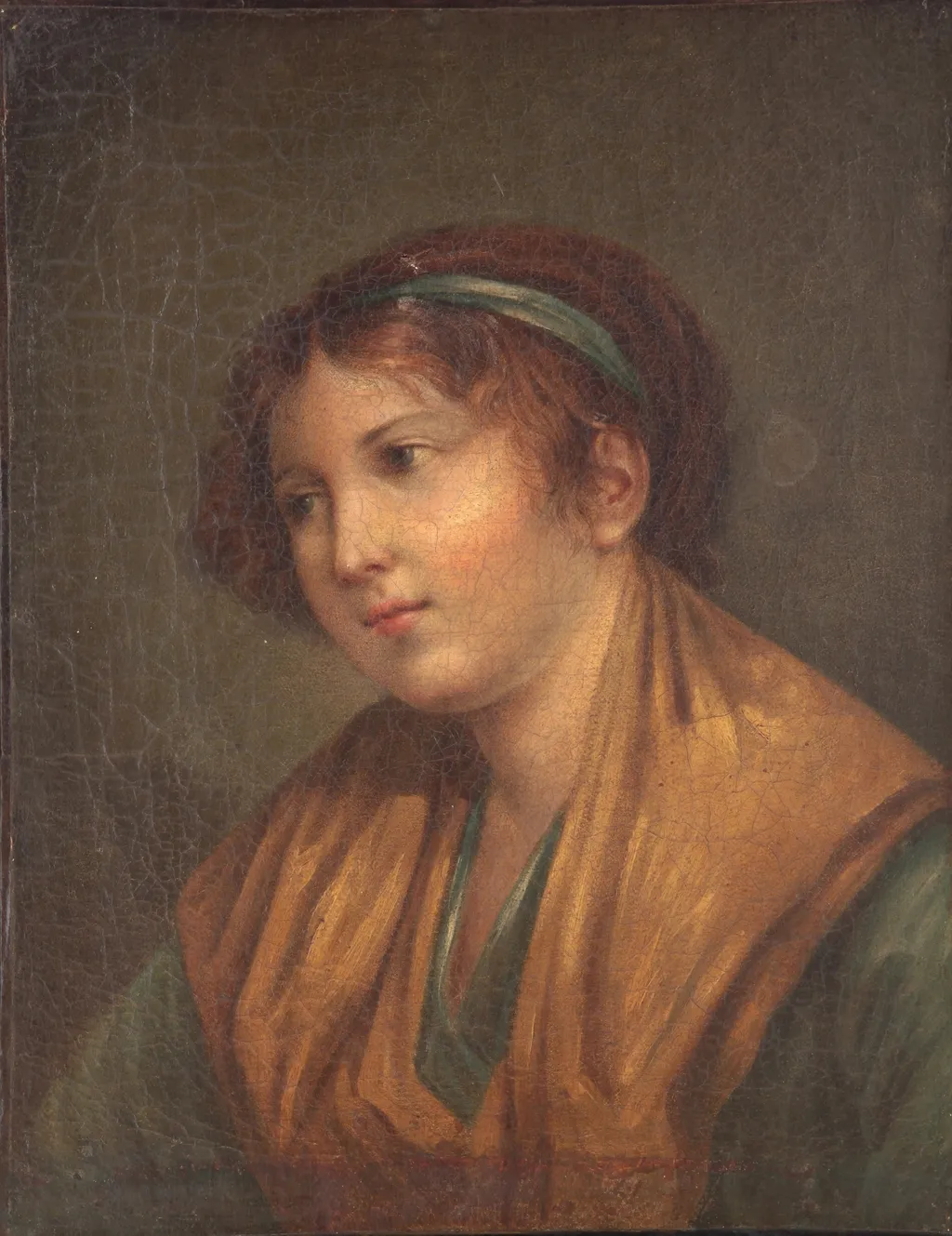
Busto de niña is an oil painting by Jeanne-Philiberte Ledoux. It dates from 1813 and is held in the collection of the National Museum of Fine Arts, Argentina.
About this work
Overview
Painted around 1813, *Busto de niña* is an oil portrait by French artist Jeanne-Philiberte Ledoux, known for her intimate portraiture and miniature works.
Painted around 1813, *Busto de niña* is an oil portrait by French artist Jeanne-Philiberte Ledoux, known for her intimate portraiture and miniature works. The piece captures a young girl in bust-length format, rendered with quiet precision. It resides in the collection of the National Museum of Fine Arts in Buenos Aires, reflecting Ledoux’s presence in early 19th-century French artistic circles through her consistent exhibition at the Paris Salons between 1793 and 1819.
Subject & Meaning
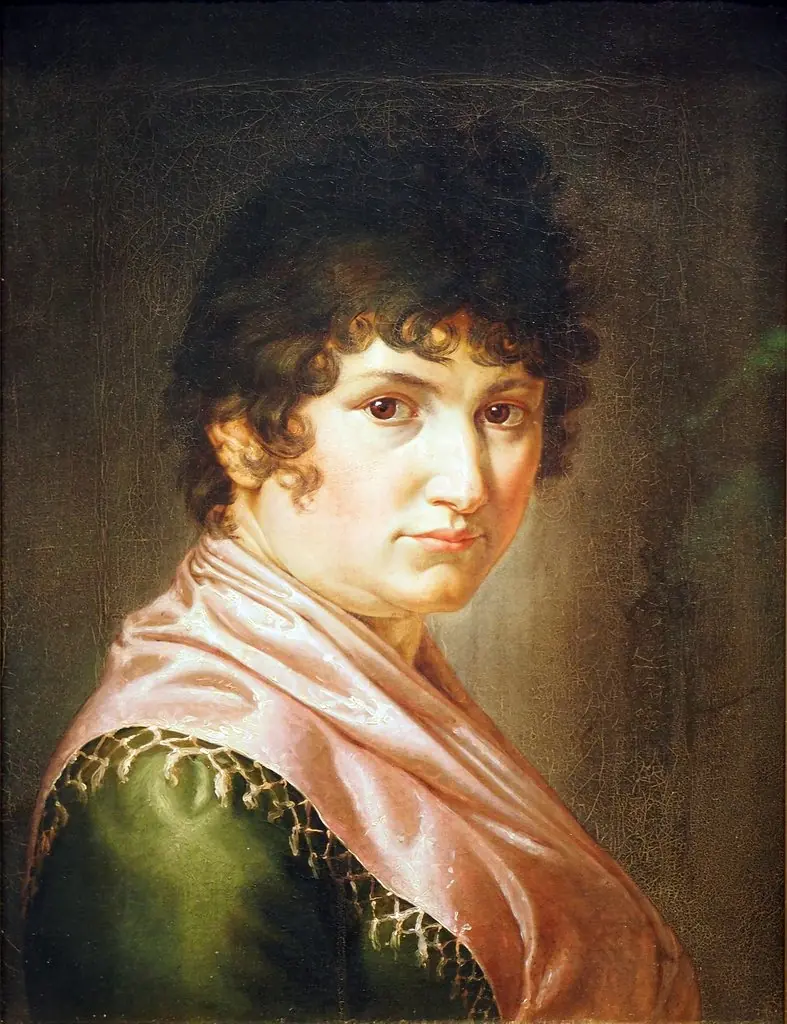
The subject is a young girl, depicted without overt narrative or symbolic context. Her neutral expression and averted gaze suggest introspection rather than performance. The absence of identifiers—name, status, or setting—shifts focus to the quiet dignity of the individual. The painting functions as a personal study, emphasizing presence over story, typical of Ledoux’s approach to portraiture.
Technique & Style
Ledoux employed subtle tonal gradations and restrained brushwork to model the girl’s features. The green headband and top, contrasted with the yellow shawl, are rendered with soft edges, avoiding sharp definition. The muted brown background recedes gently, ensuring attention remains on the figure. The technique reflects a Neoclassical sensitivity to form, tempered by the intimacy characteristic of domestic portraiture of the period.
History & Provenance
The painting entered the collection of the National Museum of Fine Arts in Buenos Aires at an unknown date, likely through acquisition or donation in the late 19th or early 20th century. Its journey from France to Argentina remains undocumented, though its presence there underscores the transatlantic circulation of European academic art during the colonial and post-colonial eras.
Context
Ledoux worked within a tradition of female artists specializing in portraiture during a time when public artistic recognition for women remained limited. Her regular Salon exhibitions indicate a degree of professional acceptance. *Busto de niña* aligns with the era’s preference for restrained, psychologically subtle depictions of individuals, particularly children and women, often intended for private or familial contemplation.
Legacy
Though not widely known today, Ledoux’s body of work contributes to the broader understanding of women’s roles in early 19th-century French art. *Busto de niña* stands as a quiet example of her skill in capturing likeness without theatricality. Its preservation in a major Latin American institution highlights the global reach of modest, non-monumental portraiture from this period.
Own this work as a print
Artist & collection
Artist
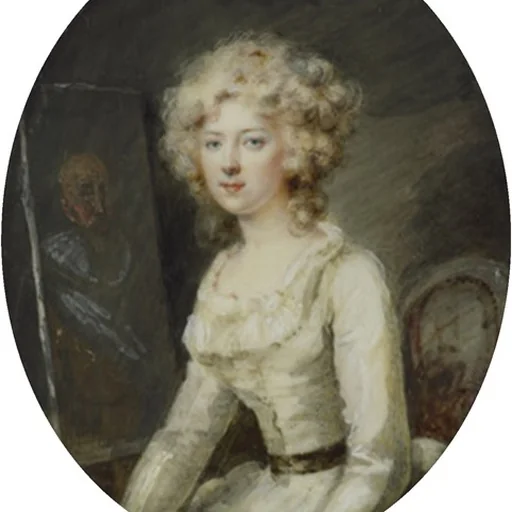
Jeanne-Philiberte Ledoux (1767 – 12 October 1840) was a French painter. Ledoux was born in Paris and took lessons from Jean-Baptiste Greuze. Her work was first seen in public in 1793, when she showed three paintings in…

Museum
National Museum of Fine Arts, Argentina
Continue through works from the same source collection.
 Self-Portrait
 Head of a Young Woman
 Portrait of Tekla Osławska
 Head of a Young Woman
 Portrait of Vincenza Scaccia, the artist's girlfriend
 Portrait of Joanna Dzierzbicka
 Portrait of Wiktoria née Potocka 1.v. Choiseul Gouffier 2.v. wife of general Bakhmatiev
 Portrait of Aniela Nowicka née Popławska
 Portrait of a woman with a veil
 Madame Van Donick
 Pauline Runge, the Artist's Wife
 Den hellige Barbara