Artwork
Portrait de vielles femmes
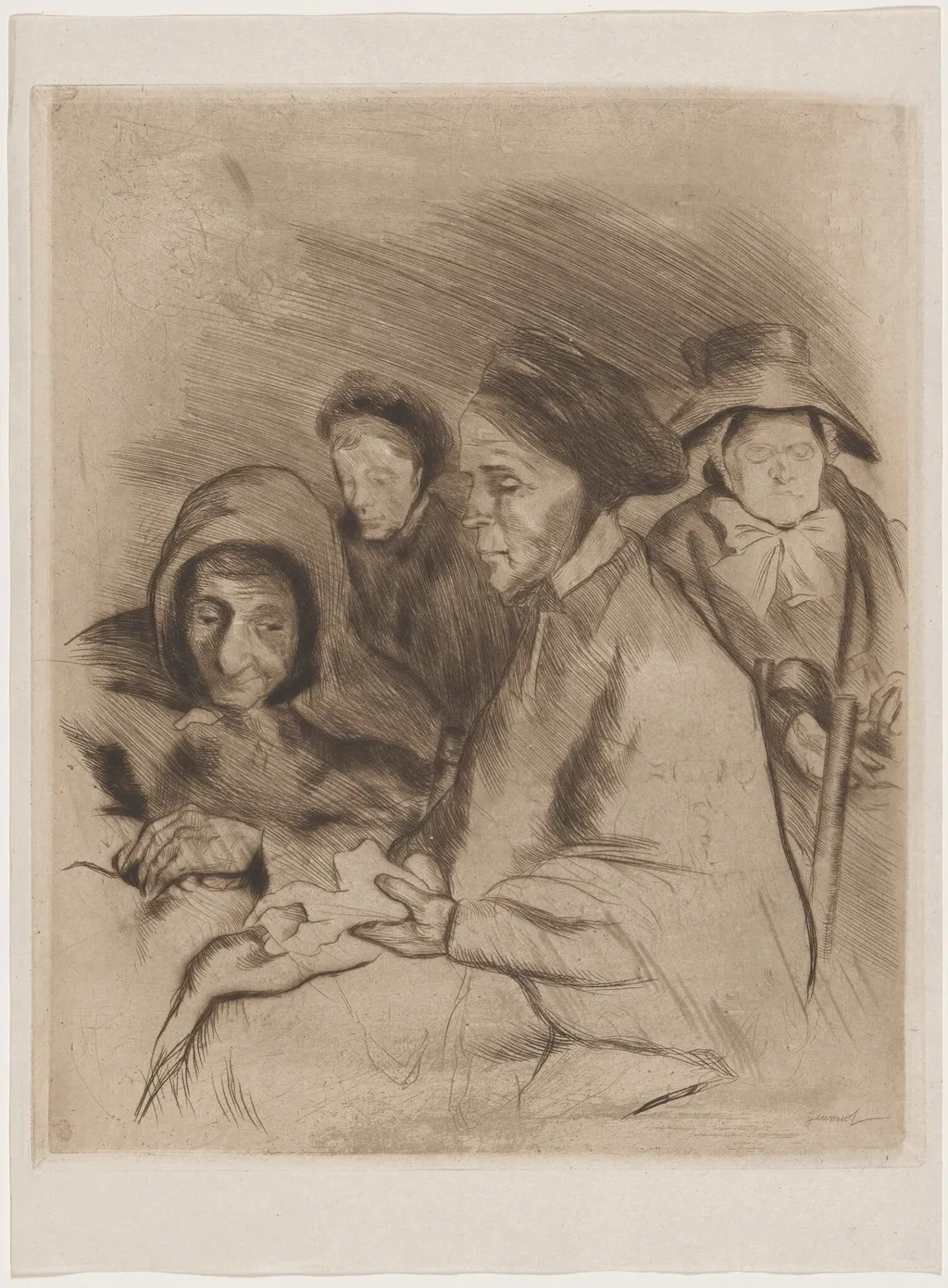
Portrait de vielles femmes is an ink print by the Impressionist artist Georges Jeanniot. It dates from 1895 and is held in the collection of the National Gallery of Art.
About this work
Overview
Georges Jeanniot’s 1895 drypoint, executed in brown on Japan paper, depicts a small gathering of four elderly women. The print’s limited palette and intimate scale focus attention on the figures’ expressions and the subtle interplay of light and shadow.
Subject & Meaning
The composition centers on the women’s shared moment: one holds a folded document, prompting the others to listen attentively. Their weathered faces and subdued attire suggest themes of age, memory, and the quiet significance of personal correspondence.
Technique & Style
Jeanniot employed drypoint, a technique that incises lines directly into the plate, producing rich, velvety burrs that translate into soft, tonal variations on the paper. The artist’s use of chiaroscuro—contrasting dark clothing with illuminated faces—creates depth and a three‑dimensional presence within the flat surface.
History & Provenance
Created in 1895, the print belongs to the later period of Jeanniot’s career, when he explored intimate genre scenes. It was produced on imported Japan paper, a material favored for its smooth surface and ability to render fine drypoint lines.
Context
During the late nineteenth century, French printmakers often turned to everyday subjects, reflecting a broader interest in realism and the lives of ordinary people. Jeanniot’s focus on an elderly female group aligns with contemporary social observations of aging and domestic interaction.
Legacy
While not as widely reproduced as his larger works, this drypoint exemplifies Jeanniot’s skill in capturing nuanced human moments through printmaking, contributing to the appreciation of intimate genre scenes in the French artistic tradition.
Artist & collection

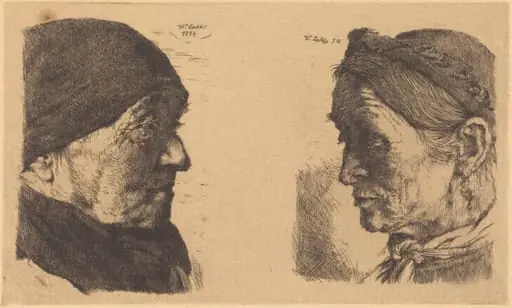 Portrait of an Old Peasant Woman, in Profile to the Right, and Peasant Woman with Closed Eyes
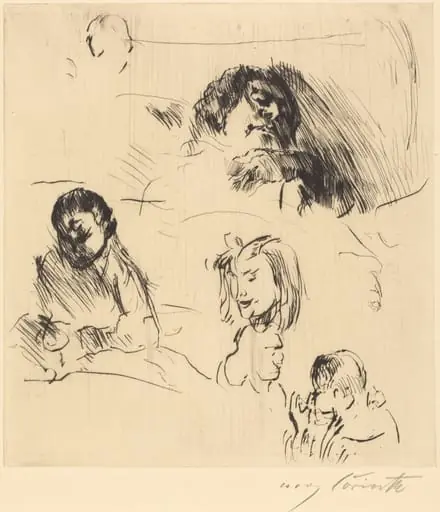 Verschiedene Bilnisstudien (Portrait Sketches)
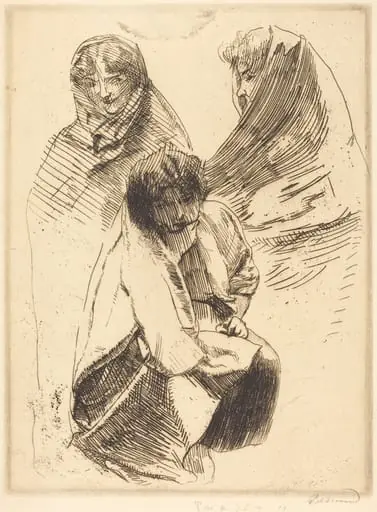 Three Veiled Women (Trois femmes voilées)
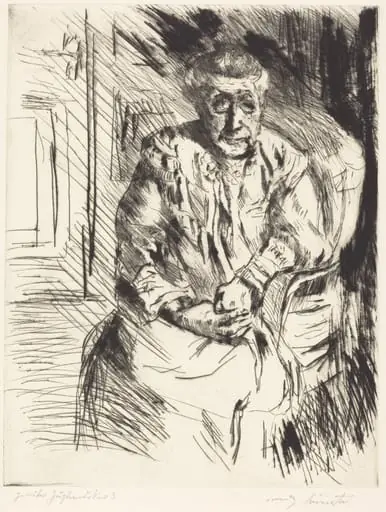 Ma Belle Mere (Mother-in-Law)
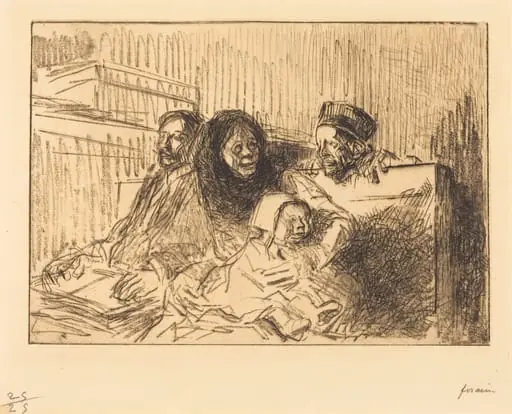 Témoins à l'audience (2e planche) (Evidence at the Hearing) (second plate)
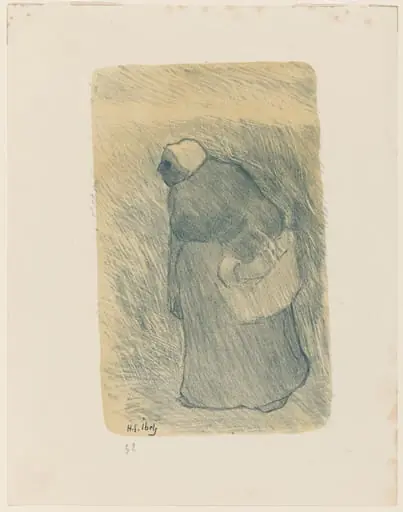 Paysanne avec pannier
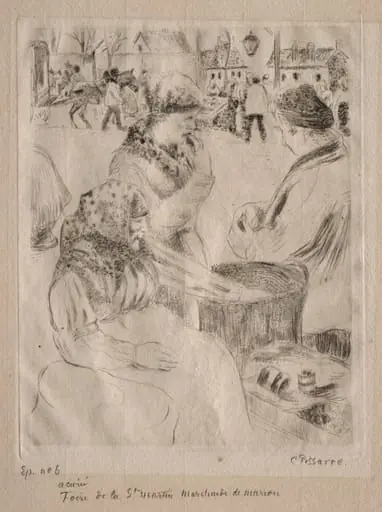 Chestnut Vendor, St. Martin's Day Fair (Pontoise)
 The Egg Merchants (1st Plate)
 The Music Room
 The Sick Mother (La mère malade)
 Three Figures