Artwork
Mary Magdalene
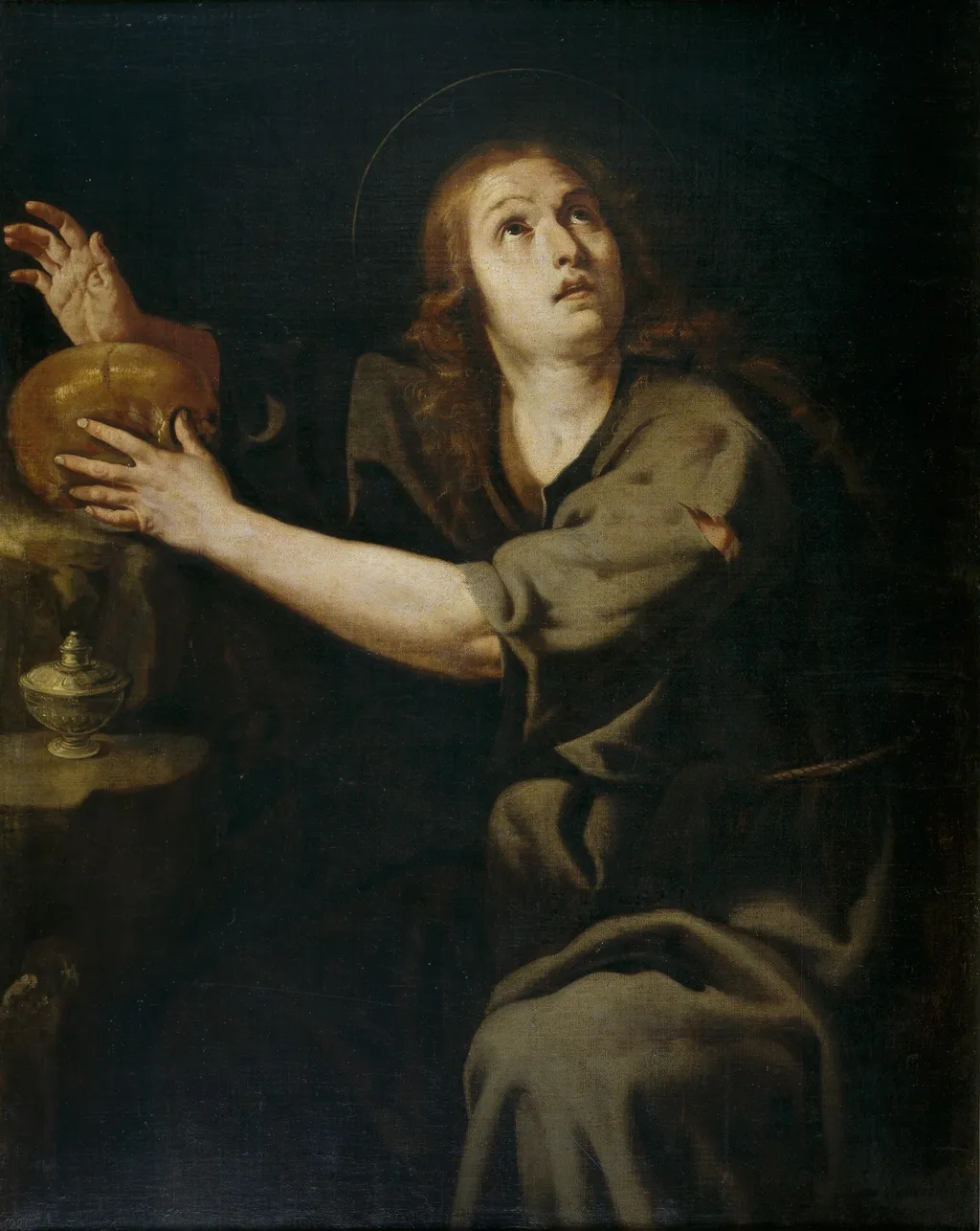
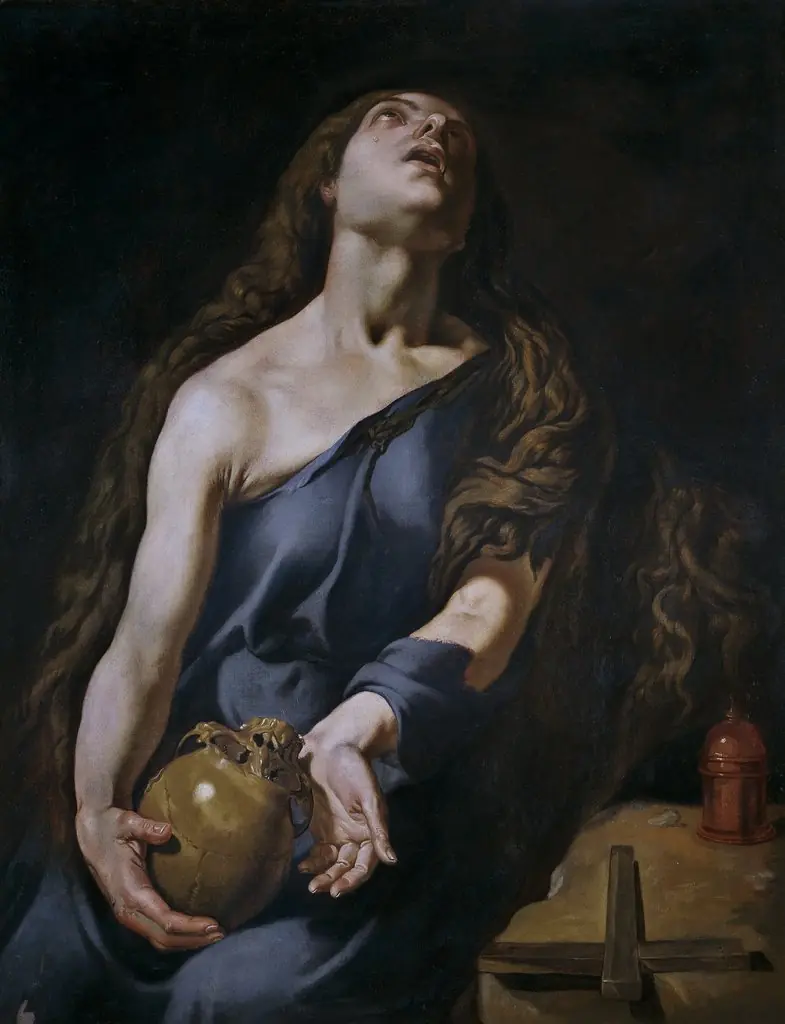
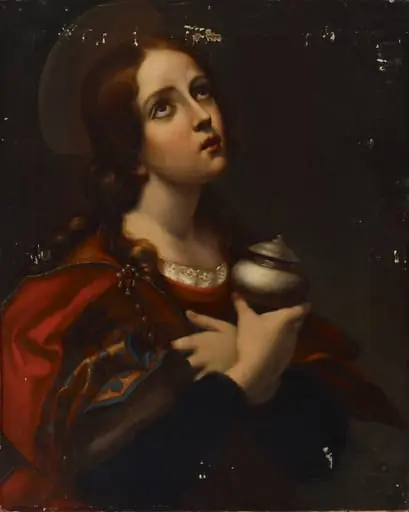
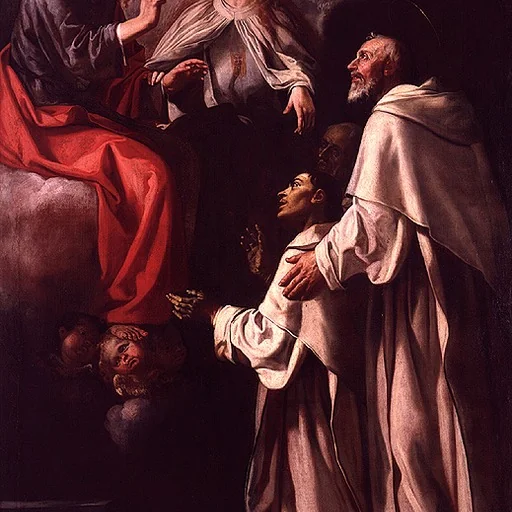
Mary Magdalene is an oil painting by the Early Baroque Italian artist Jerónimo Jacinto de Espinosa. It dates from 1640 and is held in the collection of the Museo del Prado.
About this work
Overview
Mary Magdalene is a 1640 oil painting by Jerónimo Jacinto de Espinosa, a Spanish Baroque artist. The work is part of the Museo del Prado's collection.
Subject & Meaning
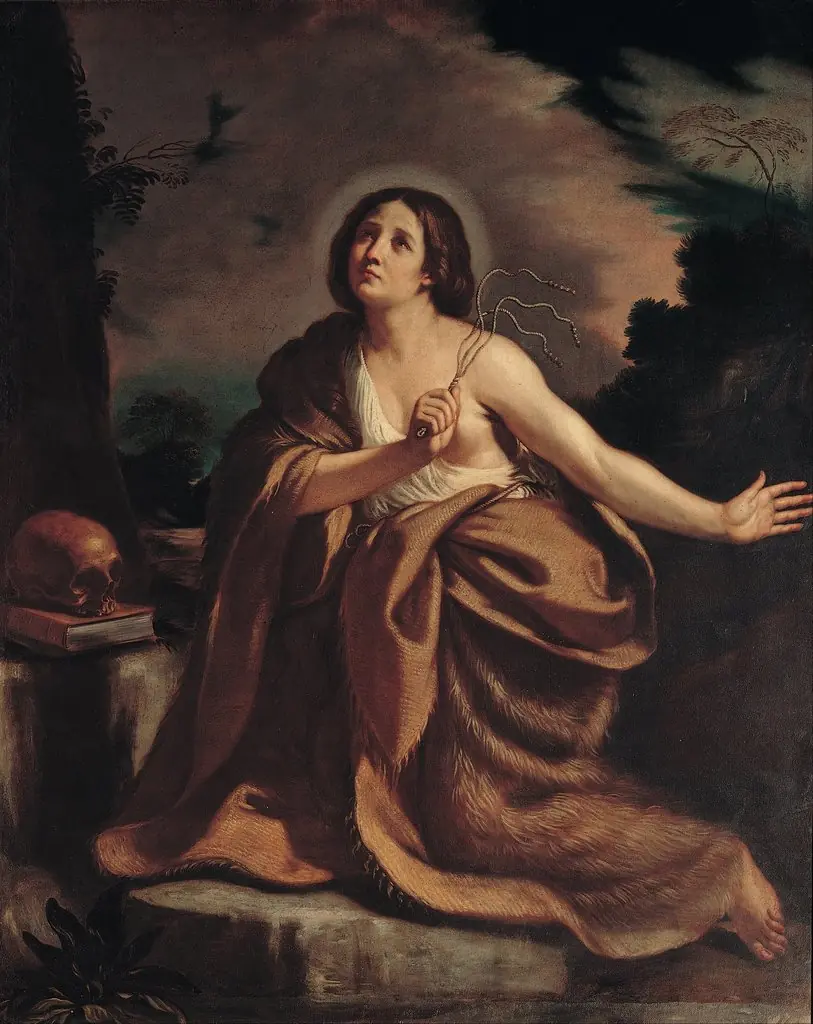
The painting portrays Mary Magdalene, a prominent religious figure, in a contemplative state. Her upward gaze and expression suggest introspection or surprise, inviting interpretation of her emotional state.
Technique & Style
Espinosa employed chiaroscuro, characteristic of the Baroque period, using a dark background to contrast with the bright, highlighted face and arms of Mary Magdalene. Deep shadows accentuate her expression.
History & Provenance
Created in 1640, the painting reflects 17th-century Spanish religious art conventions. It is attributed to Jerónimo Jacinto de Espinosa, son of a painter, and is now held in the Museo del Prado's collection.
Context
Although born in 1600, Espinosa's family moved to Valencia in 1612, influencing his artistic development within the Spanish Baroque tradition, distinct from the Italian Baroque movement he initially worked within.
Legacy
While specific impact details are scarce, *Mary Magdalene* remains a representative example of 17th-century Spanish Baroque religious art, characterized by its use of chiaroscuro and emotive portrayal of a biblical figure.
Own this work as a print
Artist & collection
Artist
Jerónimo Jacinto de Espinosa (18 July 1600 – 20 February 1667) was a Spanish Baroque painter.