Artwork
Untitled
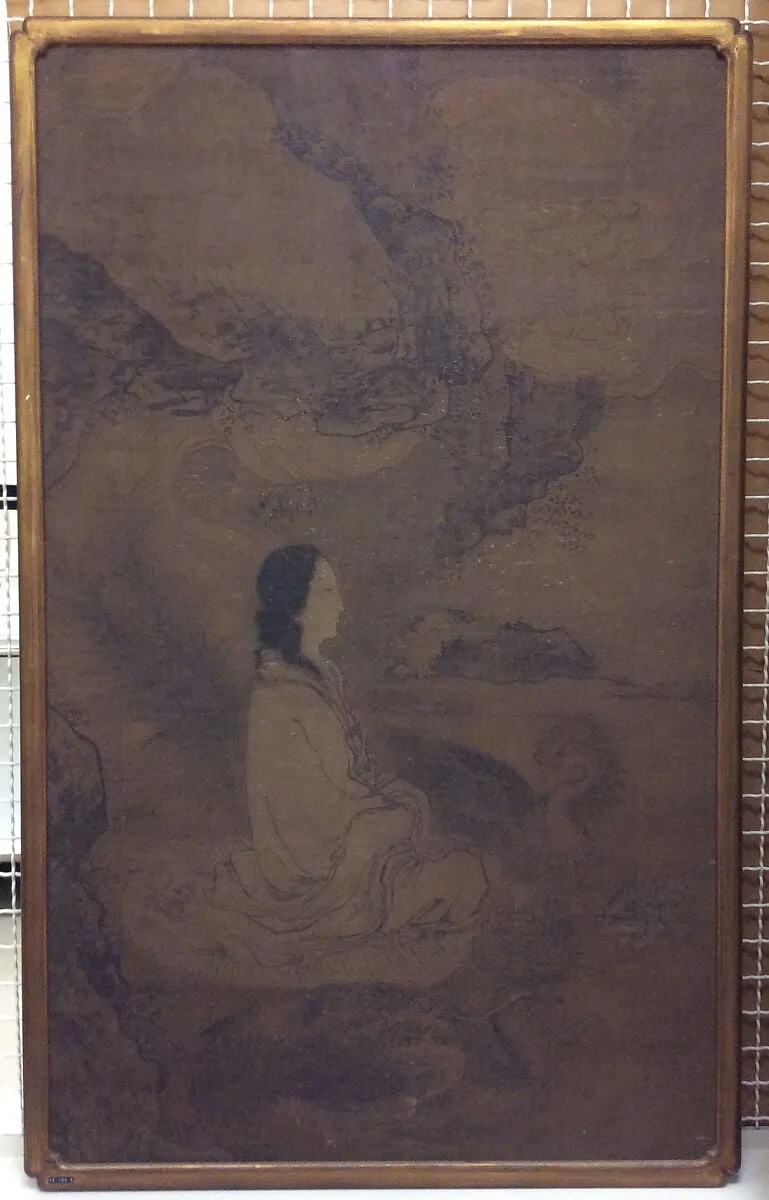
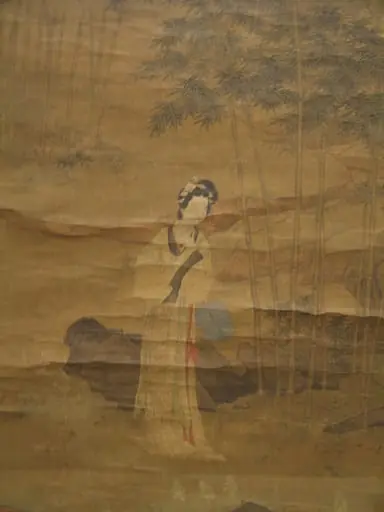
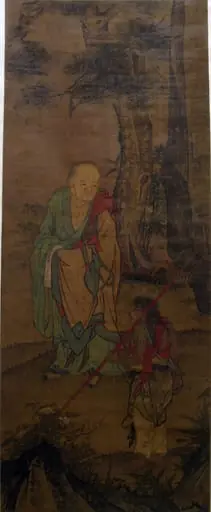
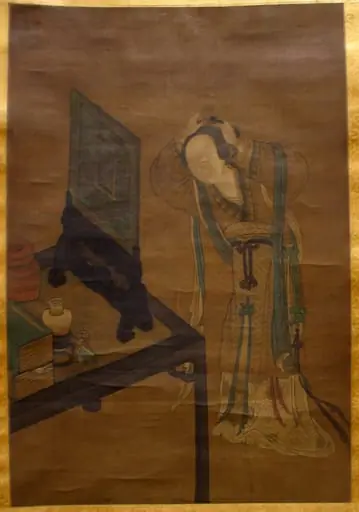
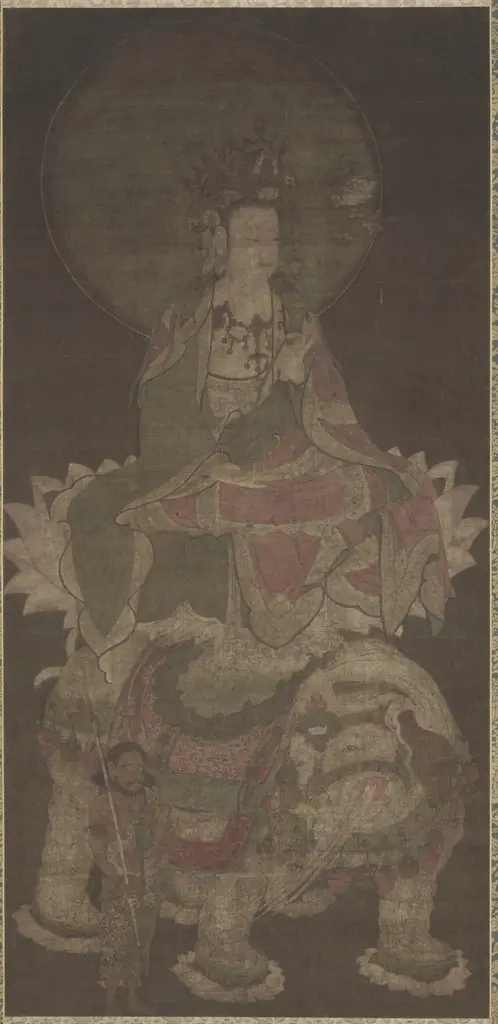
Untitled is an ink painting by the Ming dynasty painting artist Jiang Feng. It dates from 1639 and is held in the collection of the Metropolitan Museum of Art.
About this work
The artist used thin, careful lines to show her robe’s folds, almost like stitching.
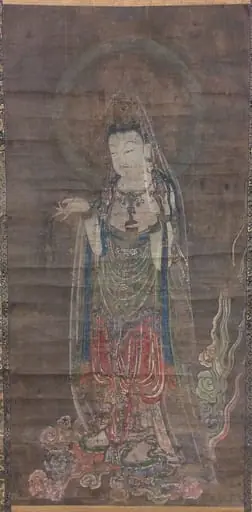
A woman in a long red robe stands under a pine tree, holding a scroll. Birds flutter above her head, and a small dog sits at her feet. The scene feels quiet, like a private moment.
This scroll was made in China around 1300, when most paintings showed men. Women were rarely the main subject—here, she’s alone, calm, and important. The artist used thin, careful lines to show her robe’s folds, almost like stitching.
To see how other artists painted women in old China, look up *women, china, woman*.
Overview
Untitled is a hanging scroll painted in ink and color on silk by Jiang Feng in 1639. The work measures a modest size typical of private devotional pieces and presents a solitary female figure in a tranquil outdoor setting. The composition balances delicate brushwork with subtle coloration, creating a serene atmosphere that invites quiet contemplation.
Subject & Meaning
At the center stands a woman dressed in a flowing red robe, her posture calm as she holds an unfurled scroll. A pine tree arches overhead, while birds glide above and a small dog rests at her feet. The arrangement suggests a moment of personal reflection or scholarly pursuit, emphasizing the figure’s inner poise rather than narrative action.
Technique & Style
Jiang Feng employs fine, controlled lines to render the folds of the robe, a technique that evokes the texture of stitching. The ink washes are applied with restrained brushstrokes, allowing the silk surface to retain a luminous quality. Color is introduced sparingly, accentuating the red garment and the muted greens of the pine without overwhelming the composition.
History & Provenance
The scroll originates from mid‑17th‑century China, a period when portraiture of women was uncommon in elite painting. Its survival in a private collection suggests it may have been commissioned for personal enjoyment rather than public display. The piece has remained largely undocumented until recent scholarly attention highlighted its rarity.
Context
During the early Qing era, most Chinese paintings focused on male scholars, officials, or mythological subjects. Jiang Feng’s decision to foreground a solitary woman marks a notable departure from prevailing conventions, reflecting a subtle shift toward acknowledging female presence within the artistic canon of the time.
Artist & collection