Artwork
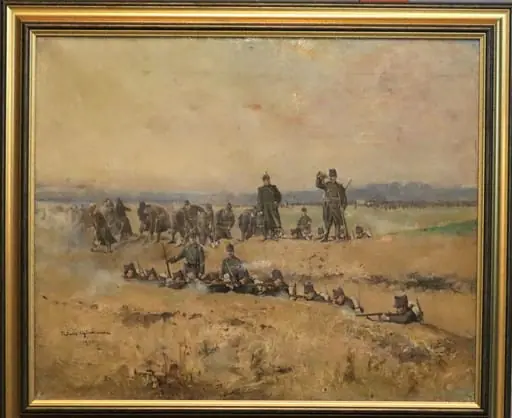
Grup de dorobanți pe poziție de atac
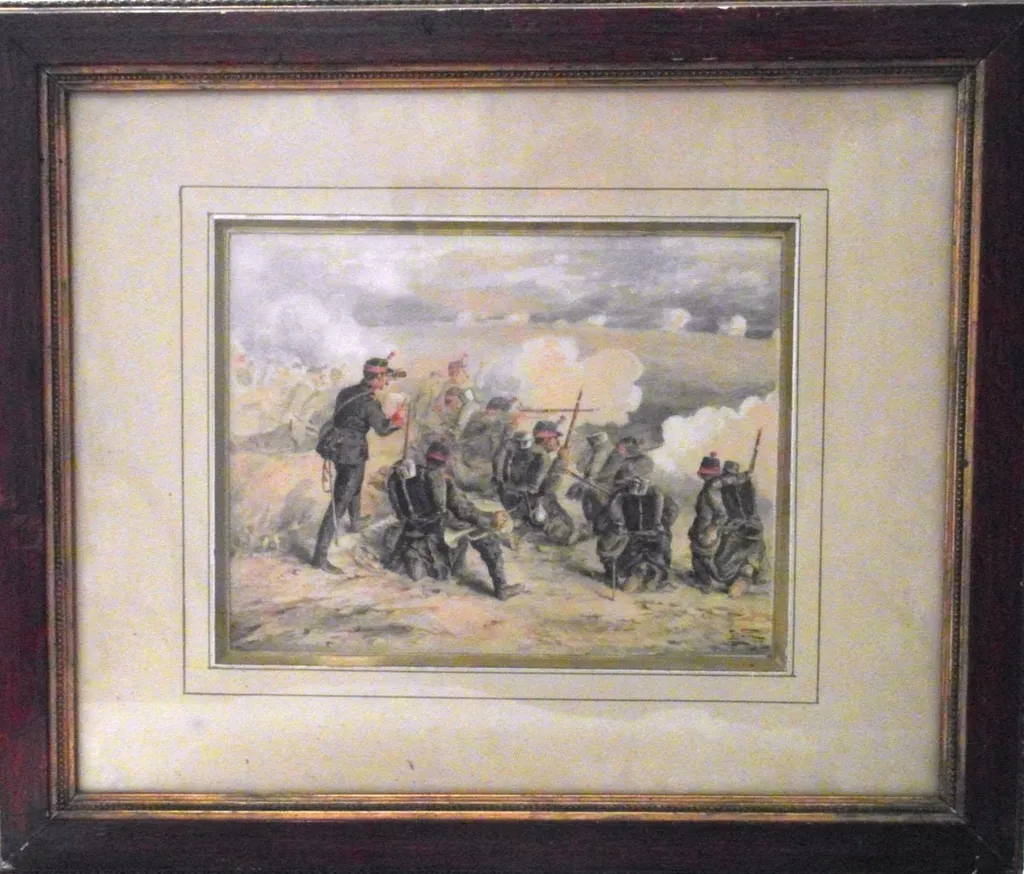
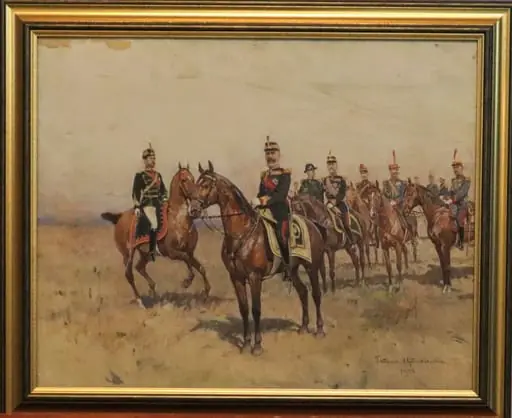
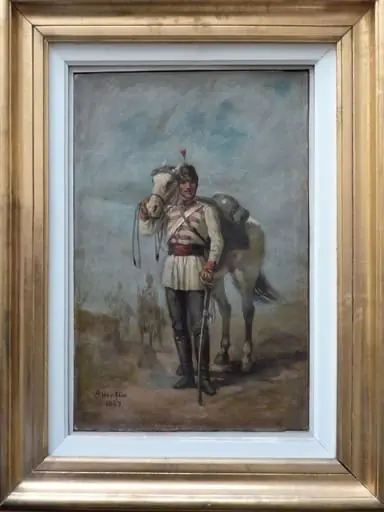
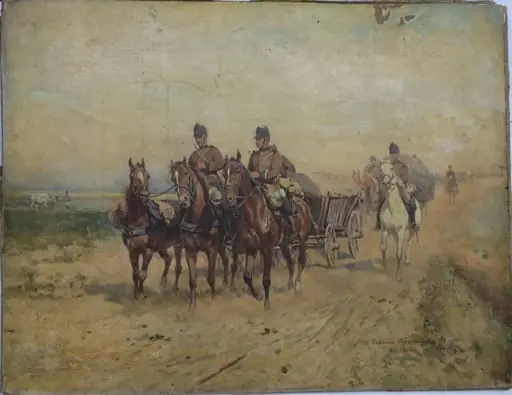
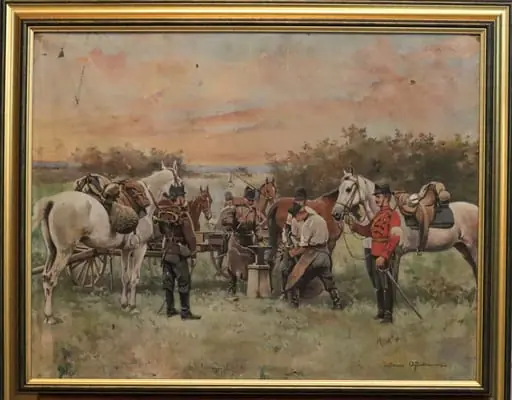
Grup de dorobanți pe poziție de atac is an unspecified painting by the Biedermeier artist Constantin Jiquidi. It dates from 1891 and is held in the collection of the National Museum of Romanian History.
About this work
Overview
The scene is stripped of narrative detail, focusing instead on the physical presence and discipline of the unit against a hazy, smoke-filled horizon.
Painted in 1891 by Constantin Jiquidi, this image captures a moment of military readiness among Romanian dorobanți troops. The composition centers on a group of soldiers arranged in a tactical formation, some kneeling, others standing, all poised for action. The scene is stripped of narrative detail, focusing instead on the physical presence and discipline of the unit against a hazy, smoke-filled horizon.
Subject & Meaning
The dorobanți, historically elite infantry and border guards, are depicted not in the heat of combat but in the tense pause before it. Their posture suggests vigilance and coordination, reflecting their role as disciplined defenders. The absence of identifiable leaders or dramatic action shifts focus to collective readiness, emphasizing duty over heroism. The somber tone underscores the gravity of military service in late 19th-century Romania.
Technique & Style
Jiquidi employs muted earth tones and soft atmospheric perspective to convey a sense of impending conflict. Brushwork is restrained, with careful attention to the texture of uniforms and the weight of rifles. The sky is rendered in thin washes of gray, blending with rising smoke to obscure the horizon. This deliberate lack of clarity enhances the painting’s sense of uncertainty and confined space, typical of military genre painting of the period.
History & Provenance
Created during a period of national consolidation in Romania, the work likely emerged from Jiquidi’s engagement with military themes common in academic art circles. While its early ownership is undocumented, it aligns with state-sponsored efforts to visually commemorate national defense forces. The painting remained within Romanian collections, possibly displayed in military or educational institutions before entering public archives.
Context
In the decades following Romanian independence, visual representations of soldiers served to reinforce civic identity. Jiquidi’s depiction reflects broader trends in Eastern European art, where military subjects were treated with sober realism rather than romantic glorification. The dorobanți, though no longer frontline troops by 1891, retained symbolic value as embodiments of national resilience and tradition.
Legacy
The painting contributes to a modest but persistent corpus of Romanian military genre art from the late 19th century. It does not seek grandeur but instead offers a quiet, observational record of soldierly routine. Its preservation provides insight into how national institutions used visual culture to normalize and dignify military service, influencing later generations of Romanian painters focused on historical and civic themes.
Artist & collection
Artist
Romanian printmaker and painter Constantin Jiquidi worked in the late 1800s, turning out prints and scenes of everyday life.