Artwork
Portrait of Begam Samru
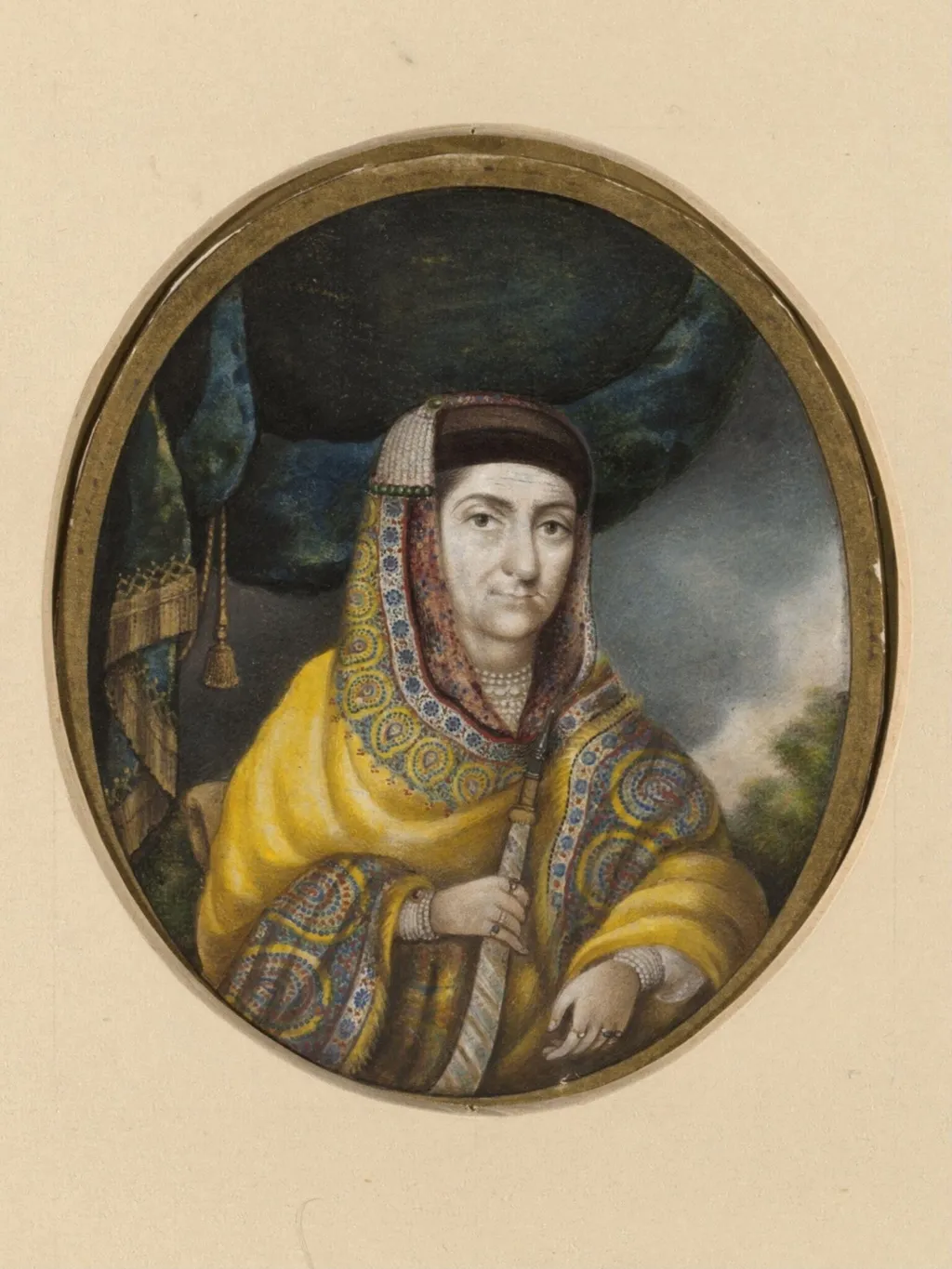
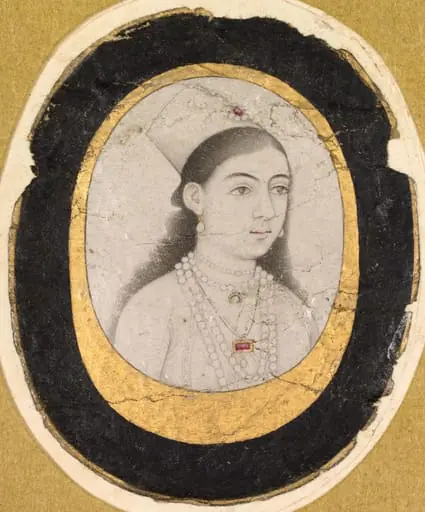
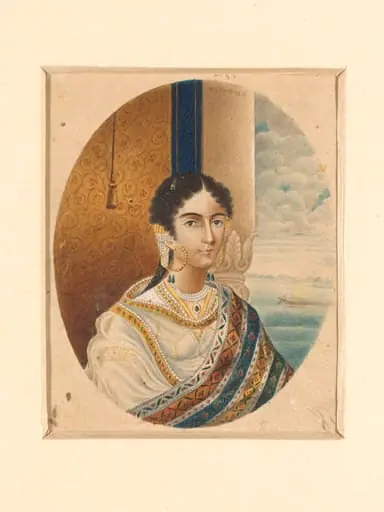
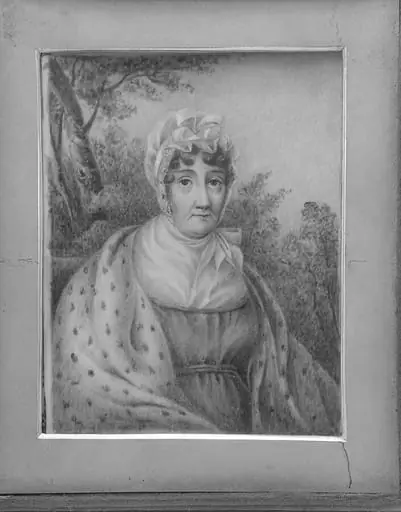
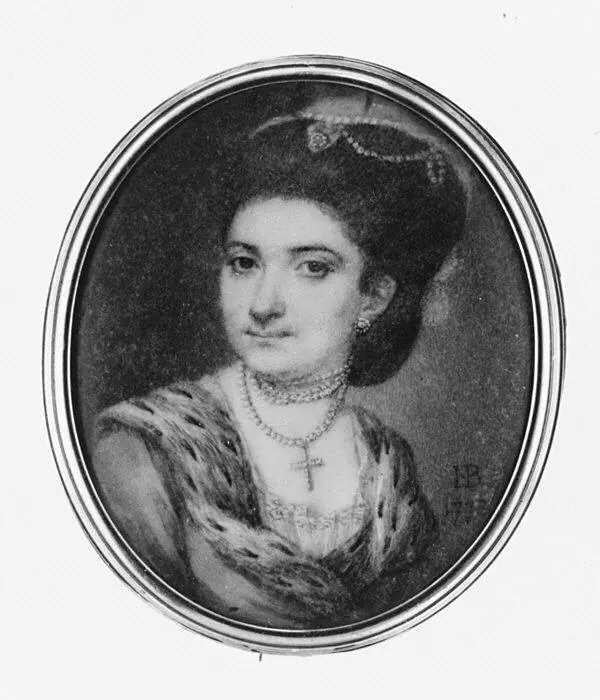
Portrait of Begam Samru is a paint painting by the Patna School of Painting artist Jivan Ram. It dates from 1830 and is held in the collection of the Victoria and Albert Museum. This portrait, created around 1830 by Delhi-based artist Jiwan Das, depicts Begam Samru in her later years.
About this work
Overview
Executed in the Company painting style, it blends Indian miniature traditions with European naturalism, reflecting the cultural intersections of colonial India.
This portrait, created around 1830 by Delhi-based artist Jiwan Das, depicts Begam Samru in her later years. Executed in the Company painting style, it blends Indian miniature traditions with European naturalism, reflecting the cultural intersections of colonial India. Commissioned likely by European patrons, the work captures a figure of extraordinary influence, whose life defied conventional social boundaries of the time.
Subject & Meaning
Begam Samru, originally a dancer from Kashmir, rose to power after the death of her husband, Walter Reinhardt, a European mercenary who had built a private army in northern India. She inherited his military force, commanded troops in battle, and governed the fiefdom of Sardhana. The portrait’s composed demeanor and regal attire convey her authority and status, marking her transformation from marginal origins to political and economic prominence in a male-dominated world.
Technique & Style
Jiwan Das employed delicate brushwork and muted color palettes typical of Delhi Company paintings, combining Indian detailing with Western spatial depth and realistic portraiture. The figure is seated in a European-style chair, rendered with attention to texture and volume, while the background remains softly blurred, focusing attention on the subject. The lighting is even, avoiding dramatic contrasts, reflecting a restrained aesthetic favored by British patrons seeking recognizable yet culturally hybrid imagery.
History & Provenance
The painting was made near the end of Begam Samru’s life, when she was nearly eighty and had converted to Christianity. She had established a church in Sardhana and maintained her military and administrative authority under British oversight. Though the painting’s exact commissioning context is undocumented, its existence suggests continued recognition of her status by colonial elites, even as her power waned with age and shifting political alliances.
Context
Company paintings emerged as a distinct genre in the late 18th and early 19th centuries, produced by Indian artists for European residents of the subcontinent. These works served both as souvenirs and as visual affirmations of colonial identity. Begam Samru’s portrait stands out for depicting a non-European woman of high rank, challenging typical colonial representations that marginalized indigenous leadership, particularly female authority.
Legacy
Begam Samru remains one of the few Indian women of her era to command a standing army and rule a territory independently. Her portrait endures as a rare visual record of female political agency in colonial India. While Company paintings often reinforced colonial hierarchies, this work quietly subverts them by centering a woman whose life transcended the roles assigned to her by birth and gender.
Artist & collection
Artist
Jiwan Ram (fl. 1820 – c. 1850) was an Indian artist active in the 19th century. He was a Delhi-based painter who worked with oil-on-canvas techniques but was a versatile artist who could work in other methods and…