Artwork
Jewel Portrait of a Young Girl
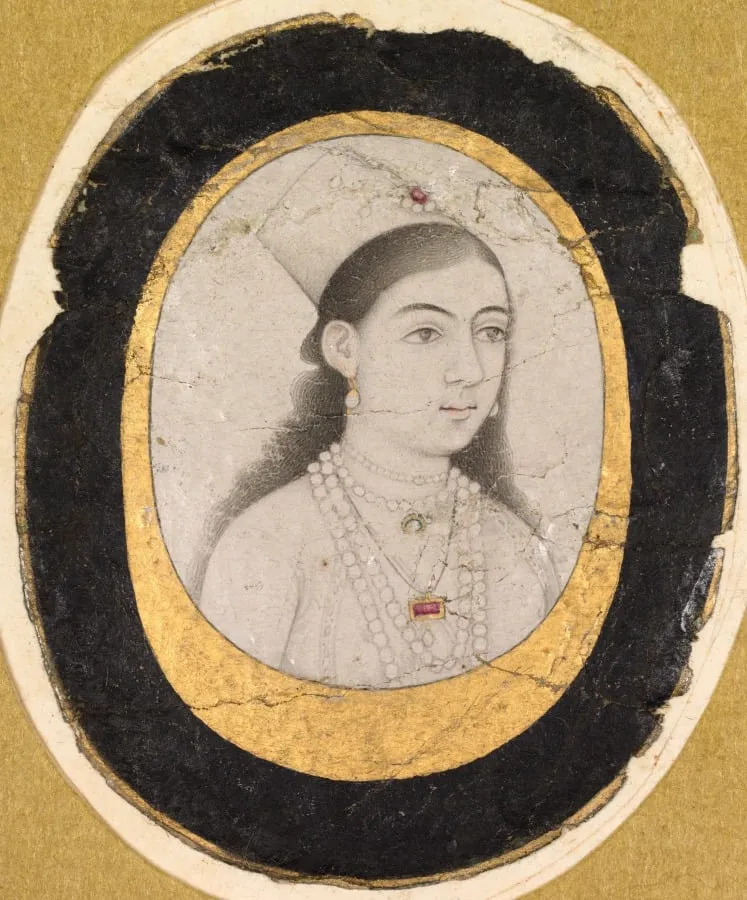
Jewel Portrait of a Young Girl is an unspecified painting by the Baroque artist Unknown. It dates from 1660 and is held in the collection of the Cleveland Museum of Art. This miniature painting depicts a young girl wearing a distinctive chaghtai cap, rendered with delicate detail on a jewel-encrusted surface.
About this work
You see a small, careful drawing of a young girl in a red cap, her face half-lit, half in shadow.
You see a small, careful drawing of a young girl in a red cap, her face half-lit, half in shadow. Tiny white dots—like stars—sparkle on her dark clothes.
This is a Mughal jewel portrait, made in 17th-century India. Most Mughal paintings of women show ideal beauty, not real people. But this girl looks like herself, not a perfect type. That makes scholars think she might have been someone important, maybe even royal.
To see more real faces from this time, look up subject: india, mughal, 17th century.
Overview
This miniature painting depicts a young girl wearing a distinctive chaghtai cap, rendered with delicate detail on a jewel-encrusted surface. Executed in the 17th‑century Mughal tradition of courtly portraiture, the work measures only a few centimeters and combines fine brushwork with the sparkle of embedded white flecks that suggest stars on her dark garments.
Subject & Meaning
Unlike many Mughal depictions of women that present an idealized standard of beauty, the girl’s features are rendered with individual specificity, suggesting a likeness of a real person rather than a generic study. Scholars therefore infer that she may have belonged to a royal or aristocratic household, and the portrait likely served a personal, sentimental purpose rather than a public display of status.
Technique & Style
The artist employed a restrained palette, contrasting a half‑lit face with deep shadow to model the features, while the red cap provides a focal point. Minute white pigment particles are applied to the clothing, creating a subtle glitter that imitates jeweled embellishment, a hallmark of Mughal jewel portraits that blended painting with precious materials.
History & Provenance
Created in 17th‑century India under the Mughal empire, the piece reflects the court’s patronage of miniature painting and the practice of gifting intimate portraiture. Its survival as a private object, rather than a public emblem, indicates it was likely exchanged within elite circles, perhaps as a keepsake among family members or close associates.
Artist & collection

 Domestic Scene
 Giacomo and Cardinal Marco, investing Andrea, Abbot of San Zeno, with his Benefice
 The Nymph of Fontainebleau
 Portrait of a Woman
 Madonna and Child with Saints in the Enclosed Garden
 Venus and Minerva
 Family Group of Four on Sofa
 Wall painting from Room H of the Villa of P. Fannius Synistor at Boscoreale
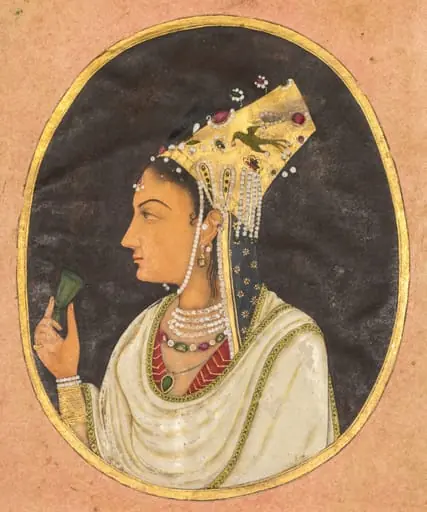 Oval portrait of a woman in a Chaghtai hat
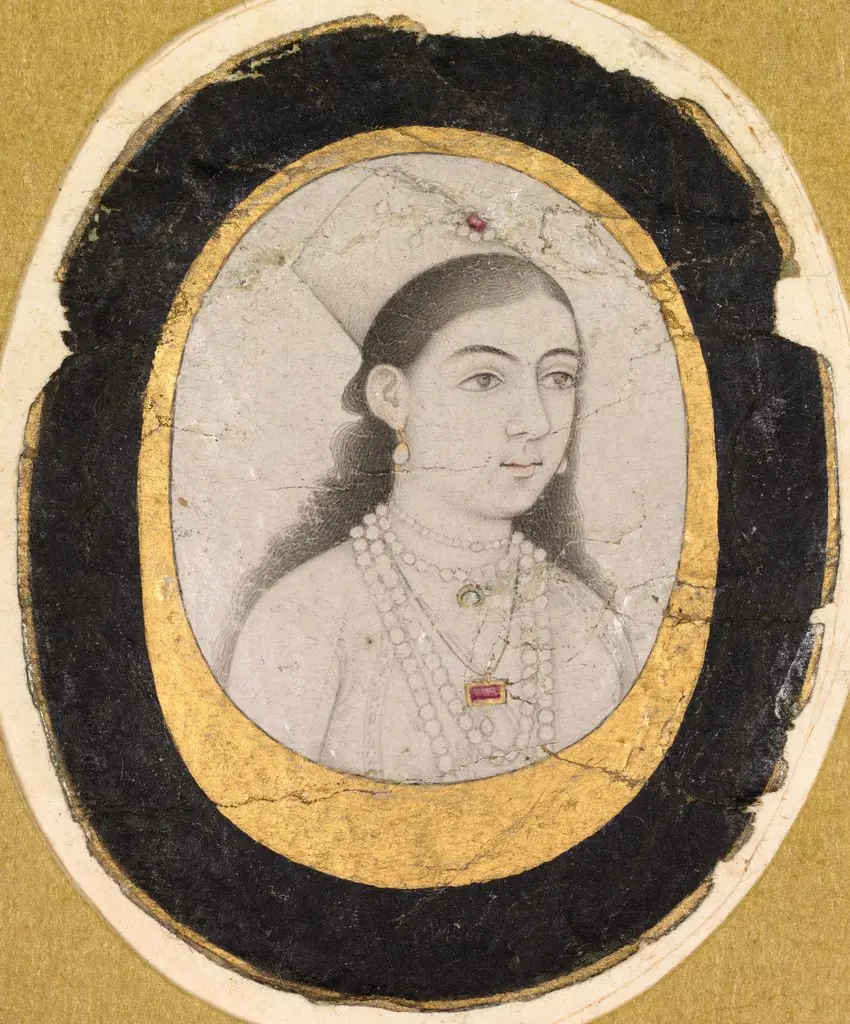 Jewel Portrait of a Young Girl
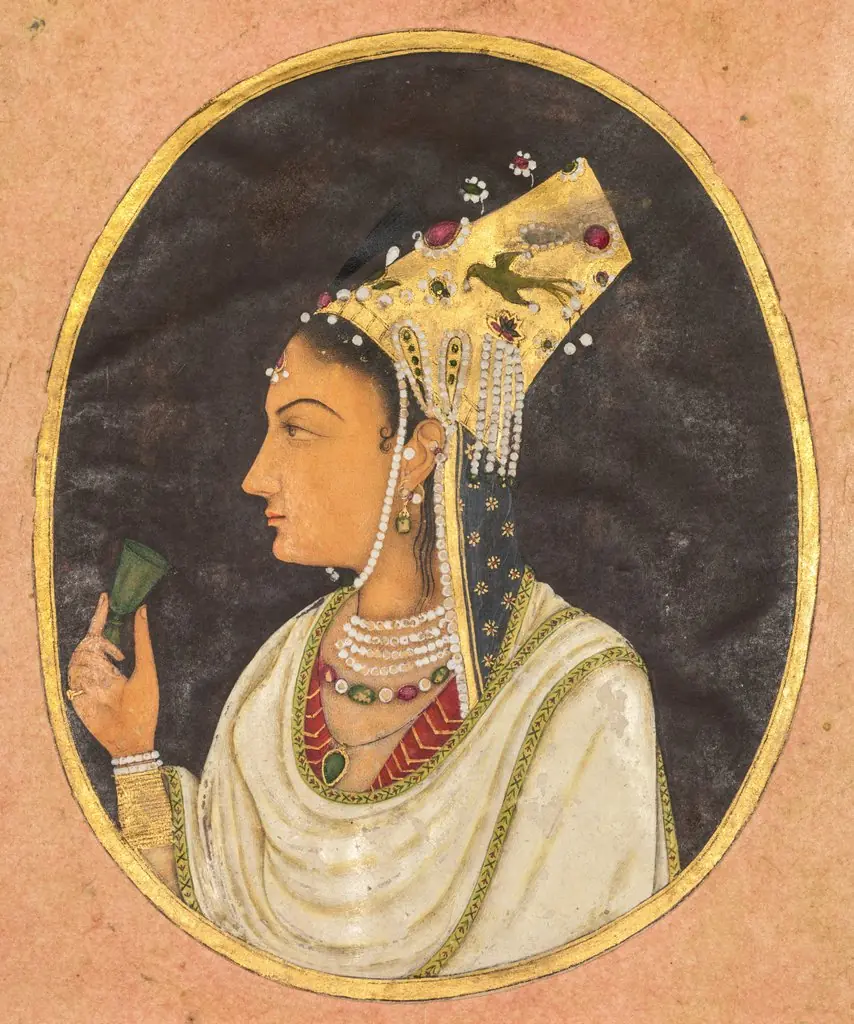 Oval portrait of a woman in a Chaghtai hat
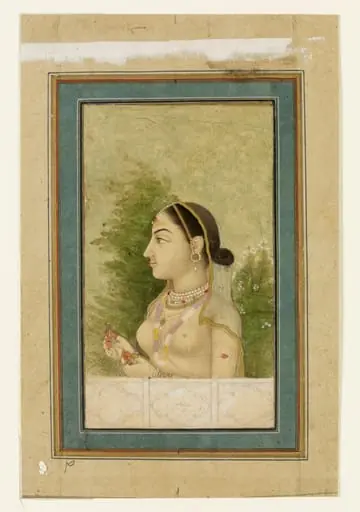 Untitled
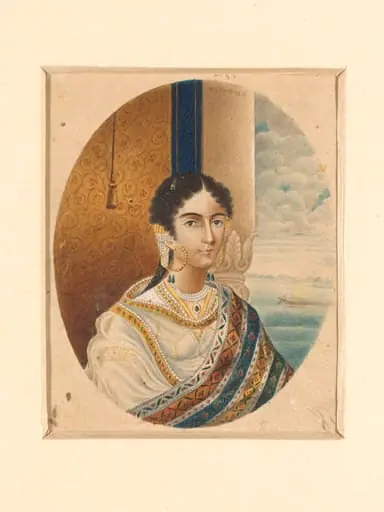 Head and shoulders portrait of an Indian lady
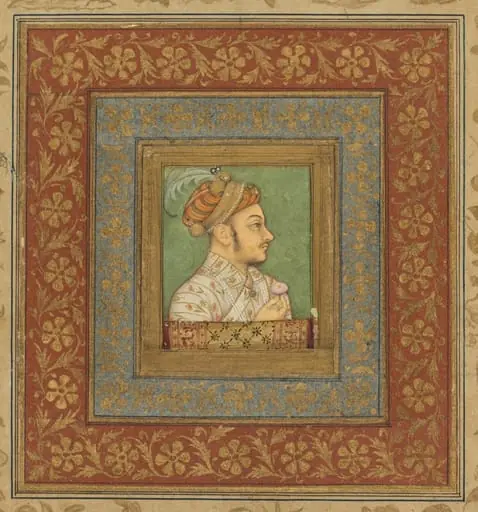 Portrait of Murad Bakhsh (1624–61)
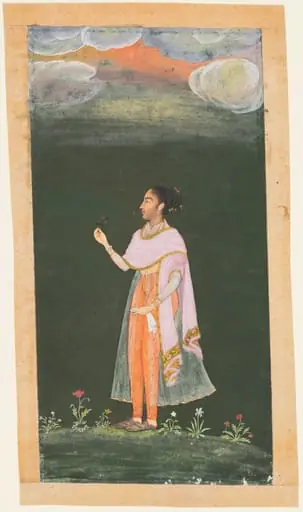 Royal Woman Holding a Flower
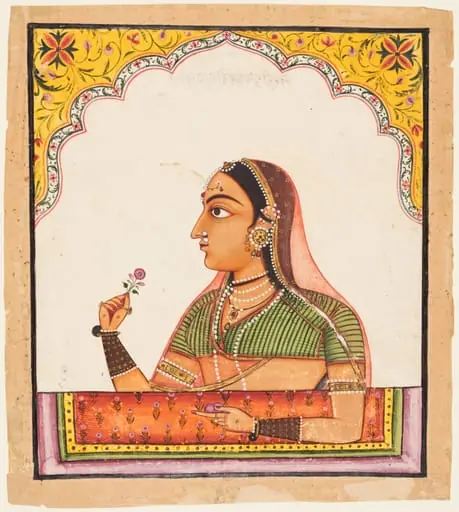 Noblewoman at a Jharokha Window Holding a Rose, from a Portraits of Women series