Artwork
Head and shoulders portrait of an Indian lady
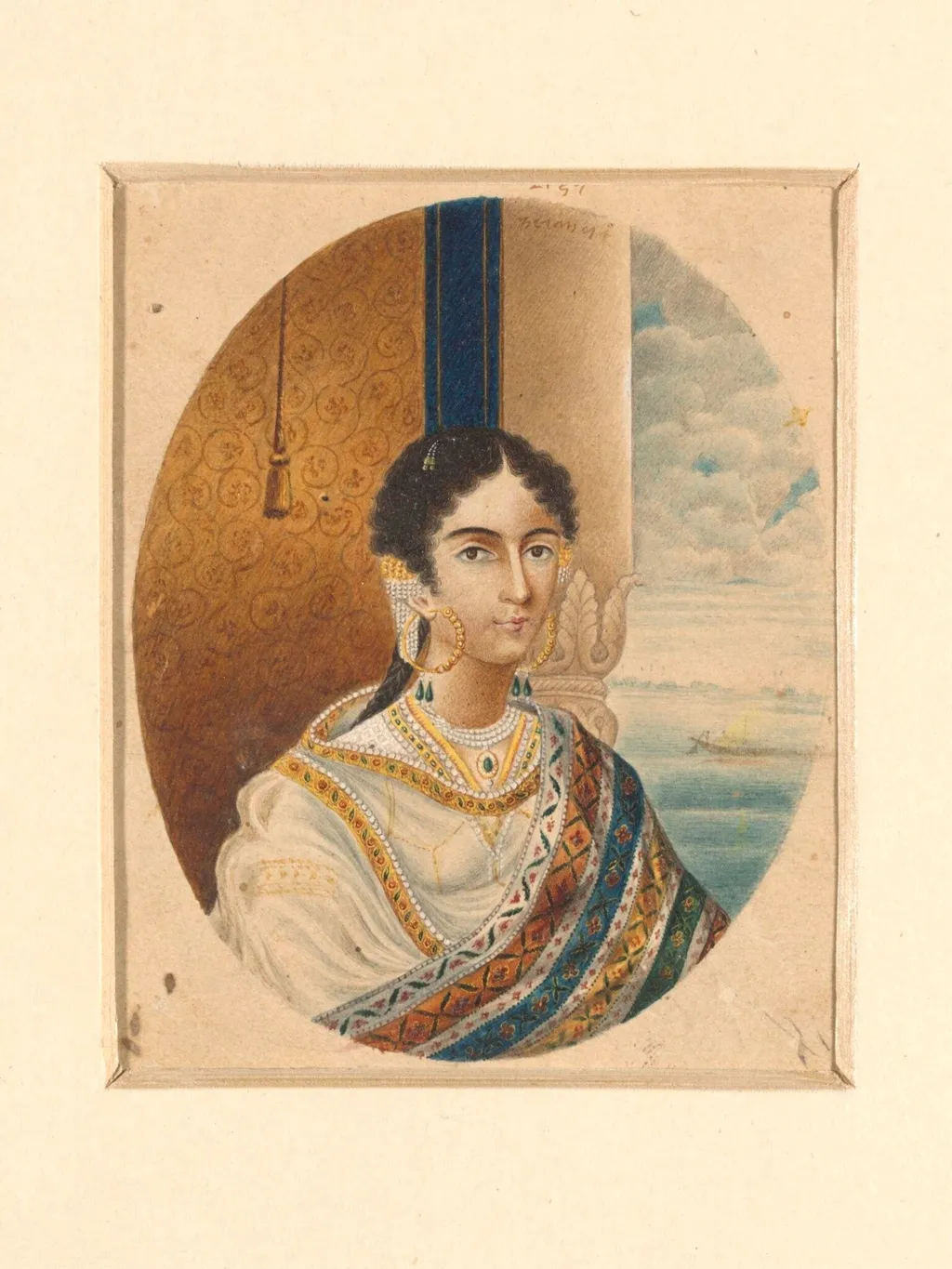
Head and shoulders portrait of an Indian lady is a paint painting by the Patna School of Painting artist Shiva Lal. It dates from 1850 and is held in the collection of the Victoria and Albert Museum.
About this work
Overview
This 1850 watercolor portrait, attributed to Shiva Lal, depicts an Indian woman in a half-length composition. Rendered in delicate washes, the work captures her upper body and face with quiet precision. The painting is enclosed in an ornate border of dark red and gold-accented green, typical of colonial-era Indian portraiture produced for British patrons during the mid-nineteenth century.
Subject & Meaning
The inclusion of a carved fan behind her suggests domestic refinement, reinforcing an image of dignified, aristocratic femininity within a colonial context.
The sitter, identified as an Indian woman, is portrayed with serene composure, her gaze direct and composed. Her attire includes a white garment edged with vibrant embroidery, paired with substantial gold jewelry—earrings, a necklace, and bracelets—signaling status and cultural identity. The inclusion of a carved fan behind her suggests domestic refinement, reinforcing an image of dignified, aristocratic femininity within a colonial context.
Technique & Style
Shiva Lal employed translucent watercolor washes to model form and suggest texture, particularly in the fabric and jewelry. Loose, expressive brushwork defines the sky and background elements, while finer strokes detail the embroidery and metallic ornaments. The soft, atmospheric backdrop—hinting at sky and water—contrasts with the sharp clarity of the figure, reflecting a synthesis of Indian miniature traditions and European watercolor techniques.
History & Provenance
Created in 1850, the portrait likely originated in northern India under British colonial influence, possibly commissioned by a British official or local elite. It entered the Victoria and Albert Museum’s collection as part of a broader acquisition of Indo-British artworks from the period, reflecting institutional interest in documenting cross-cultural artistic practices of the era.
Context
During the mid-1800s, Indian artists adapted traditional miniature techniques to meet the tastes of British patrons, producing portraits that blended indigenous aesthetics with Western conventions of realism. This work exemplifies that hybridity: its intimate scale, decorative framing, and attention to textile detail align with Mughal and Company painting traditions, while its composition echoes European portraiture.
Legacy
The portrait remains a representative example of Company painting, a genre that documented Indian life through a colonial lens. Its preservation in the Victoria and Albert Museum underscores its role in historical records of cultural exchange. Though attributed to a single artist, such works collectively illuminate the complex negotiations of identity, patronage, and artistic practice during British rule in India.
Artist & collection
Artist
A Mewari painter active in the mid-1800s, Shiva Lal made precise, lively records of daily life and workshops.

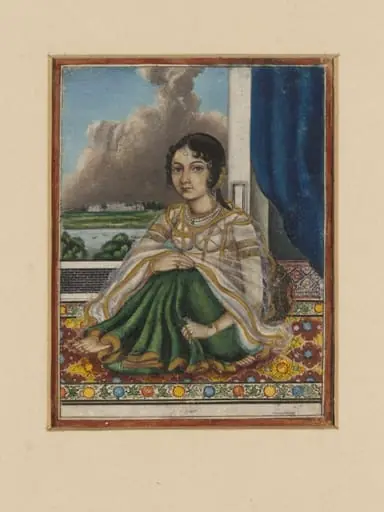 An Indian lady seated on a carpet by an open door overlooking a river with a European-style house on the opposite bank.
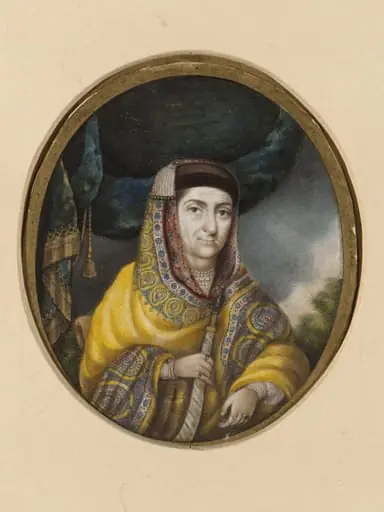 Portrait of Begam Samru
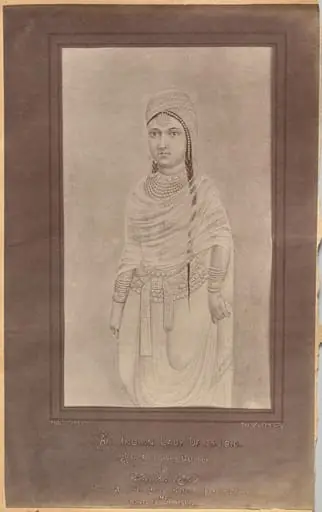 Indian Lady 250 BC (verso, right)
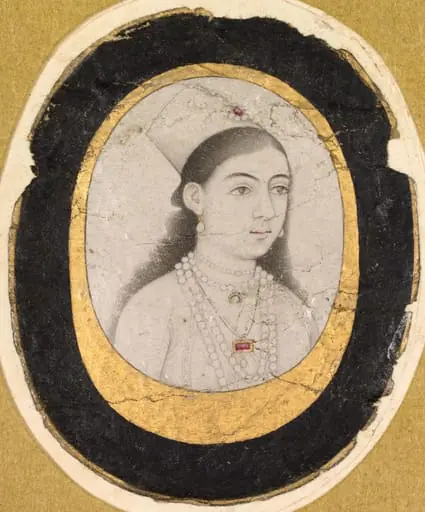 Jewel Portrait of a Young Girl
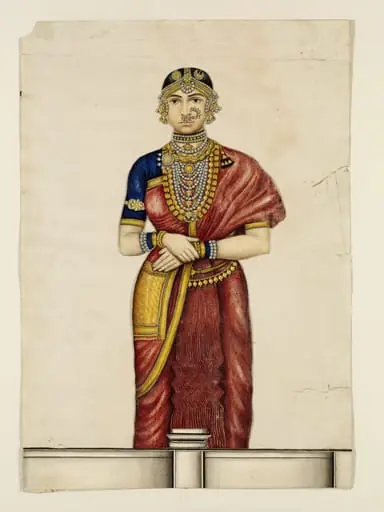 Portrait of Rani Mudai
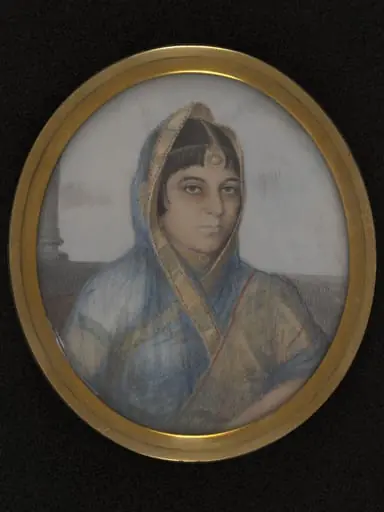 A lady in a blue, gold-edged sari.
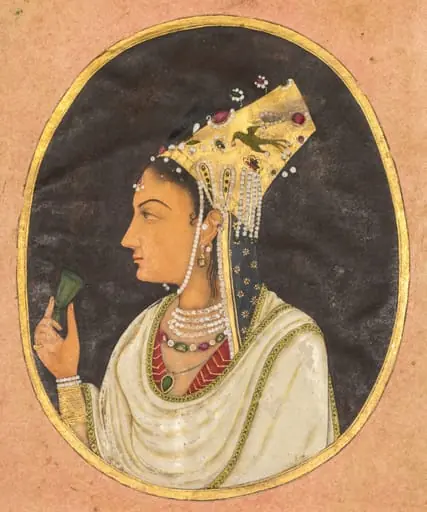 Oval portrait of a woman in a Chaghtai hat
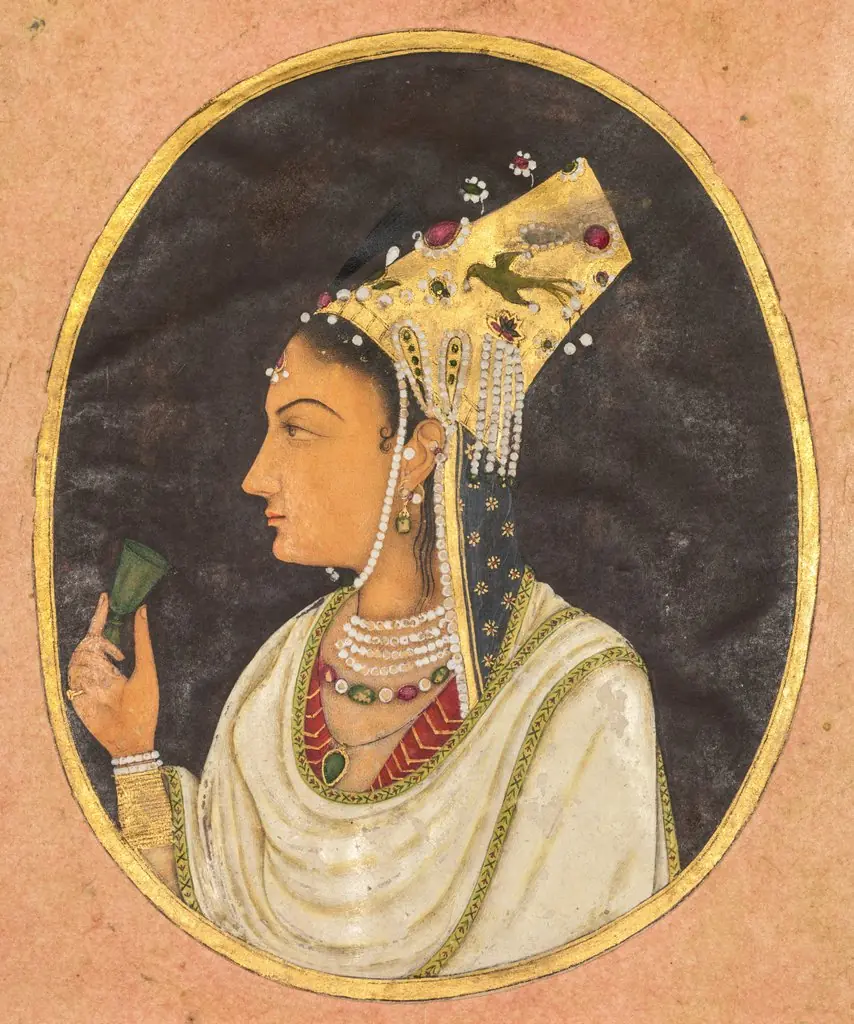 Oval portrait of a woman in a Chaghtai hat
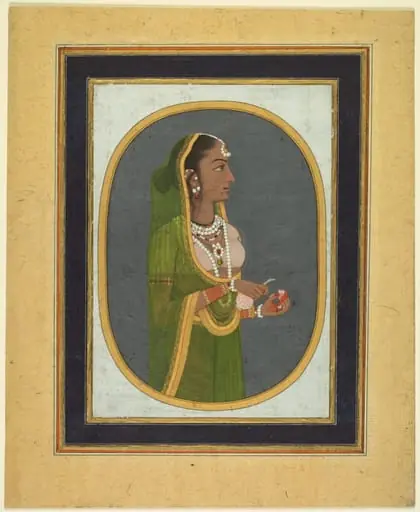 Court Lady Pouring Wine (recto); Calligraphy of Lyrical Quatrains (verso)
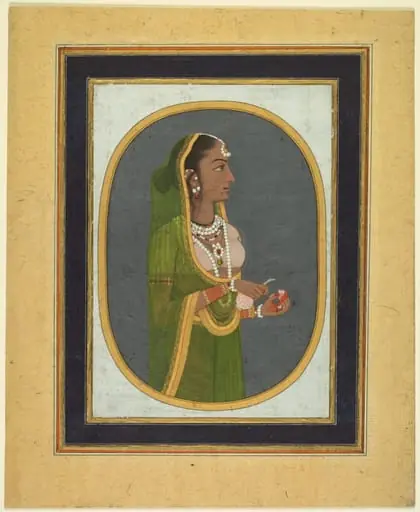 Court Lady Pouring Wine (recto)
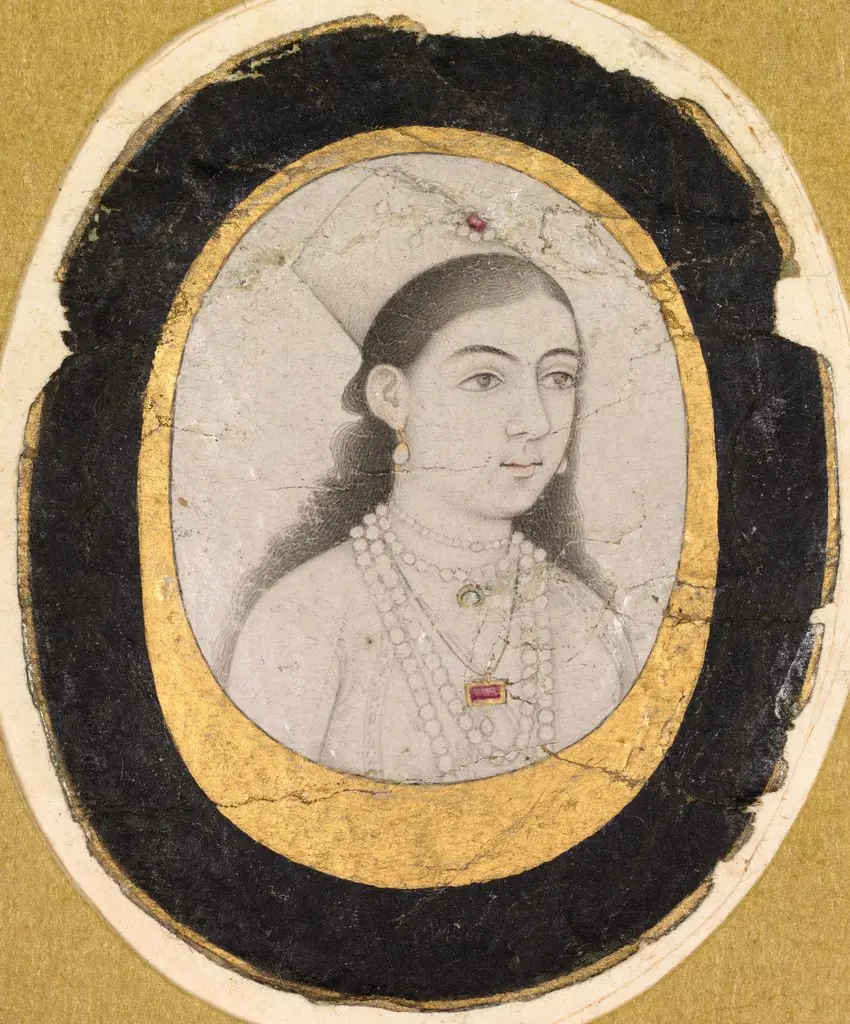 Jewel Portrait of a Young Girl
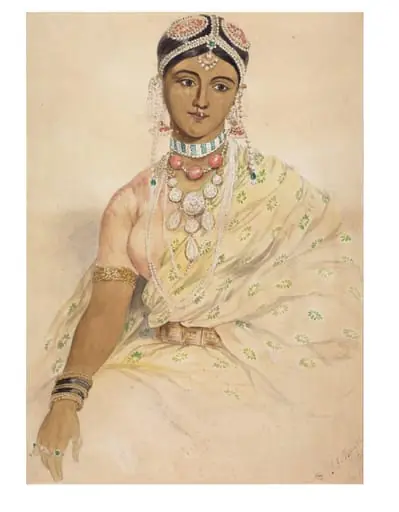 Portrait of a Hindu woman wearing jewellery