Artwork
Brothel
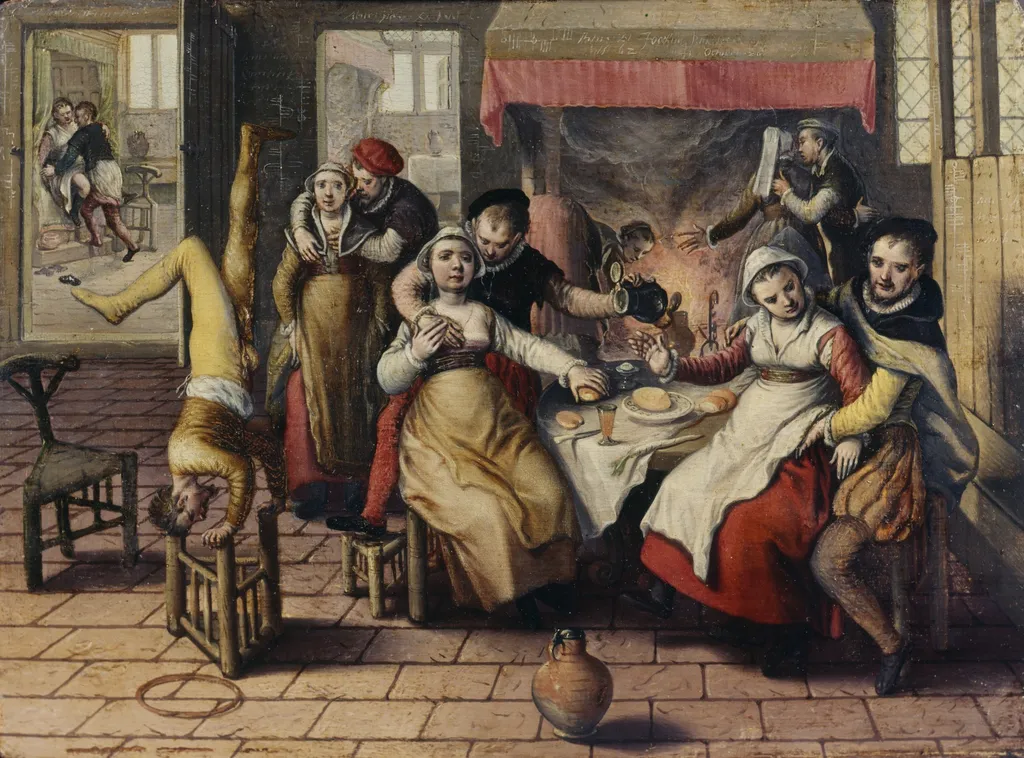
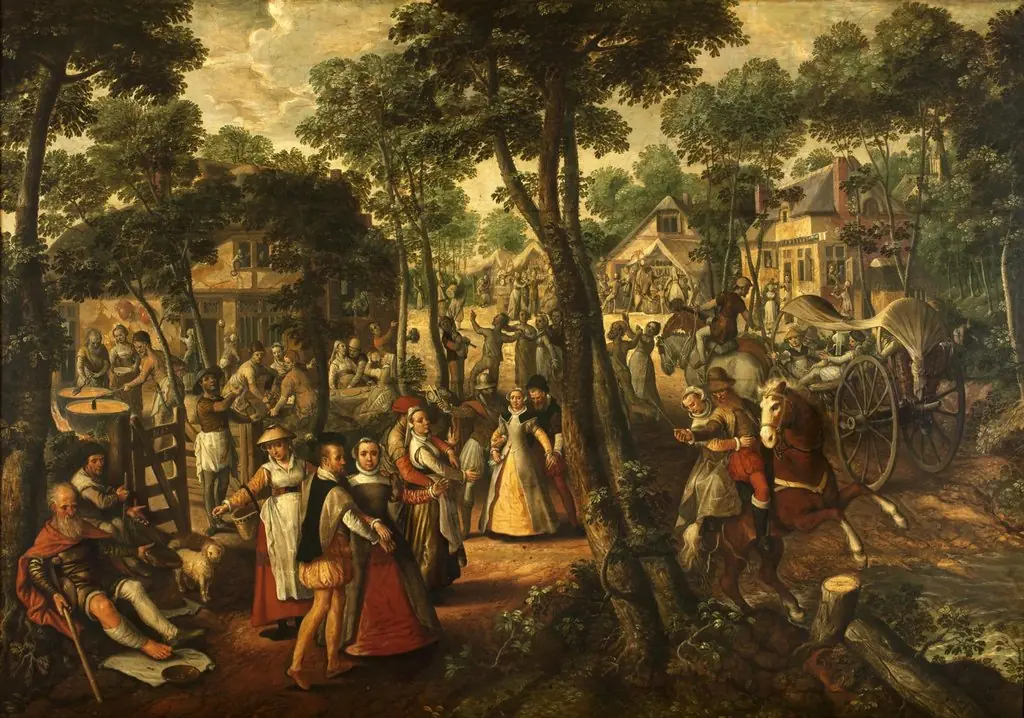
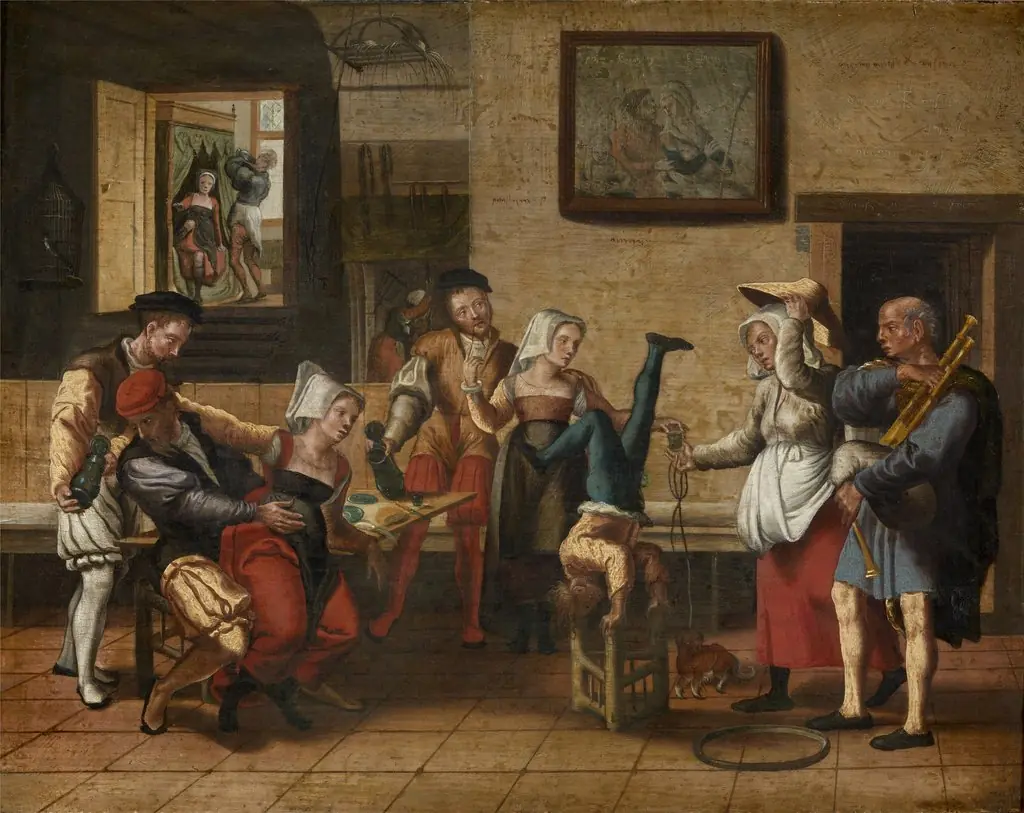
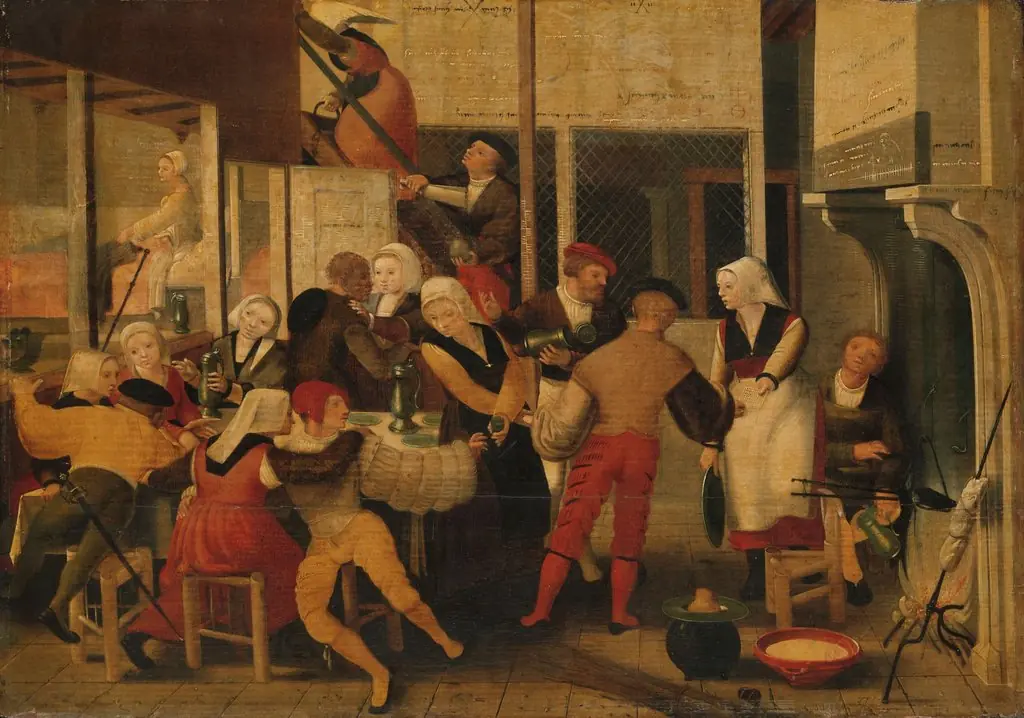
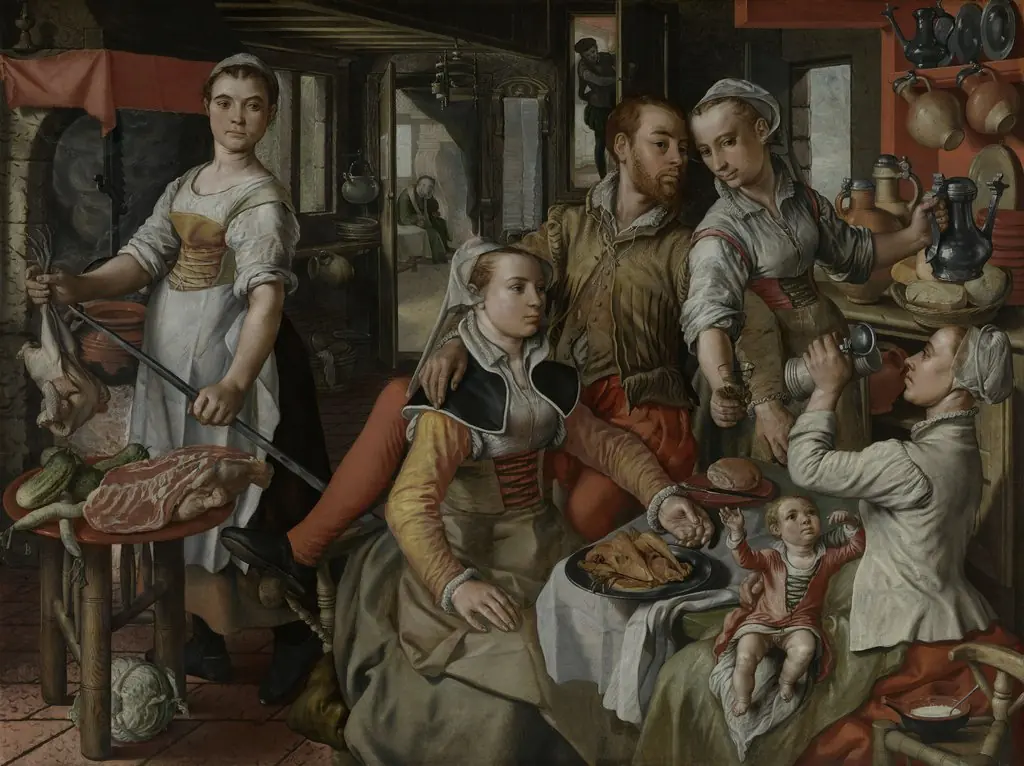
Brothel is an oil painting by the Northern Renaissance artist Joachim Beuckelaer. It dates from 1562 and is held in the collection of the Walters Art Museum.
About this work
Overview
Beuckelaer, a Flemish artist known for domestic and market interiors, applied his skill in rendering everyday life to a morally ambiguous setting.
Painted in 1562 by Joachim Beuckelaer, this oil-on-panel work presents a crowded interior scene set in a brothel. Beuckelaer, a Flemish artist known for domestic and market interiors, applied his skill in rendering everyday life to a morally ambiguous setting. The painting is part of the Northern Renaissance tradition and resides in the Walters Art Museum’s collection, where it reflects the era’s fascination with social behavior and visual narrative.
Subject & Meaning
The scene captures a moment of informal revelry among patrons and workers in a brothel. Figures engage in varied activities—some conversing, one performing a handstand—suggesting a space of transient pleasure and disorder. The composition avoids overt moralizing, instead presenting the environment with observational neutrality, inviting viewers to interpret the social dynamics without explicit judgment.
Technique & Style
Beuckelaer employed oil paint to achieve fine detail and subtle tonal shifts, particularly in the rendering of fabrics and facial expressions. Chiaroscuro defines the spatial depth, guiding attention toward the central group around the table. The brushwork remains precise yet unembellished, characteristic of Northern Renaissance realism, with no idealization of the figures or setting.
History & Provenance
Created during Beuckelaer’s mature period, the painting entered the Walters Art Museum’s collection in the early 20th century. Its survival through centuries reflects its appeal to collectors interested in genre scenes of daily life. No documented commissions or early ownership records exist, suggesting it may have been produced for the open market rather than a private patron.
Context
In mid-16th-century Flanders, depictions of brothels and taverns were uncommon in fine art, yet Beuckelaer’s work aligns with a growing interest in secular, morally complex subjects. His focus on interiors and human interaction paralleled broader trends in Northern Europe, where artists began to explore the social fabric beyond religious or aristocratic themes.
Legacy
Though not widely exhibited, the painting contributes to understanding how Northern Renaissance artists treated illicit or marginalized spaces with observational rigor. Beuckelaer’s approach influenced later genre painters in the Low Countries, who similarly depicted everyday life with unvarnished detail, laying groundwork for 17th-century Dutch realism.
Own this work as a print
Artist & collection

Artist
Joachim Beuckelaer (c. 1533 – c. 1570/4) was a Flemish painter specialising in market and kitchen scenes with elaborate displays of food and household equipment. His development of the genre of market and kitchen scenes…