Artwork
Untitled
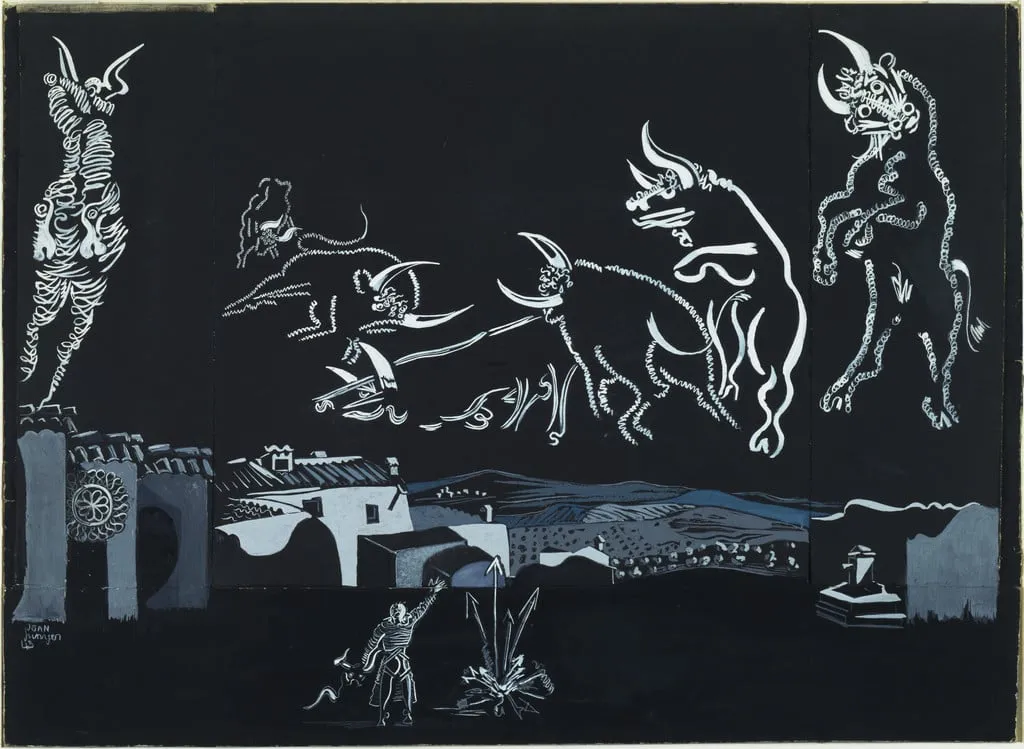
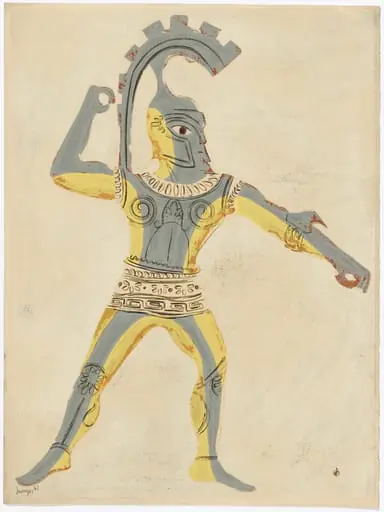
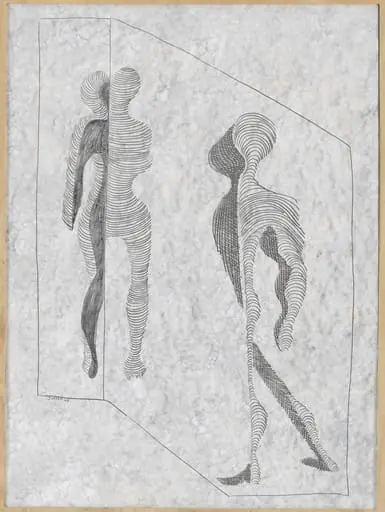
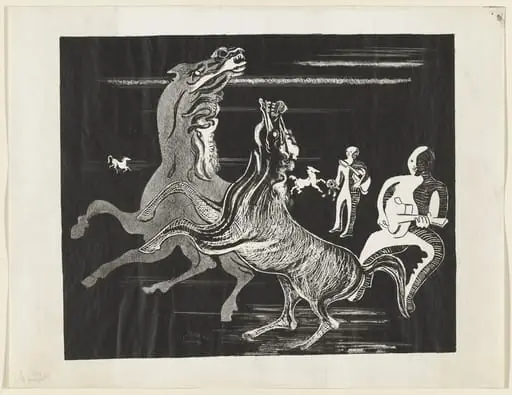
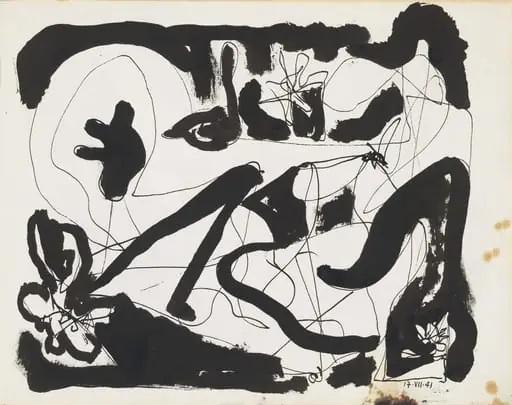
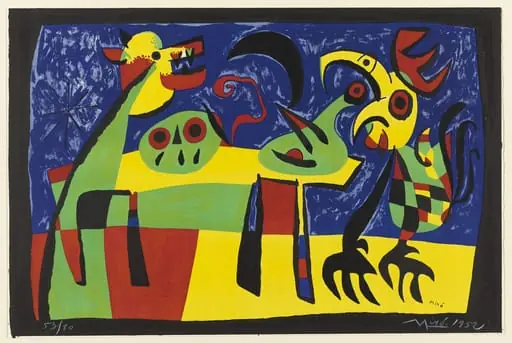
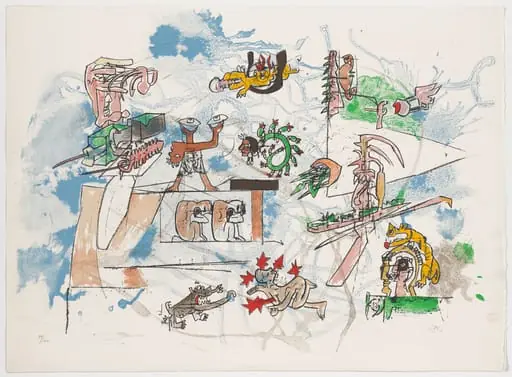
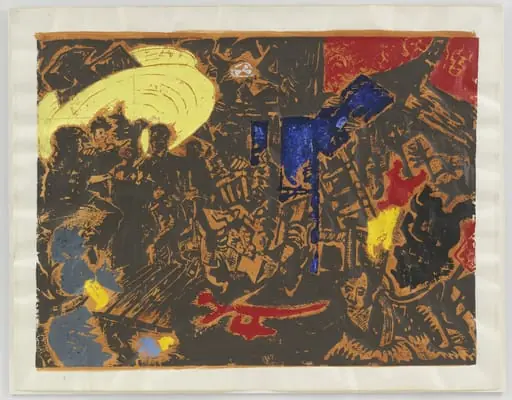
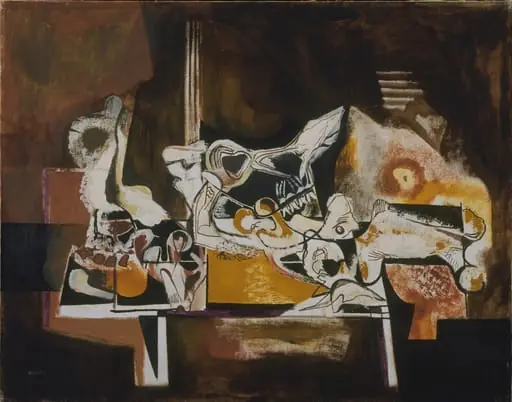
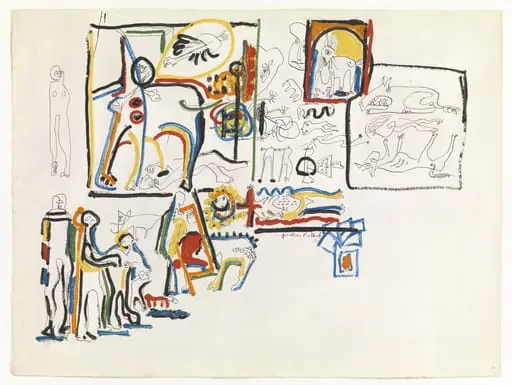
Untitled is a gouache drawing by Joan Junyer. It dates from 1943 and is held in the collection of the Museum of Modern Art. Created in 1943, this drawing by Joan Miró combines gouache and ink on black paper mounted to board.
About this work
Overview
The work’s stark contrast between dark ground and luminous lines defines its visual language, emphasizing gesture over detail.
Created in 1943, this drawing by Joan Miró combines gouache and ink on black paper mounted to board. It belongs to The Museum of Modern Art’s collection and exemplifies a surrealist approach to form and space. The work’s stark contrast between dark ground and luminous lines defines its visual language, emphasizing gesture over detail. Though titled 'Untitled,' its imagery suggests a narrative realm between dream and reality.
Subject & Meaning
The composition splits into two zones: a terrestrial plane with simplified architectural forms and an aerial domain populated by hybrid, mythic figures. A central human figure, rendered in active pose, appears to engage with the airborne entities—neither clearly hostile nor harmonious. The creatures, with angular horns and elongated limbs, evoke folklore and subconscious imagery, reflecting Miró’s interest in primal symbols and psychic automatism.
Technique & Style
Miró employed gouache for its opaque, matte quality, layering white and pale blue pigments over a black paper ground to achieve luminous, floating forms. Ink outlines define sharp contours, enhancing the sense of movement. The absence of gradation or shading heightens the graphic intensity. This method aligns with his broader practice of reducing forms to essential lines and shapes, prioritizing expressive clarity over naturalism.
History & Provenance
The work was produced during Miró’s time in Spain, amid the turmoil of the Spanish Civil War and the early years of World War II. It entered The Museum of Modern Art’s collection in the 1950s, part of a broader postwar effort to recognize European modernists. Its preservation on board suggests careful handling, reflecting its significance within the artist’s oeuvre and the museum’s holdings of surrealist works.
Context
Created during a period of political instability, the piece resonates with surrealist efforts to access deeper psychological truths beyond rational order. Miró’s imagery draws from Catalan folk traditions, childhood memories, and the influence of Dada and Surrealism. The work’s ambiguity invites multiple interpretations, consistent with the movement’s rejection of fixed meaning in favor of poetic suggestion.
Legacy
This drawing exemplifies Miró’s mature style—minimalist yet rich in symbolic resonance. It influenced later generations of artists exploring abstraction and mythic narrative, particularly those interested in non-representational expression. Its presence in MoMA’s collection cemented its role as a touchstone for mid-century modernist drawing, illustrating how limited means can evoke complex inner worlds.
Artist & collection