Artwork
The god of waters
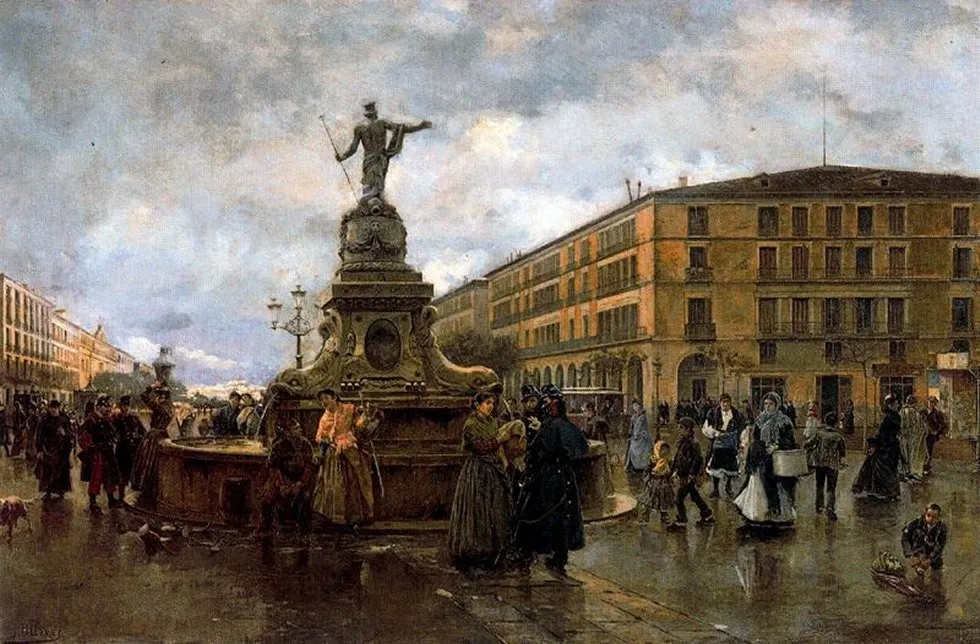
The god of waters is an oil painting by the Art Nouveau artist Joaquín Pallarés Allustante. It dates from 1896 and is held in the collection of the Museu Nacional d'Art de Catalunya.
About this work
Overview
Painted in 1896 by Joaquín Pallarés Allustante, this oil work depicts a public fountain as the focal point of an urban square.
Painted in 1896 by Joaquín Pallarés Allustante, this oil work depicts a public fountain as the focal point of an urban square. Rendered in a restrained palette of browns and grays, the scene captures everyday life around a monumental water feature. Though associated with Art Nouveau’s broader cultural moment, the painting leans toward realism in its treatment of architecture and figures, avoiding ornamental stylization.
Subject & Meaning
The central figure is a male statue holding a trident, evoking classical associations with water deities, though the work does not explicitly name a mythological identity. The fountain serves as both a functional civic element and a symbolic anchor for communal activity. Gathered citizens—some seated, others standing—suggest the space as a hub of daily interaction, grounding the divine reference in mundane reality.
Technique & Style
Pallarés employed careful brushwork to render architectural details and the textures of stone, water, and clothing. The composition is balanced, with the fountain’s verticality contrasting the horizontal lines of surrounding buildings. Colors are subdued, emphasizing tonal harmony over vibrancy. Light falls evenly, minimizing dramatic shadows, reinforcing the painting’s quiet, observational tone.
History & Provenance
Created in 1896, the painting entered the collection of the Museu Nacional d'Art de Catalunya, where it remains today. Its acquisition reflects the museum’s interest in documenting Catalan artistic production at the turn of the century. While not widely exhibited outside Catalonia, it is recognized as part of the region’s late 19th-century urban scene documentation.
Context
In the 1890s, Catalan cities underwent modernization, with public fountains symbolizing civic progress and hygiene. Pallarés’s work aligns with a broader trend of artists recording urban transformation. Though Art Nouveau influenced decorative arts in the region, this painting reflects a more restrained, documentary impulse, prioritizing social observation over stylistic novelty.
Legacy
The painting contributes to the historical record of Catalan urban life during industrialization. It is not considered a defining work of Art Nouveau, but rather a quiet example of how regional artists engaged with public space and civic identity. Its preservation in a national museum underscores its value as a social document rather than a stylistic landmark.
Artist & collection
Artist
Joaquín Pallarés Allustante (1853–1935) was an artist, born in Zaragoza.

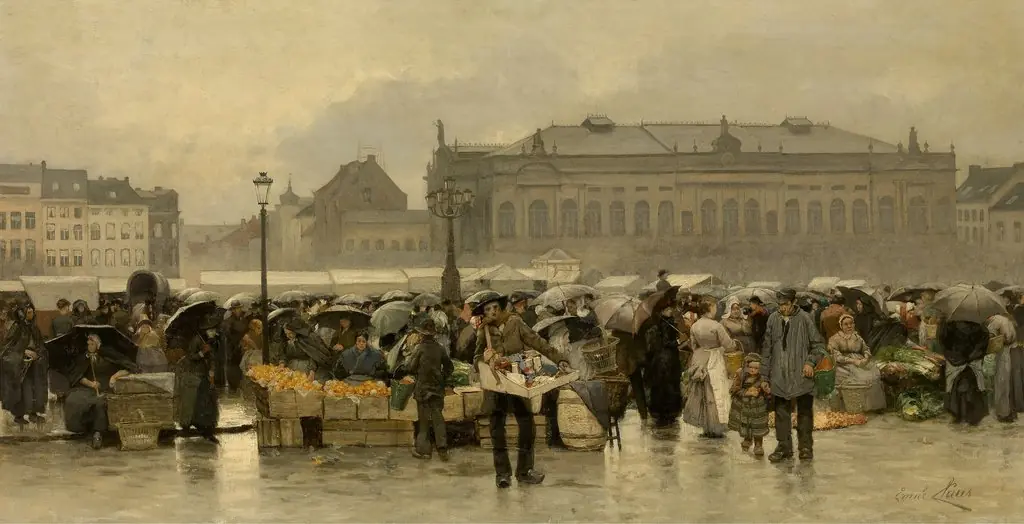 De markt voor de schouwburg in Antwerpen
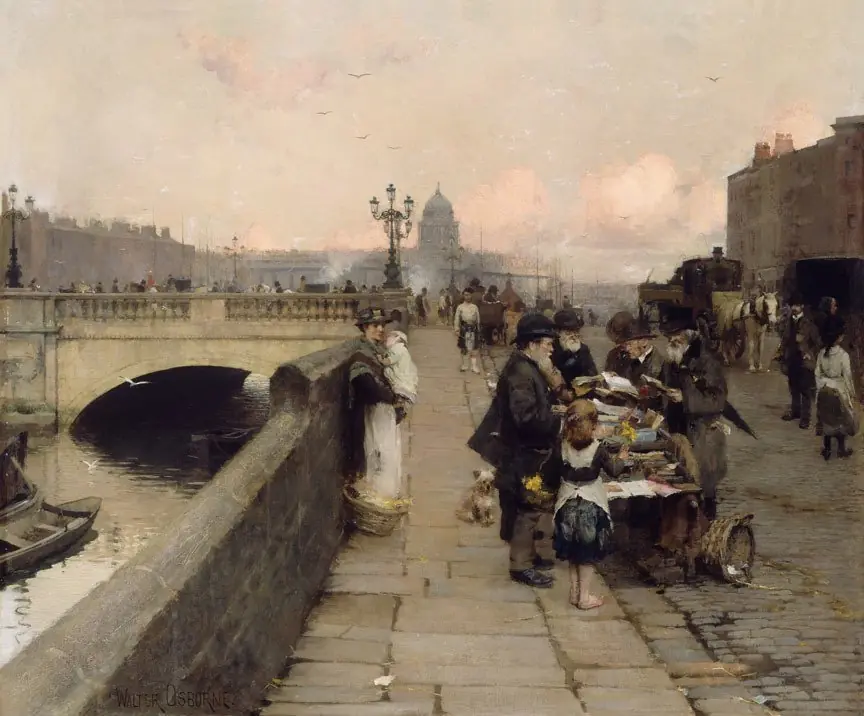 Dublin Streets: a Vendor of Books
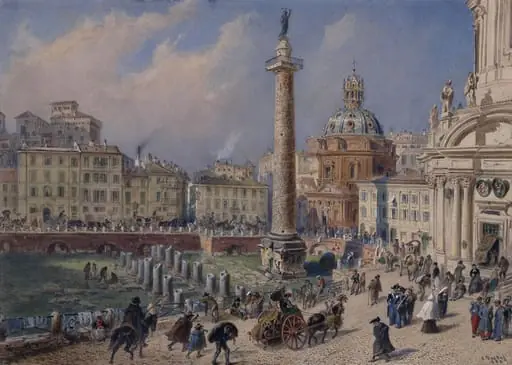 Trajan's Column, Rome
 Paris, rue du Havre
 Paris at Twilight
 The Piazza del Popolo, Rome
 Segovia, Spain
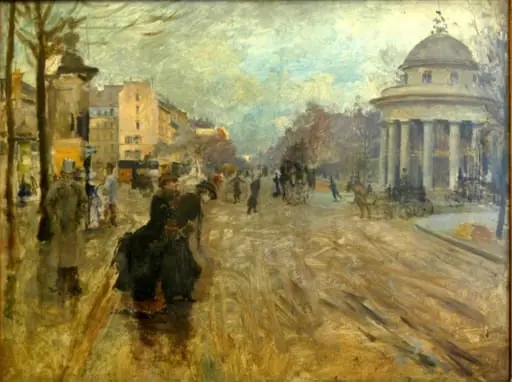 Stradă pariziană
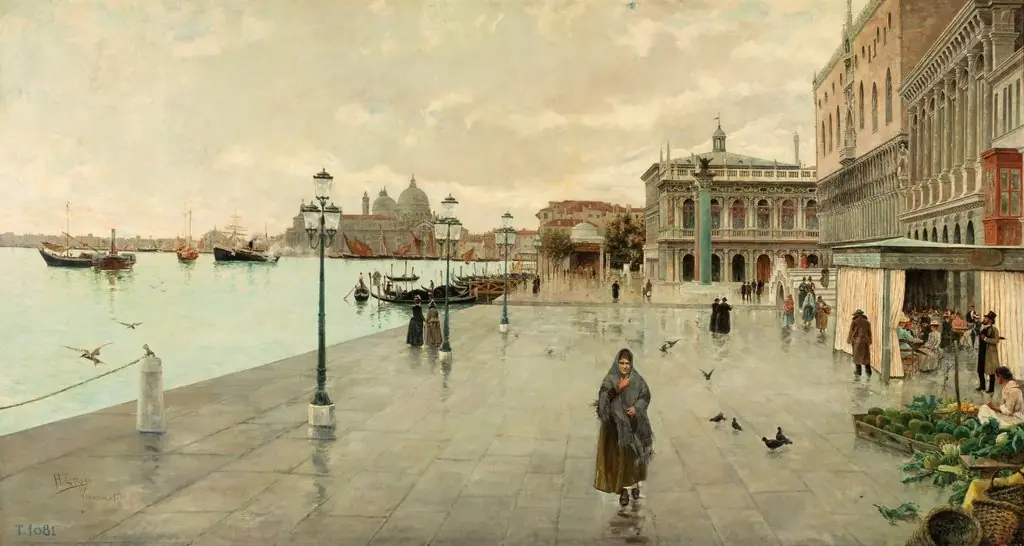 Riva degli Schiavoni
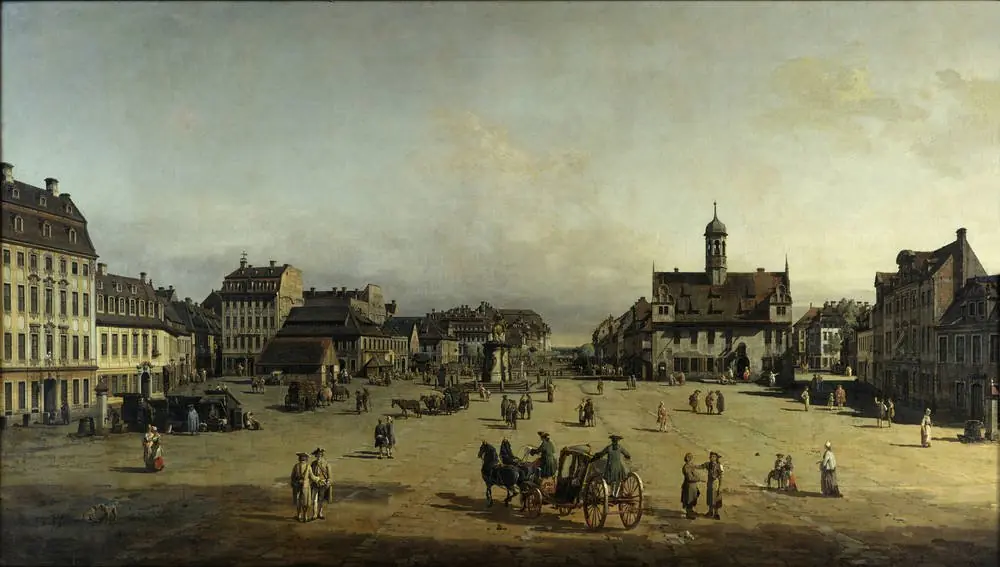 The New Market in Dresden
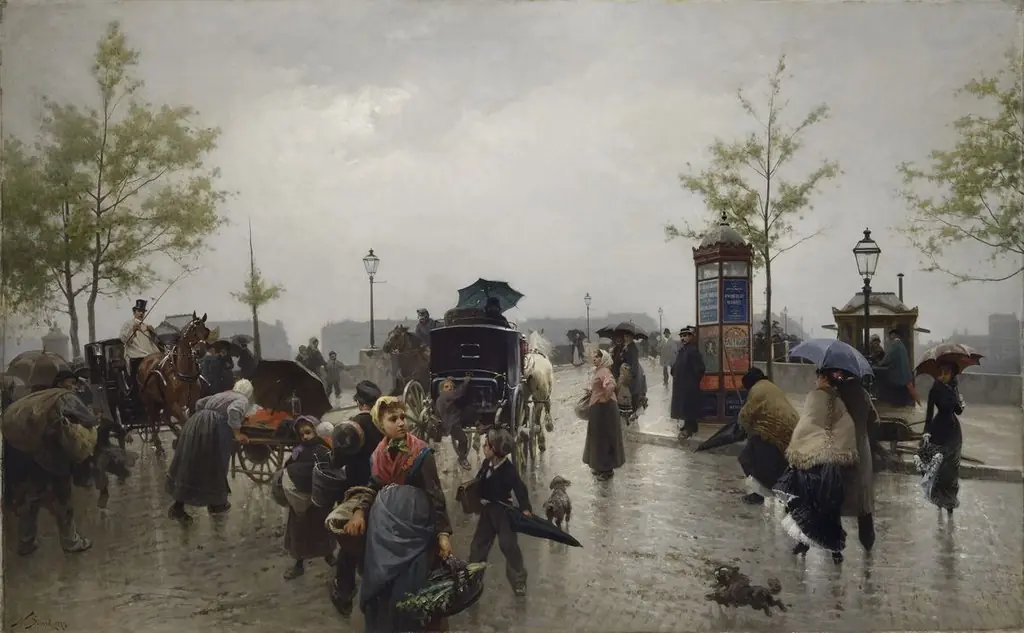 L'Entrée du Pont de la Guillotière à Lyon
 L'ancien quartier de la Pêcherie à Lyon