Artwork
Gebirgslandschaft mit Burganlage
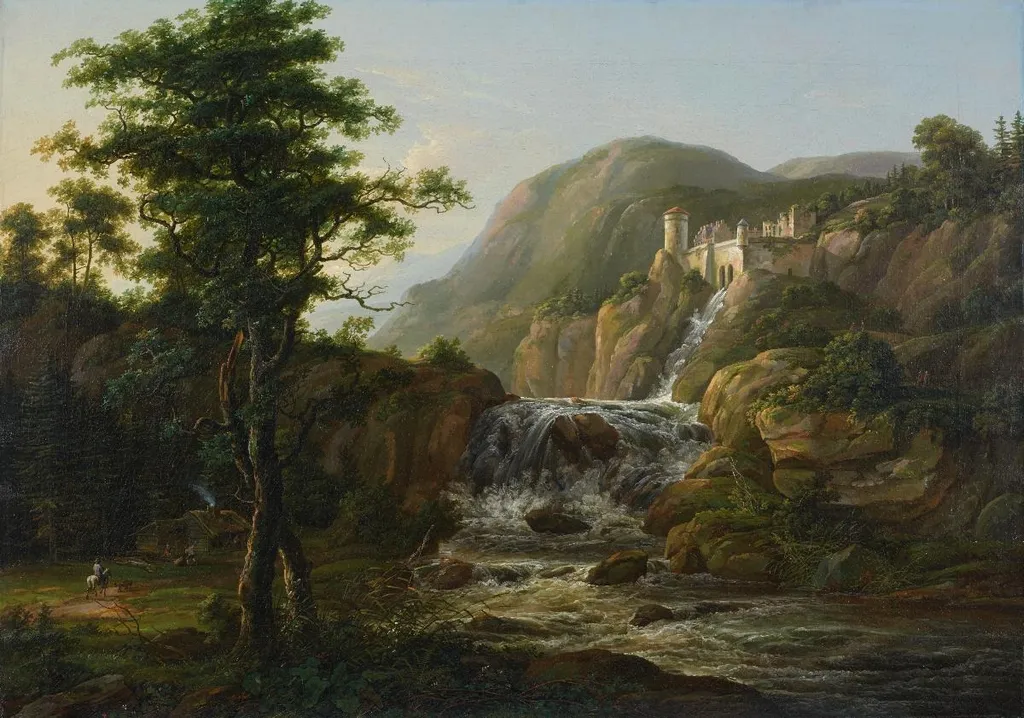
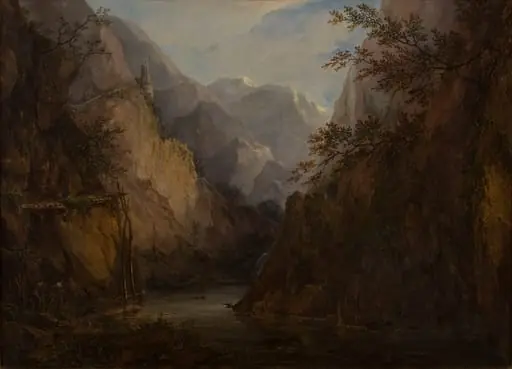
Gebirgslandschaft mit Burganlage is an oil painting by the German Romanticist artist Johan Christian Dahl. It dates from 1816 and is held in the collection of the Kunsthaus Zürich.
About this work
Overview
Johan Christian Dahl painted *Gebirgslandschaft mit Burganlage* in 1816, an oil-on-canvas landscape that exemplifies early 19th-century Romantic sensibilities.
Johan Christian Dahl painted *Gebirgslandschaft mit Burganlage* in 1816, an oil-on-canvas landscape that exemplifies early 19th-century Romantic sensibilities. Though Norwegian by birth, Dahl was deeply engaged with German artistic circles, where his detailed naturalism and emotional tone found broad appreciation. The work belongs to the collection of Kunsthaus Zürich, reflecting its international recognition during a period when landscape painting was gaining new philosophical weight across Europe.
Subject & Meaning
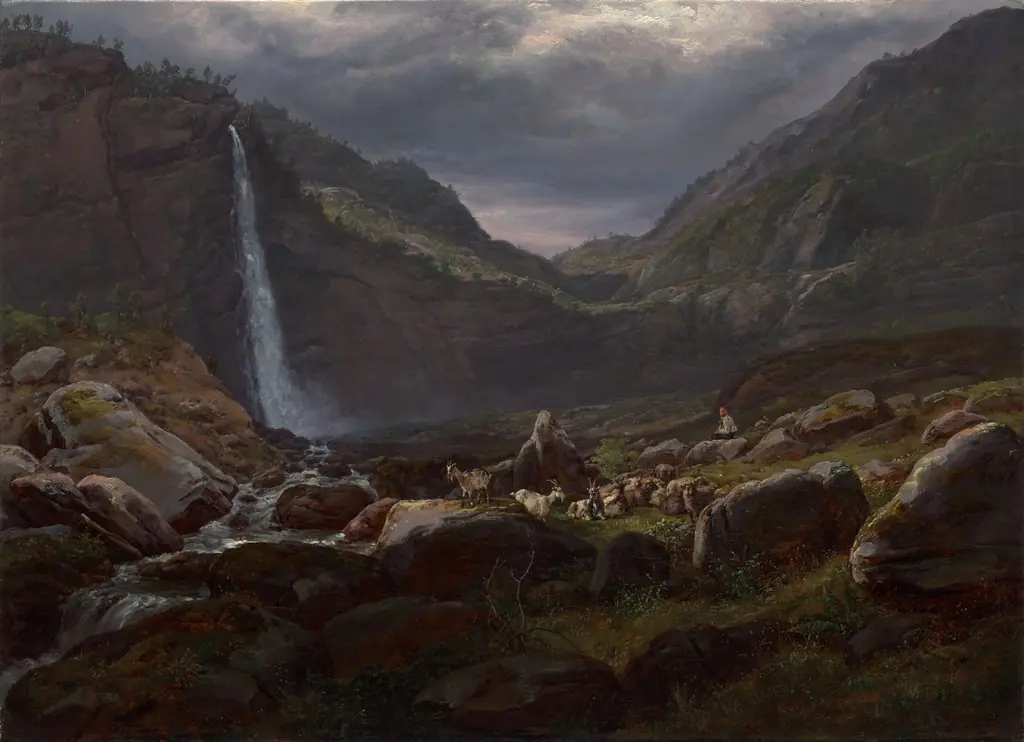
The painting presents a tranquil alpine scene dominated by rugged terrain, a cascading waterfall, and a distant castle ruin. The structure, barely prominent, suggests human presence as a fleeting element within nature’s enduring scale. Rather than celebrating power or history, the composition evokes quiet contemplation, aligning with Romantic ideals that valued solitude, awe, and the sublime in the natural world over human achievement.
Technique & Style
Dahl employed smooth, controlled brushwork to render atmospheric depth, using subtle gradations of light and shadow to model form and space. His handling of light—soft yet directional—enhances the sense of volume in rocks and foliage, while the sky’s pale blue tones recede gently, reinforcing spatial harmony. Though not overtly dramatic, the painting’s chiaroscuro effects guide the viewer’s eye from foreground trees to the distant castle, creating a quiet narrative of distance and stillness.
History & Provenance
Created during Dahl’s formative years in Dresden, the painting emerged from his travels through the Alps and his study of German Romantic landscape traditions. It was acquired by Kunsthaus Zürich in the 19th century, likely through the artist’s network of patrons and collectors. Its presence in a Swiss institution underscores Dahl’s cross-border influence and the growing European interest in Nordic artists as contributors to Romanticism’s broader visual language.
Context
In the early 1800s, landscape painting shifted from mere topographical record to a vehicle for emotional and spiritual expression. Dahl’s work responded to this trend, influenced by German thinkers like Schelling and artists like Friedrich. His Norwegian identity added a distinct northern sensibility—cool tones, misty horizons, and a reverence for wild terrain—that distinguished his approach from more dramatic southern Romantic landscapes.
Legacy
Dahl’s landscapes helped establish a national visual identity for Norway and inspired later generations of Nordic painters. *Gebirgslandschaft mit Burganlage* remains a key example of how Romantic ideals were adapted beyond Germany, blending personal observation with philosophical depth. Its quiet intensity continues to inform how landscape art is understood—not as decoration, but as a medium for reflecting humanity’s place within nature.
Artist & collection
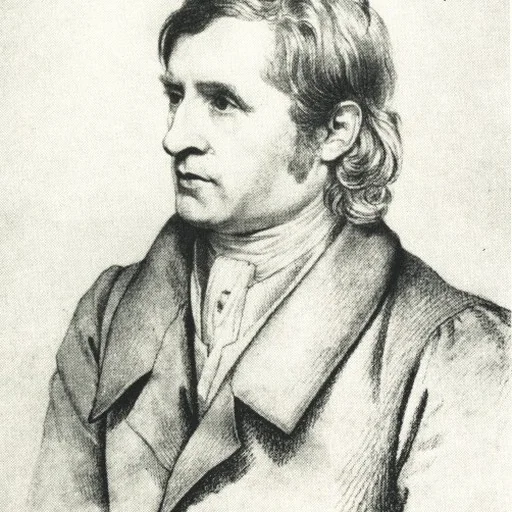
Artist
Johan Christian Claussen Dahl (24 February 1788 – 14 October 1857), often known as J.

 Norjalainen tunturimaisema
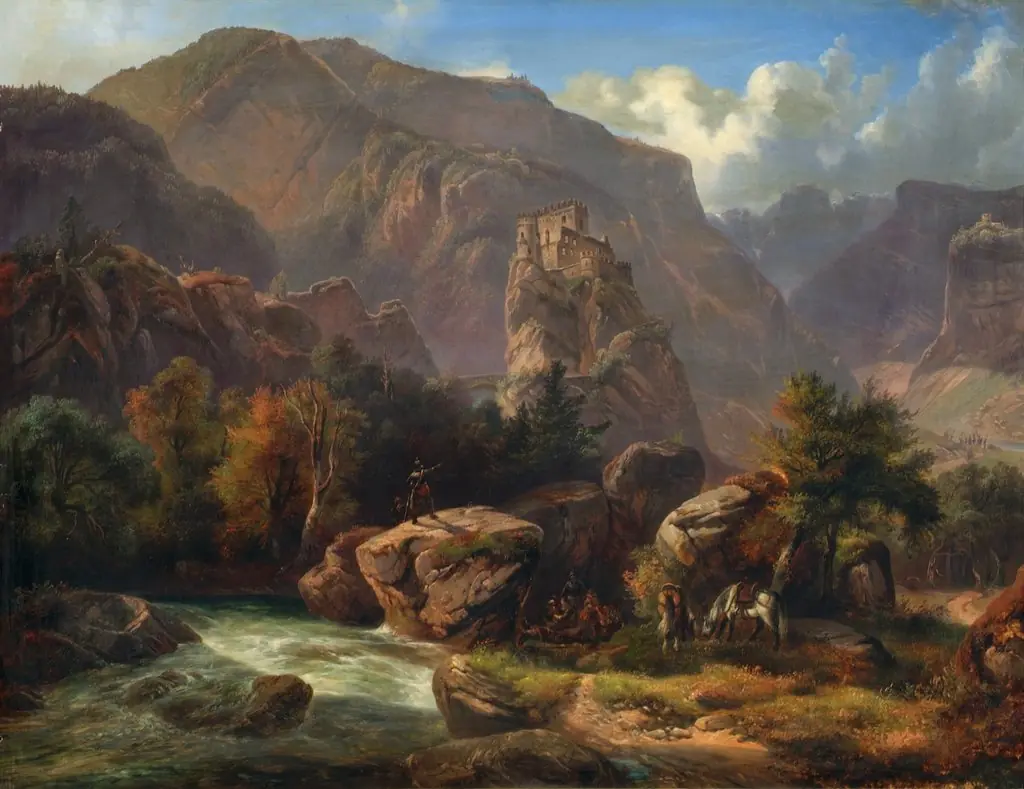 Schloss Salurn in Südtirol
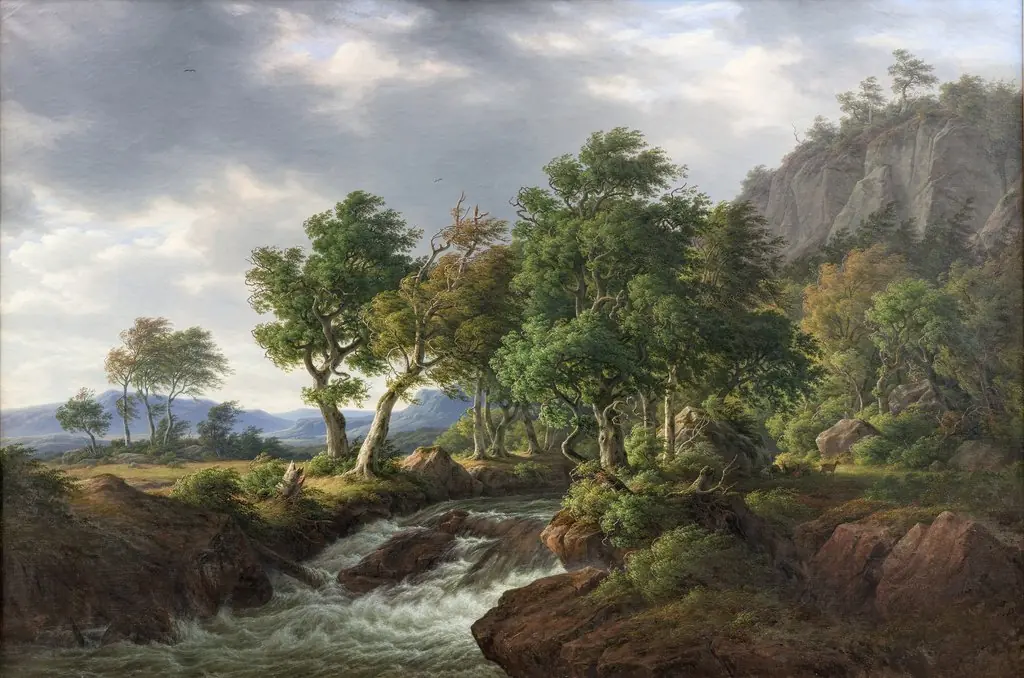 Klippelandskab. Djupadal i Bleking
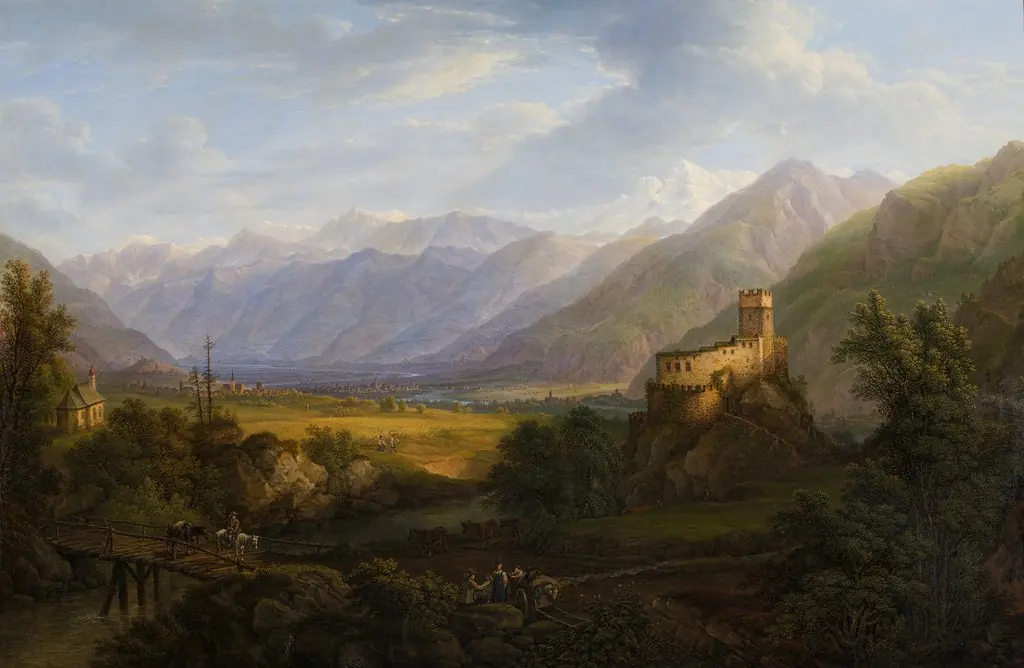 Das Glurnsertal mit der Etsch in Tirol
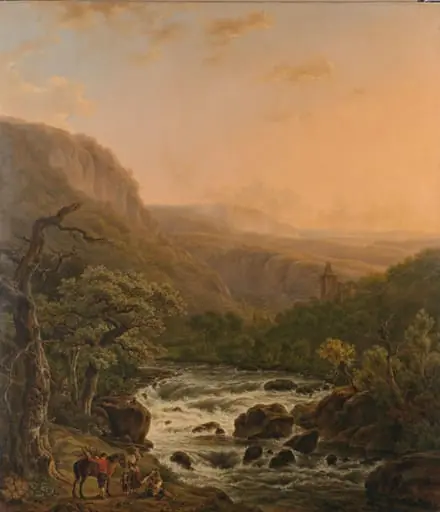 River in the Ardennes at Sunset
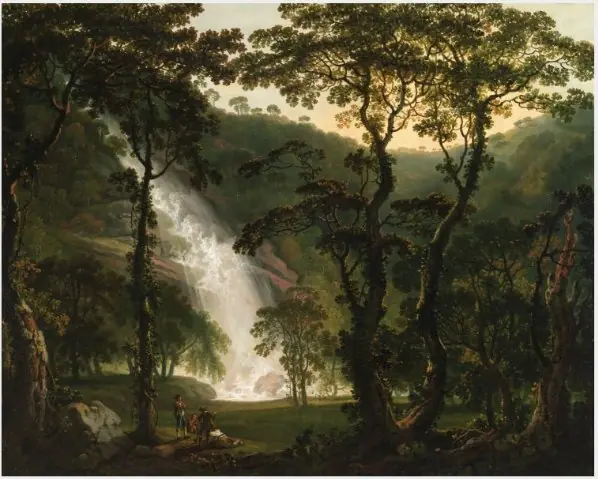 View of Powerscourt Waterfall
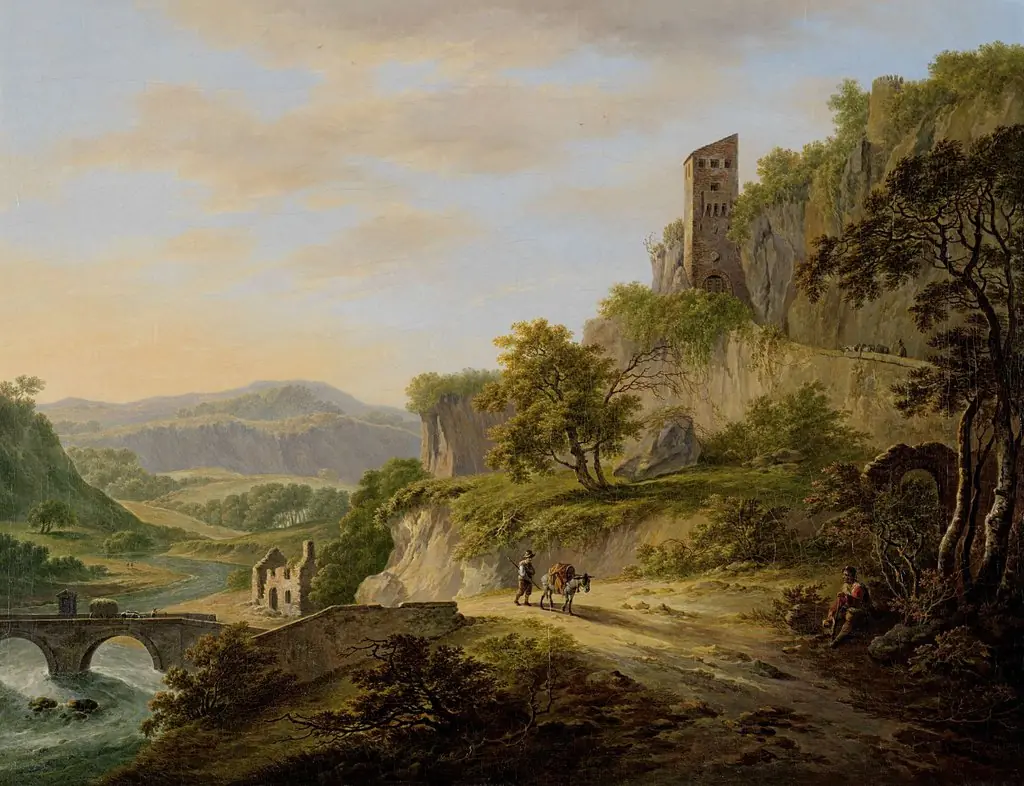 Gezicht op Civita Castellana
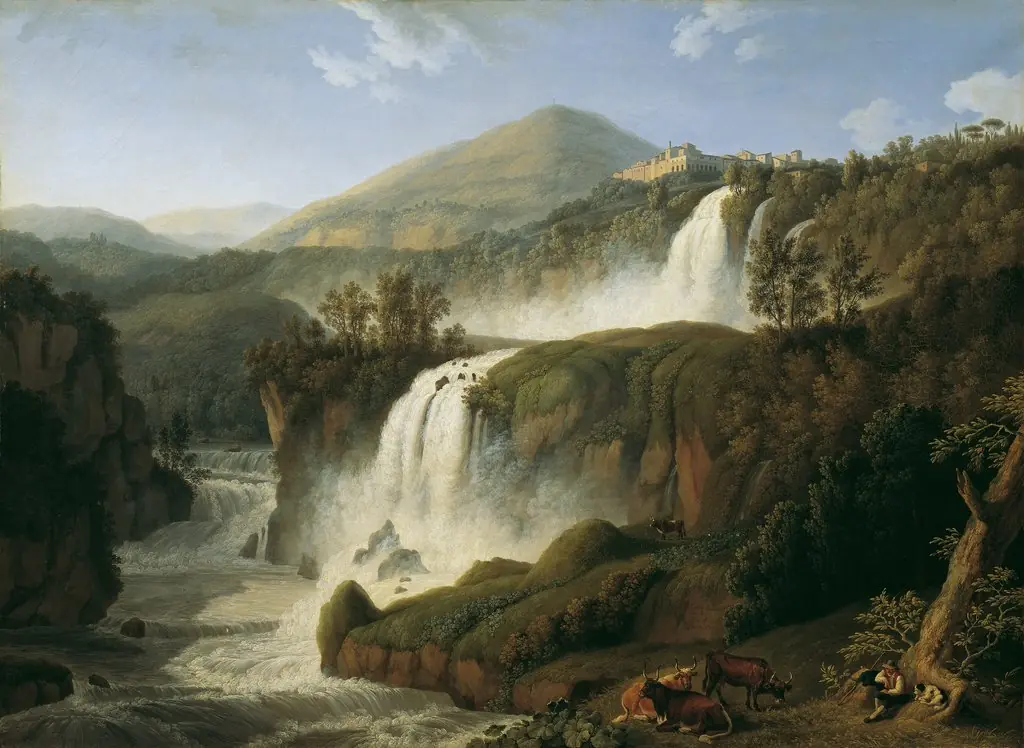 The Large Waterfall at Tivoli near Rome
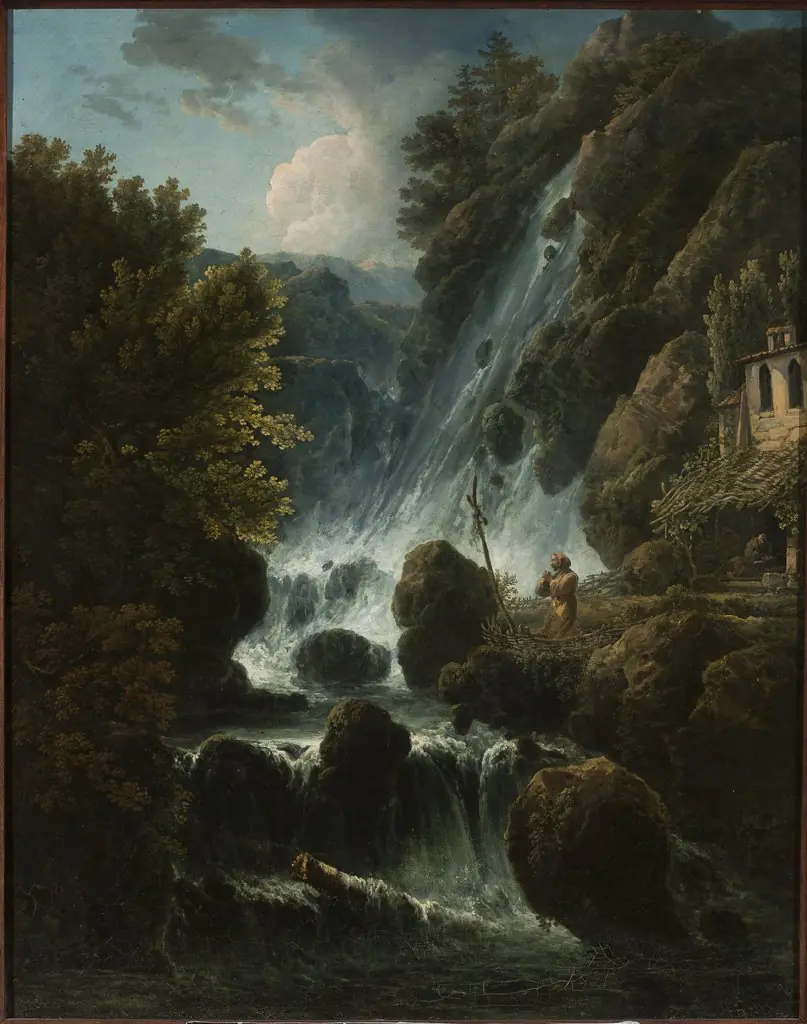 Hermit praying at the waterfall
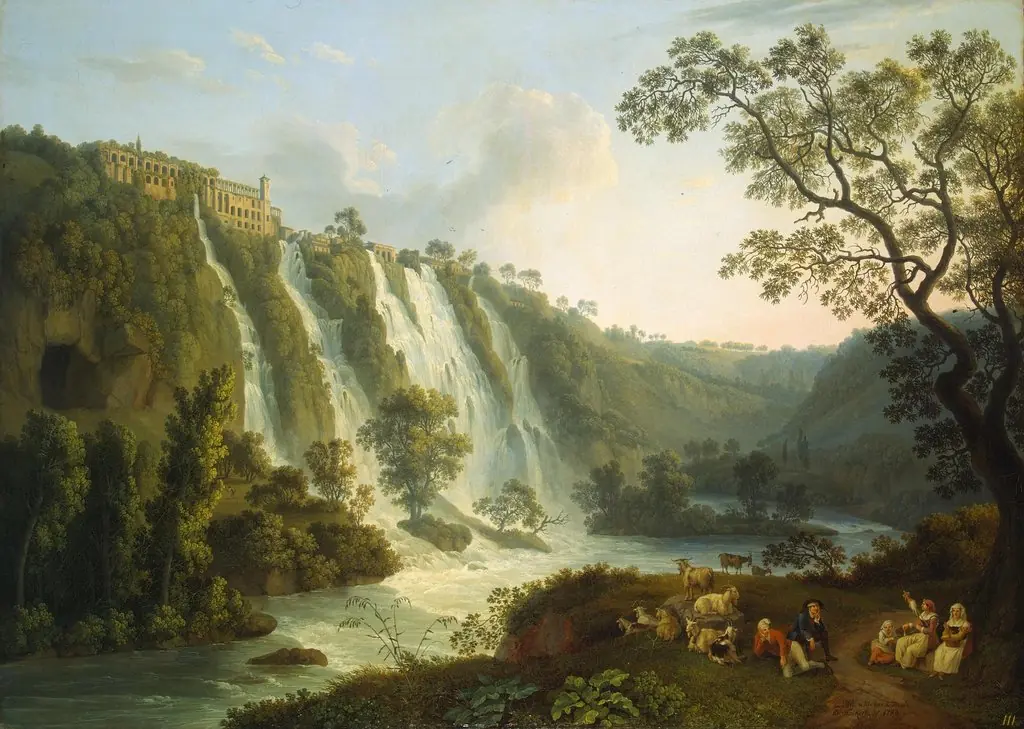 Villa of Maecenas and the Waterfalls at Tivoli
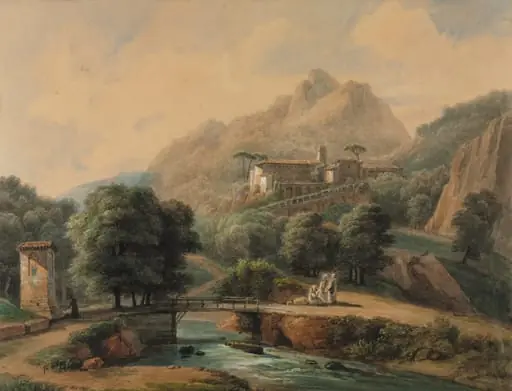 Paysage Italien: L'Abbaye et Les Religieux
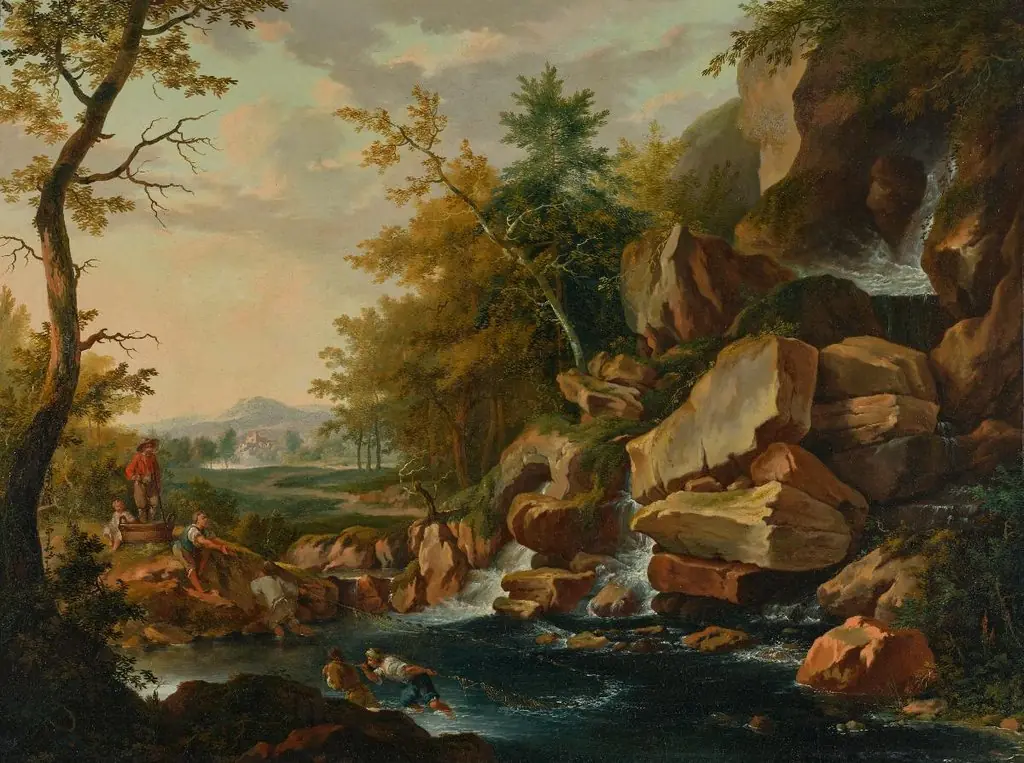 Felslandschaft mit Fischern