Artwork
Still Life with Monogramed Cup
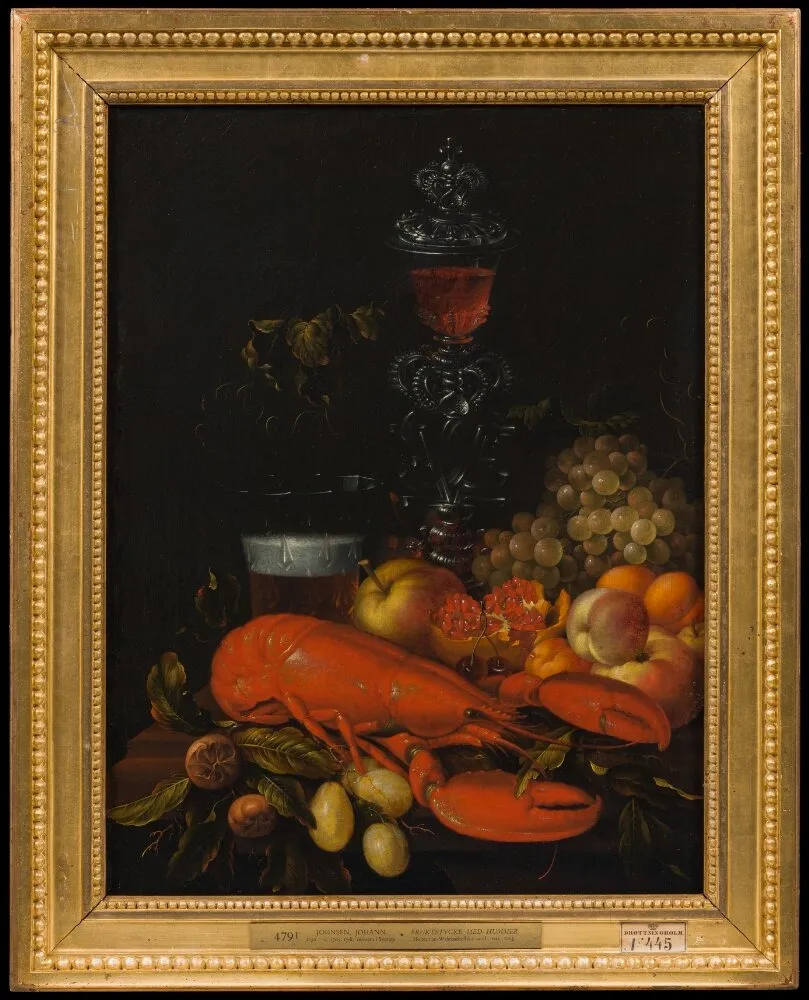
Still Life with Monogramed Cup is an oil painting by the Dutch Golden Age artist Johan Johnsen. It dates from 1693 and is held in the collection of the Nationalmuseum.
About this work
Overview
Set against a dark, undefined background, the composition emphasizes tactile surfaces and quiet observation.
Painted in 1693 by Johan Johnsen, this oil-on-canvas still life presents a modest arrangement of domestic objects: a monogrammed covered cup, assorted fruits, and a live lobster. Set against a dark, undefined background, the composition emphasizes tactile surfaces and quiet observation. The work is part of the Nationalmuseum’s collection in Stockholm, reflecting the Dutch-influenced tradition of Northern European still life painting in the late 17th century.
Subject & Meaning
The objects—grapes, peaches, pears, a lobster, and an engraved cup—suggest themes of abundance and transience. The lobster, still alive and clawed, may imply vitality or the fleeting nature of life, while the monogrammed cup hints at ownership or status. Together, these elements form a restrained meditation on material wealth and impermanence, common in Dutch and Scandinavian still lifes of the period.
Technique & Style
Johnsen employed oil paint to render textures with precision: the glossy sheen of fruit skin, the rough shell of the lobster, and the metallic gleam of the cup’s lid. Chiaroscuro modeling creates strong contrasts between light and shadow, giving form and weight to each object. The brushwork is controlled yet expressive, avoiding theatricality in favor of quiet realism and careful observation.
History & Provenance
The painting has remained in institutional hands since at least the 19th century, entering the Nationalmuseum’s collection as part of its broader effort to document Swedish and Nordic artistic heritage. Its attribution to Johan Johnsen, a lesser-known artist of the period, suggests it was valued for its technical competence rather than its fame. No earlier ownership records are widely documented.
Context
This work emerged during a time when still life painting flourished in Northern Europe, particularly in the Netherlands and Scandinavia. Artists often depicted everyday objects with symbolic undertones, blending observation with moral reflection. Johnsen’s painting aligns with this tradition, though its restrained palette and intimate scale distinguish it from more elaborate Dutch examples.
Legacy
Though not widely reproduced or studied, the painting contributes to the understanding of regional still life practices in late 17th-century Scandinavia. It demonstrates how local artists adapted Dutch compositional norms to suit local tastes and available subjects. Its preservation in a national museum underscores its role as a representative example of Nordic still life painting from the era.
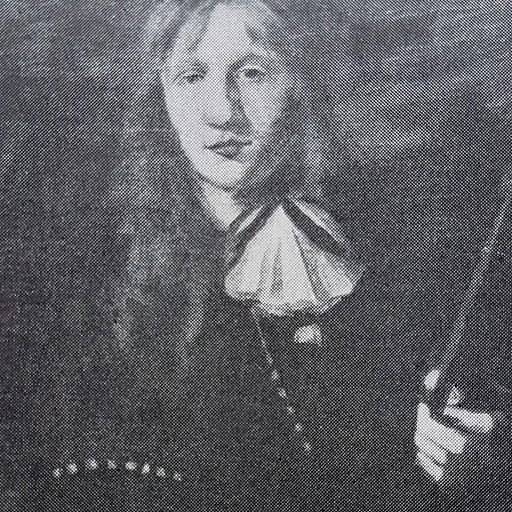
Artist & collection

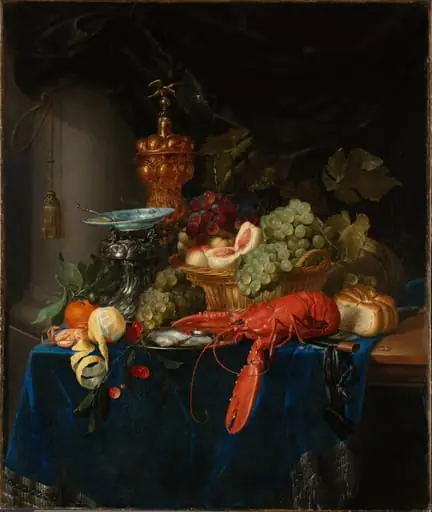 Untitled
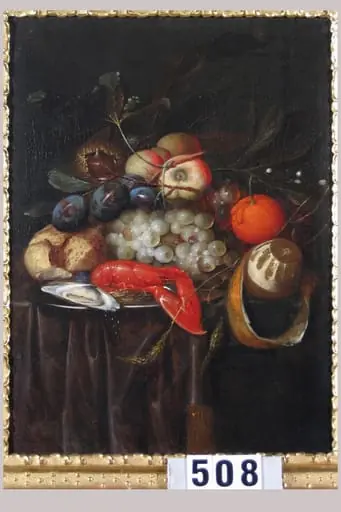 Fructe cu raci și stridii
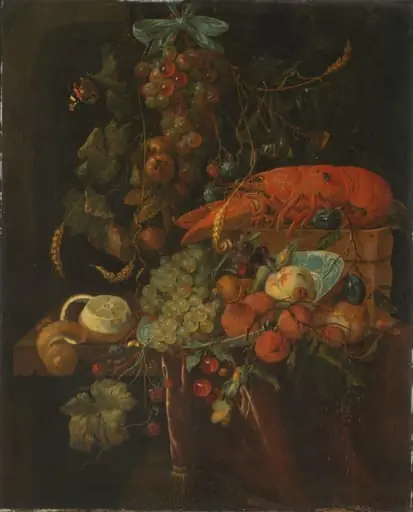 Still Life with Fruit and a Lobster
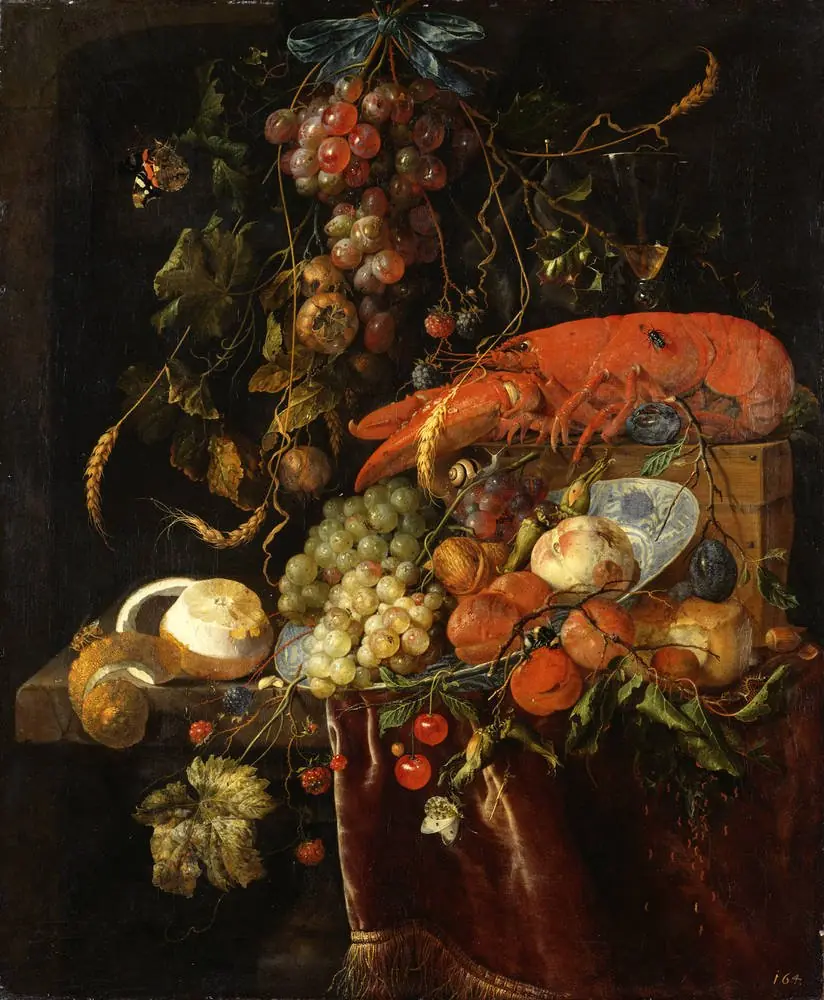 Still Life with a Lobster
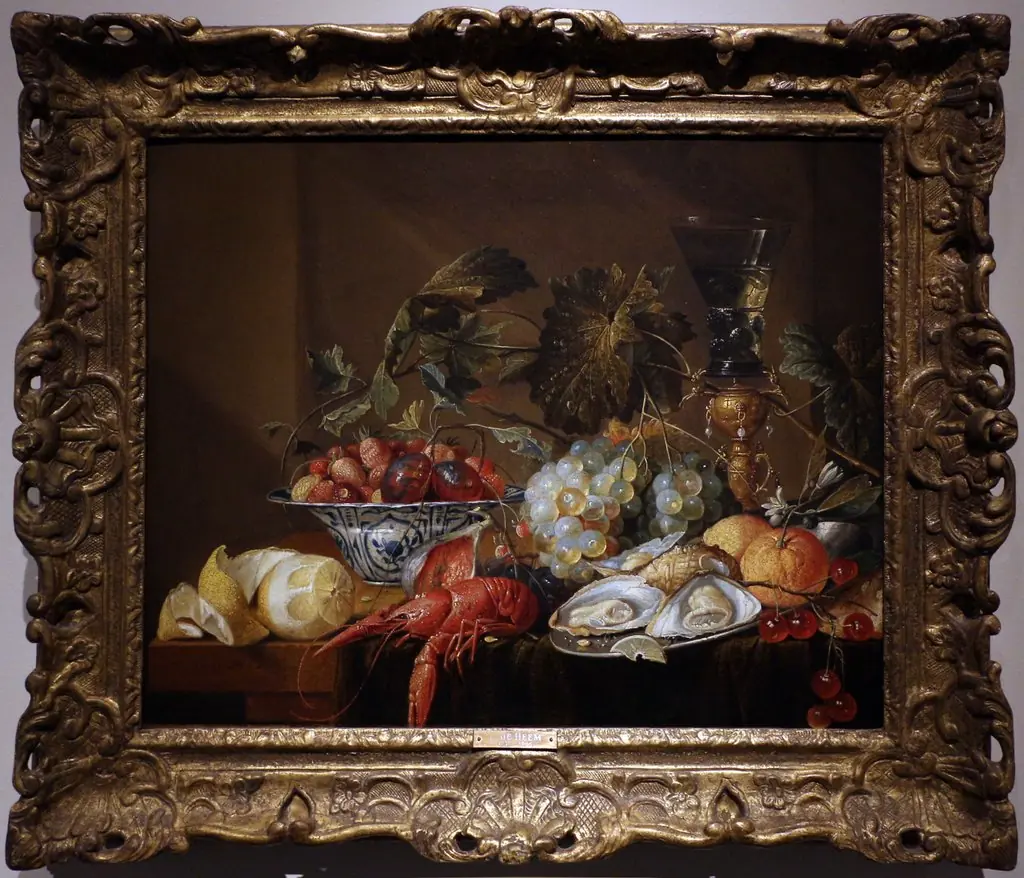 natura morta con gamberone, ostriche e frutta
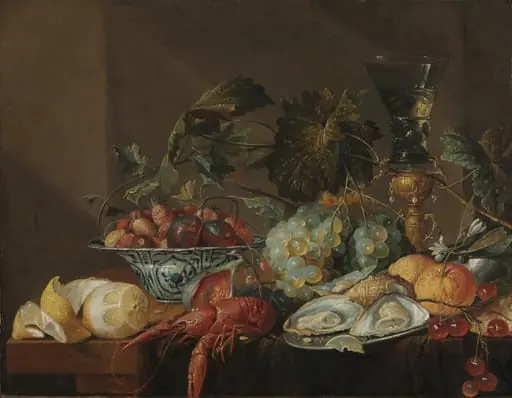 Still-Life with Crayfish, Oysters, and Fruit
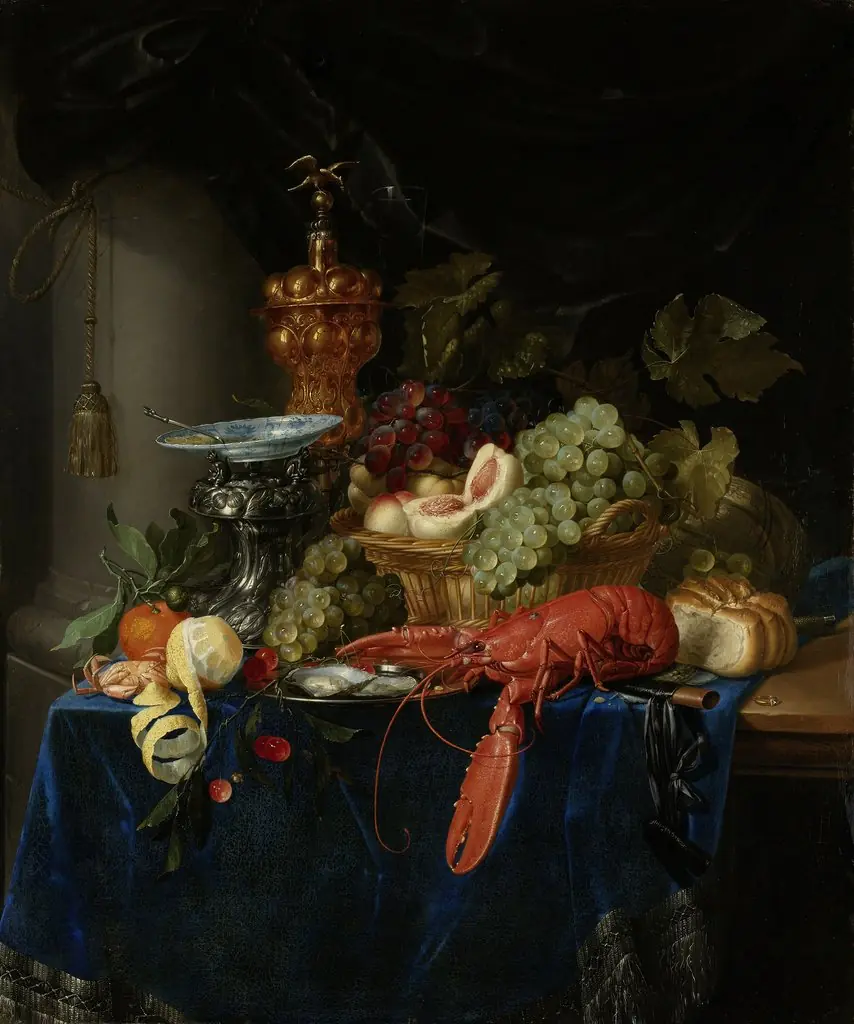 Still life with a golden goblet
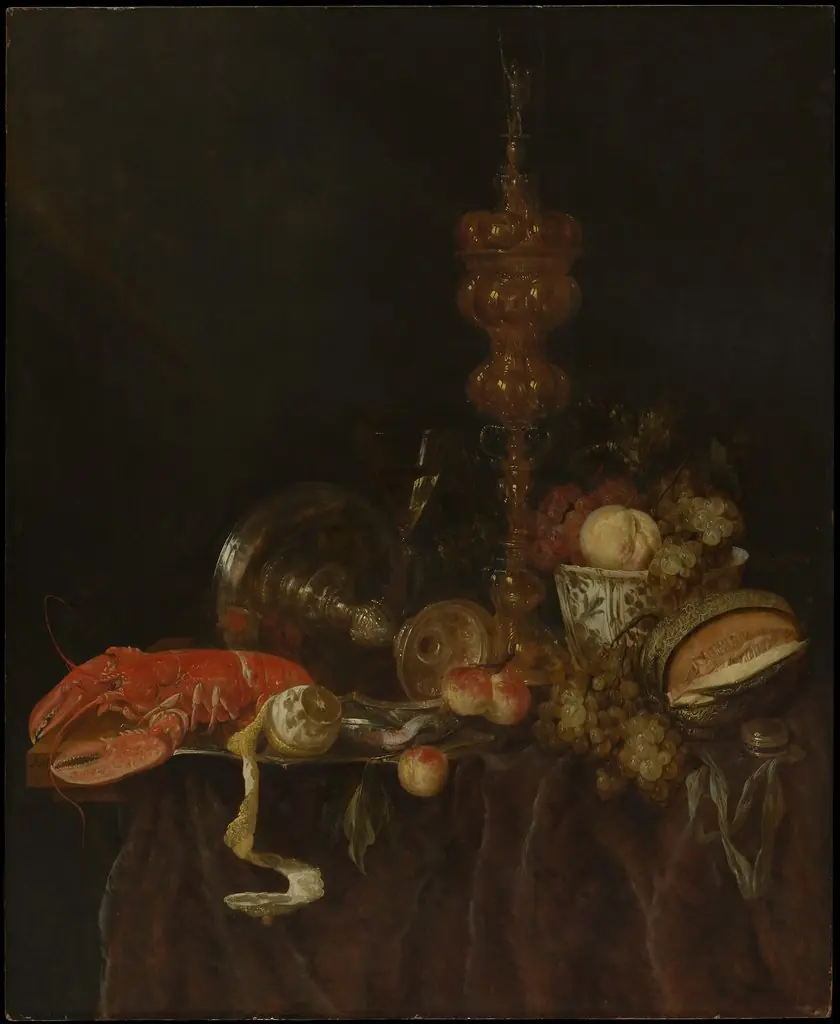 Still Life with Lobster and Fruit
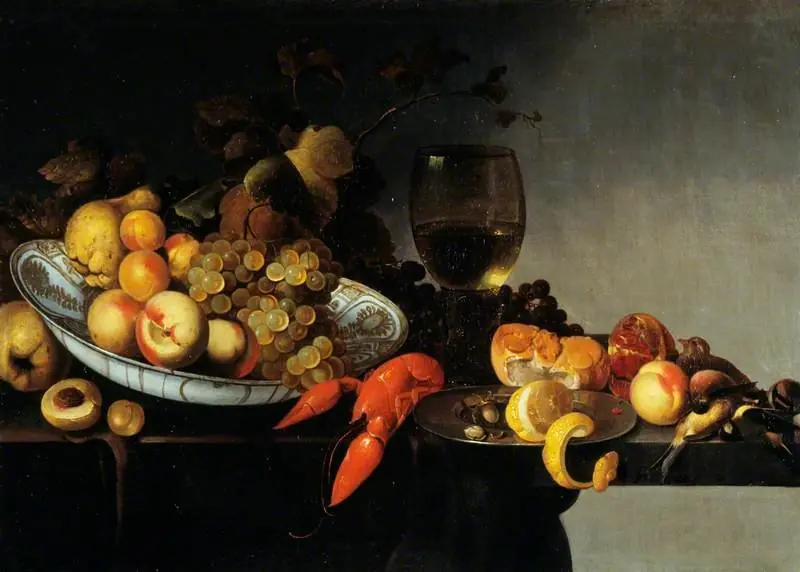 Still Life with Fruit, a Lobster and Dead Game
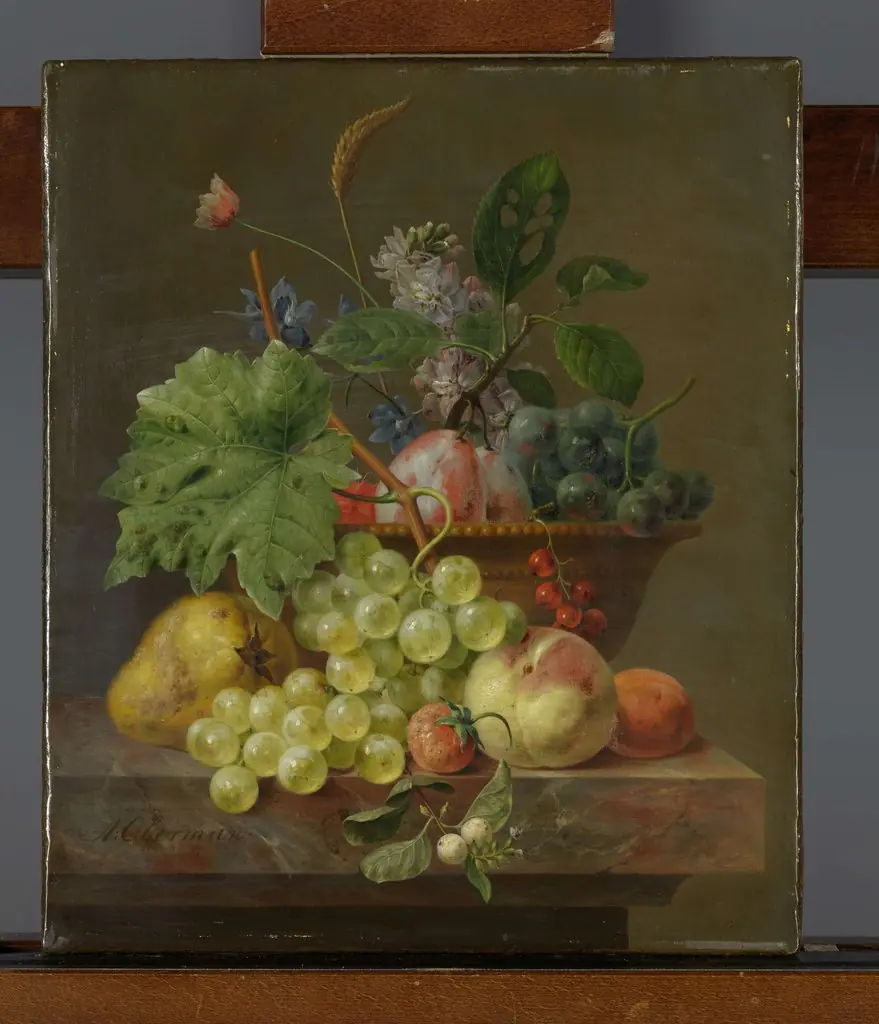 Still Life with Fruit in a Terracotta Dish
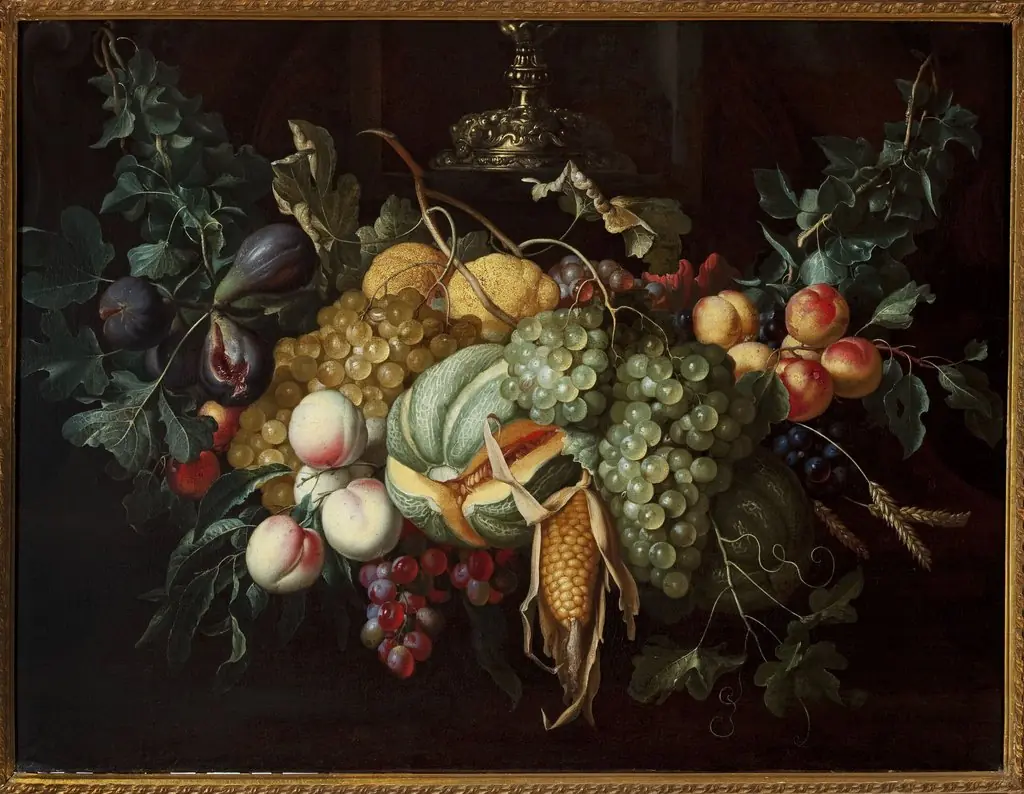 Still life with fruits and corn
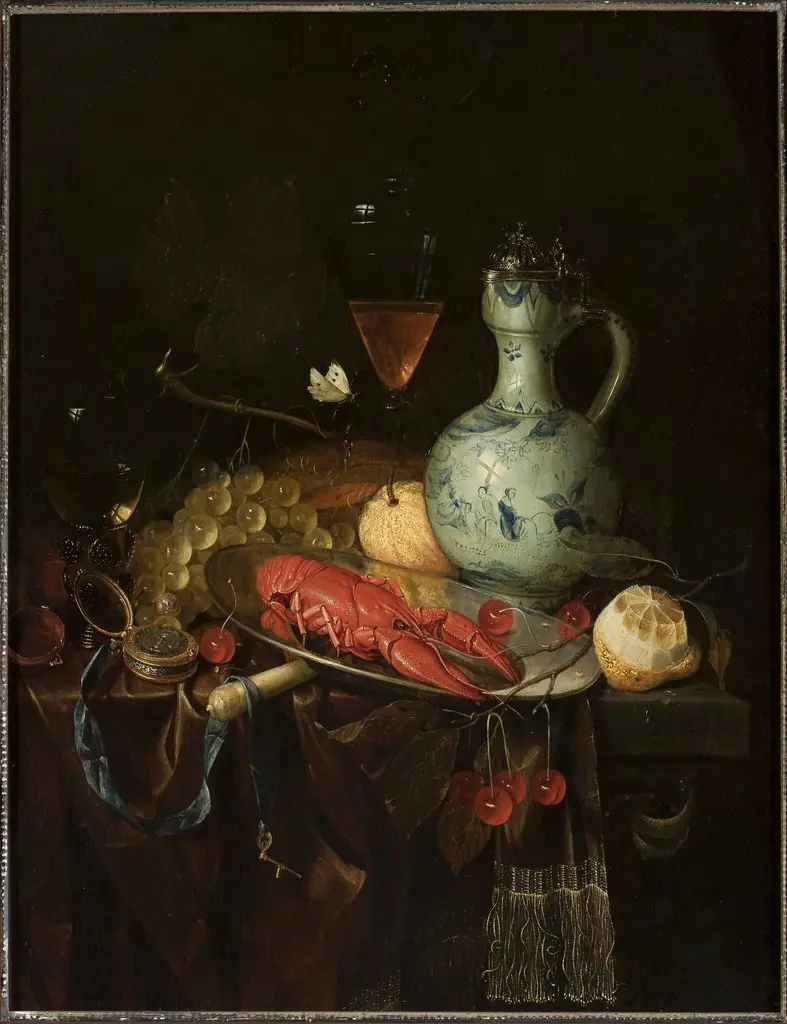 Still life with a watch