Artwork
Fredrik Arvid Trolle (1807-1839), friherre
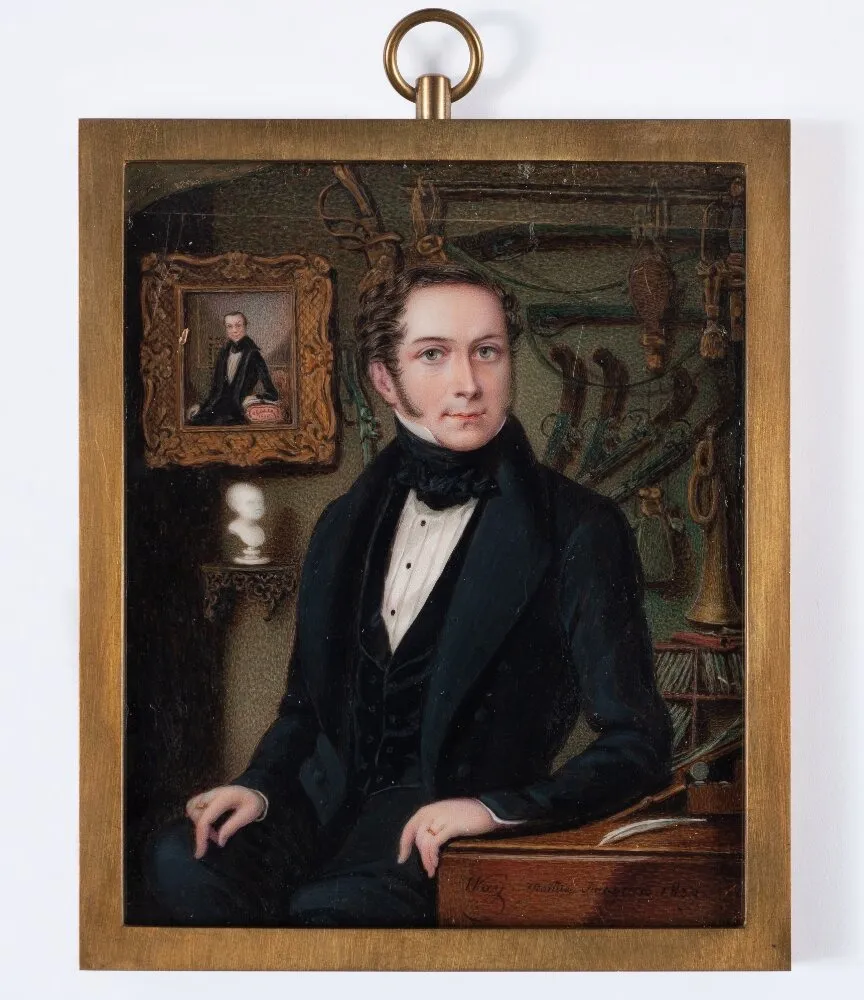
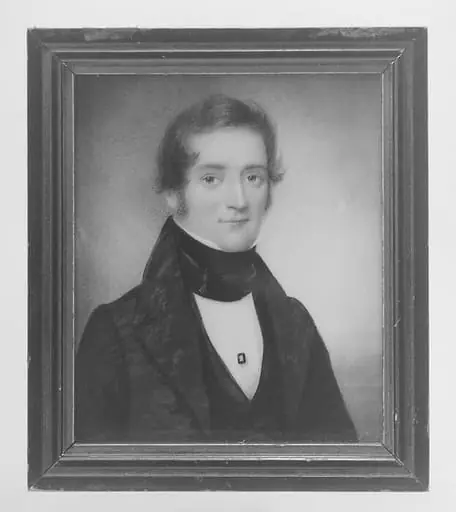
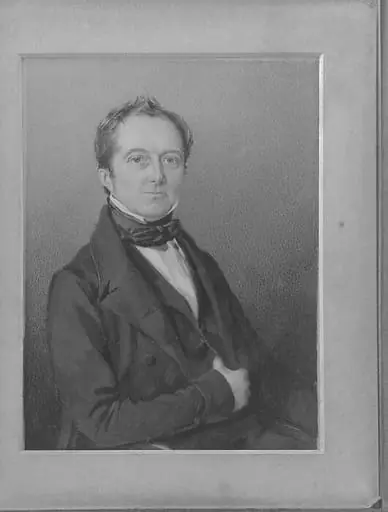
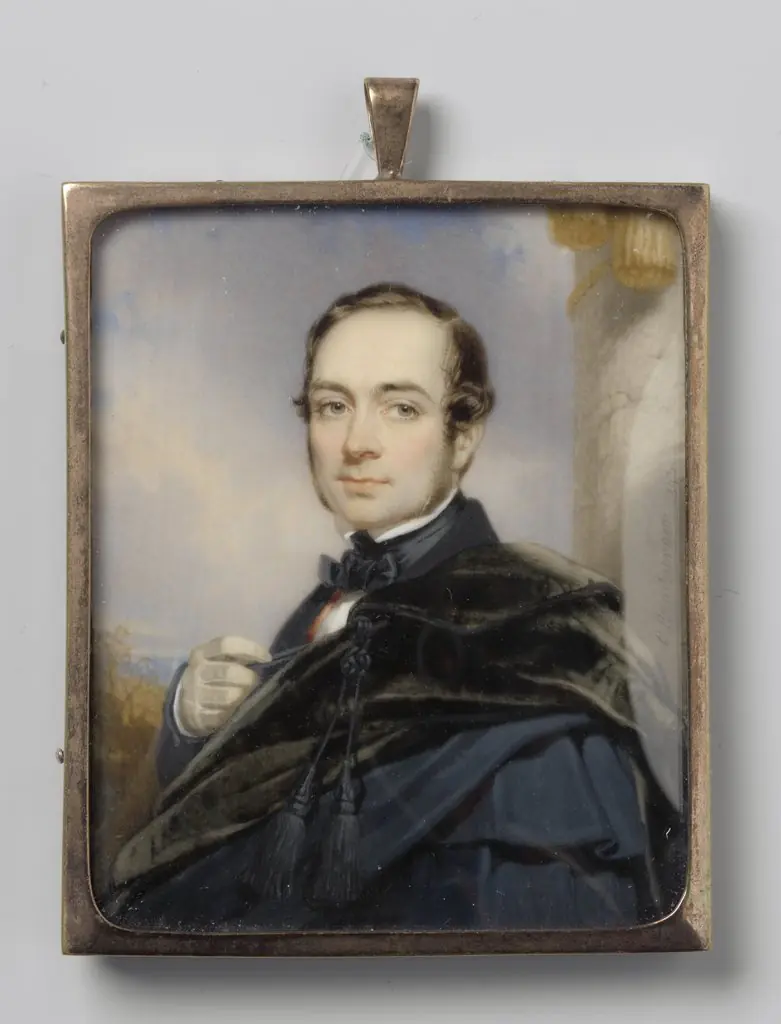
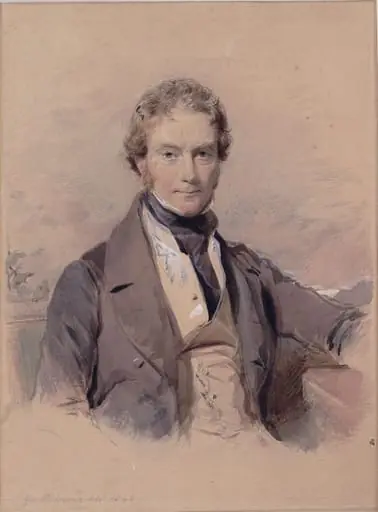
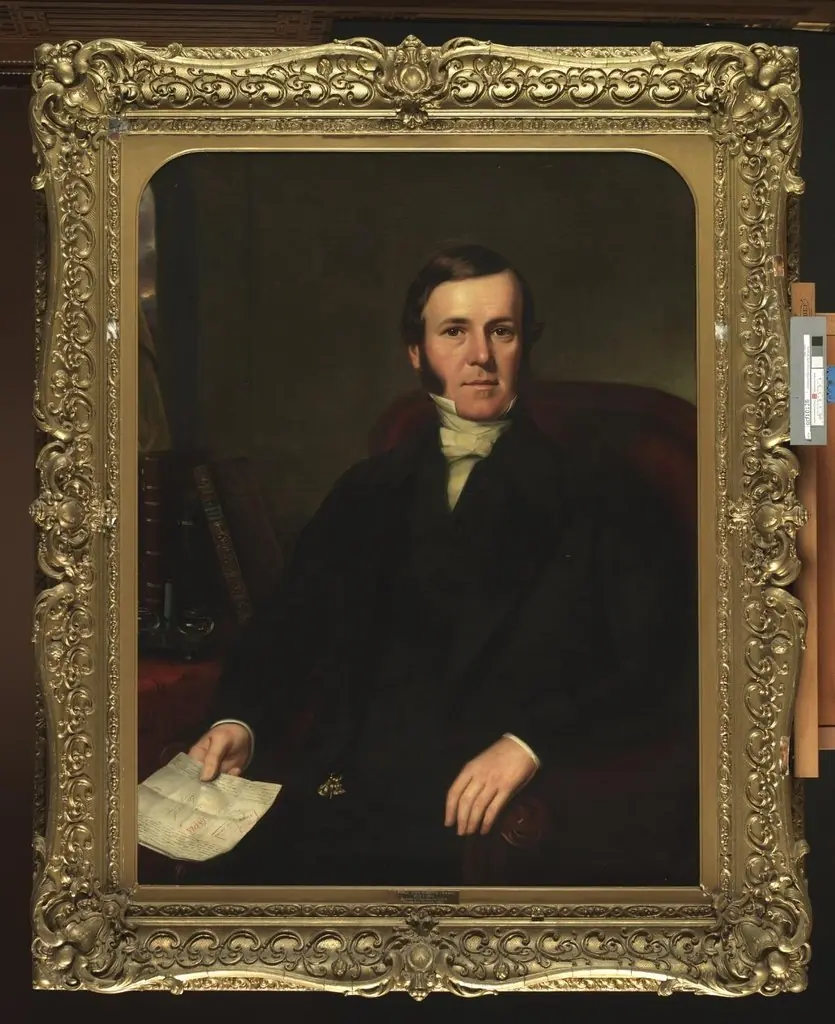
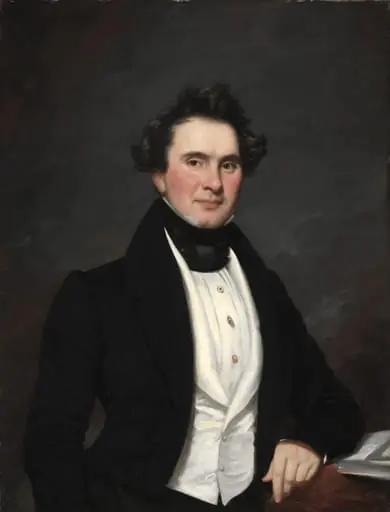
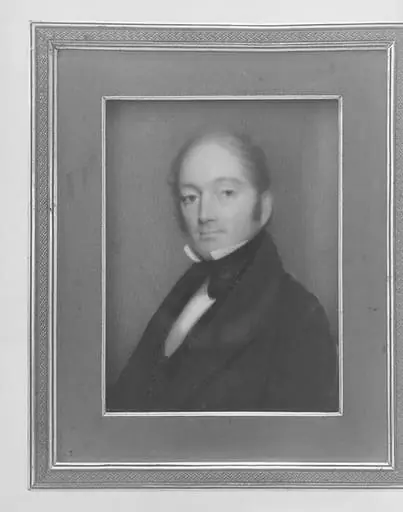
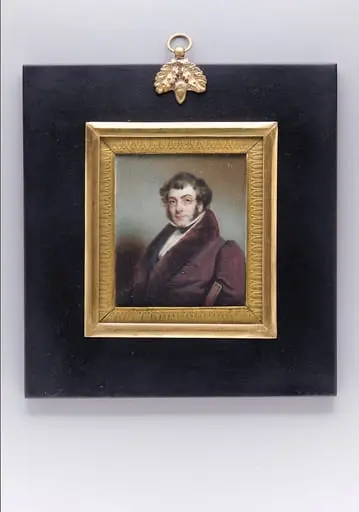
Fredrik Arvid Trolle (1807-1839), friherre is an unspecified painting by Johan Way. It dates from 1839 and is held in the collection of the Nationalmuseum.
About this work
Overview
In 1839 Johan Way painted a portrait of Fredrik Arvid Trolle, a Swedish baron born in 1807 who died the same year the canvas was finished. The oil work is part of the Nationalmuseum’s holdings in Stockholm and presents the sitter in a formal, interior setting.
Subject & Meaning
Trolle is shown seated at a wooden desk, dressed in a black coat, white shirt and black bow tie. His left hand rests on the surface, beside a quill and an inkwell, suggesting a connection to writing or administration. The background includes a framed portrait, a bust, and an arrangement of swords, reinforcing his aristocratic status and possibly his military affiliations.
Technique & Style
Way employs a restrained palette of dark tones contrasted with the crisp white of the shirt, rendering the fabrics with careful attention to texture. The composition follows a conventional portrait format, using chiaroscuro to model the figure against a detailed, yet subdued, interior. The inclusion of symbolic objects aligns with early‑19th‑century Swedish portrait conventions.
History & Provenance
The painting entered the Nationalmuseum’s collection after Trolle’s death, remaining in Swedish public ownership. Johan Way, besides his reputation as a portraitist, was also a military officer and writer, which may have informed his choice of props and the dignified atmosphere of the work.
Artist & collection
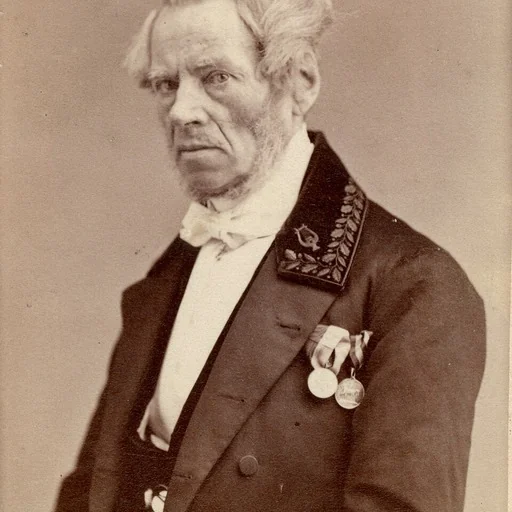
Artist
Johan Wilhelm Carl Way (11 June 1792, Rute, Gotland – 10 April 1873, Stockholm) was a Swedish professor, portrait painter, graphic artist, military officer and writer.