Artwork
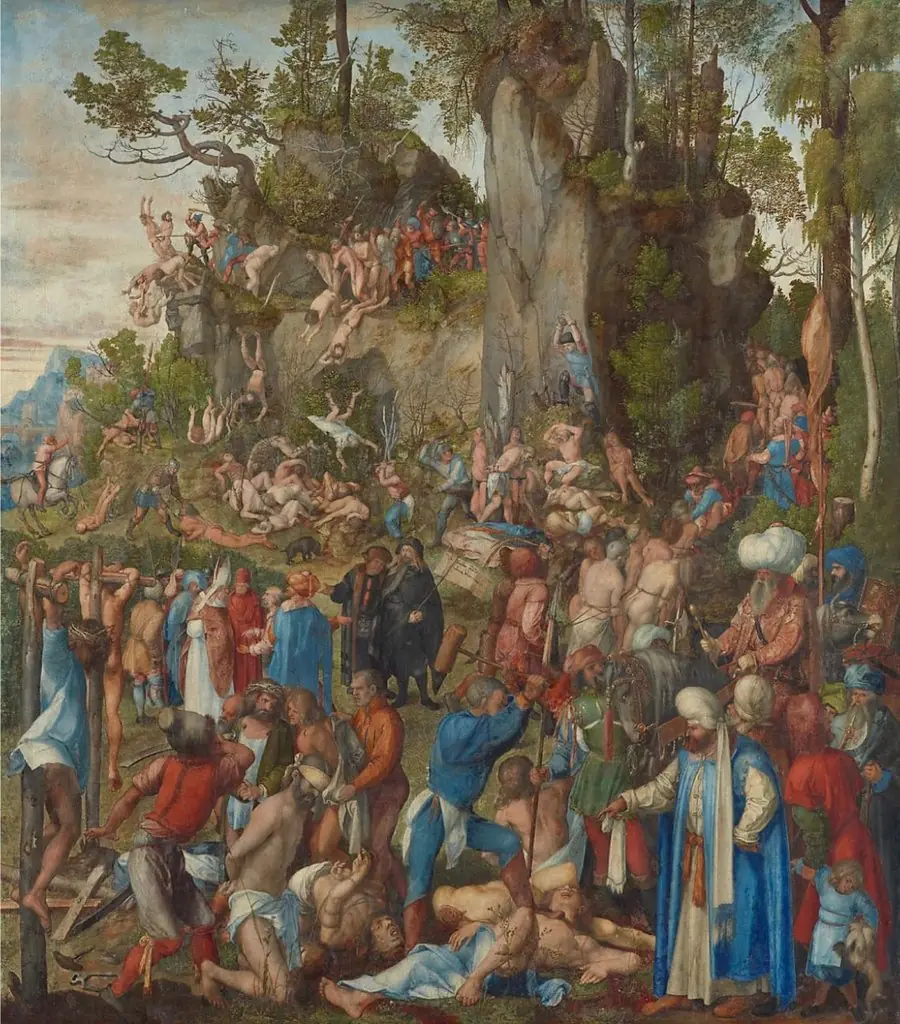
Marter der Zehntausend Christen
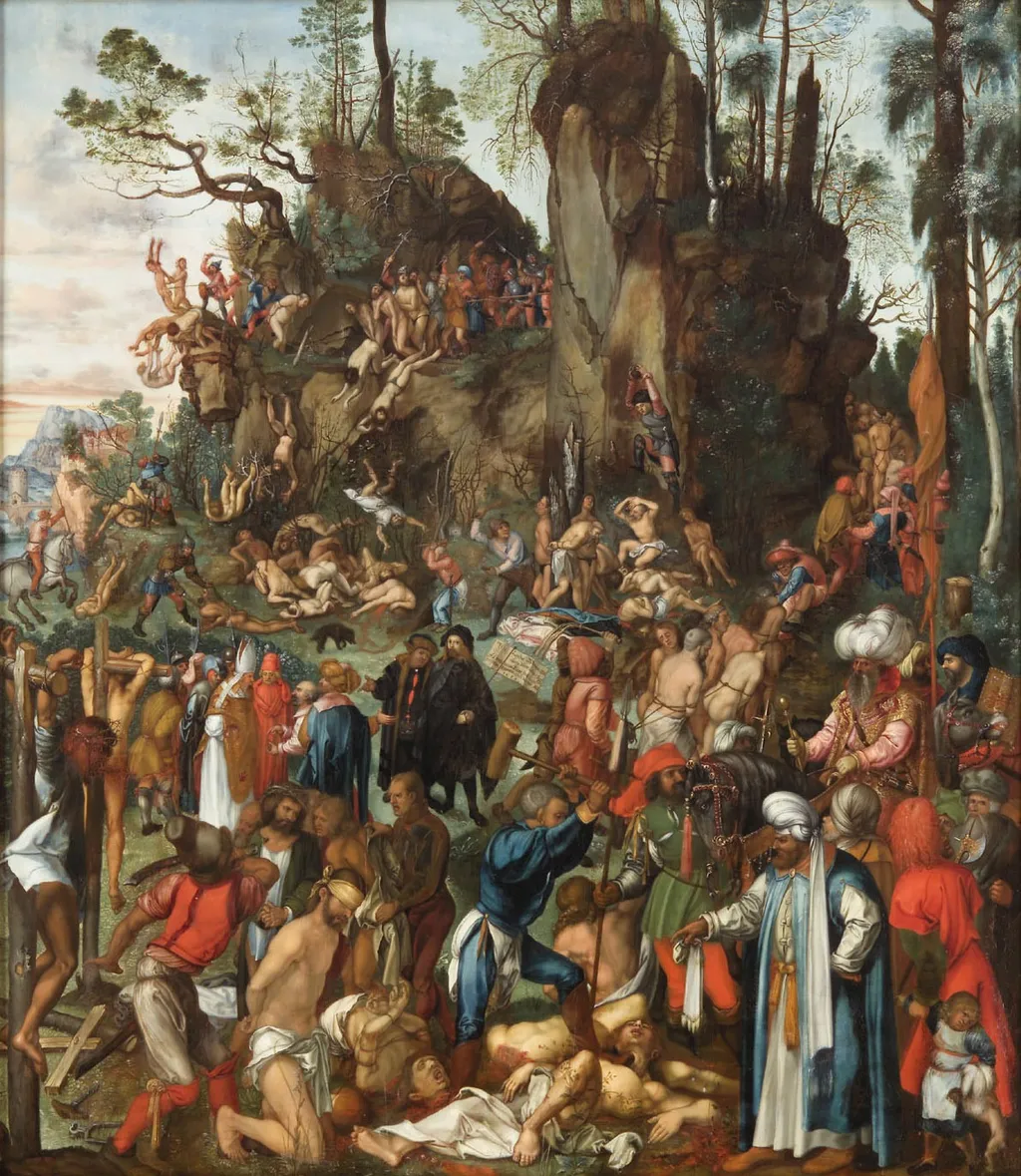
Marter der Zehntausend Christen is an unspecified painting by the Dutch Golden Age artist Johann Christian Ruprecht. It dates from 1653 and is held in the collection of the Kunsthistorisches Museum.
About this work
Overview
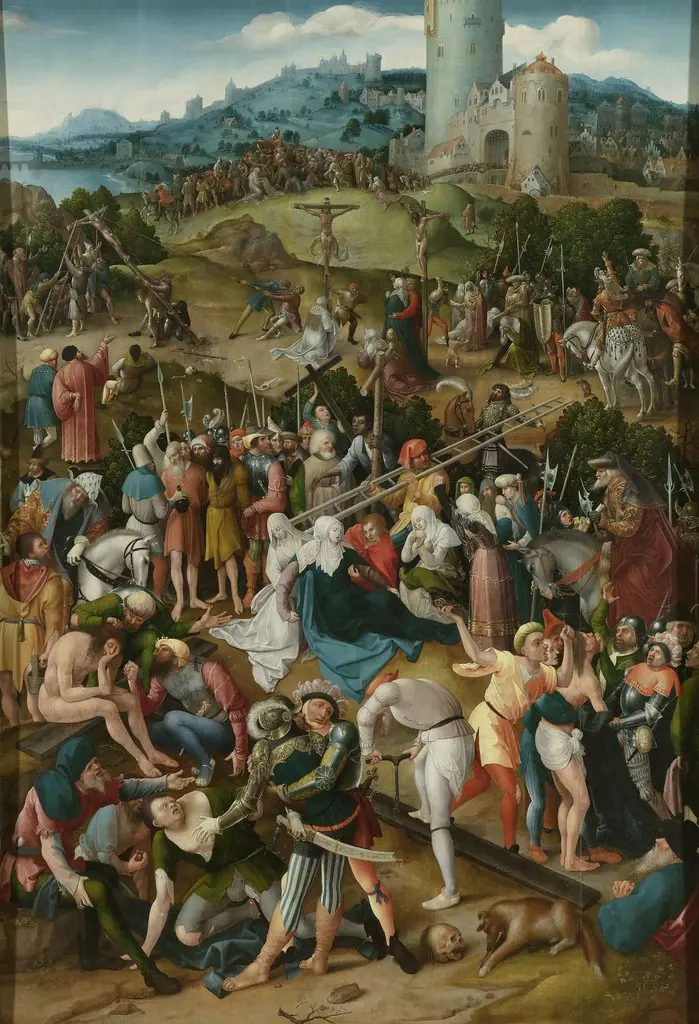
Johann Christian Ruprecht’s 1653 painting *Marter der Zehntausend Christen* presents a harrowing vision of mass execution. Measuring approximately 150 by 200 centimeters, the work occupies a large vertical format, allowing for dense figural composition. It resides in the Kunsthistorisches Museum, Vienna, where it remains part of the institution’s Baroque holdings.
Subject & Meaning
The scene illustrates the legendary martyrdom of ten thousand Christian soldiers under the Roman emperor Hadrian. Ruprecht condenses multiple acts of violence into a single, teeming panorama: victims are impaled, bludgeoned, or bound to trees. The painting does not narrate a specific historical event but instead amplifies the collective suffering as a testament to unwavering faith.
Technique & Style
Ruprecht employs a dark, earth-toned palette punctuated by flashes of crimson and ochre to heighten the brutality. Figures are rendered with vigorous, almost sculptural modeling, their contorted postures emphasizing physical agony. The composition relies on diagonal thrusts and overlapping bodies to create a sense of relentless motion, characteristic of mid-seventeenth-century Baroque drama.
History & Provenance
Commissioned in 1653, the work entered the imperial collections of the Habsburgs before being transferred to the Kunsthistorisches Museum upon its founding in 1891. No preparatory sketches or contemporary documents survive to clarify the original patron or intended display context, though its scale suggests a prominent ecclesiastical or court setting.
Context
The painting reflects Counter-Reformation imagery, in which martyrdom served as both moral exemplar and propaganda. During the Thirty Years’ War and its aftermath, such scenes reinforced Catholic identity by contrasting Protestant iconoclasm with the endurance of the faithful. Ruprecht’s treatment aligns with contemporaneous works that used extreme violence to evoke piety and divine justice.
Legacy
While Ruprecht’s reputation faded after his death, *Marter der Zehntausend Christen* endured as a study in Baroque pathos. Later scholars have examined its compositional strategies and thematic intensity, situating it within broader discussions of seventeenth-century religious art. The painting remains a key example of how violence was aestheticized to serve devotional and ideological ends.
Artist & collection
Artist
Johann Christian Ruprecht (1600–1666) was an artist, born in Mühlhausen/Thuringia.