Artwork
Man with Wheelbarrow (Le paysan rentrant du fumier)
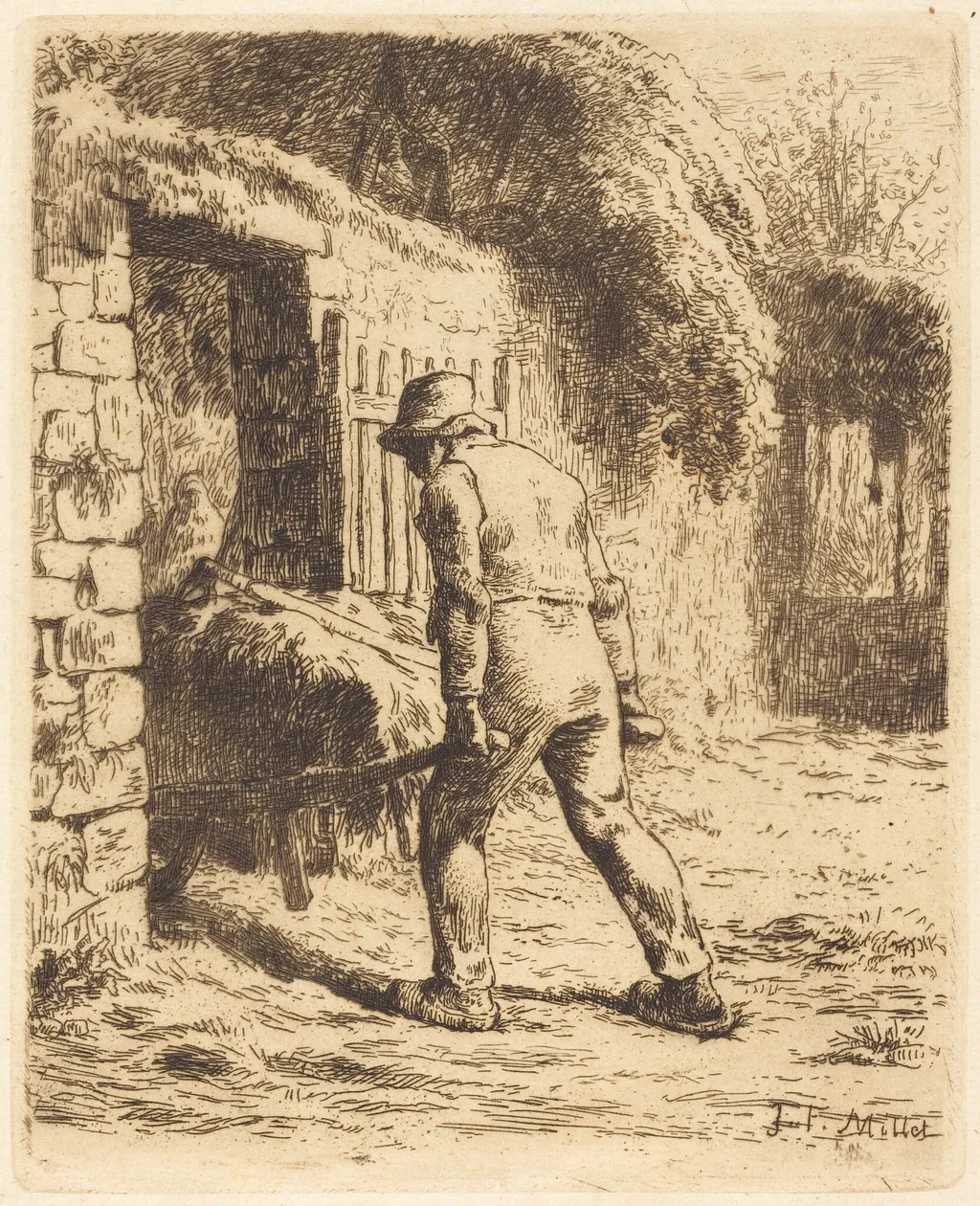
Man with Wheelbarrow (Le paysan rentrant du fumier) is an ink print by the Impressionist artist Jean François Millet. It dates from 1855 and is held in the collection of the National Gallery of Art.
About this work
Overview
Jean-François Millet’s 1855 etching *Man with Wheelbarrow* (Le paysan rentrant du fumier) presents a solitary agricultural worker advancing toward a stone wall while pulling a loaded wheelbarrow. The figure is rendered in loose clothing and a wide-brimmed hat, set against a rugged ground and a thicket of tangled trees that recede into the background.
Subject & Meaning
The image captures a moment of everyday labor, emphasizing the physicality of peasant work in mid‑nineteenth‑century France. By focusing on a single, unnamed laborer, Millet underscores the dignity and routine of rural life, aligning the composition with the Realist aim of portraying ordinary people without romanticization.
Technique & Style
Millet employs swift, scratchy line work characteristic of his printmaking practice, using varied hatching to suggest light, shadow, and texture. The etching’s economy of line conveys movement and the tactile quality of the terrain, while the contrast between the dark silhouette of the figure and the lighter surrounding foliage creates a sense of immediacy.
History & Provenance
Created during the early phase of Millet’s career, the print reflects his involvement with the Barbizon school, a group that advocated naturalistic depictions of the countryside. Though primarily known for later landscape paintings, this work illustrates his simultaneous interest in the lives of laborers, a theme he would continue to explore in subsequent drawings, pastels, and prints.
Own this work as a print
Artist & collection
Artist
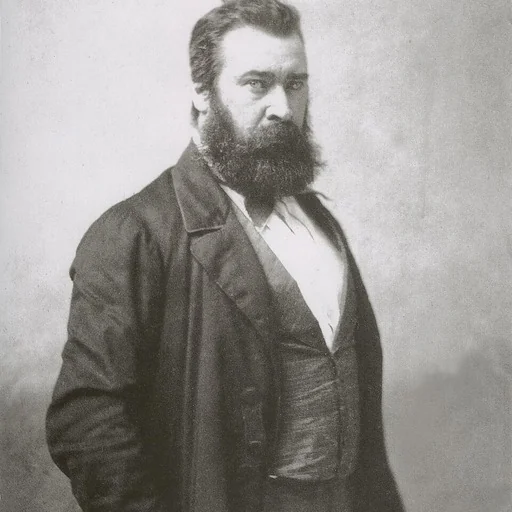
Jean-François Millet (French pronunciation: ; 4 October 1814 – 20 January 1875) was a French painter and one of the founders of the Barbizon school in rural France.

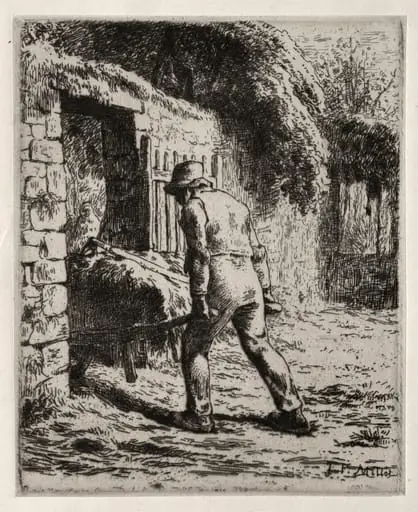 Peasant Returning from the Manure Heap
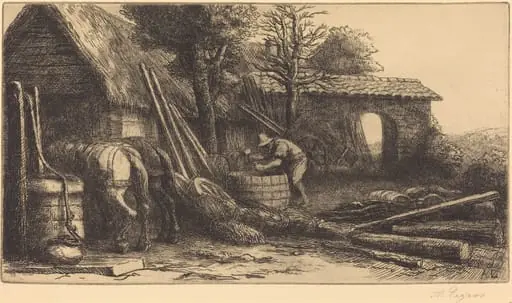 The Cooper (Le tonnelier)
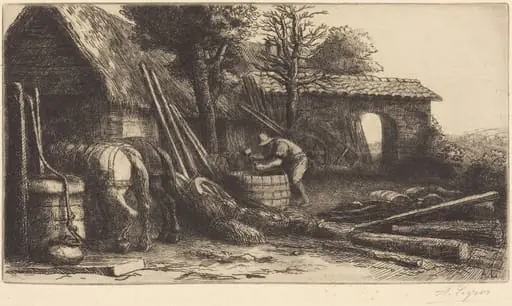 The Cooper (Le tonnelier)
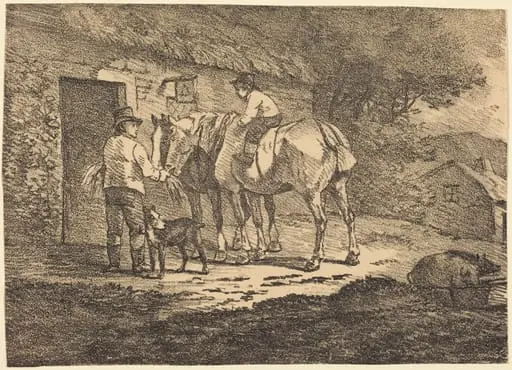 Horses at Cottage Door
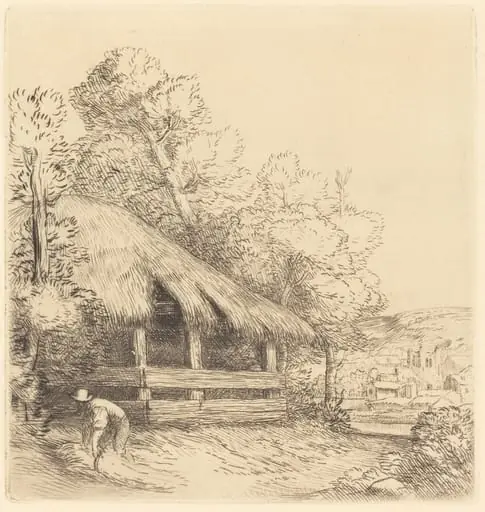 Little Shelter (Le petit hangar)
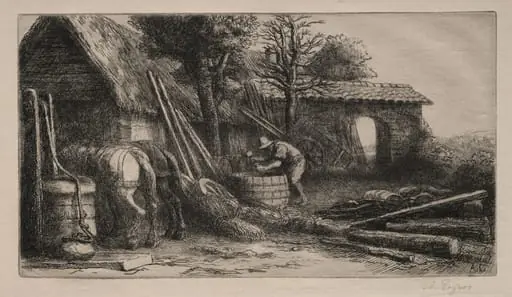 Le Tonnelier
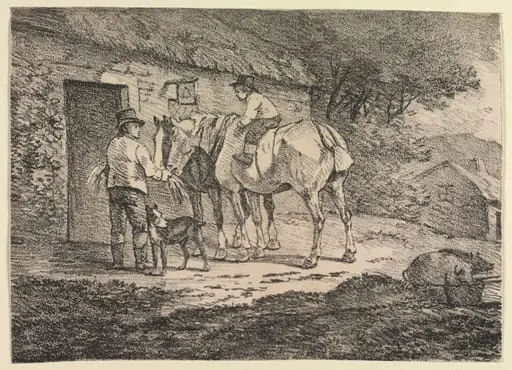 Specimens of Polyautography: Horses at a Cottage Door
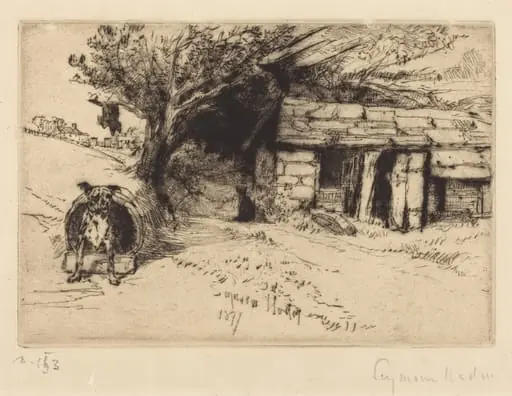 The Cabin
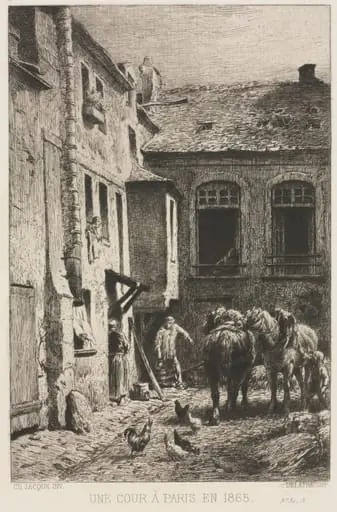 A Courtyard in Paris
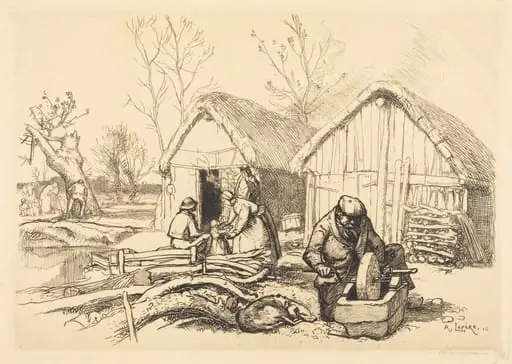 The House of the Woodcutter, Vendee (La maison du bucheron, Vendee)