Artwork
Le Tonnelier
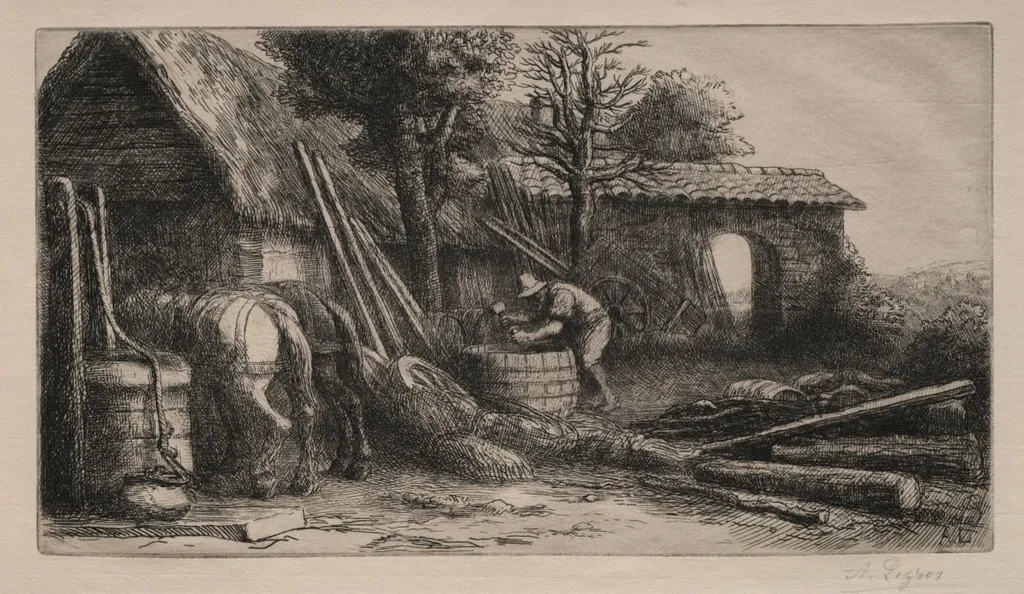
Le Tonnelier is a print by the Impressionist artist Alphonse Legros. It dates from 1884 and is held in the collection of the Cleveland Museum of Art.
About this work
Overview
The composition captures an unidealized moment of manual labor, rendered with deliberate haste and minimal detail, emphasizing atmosphere over finish.
Le Tonnelier is a monochrome print by Alphonse Legros, dated 1884, and currently held in the collection of The Cleveland Museum of Art. Executed in ink on paper, it depicts two laborers engaged in the quiet, physical work of barrel-making near a modest rural dwelling. The composition captures an unidealized moment of manual labor, rendered with deliberate haste and minimal detail, emphasizing atmosphere over finish.
Subject & Meaning
The scene portrays two working-class men—one filling a barrel with liquid, the other holding a stave pole—engaged in the routine tasks of a cooper’s trade. No narrative climax is suggested; instead, the focus lies in the dignity of ordinary labor. The absence of facial detail and the muted setting reinforce a sense of anonymity, reflecting Legros’s interest in the quiet endurance of rural workers rather than their glorification.
Technique & Style
Legros employed rapid, expressive ink lines to convey texture and movement, avoiding smooth contours in favor of fragmented strokes. The roughness of wood, fabric, and tools is suggested through hatched and crosshatched marks, while the loose handling of the background implies depth without definition. The tonal range is restrained, relying on contrast and negative space to evoke light and shadow, characteristic of his sketch-based aesthetic.
History & Provenance
Created in 1884, the print emerged during Legros’s tenure as a professor at Slade School of Fine Art in London, where he championed direct observation and draftsmanship. It entered The Cleveland Museum of Art’s collection through the John L. Severance Fund, reflecting early 20th-century American interest in European realist prints. Its preservation underscores its value as a document of 19th-century artistic pedagogy and social realism.
Context
In the late 19th century, Legros aligned with artists who rejected academic idealism in favor of truthful depictions of labor and rural life. His work resonated with broader European movements, including the Barbizon School and French Realism, which elevated everyday scenes as worthy subjects. Unlike contemporaries who dramatized labor, Legros favored understated observation, aligning his prints with the quiet poetry of the commonplace.
Legacy
Le Tonnelier exemplifies Legros’s influence on the revival of printmaking as a serious medium for artistic expression. His emphasis on spontaneous drawing and truthful representation inspired later generations of British and American artists, particularly those invested in social realism. The work remains a touchstone for understanding how sketch-like precision could convey both technical discipline and human presence without embellishment.
Artist & collection

Artist
Alphonse Legros (French pronunciation: ; 8 May 1837 – 8 December 1911) was a French, later British, painter, etcher, sculptor, and medallist.

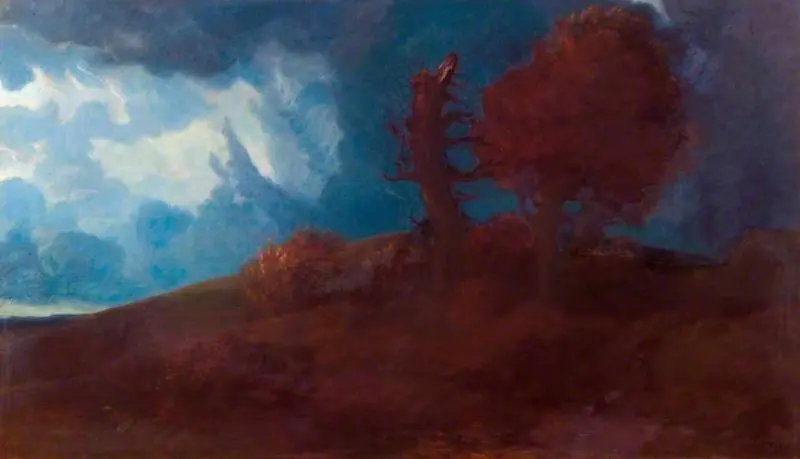
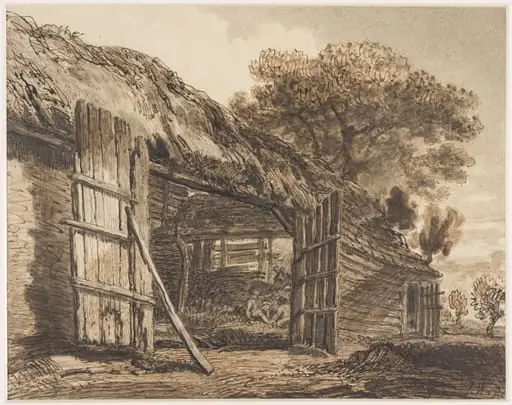 A Study from Nature.
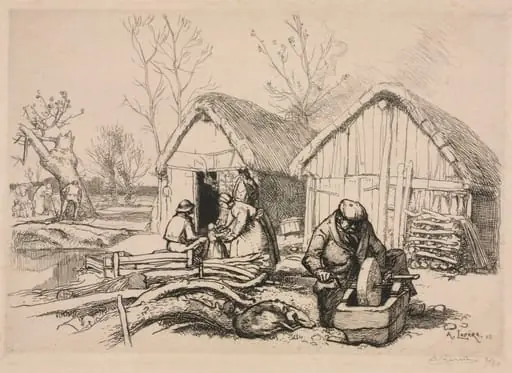 The Woodcutter’s House (Vendée)
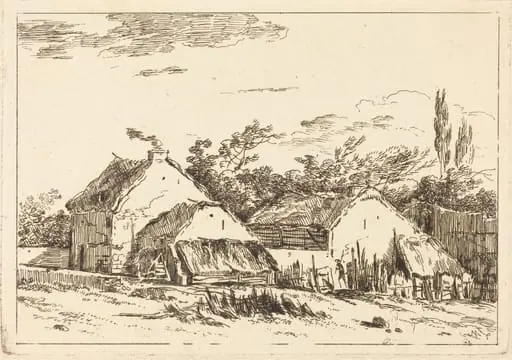 Two Barns
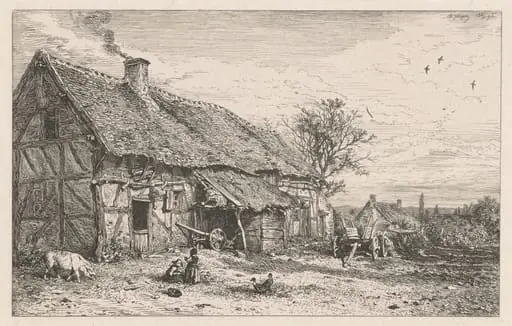 Peasant's House
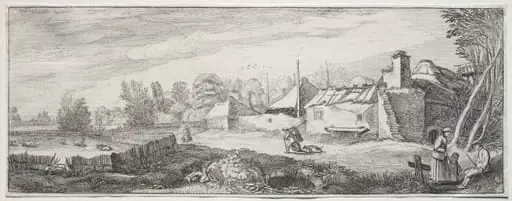 Some Pleasing Landscapes and Ruins of Ancient Monuments: Dilapidated Farm
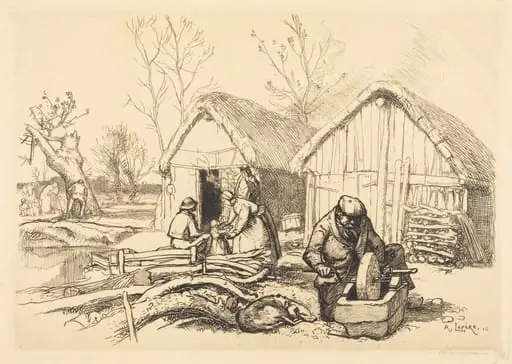 The House of the Woodcutter, Vendee (La maison du bucheron, Vendee)
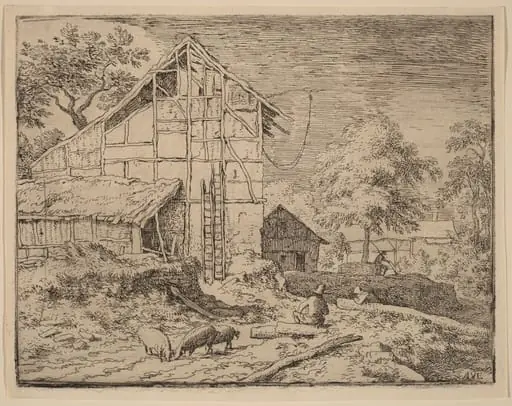 Cottage with Two Ladders
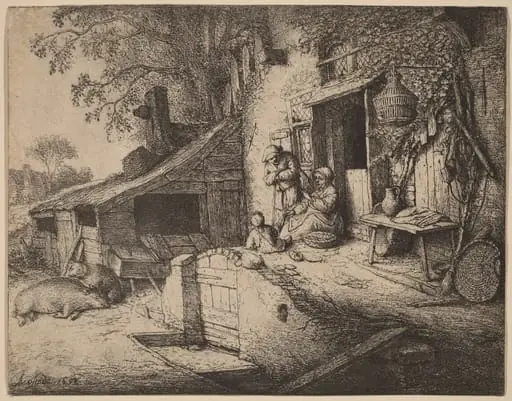 Farmstead wtih a Peasant Family Outside the Front Door, the Woman Spinning
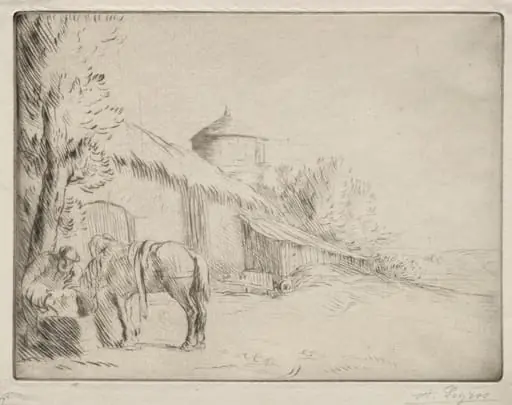 The Watering Place (2nd Plate)
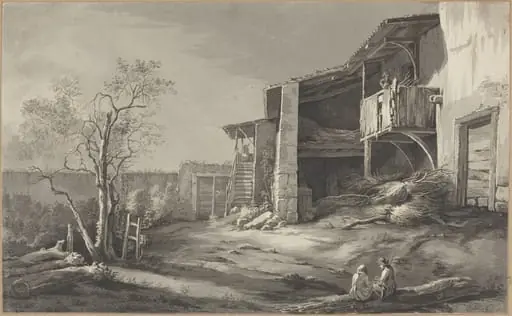 A Farmyard