Artwork
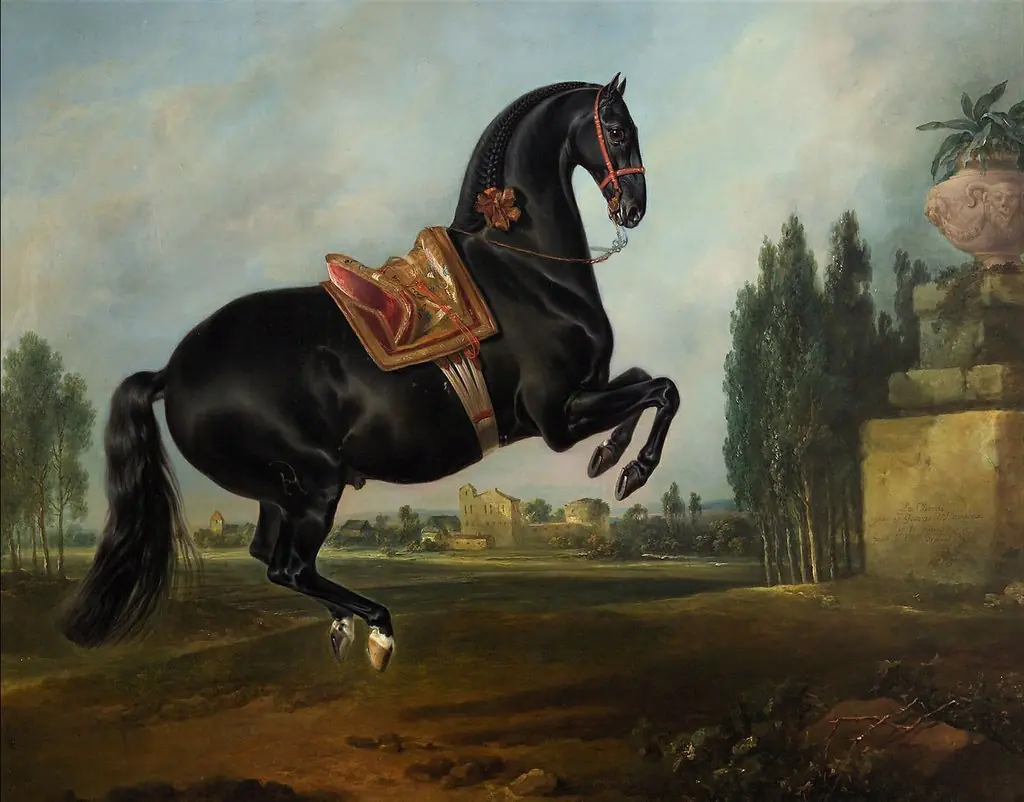
Kladruber Hengst "Cerbero" in der Kapriole
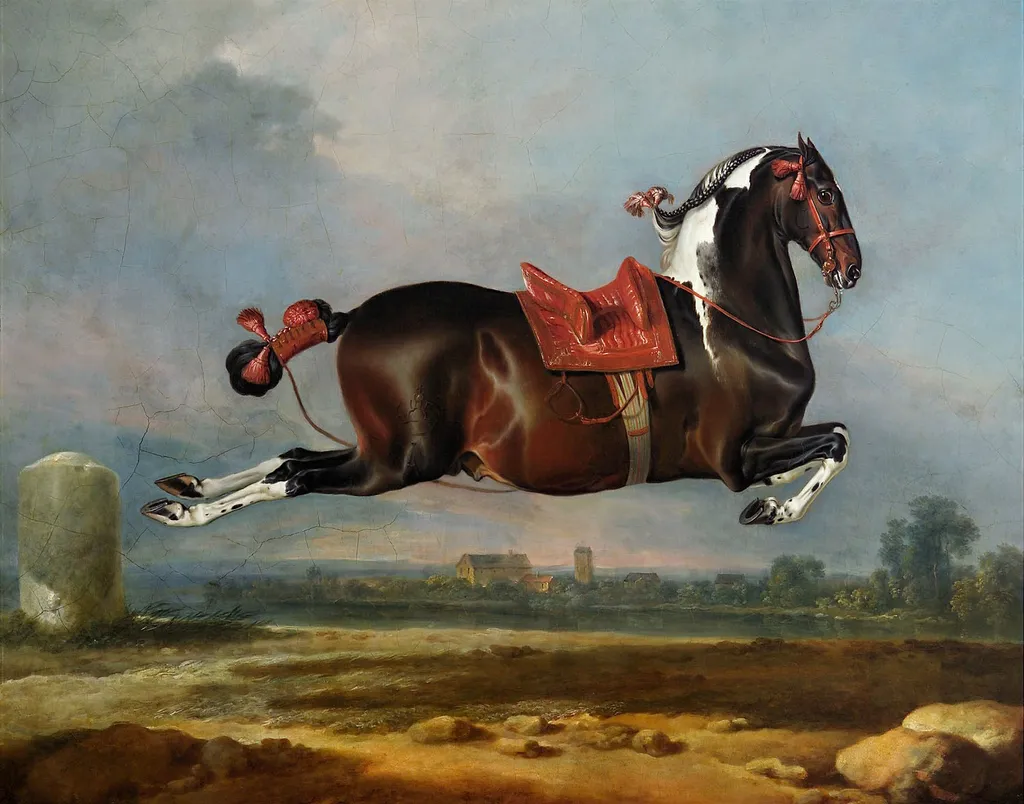
Kladruber Hengst "Cerbero" in der Kapriole is an unspecified painting by Johann Georg de Hamilton. It dates from 1721 and is held in the collection of the Kunsthistorisches Museum.
About this work
Overview
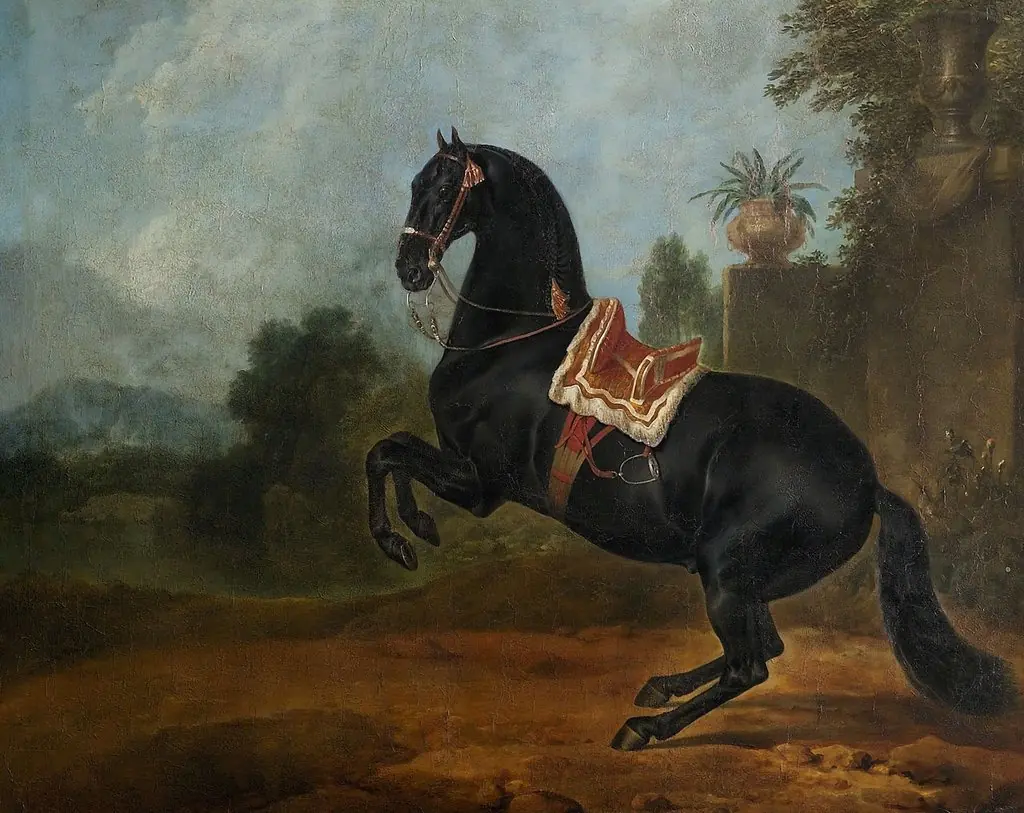
Painted in 1721 by Johann Georg de Hamilton, this work captures a Kladruber stallion performing a capriole—a controlled leap in which the horse kicks out its hind legs mid-air. The painting is part of the Kunsthistorisches Museum’s collection in Vienna, reflecting the Habsburg court’s interest in equestrian art and horsemanship as expressions of power and refinement.
Subject & Meaning
The stallion’s breed, Kladruber, was reserved for ceremonial use, reinforcing the painting’s connection to aristocratic ritual and imperial prestige.
The horse, Cerbero, is rendered in a moment of athletic precision, symbolizing the mastery of both animal and rider. The capriole, a maneuver associated with haute école dressage, conveyed control over nature and the nobility’s cultivated discipline. The stallion’s breed, Kladruber, was reserved for ceremonial use, reinforcing the painting’s connection to aristocratic ritual and imperial prestige.
Technique & Style
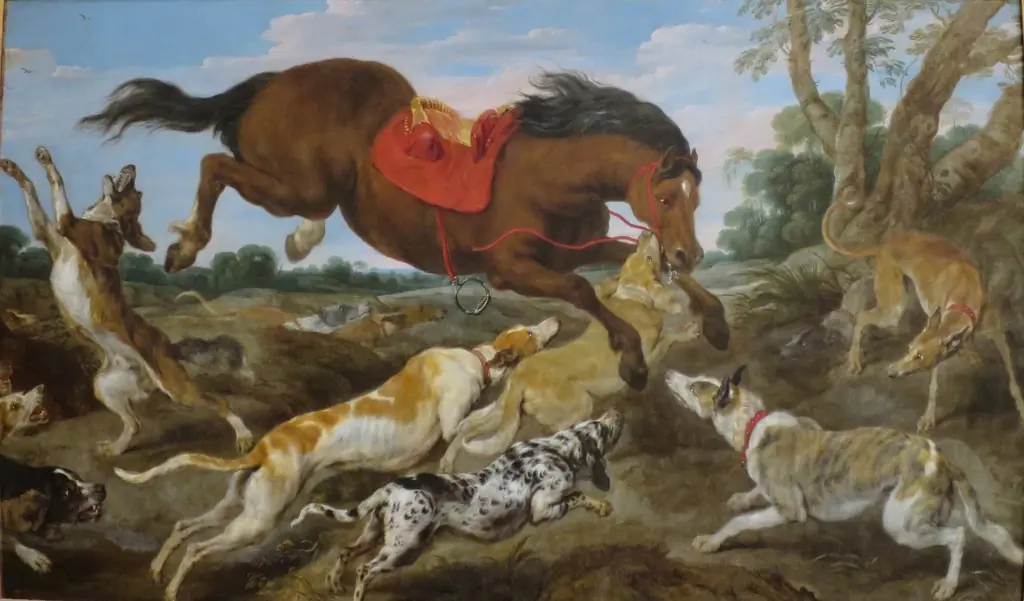
Hamilton employs precise brushwork to define the horse’s musculature and the texture of its coat, contrasting the smoothness of the red saddle with the softness of the sky. The background landscape is rendered with loose, atmospheric strokes, grounding the dynamic figure in a real-world setting. Light falls evenly, enhancing the clarity of motion without dramatic chiaroscuro, aligning with Baroque naturalism rather than theatricality.
History & Provenance
Commissioned during the early 18th century, the painting likely originated in the Habsburg stables, where Kladruber horses were bred for state ceremonies. It entered the Kunsthistorisches Museum’s holdings through imperial collections, preserved as part of a broader archive of courtly equestrian imagery. Its survival reflects sustained interest in equine portraiture as historical documentation.
Context
In early 18th-century Europe, equestrian art served both aesthetic and political functions. The Kladruber breed, developed in Bohemia, was prized for its elegance and strength in royal processions. Hamilton’s depiction aligns with a tradition of court painters documenting noble horses, reinforcing the monarchy’s association with grace, order, and control over the natural world.
Legacy
The painting remains a key example of Baroque equine portraiture in Central Europe, valued for its technical accuracy and historical specificity. While not widely reproduced, it contributes to scholarly understanding of Habsburg equestrian culture and the role of animals in aristocratic identity. Its preservation underscores the importance of animal subjects in historical visual records.
Artist & collection