Artwork
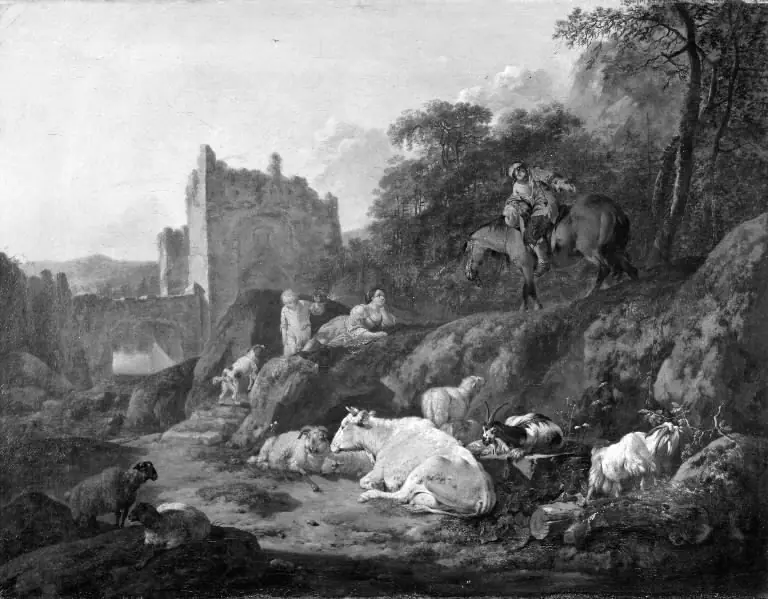
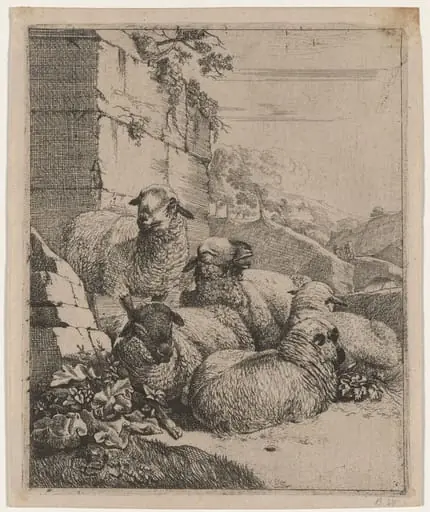
Sheep Near the Ruins of an Arch
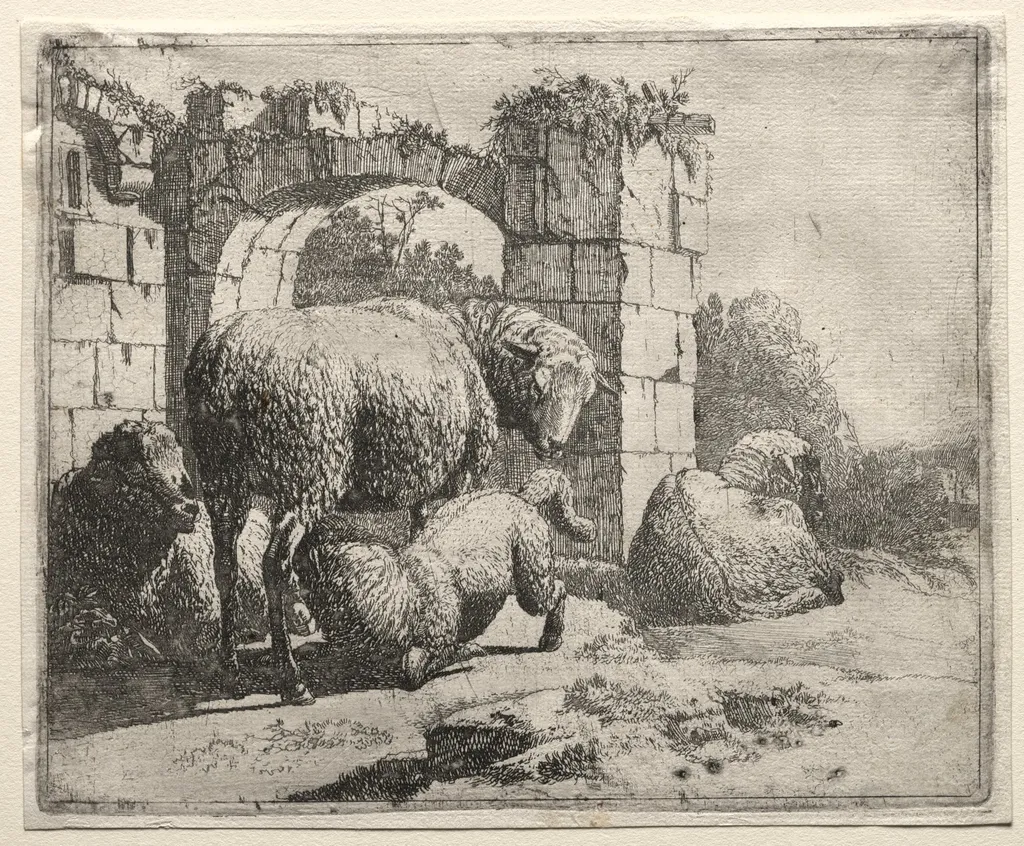
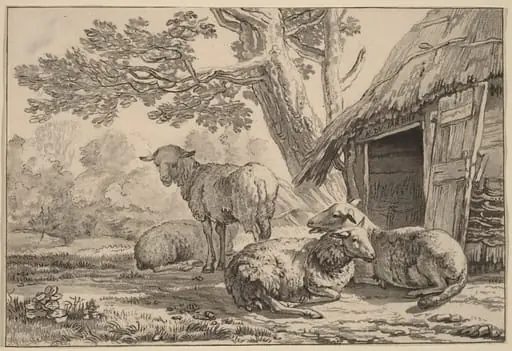
Sheep Near the Ruins of an Arch is a print by the Baroque artist Johann Heinrich Roos. It dates from 1665 and is held in the collection of the Cleveland Museum of Art.
About this work
Look up other animal scenes by Johann Heinrich Roos (German, 1631–1685) to see how he made fur and stone feel soft and heavy at the same time.
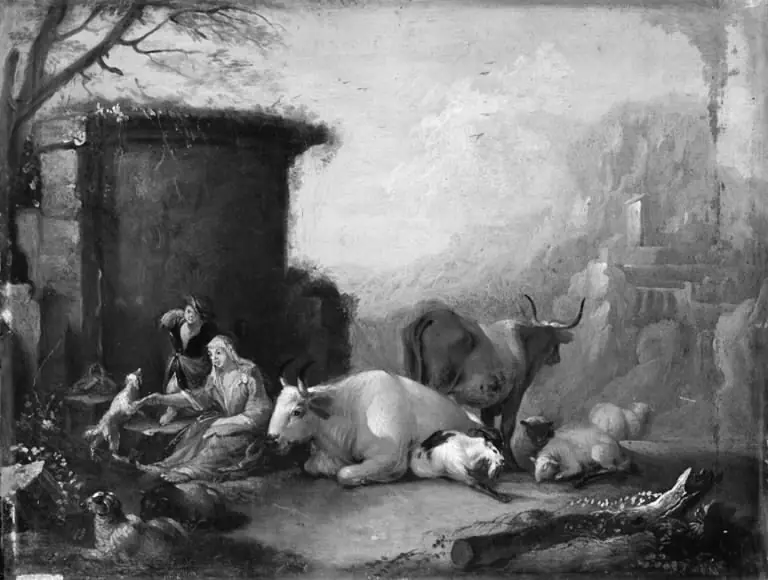
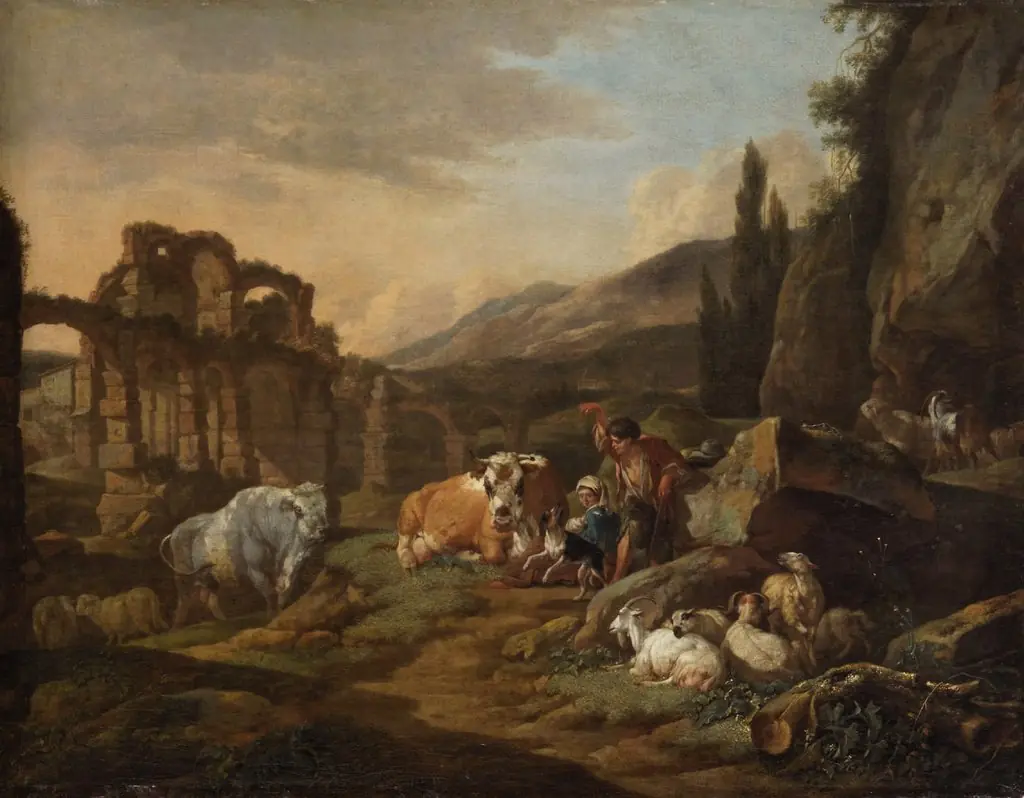
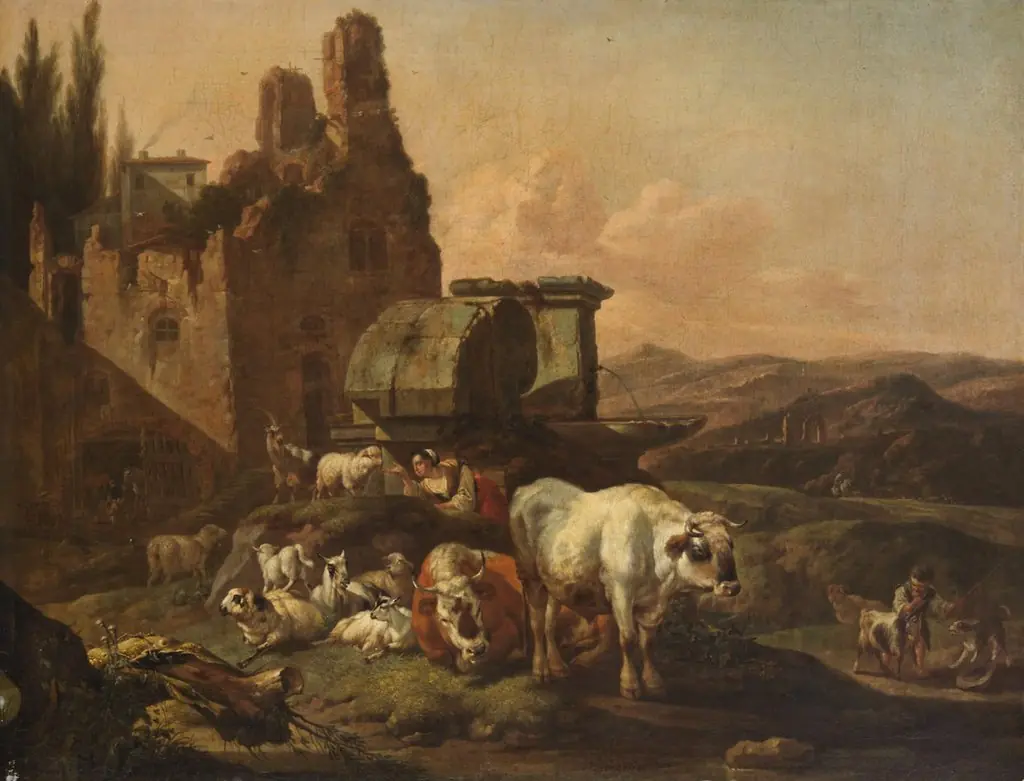
You see a crumbling stone arch with sheep grazing beside it, their wool thick and white against the dark ruins.
Roos painted animals more than people—his sheep feel alive, not just props. The ruins might be real places he sketched in Germany, left to slowly fall apart.
Look up other animal scenes by Johann Heinrich Roos (German, 1631–1685) to see how he made fur and stone feel soft and heavy at the same time.
Overview
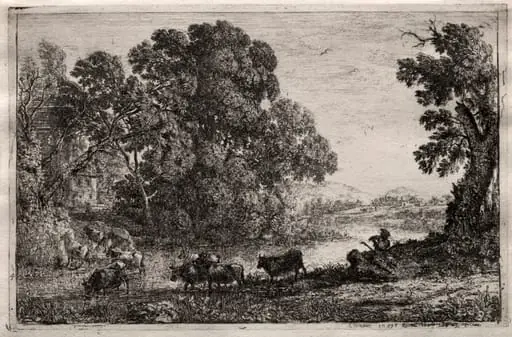
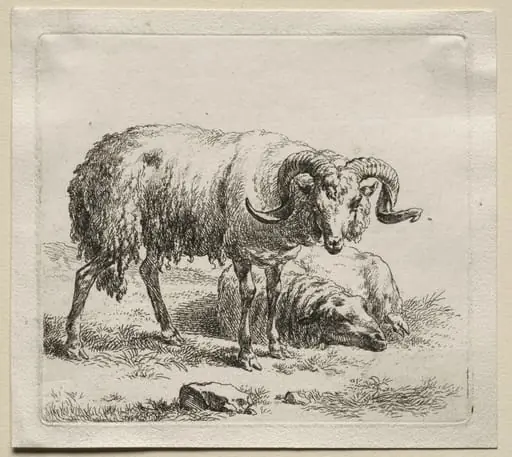
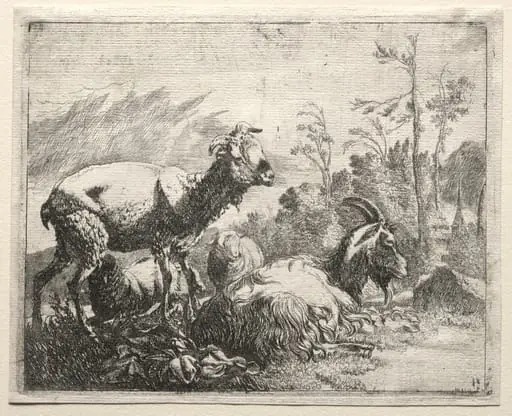
Created in 1665 by Johann Heinrich Roos, this print depicts a pastoral scene centered on a weathered stone arch, partially collapsed and overgrown. A small flock of sheep grazes nearby, their forms rendered with careful attention to texture and weight. The work reflects Roos’s sustained focus on animals as primary subjects, distinguishing his output from contemporaries who prioritized human figures in landscape settings.
Subject & Meaning
The sheep, rendered with lifelike presence, inhabit a ruin that suggests the passage of time and the quiet decay of human structures. There is no narrative drama—only the calm coexistence of nature and architecture in decline. The scene evokes a meditative stillness, where animal life persists undisturbed amid the remnants of civilization, possibly drawn from Roos’s observations of real sites in Germany.
Technique & Style
Roos employed fine, deliberate lines to capture the softness of wool and the roughness of stone, balancing tactile contrast without overt modeling. His technique emphasizes surface texture over dramatic lighting, allowing the material qualities of fur and masonry to emerge through careful hatching and tone. This approach gives the animals a tangible presence, grounding the scene in quiet realism rather than idealized composition.
History & Provenance
The print entered the collection of The Cleveland Museum of Art, where it remains part of its holdings of 17th-century German graphic art. While specific early ownership records are sparse, its preservation suggests it was valued within collector circles interested in naturalistic animal studies. Roos’s prints circulated widely in his lifetime, often reproduced for their detailed observation of rural life.
Context
In mid-17th-century Germany, landscape and animal painting gained traction as subjects worthy of independent study, separate from religious or mythological themes. Roos contributed to this shift by documenting everyday rural scenes with scientific precision. His work aligns with broader European trends favoring empirical observation, particularly among artists influenced by Dutch and Flemish precedents.
Legacy
Roos’s focus on animals as central, dignified subjects influenced later generations of German and Dutch animaliers. His ability to render wool, stone, and foliage with equal sensitivity established a precedent for naturalistic detail in printmaking. Though less celebrated than his contemporaries, his work remains a quiet benchmark for the integration of observation and atmosphere in early modern European art.
Artist & collection