Artwork
Goat with Bell
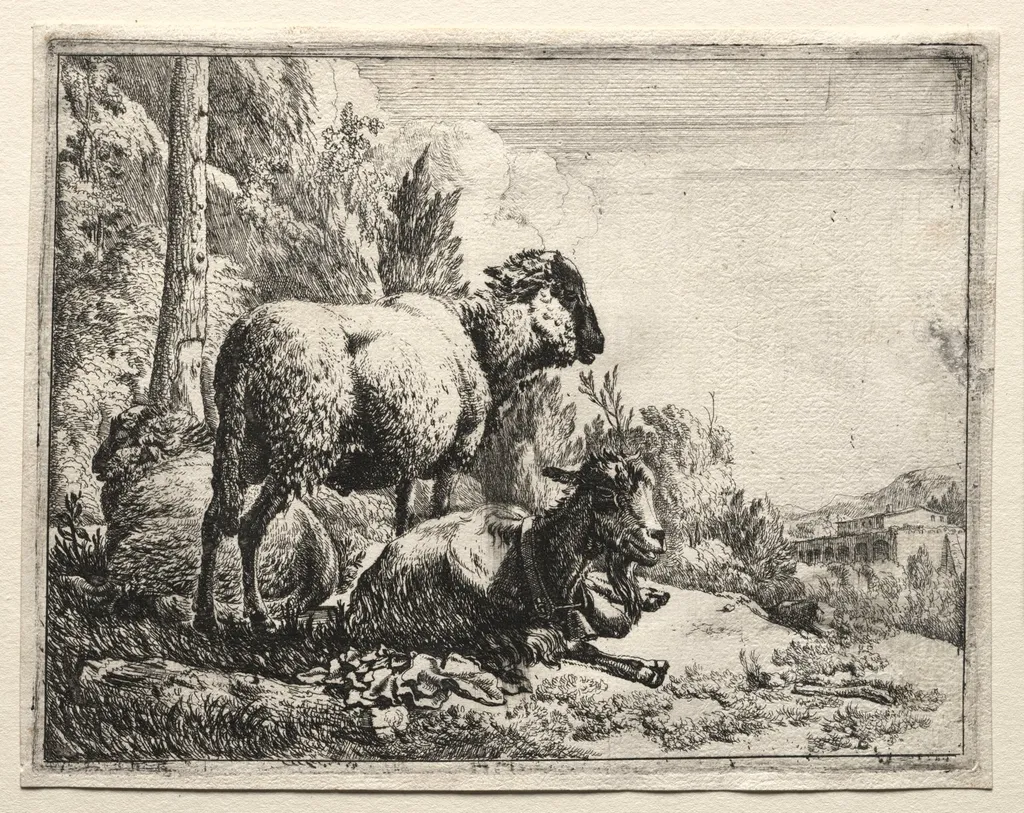
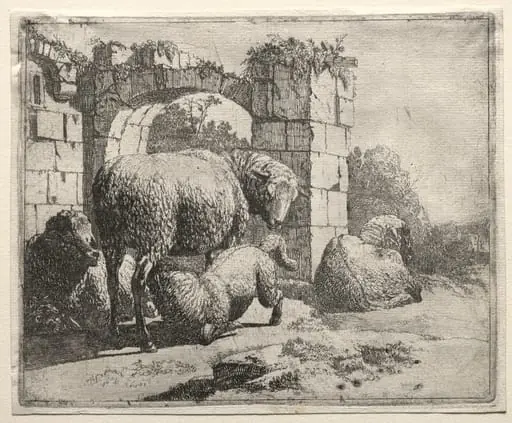
Goat with Bell is a print by the Baroque artist Johann Heinrich Roos. It dates from 1665 and is held in the collection of the Cleveland Museum of Art.
About this work
Overview
Rendered with restrained linework and subtle tonal shading, the image captures a quiet moment in the countryside, emphasizing observation over drama.
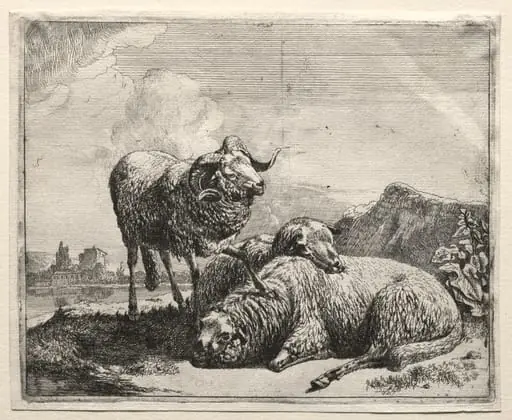
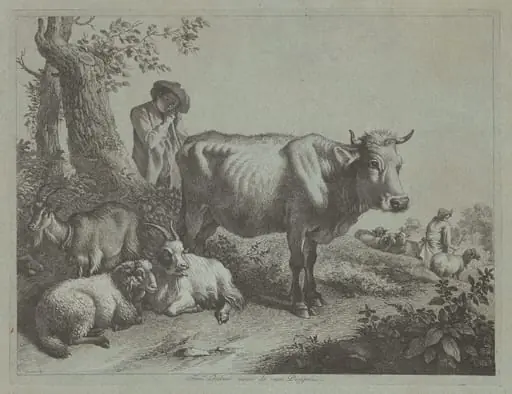
Created in 1665 by Johann Heinrich Roos, this ink drawing depicts a goat with a bell, standing on a gentle slope. A lamb rests nearby, and distant trees and structures suggest a rural setting. Rendered with restrained linework and subtle tonal shading, the image captures a quiet moment in the countryside, emphasizing observation over drama. The work is part of the collection at The Cleveland Museum of Art.
Subject & Meaning
The goat, adorned with a bell, and the resting lamb evoke pastoral life in 17th-century Europe. The bell, a practical tool for tracking livestock, subtly signals human presence without intrusion. The calm interaction between the animals suggests harmony within the natural world. The scene lacks narrative tension, instead offering a contemplative glimpse into everyday rural existence.
Technique & Style
Roos employed fine ink lines and delicate hatching to define the goat’s woolly texture and the lamb’s soft form. The shading is minimal but effective, suggesting volume without heavy contrast. Background elements are lightly sketched, receding into the distance to preserve focus on the animals. The composition feels spontaneous, as if drawn from life, aligning with Baroque traditions of keen natural observation.
History & Provenance
The drawing entered The Cleveland Museum of Art’s collection as part of a broader acquisition of European works on paper. Its origins trace to Roos’s practice of sketching animals in the wild, a habit common among German artists of the period. While no early ownership records are documented, its stylistic consistency with his known drawings supports its attribution and dating to circa 1665.
Context
In mid-17th-century Germany, artists like Roos turned to nature for subject matter, moving away from grand religious or mythological themes. Animal studies, especially of livestock, became a respected genre among Northern European draftsmen. This work reflects a growing interest in the observable world, influenced by scientific curiosity and the quiet realism of Dutch and German landscape traditions.
Legacy
Roos’s animal sketches, including this one, contributed to the development of naturalistic drawing in Baroque art. Though not widely exhibited, such works influenced later generations of wildlife illustrators and landscape artists who valued direct observation. The drawing remains a quiet example of how everyday rural subjects could be rendered with sensitivity and precision.
Artist & collection