Artwork
Brigands Attacking Wagoners
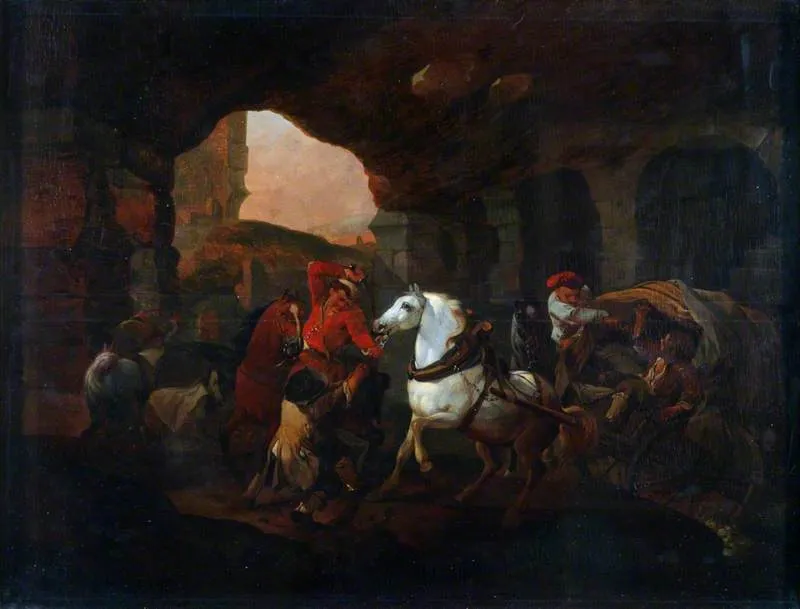
Brigands Attacking Wagoners is an oil painting by Johann Melchior Roos. It dates from 1696 and is held in the collection of the Victoria and Albert Museum.
About this work
Overview
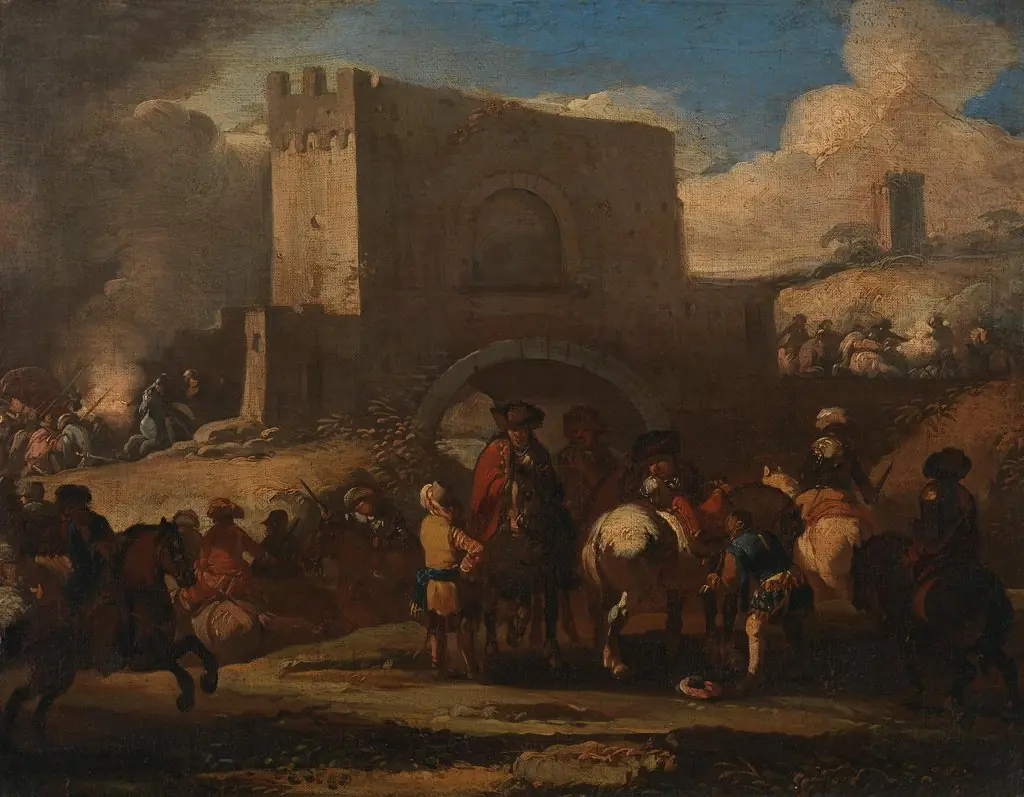
Painted in 1696 by Johann Melchior Roos, this oil work depicts a violent encounter between highwaymen and travelers. The scene captures a moment of sudden aggression, with attackers overwhelming a transport wagon. The painting resides in the Victoria and Albert Museum, where it stands as a representative example of late 17th-century German narrative painting focused on rural peril.
Subject & Meaning
The painting illustrates a common threat to overland trade in early modern Europe: armed bandits ambushing cargo wagons. The defenders, though outnumbered, resist with whatever means available, suggesting the vulnerability of travelers and the lawlessness of remote routes. The scene carries no moral resolution, instead emphasizing chaos and the unpredictability of danger on the road.
Technique & Style
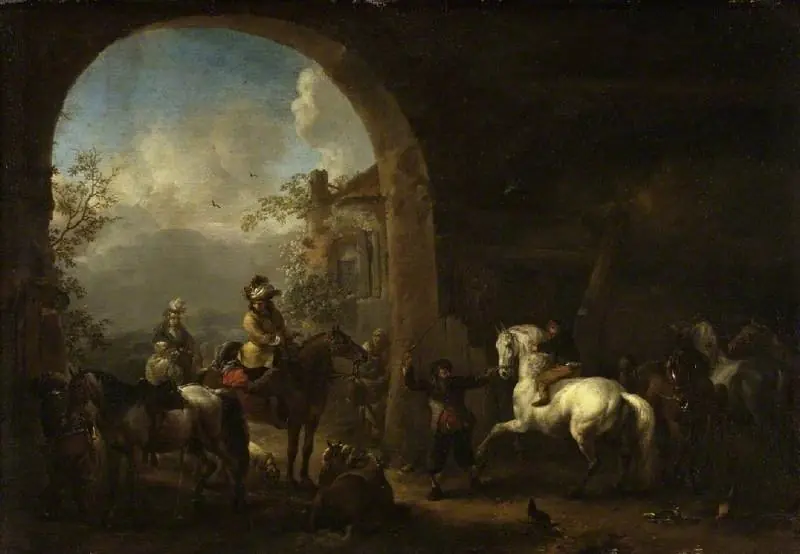
Roos employs chiaroscuro to heighten the drama, directing light toward the central struggle while plunging the surroundings into shadow. Figures are rendered with dynamic, slightly exaggerated postures to convey motion and urgency. The dark archway in the background frames the action, reinforcing a sense of entrapment. Brushwork is decisive, prioritizing narrative clarity over fine detail.
History & Provenance
No earlier ownership records are widely documented, but its survival suggests it was valued as a vivid depiction of contemporary peril.
The painting was completed in 1696 and entered the Victoria and Albert Museum’s collection in the 19th century, likely through a broader acquisition of European decorative and fine arts. Its origin traces to Roos’s workshop in Germany, where he specialized in genre scenes and landscapes. No earlier ownership records are widely documented, but its survival suggests it was valued as a vivid depiction of contemporary peril.
Context
In late 17th-century Germany, banditry along trade routes was a persistent concern, especially in poorly policed rural areas. Artists like Roos responded to public interest in such threats, producing scenes that blended realism with theatrical tension. This work aligns with a broader European tradition of depicting highway robbery, reflecting both social anxiety and the growing market for narrative art among middle-class collectors.
Legacy
Though not among Roos’s most widely studied works, the painting contributes to understanding how German artists interpreted everyday violence through dramatic composition. It remains a reference for scholars examining the intersection of genre painting and social history in early modern Europe, offering insight into how visual culture reflected the fears of its time.
Artist & collection