Artwork
Flowers and fruit
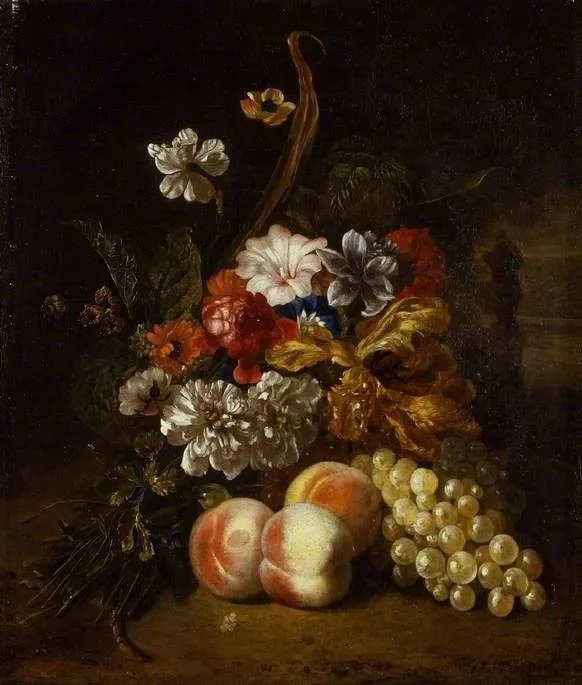
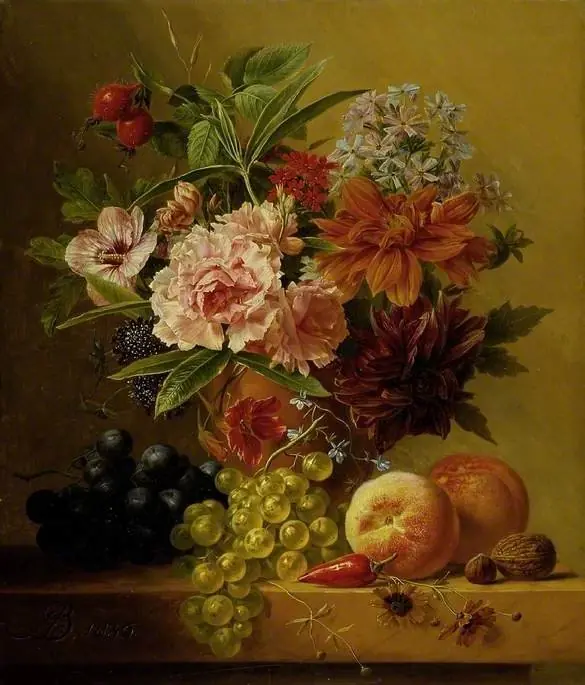
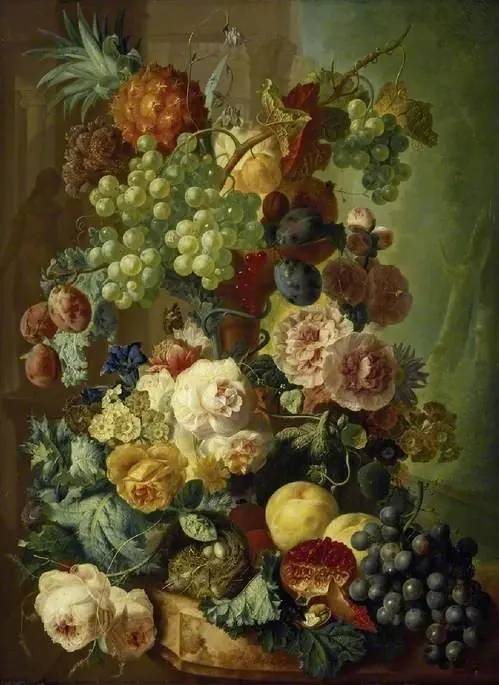
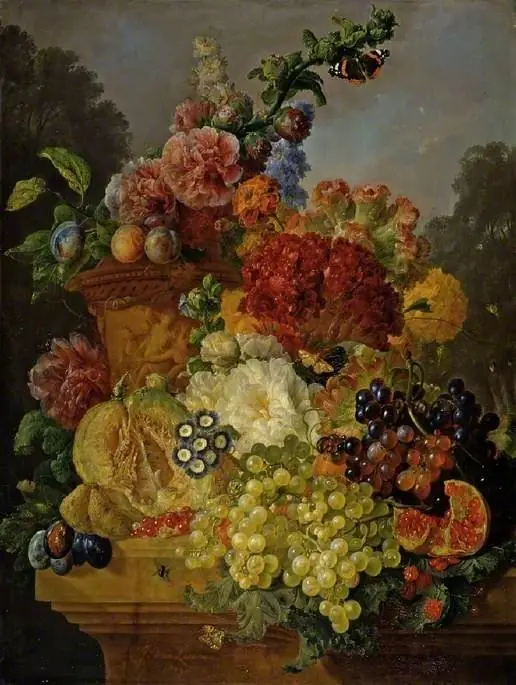
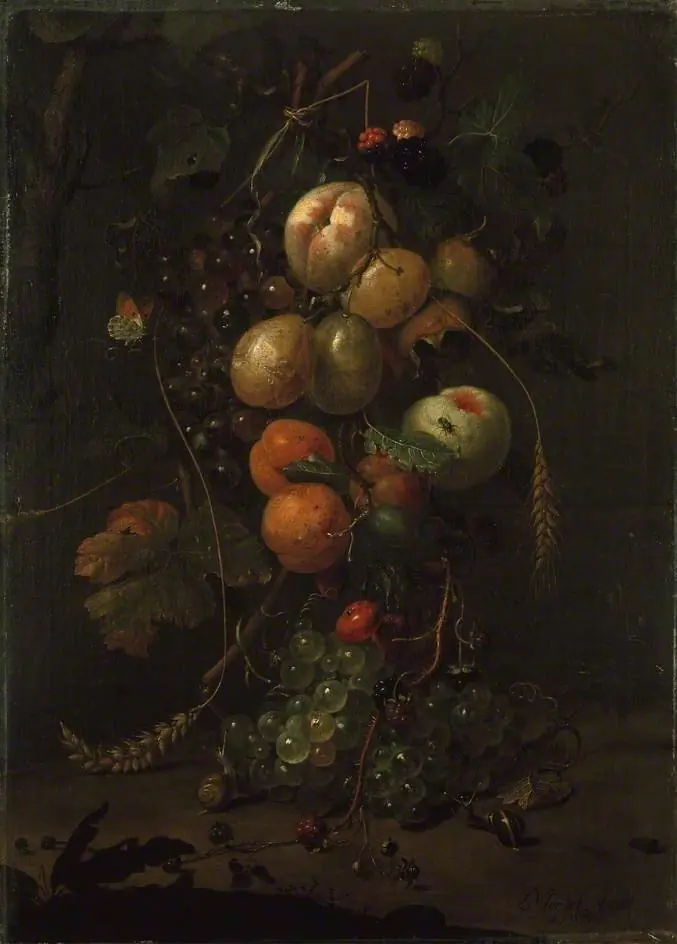
Flowers and fruit is an oil painting by Maria Weenix. It dates from 1720 and is held in the collection of the Fitzwilliam Museum.
About this work
Overview
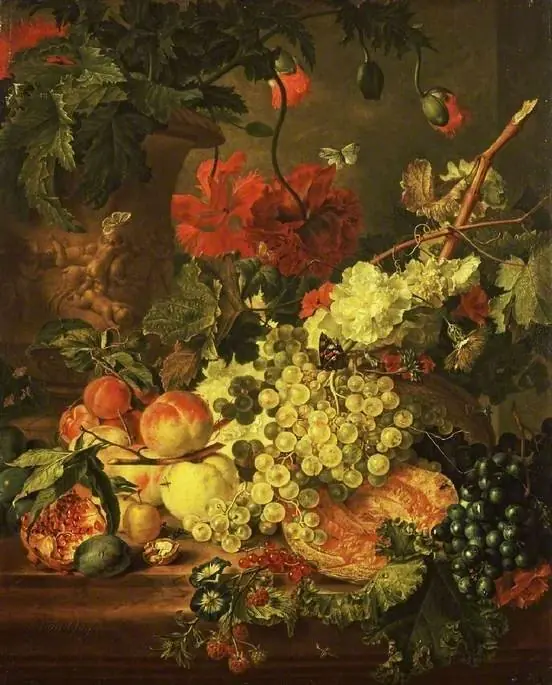
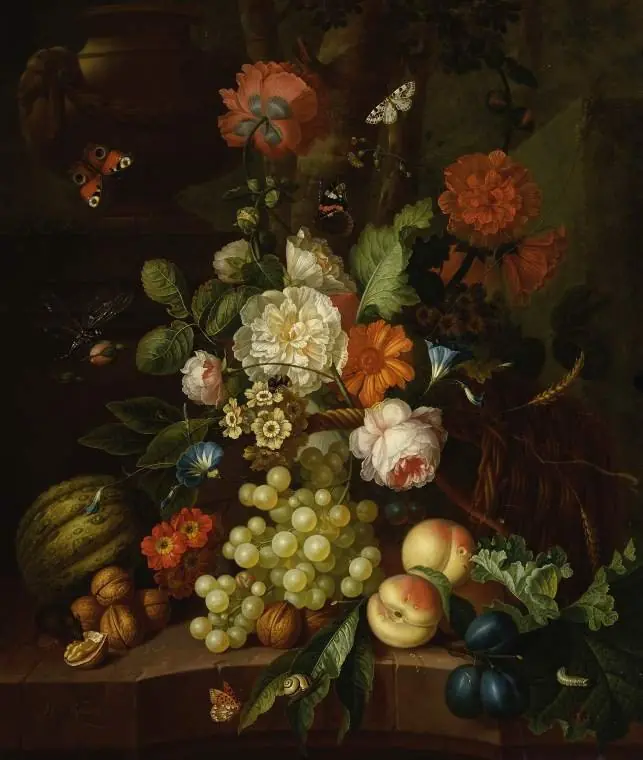
Painted in 1720 by Maria Weenix, this oil on canvas work presents a still life of flowers and fruit arranged on a tabletop.
Painted in 1720 by Maria Weenix, this oil on canvas work presents a still life of flowers and fruit arranged on a tabletop. The composition is modest in scale but carefully balanced, with a dark background enhancing the vibrancy of the subject. It resides in the collection of the Fitzwilliam Museum, Cambridge, where it represents a rare surviving example of female still-life painting from the early 18th century Dutch tradition.
Subject & Meaning
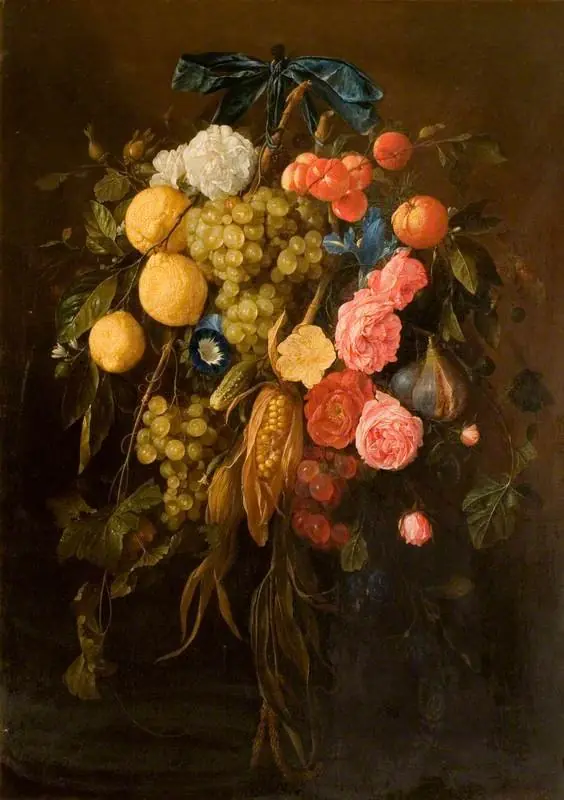
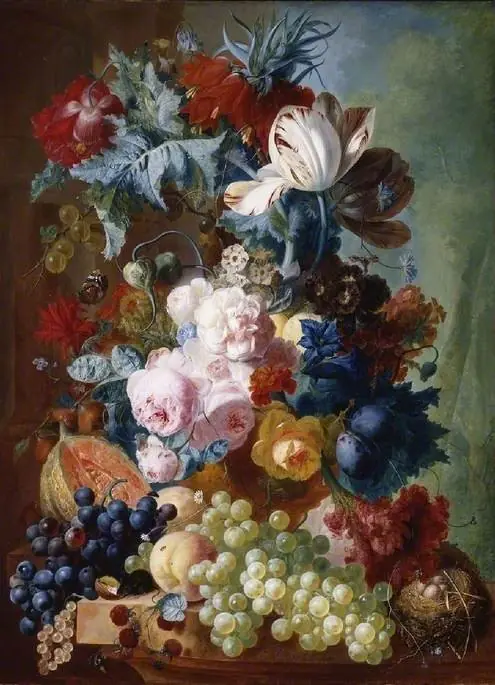
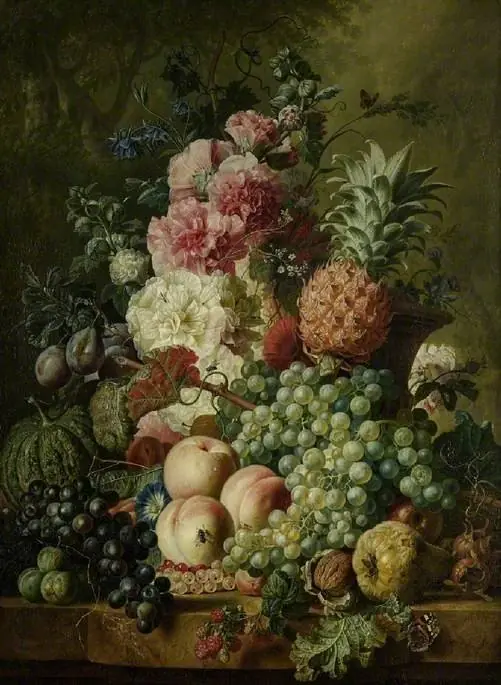
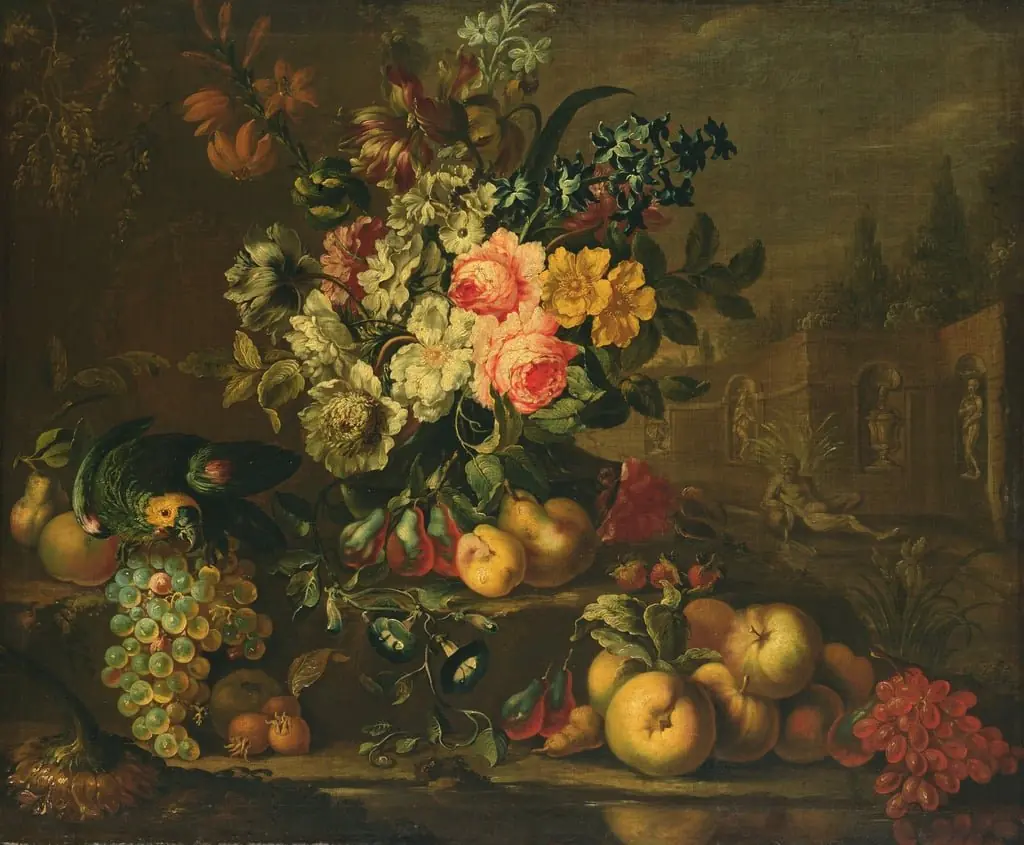
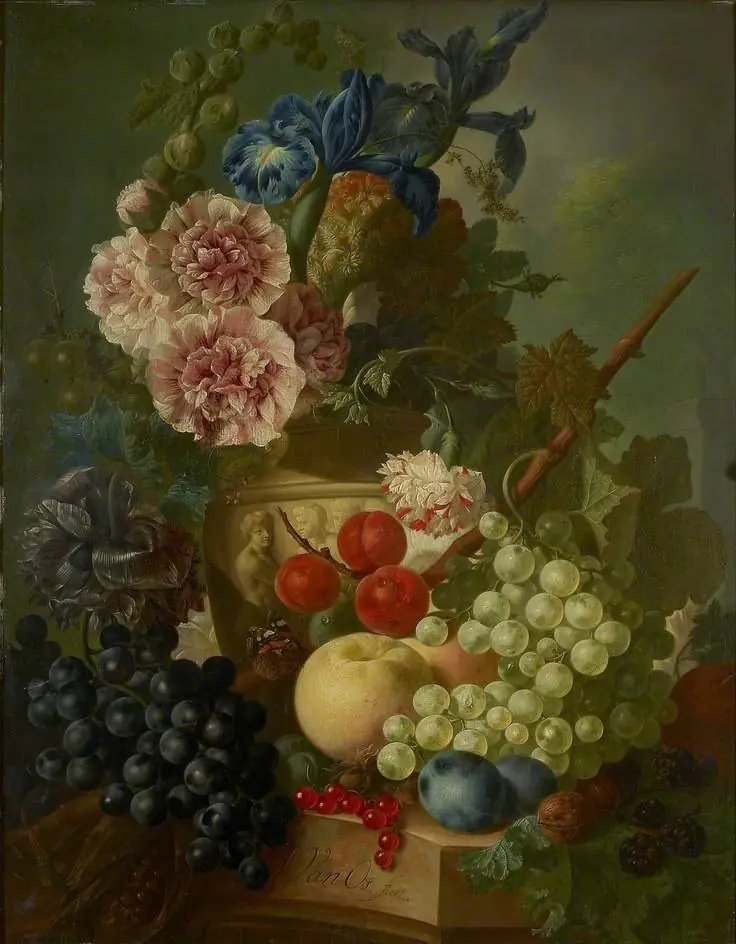
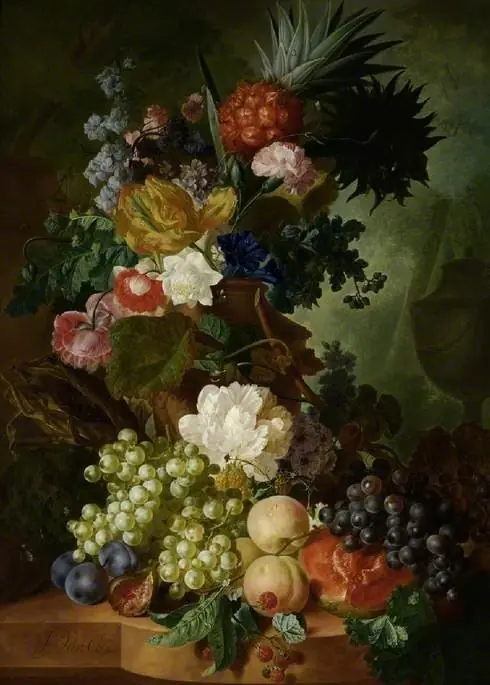
The painting features a selection of seasonal blooms—white, red, and orange petals—alongside peaches and grapes, arranged with naturalistic spontaneity. Though devoid of overt symbolism, the inclusion of perishable fruits and fleeting flowers subtly evokes themes of transience and abundance, common in Northern European still life of the period. The arrangement reflects domestic observation rather than allegory, emphasizing sensory pleasure over moral instruction.
Technique & Style
Weenix employs fine brushwork to render the textures of petals, skin, and leaves with quiet precision. Light falls diagonally across the composition, creating soft highlights and shadows that lend volume and realism to the objects. The dark, unmodeled background isolates the still life, focusing attention on the interplay of color and form. Her handling is restrained, avoiding theatricality in favor of quiet observation and tactile accuracy.
History & Provenance
The painting entered the Fitzwilliam Museum’s collection in the 19th century, though its earlier ownership remains undocumented. As one of few known works by Maria Weenix, it offers insight into the artistic output of women in a male-dominated field. Its survival and preservation suggest it was valued within private collections prior to institutional acquisition, though no records of its initial commission or exhibition are known.
Context
Created during the height of Dutch still-life painting, Weenix’s work aligns with regional traditions that celebrated natural beauty and domestic order. While male artists like Jan van Huysum dominated the genre, female painters often worked within smaller, private circles. Weenix’s piece reflects this quieter, intimate approach—less concerned with grandeur than with the delicate rendering of everyday objects found in a well-tended garden or kitchen table.
Legacy
Few works by Maria Weenix survive, making this painting a significant reference for understanding female participation in Dutch still-life painting. Its presence in a major public collection ensures continued scholarly attention, though it remains less known than contemporaneous works by male peers. The painting contributes to broader efforts to recover and reassess the contributions of women artists in the early modern period.
Artist & collection