Artwork
Fruit and flowers
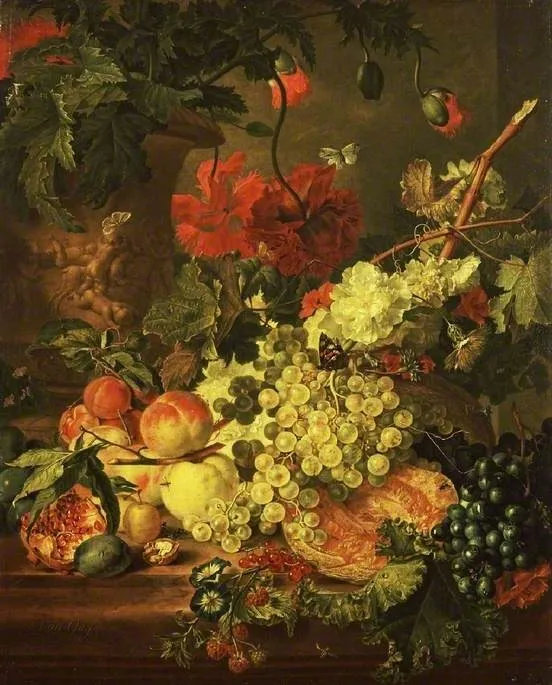
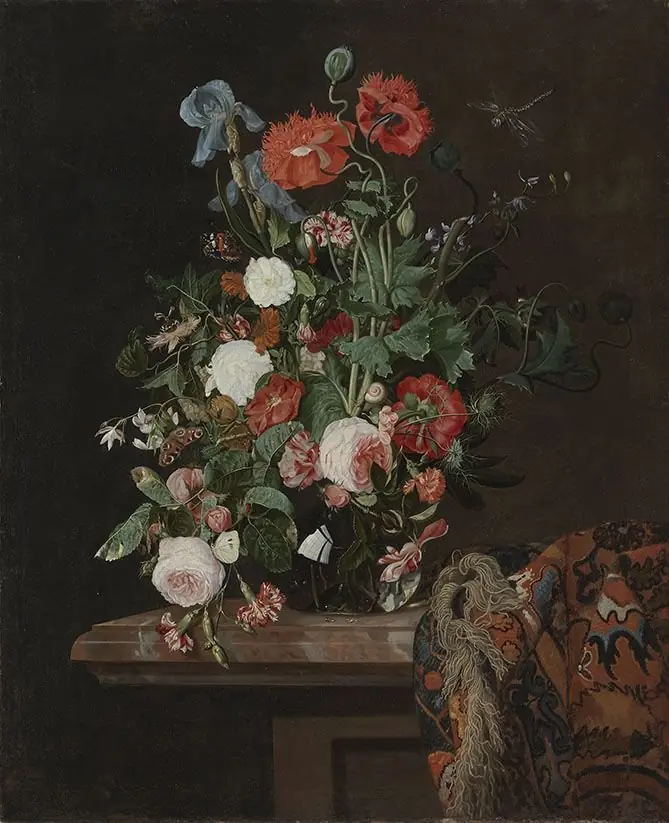
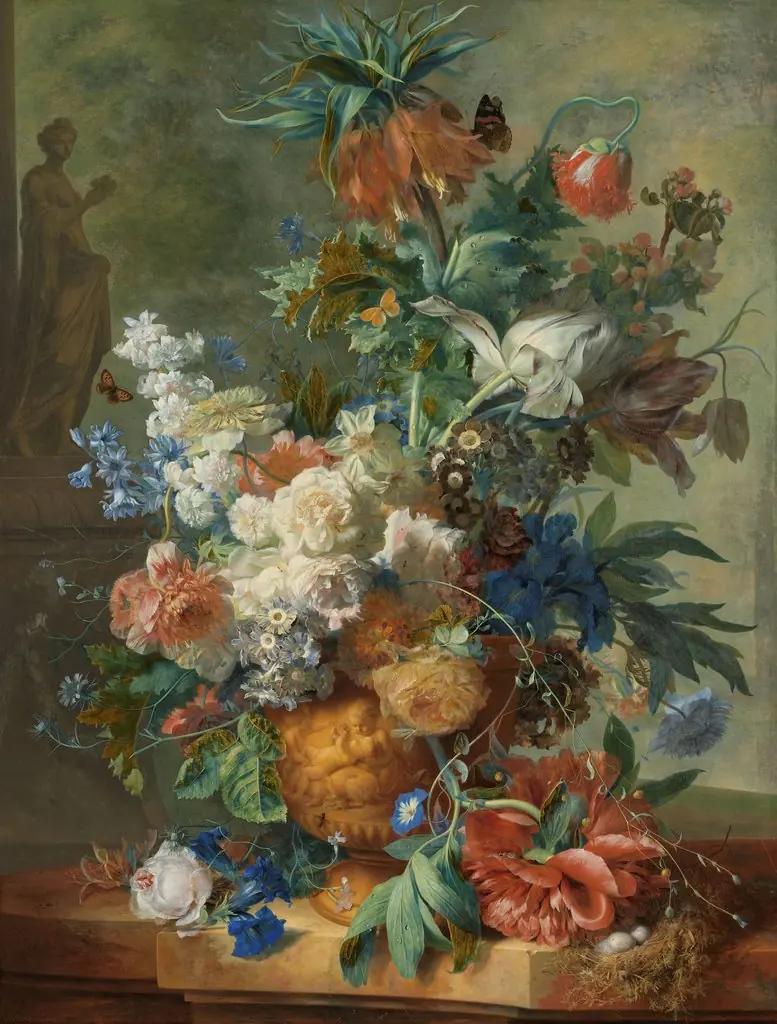
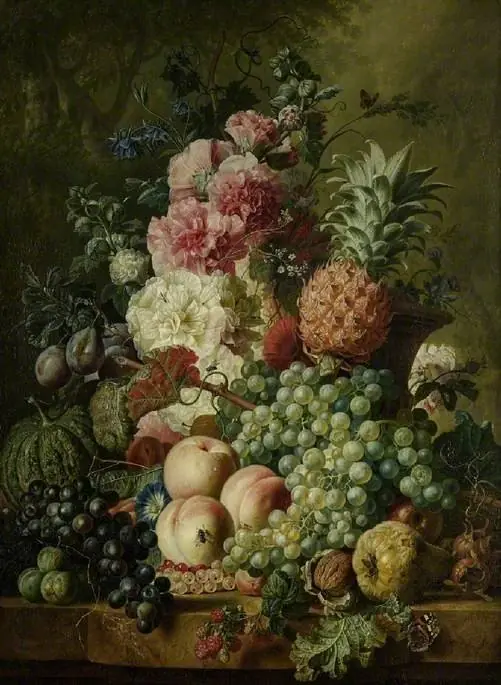
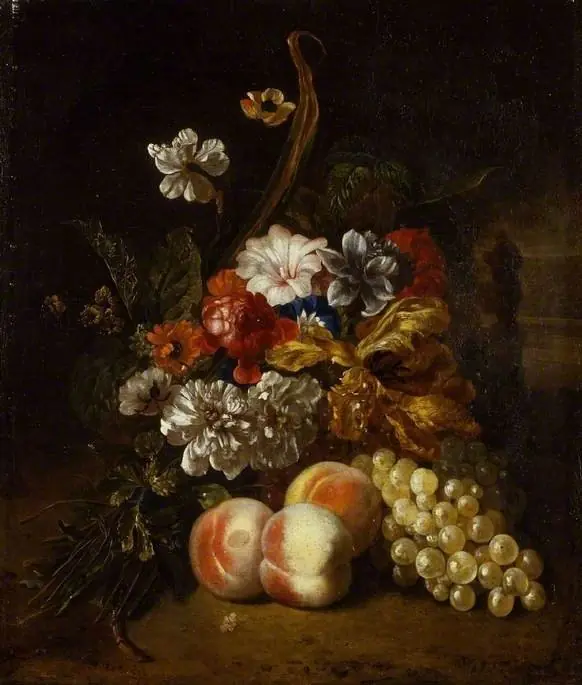
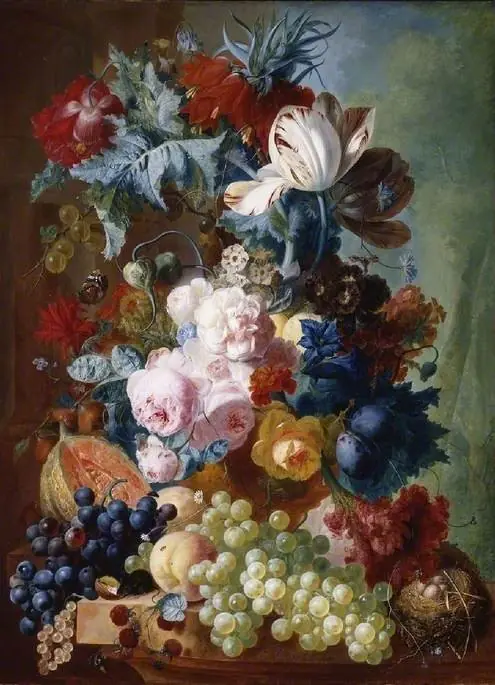
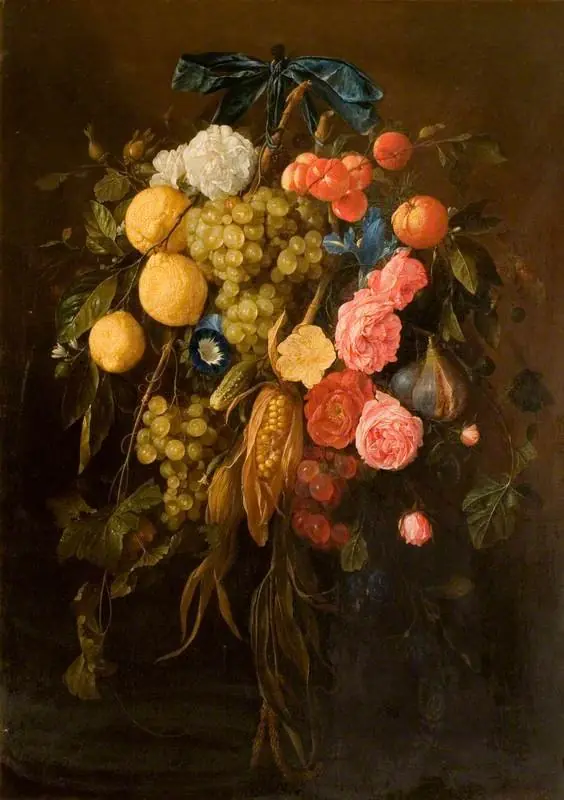
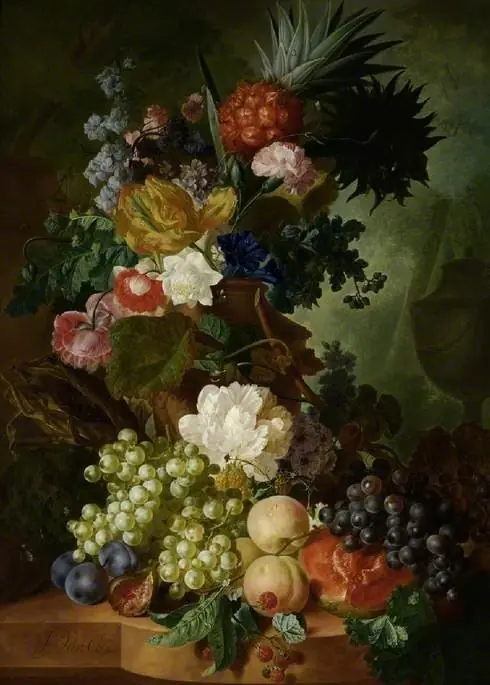
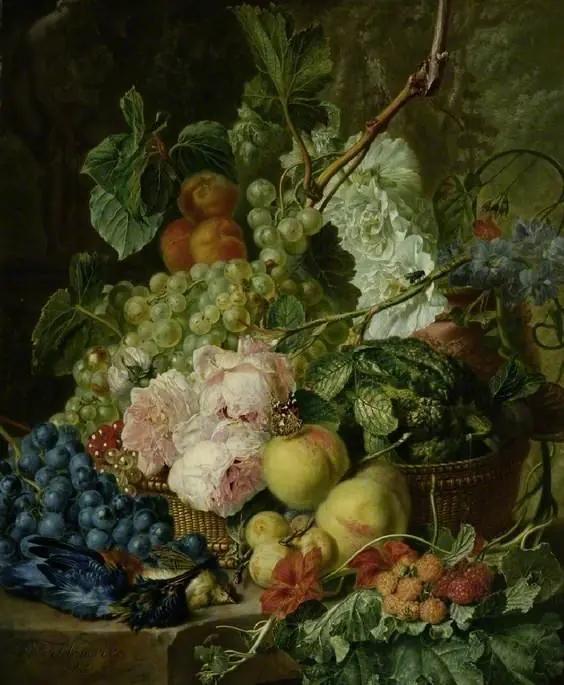
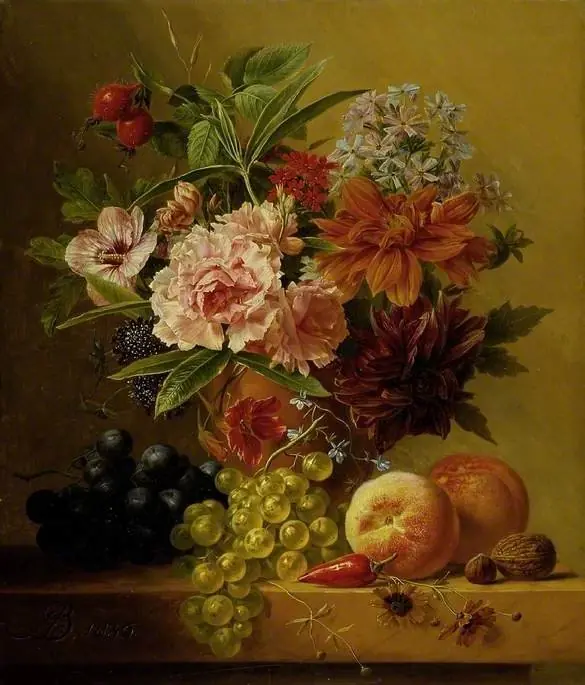
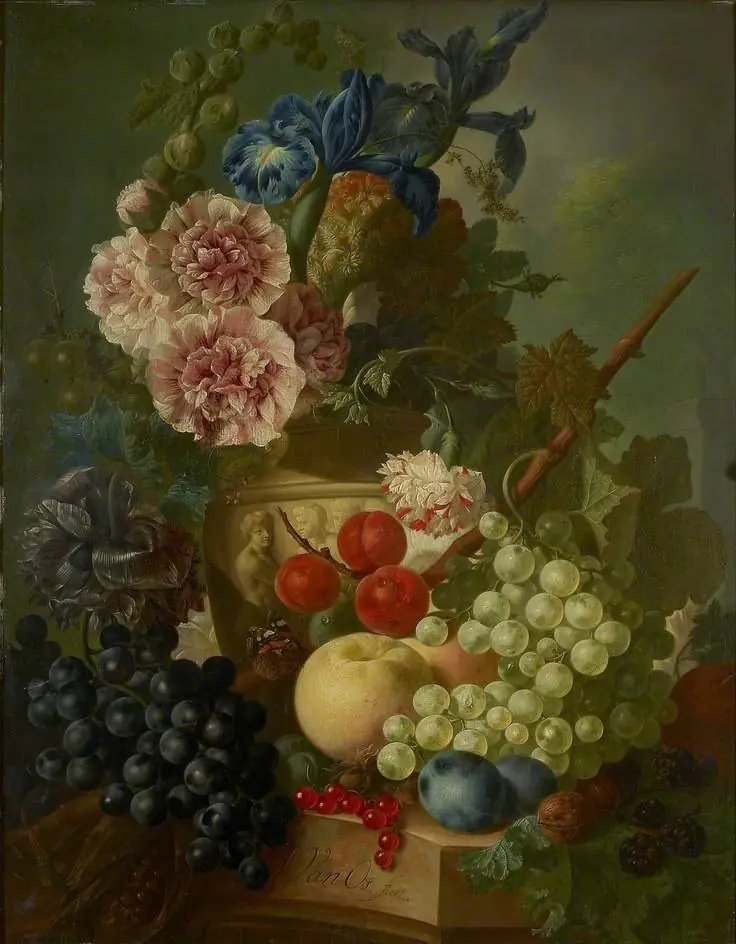
Fruit and flowers is an oil painting by the Rococo painting artist Jan van Huysum. It is held in the collection of the Fitzwilliam Museum.
About this work
Overview
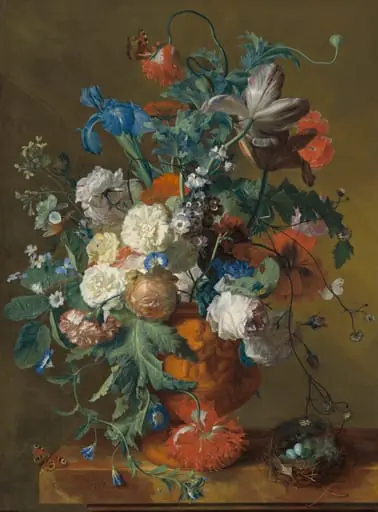
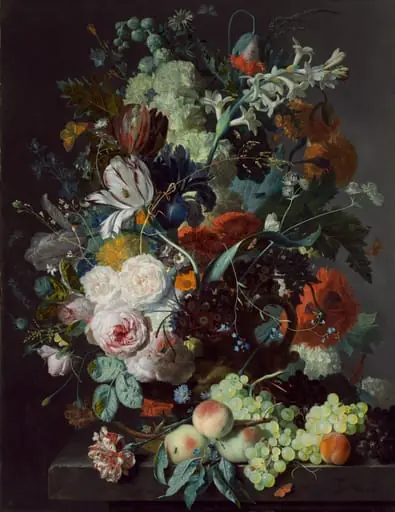
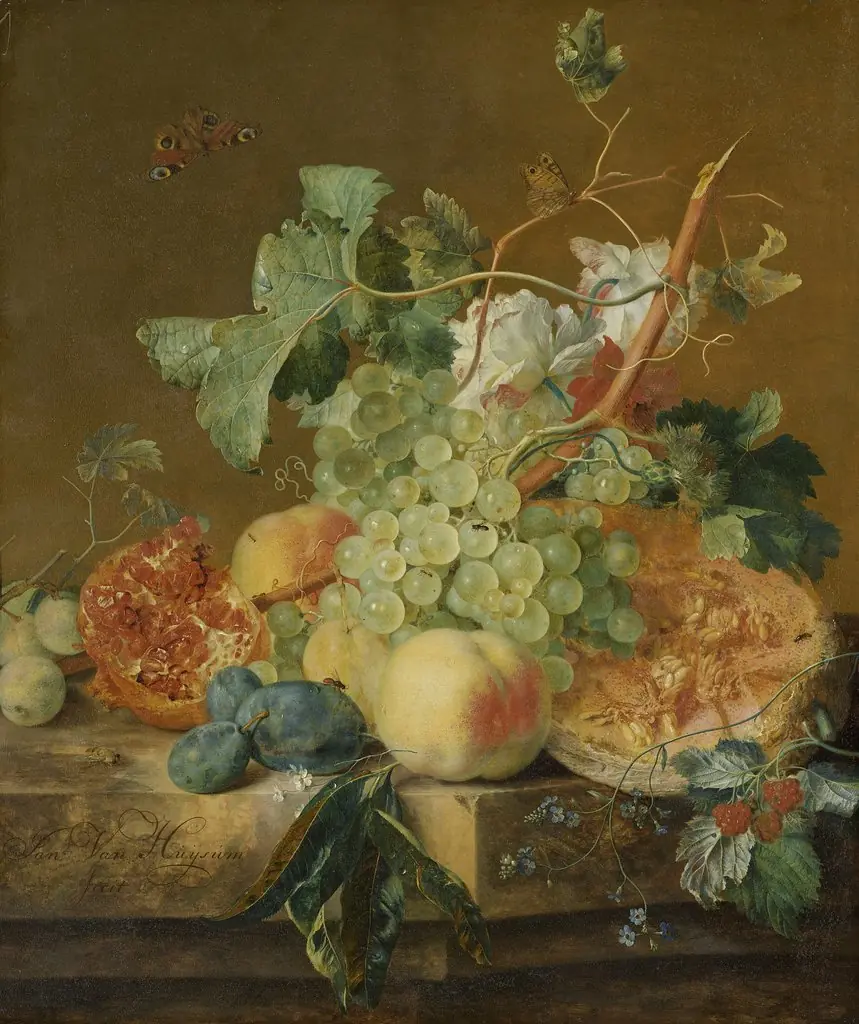
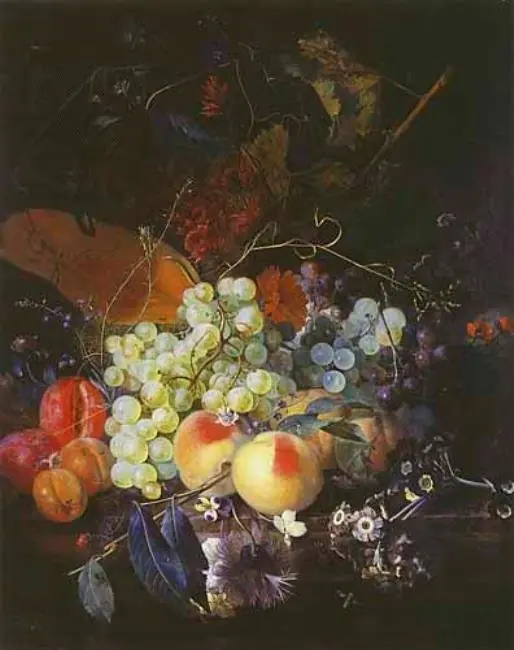
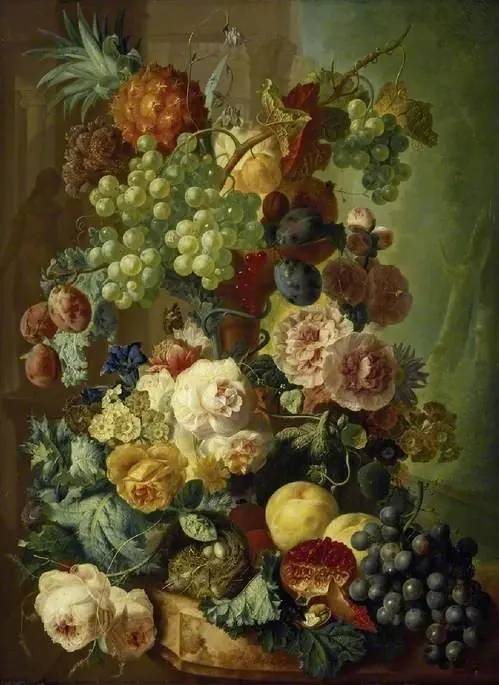
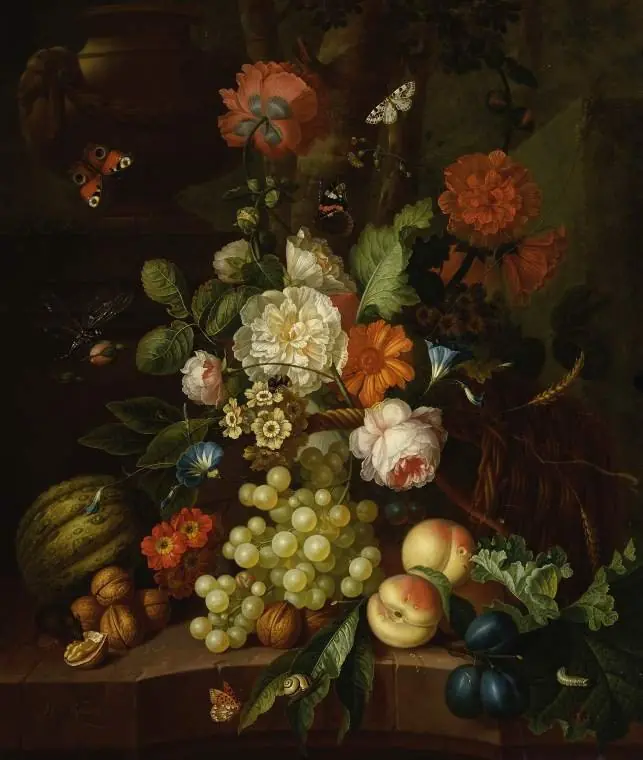
This oil painting by Jan van Huysum presents a carefully composed still life of fruit and blossoms, arranged as if on a stone ledge. Though dated to 1763, the work reflects the artist’s lifelong dedication to naturalistic detail and quiet elegance. Its subdued palette of greens, yellows, and muted reds avoids theatricality, emphasizing the quiet dignity of organic forms over decorative flourish.
Subject & Meaning
The arrangement includes ripe fruits—peaches, grapes, and pomegranates—alongside seasonal flowers such as roses and tulips, each chosen for its brief period of fullness. Together, they suggest the passage of time and the fragility of beauty, a common theme in Dutch still life. No symbolic references are overt; meaning arises from the careful observation of nature’s transient abundance.
Technique & Style
Van Huysum applied thin layers of oil paint to achieve subtle gradations of light and texture, rendering dewdrops on petals and the fuzzy skin of peaches with near-microscopic precision. His brushwork is controlled yet invisible, allowing the subjects to appear untouched by artifice. The composition avoids symmetry, favoring a naturalistic asymmetry that enhances realism.
History & Provenance
Painted near the end of van Huysum’s career, this work aligns with his established reputation among European collectors. Though specific early ownership records are sparse, its style and date place it within the final phase of his output, when his technique had matured into a refined, almost scientific observation of botanical forms. It entered public collections in the 19th century.
Context
While often associated with Rococo aesthetics due to its delicacy, this painting diverges from the movement’s typical exuberance. Van Huysum’s work emerged from the Dutch still-life tradition, rooted in scientific curiosity and mercantile wealth. His focus on botanical accuracy reflects broader 18th-century interests in natural history and the classification of species.
Legacy
Van Huysum’s meticulous approach influenced later still-life painters across Europe, particularly in the treatment of light on organic surfaces. Though his work fell out of favor in the 19th century with the rise of Romanticism, modern scholarship has reaffirmed his role in advancing the technical possibilities of oil painting through patient, observant practice.
Artist & collection
Artist
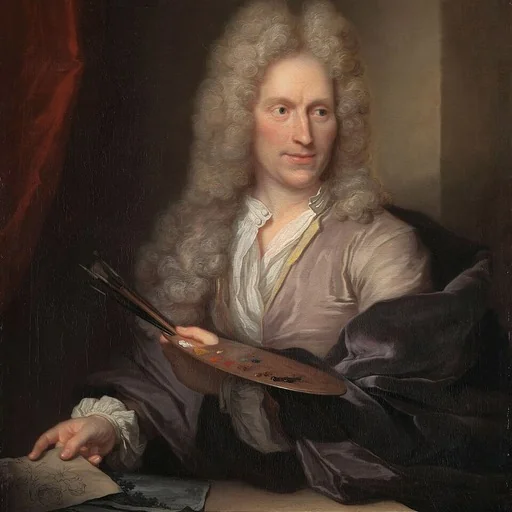
Jan van Huysum was born in Amsterdam on 15 April 1682 and died there on 8 February 1749.