Artwork
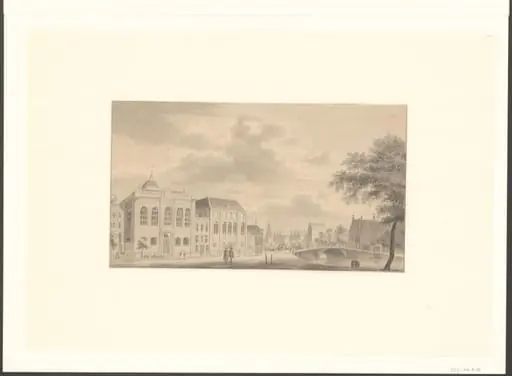
A View of the Nieuwe Kerk, Delft
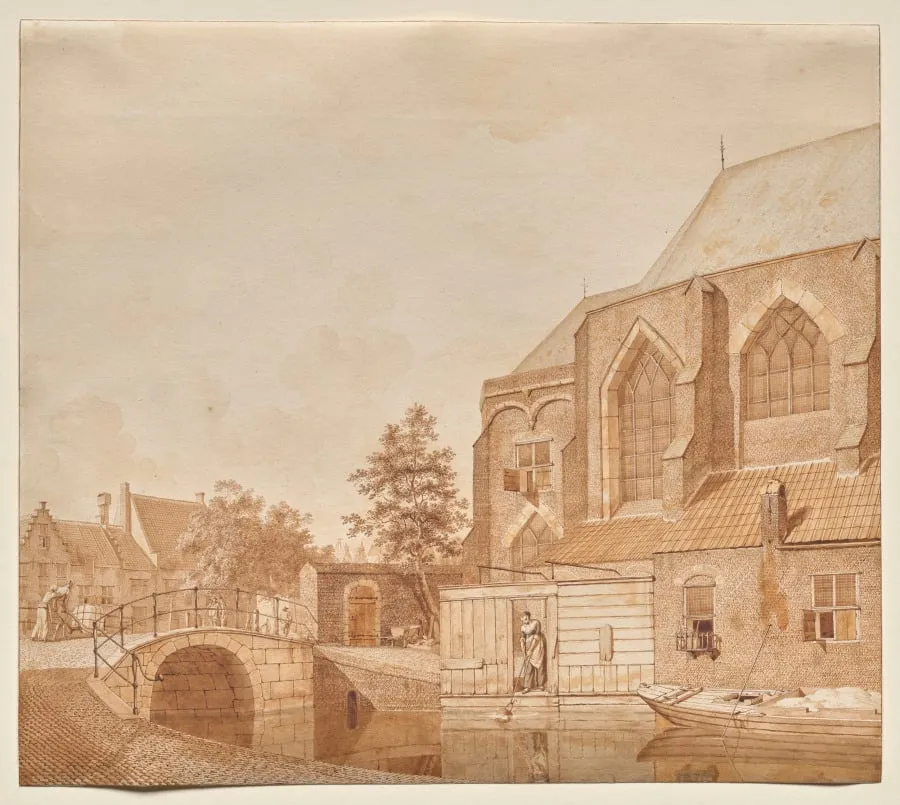
A View of the Nieuwe Kerk, Delft is a drawing by the Romanticist artist Johannes Huibert Prins. It dates from 1793 and is held in the collection of the Cleveland Museum of Art.
About this work
Overview
Executed on paper, the work belongs to a series of intimate urban scenes Prins produced, emphasizing ordinary life rather than grand events.
This small ink and wash drawing by Johannes Huibert Prins captures a quiet moment in Delft, focusing on the Nieuwe Kerk as a stable architectural presence amid daily activity. Executed on paper, the work belongs to a series of intimate urban scenes Prins produced, emphasizing ordinary life rather than grand events. Its scale and medium suggest it was made for private contemplation, not public display.
Subject & Meaning
The drawing depicts the Nieuwe Kerk from a lateral angle, its brick facade rising beside a canal where a woman draws water and pedestrians cross a bridge. Figures are rendered with minimal detail, their actions—washing, walking, hauling—suggesting routine rather than narrative. The church, a real and enduring landmark, anchors the scene, while human activity conveys the rhythm of urban existence without sentimentality.
Technique & Style
Prins employed a refined technique derived from Jan van der Heyden’s 17th-century precision, using fine ink lines and subtle washes to render architectural textures. Each brick, mortar joint, and roof tile is carefully articulated, demonstrating meticulous control. The delicate handling of tone creates depth without heavy shading, preserving the clarity and stillness characteristic of Dutch topographical drawing.
History & Provenance
Created in the late 18th or early 19th century, the drawing reflects a continued interest in Delft’s architectural heritage during a period of urban change. Though Prins was not a major public figure, his works were collected by local patrons who valued topographical accuracy and quiet observation. Its survival suggests it was preserved within private or civic collections in the Netherlands.
Context
Prins worked in a tradition of Dutch city views that valued documentary precision over dramatic effect. His approach echoed earlier artists like van der Heyden, whose detailed renderings of urban spaces had become models for recording the built environment. This drawing aligns with a broader cultural interest in preserving the visual character of Dutch towns amid industrial and social transformation.
Legacy
Prins’s work contributes to a sustained record of Dutch urban life through precise, unembellished observation. While not widely known today, his drawings offer insight into how 18th- and 19th-century artists engaged with their surroundings—not as spectacle, but as lived reality. His technique influenced later topographical draftsmen who sought to document architecture with fidelity and restraint.
Artist & collection
Artist
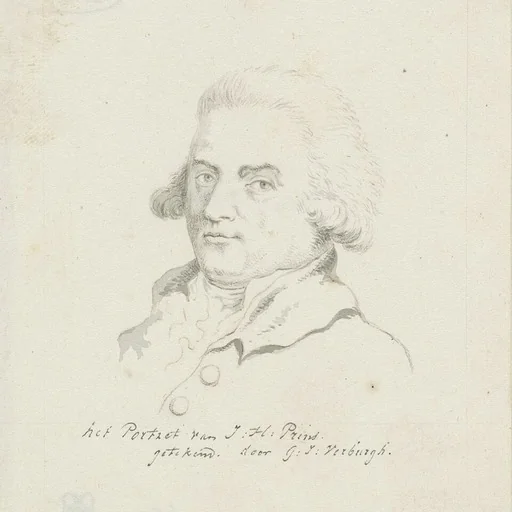
Johannes Huibert Prins (1756–1806), was an 18th-century painter from the Dutch Republic.

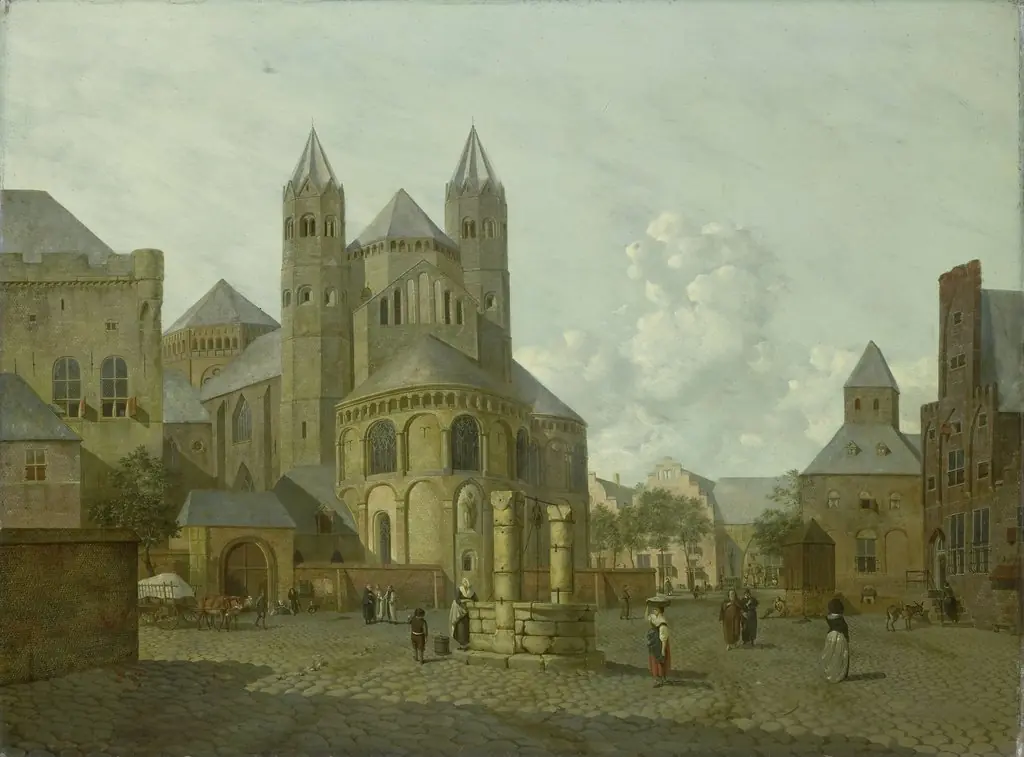
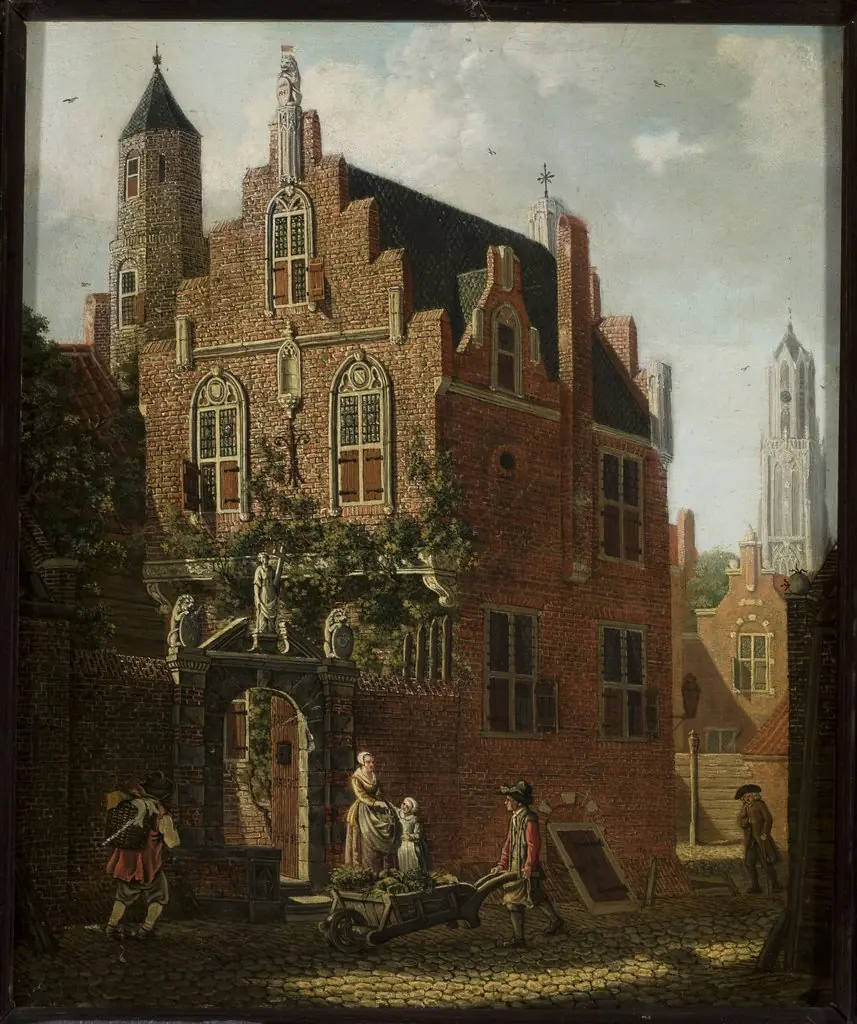
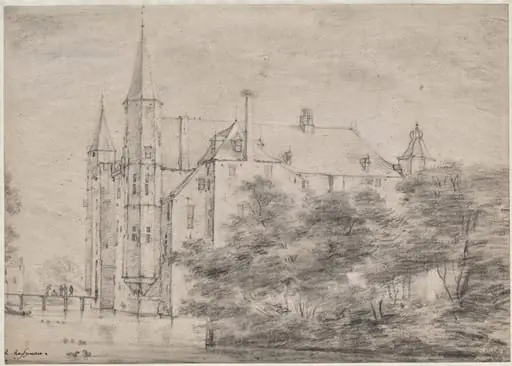 Zuylen Castle Near Utrecht
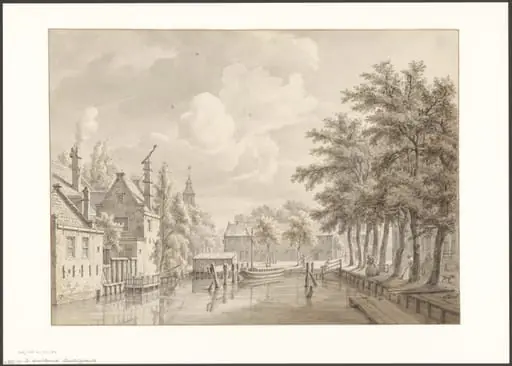 Untitled
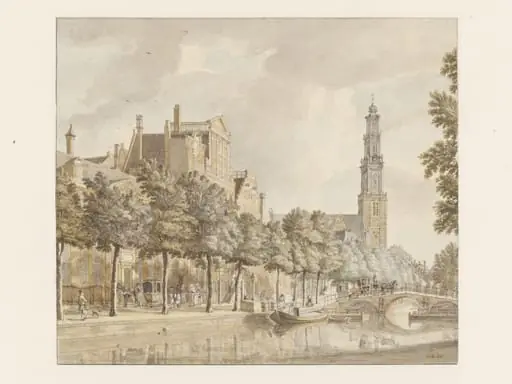 View in Amsterdam with Canal Houses and the Westerkerk on the Prinsengracht
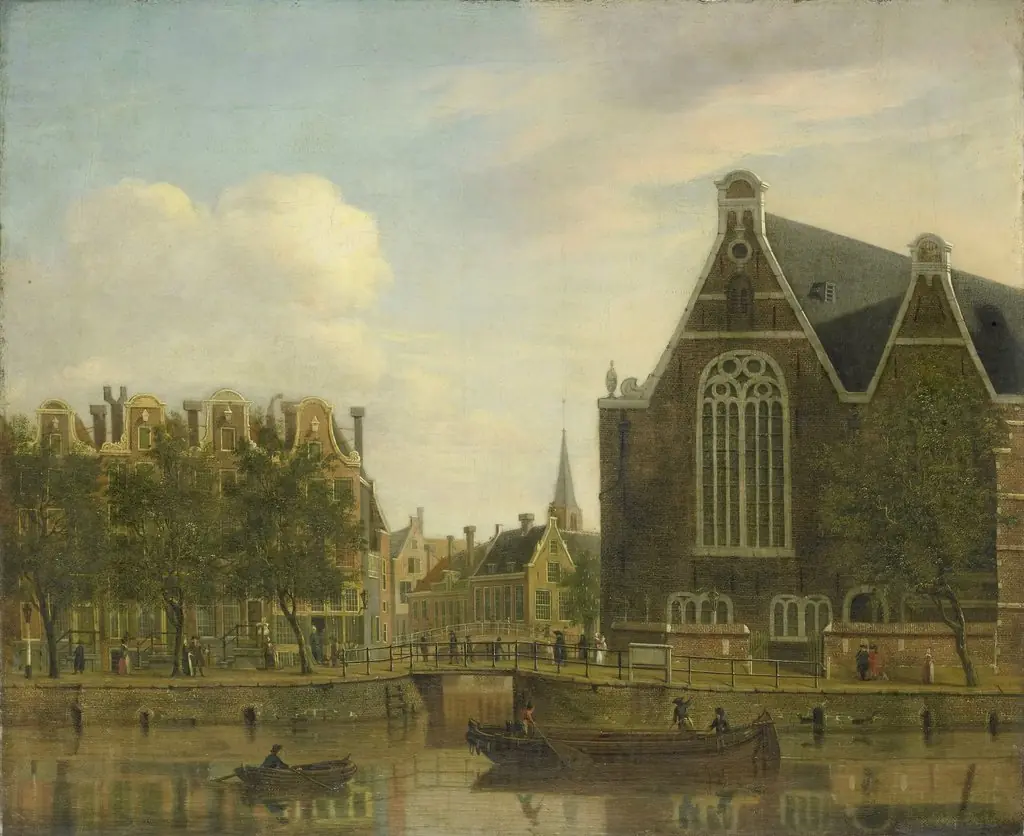 The so-called Boerenverdriet on the Spui, Amsterdam
 Picturesque Architecture in Paris, Ghent, Antwerp, Rouen: Rue du Rivage, Abbeville, France
 All Saints' Church and the Archbishop's Palace, Maidstone
 View of the Oude Kerk at Ede in Gelderland
 Country Village with Church and Bridge
 Untitled
 Village Steeple at the Seaside