Artwork
All Saints' Church and the Archbishop's Palace, Maidstone
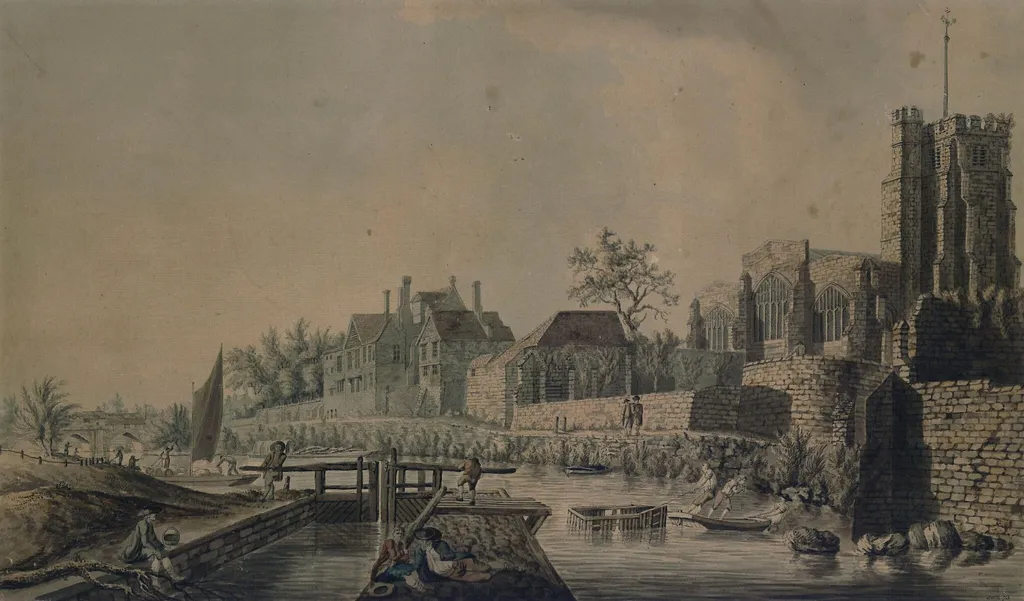
All Saints' Church and the Archbishop's Palace, Maidstone is a watercolor work on paper by the Rococo painting artist John Melchior Barralet. It dates from 1776 and is held in the collection of the Victoria and Albert Museum.
About this work
Overview
John Melchior Barralet’s 1776 watercolour presents a tranquil riverside tableau of Maid on’s All Saints’ Church and the adjoining Archbishop’s Palace.
John Melchior Barralet’s 1776 watercolour presents a tranquil riverside tableau of Maid on’s All Saints’ Church and the adjoining Archbishop’s Palace. The composition captures the stone edifices reflected in the gentle flow of the river, punctuated by modest dwellings and a few figures strolling or navigating the water. The muted palette of greens, browns and pale sky conveys a quiet, historic atmosphere.
Subject & Meaning
The work foregrounds the ecclesiastical and civic architecture that dominate Maid on’s skyline, juxtaposing the soaring windows of the church with the crumbling tower of the palace. Human activity—walkers, riverbank occupants, and small boats—suggests everyday life unfolding within a setting marked by centuries of religious and political significance.
Technique & Style
Barralet employs delicate washes to render atmospheric light, allowing subtle tonal shifts to model depth, especially in the shadows cast by the bridge and vessels. The soft, blended hues and restrained detail align the piece with late‑18th‑century British watercolour practices that favored tonal harmony over vivid coloration.
History & Provenance
Signed and dated by the artist, the watercolour originates from 1776, a period when topographical sketches were popular among travelers and patrons interested in England’s historic sites. Its documented provenance traces back to private collections before entering the museum’s holdings, where it serves as a visual record of Maid on’s urban landscape in the Georgian era.
Context
Created during a time of growing antiquarian interest, the painting reflects contemporary fascination with England’s medieval heritage. The depiction of All Saints’ Church and the Archbishop’s Palace aligns with broader efforts to document and romanticize historic architecture before the extensive urban changes of the 19th century.
Artist & collection

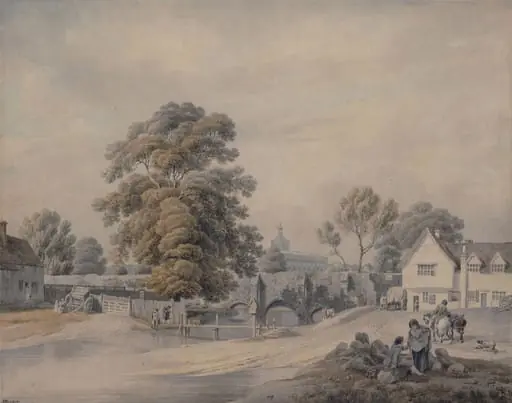 Abbot's Bridge, Bury St. Edmunds
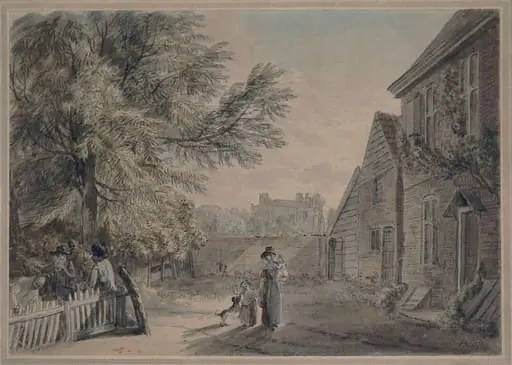 Old Public House, Bayswater
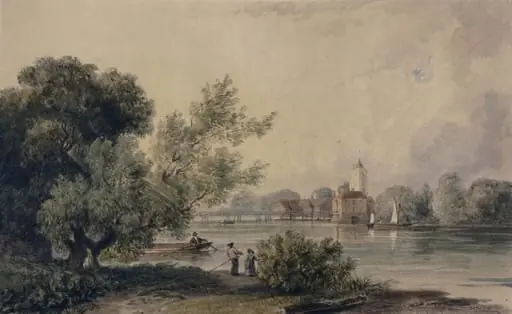 Fulham Church and Putney Old Bridge
 Millpond near Shrewsbury
 Chiswick
 A View of the Nieuwe Kerk, Delft
 Snape Bridge
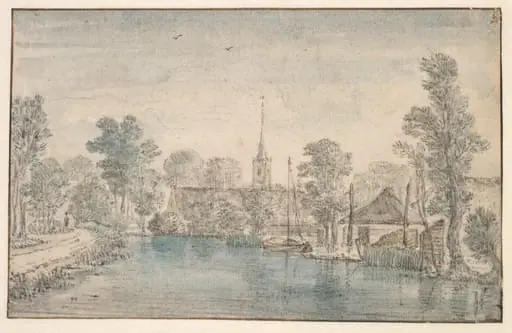 Village on a River
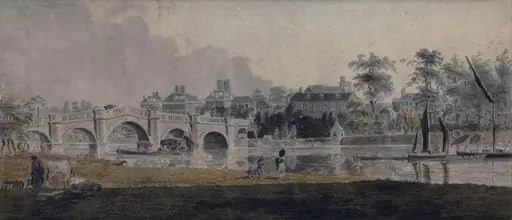 Richmond Bridge
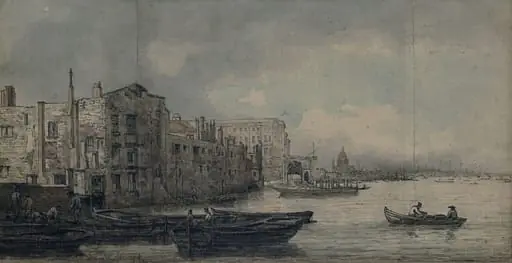 The Thames, showing Somerset House in the course of construction
 The Thames below Old Westminster Bridge
 Der kleine Isarsteg