Artwork
Untitled
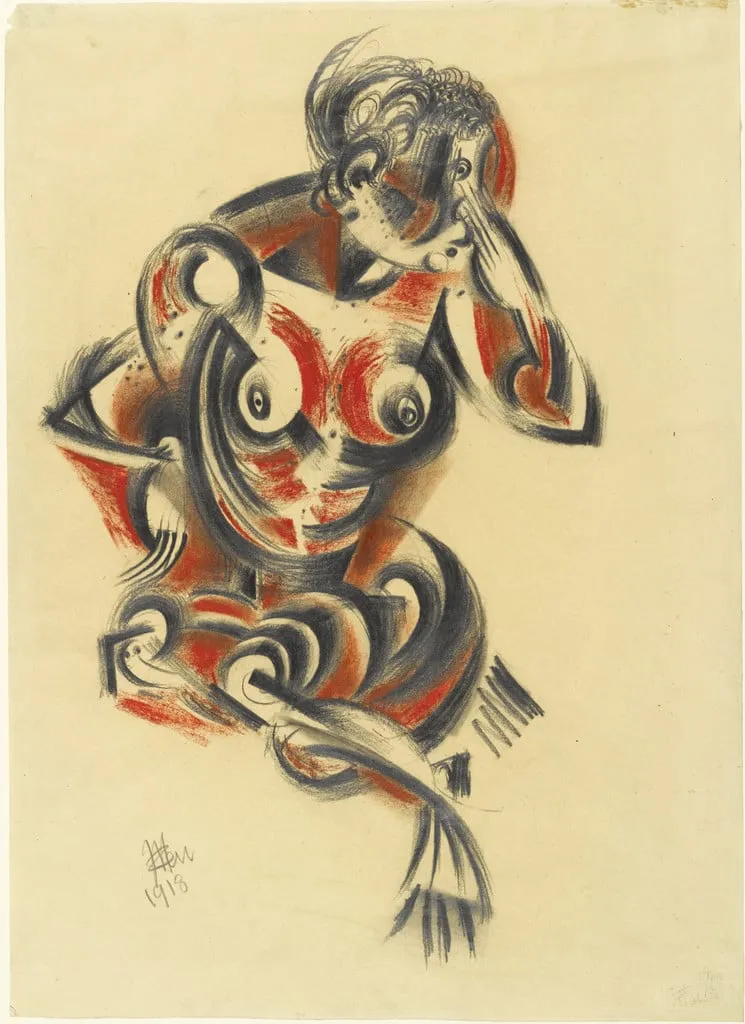
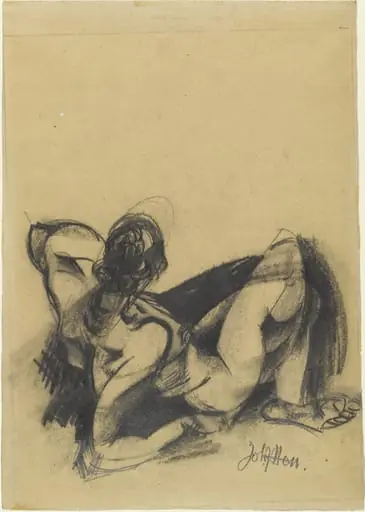
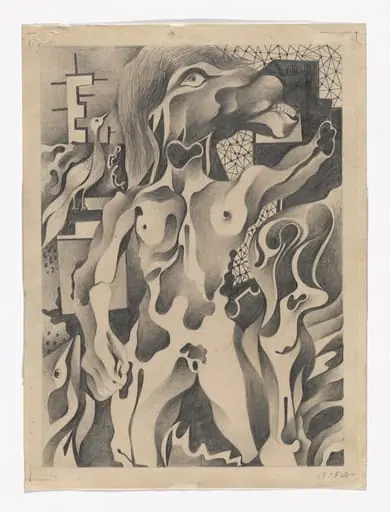
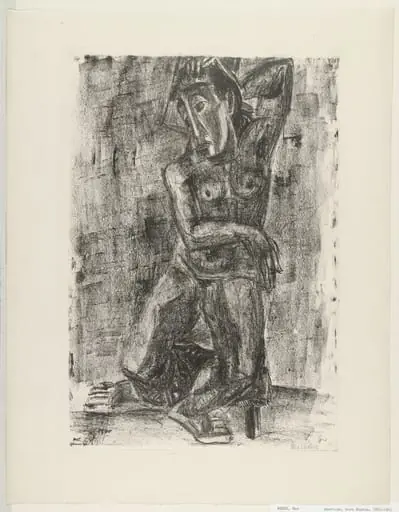
Untitled is a charcoal drawing by Johannes Itten. It dates from 1918 and is held in the collection of the Museum of Modern Art.
About this work
Overview
Its raw, unfinished appearance suggests immediacy, as if the image emerged from rapid, instinctive mark-making rather than deliberate composition.
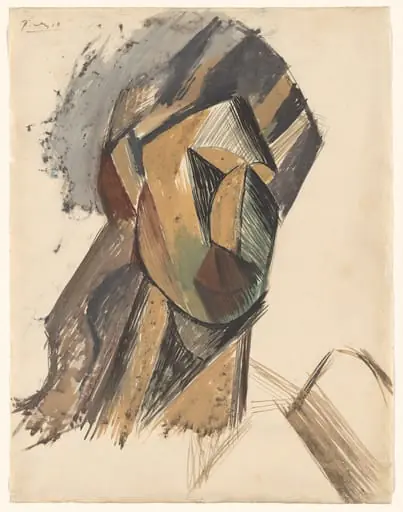
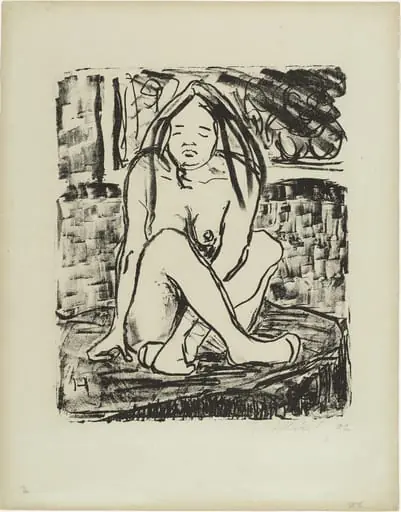
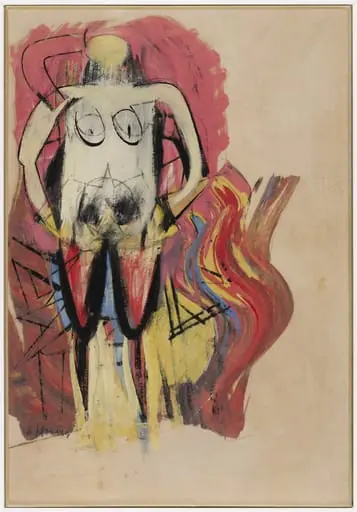
Created in 1918, this drawing by Johannes Itten is executed in crayon, charcoal, and pencil on plain paper. It belongs to the collection of The Museum of Modern Art. The work presents a single, distorted human figure rendered with minimal color—primarily black, red, and the natural tone of the paper. Its raw, unfinished appearance suggests immediacy, as if the image emerged from rapid, instinctive mark-making rather than deliberate composition.
Subject & Meaning
The figure is a nude, contorted into unnatural, almost skeletal poses, with exaggerated limbs and a mask-like face dominated by large, round eyes. The distortion departs from anatomical realism, conveying psychological tension rather than physical accuracy. The face, devoid of individual features, suggests anonymity or emotional detachment, possibly reflecting inner states or spiritual unrest common in early 20th-century expressionist thought.
Technique & Style
Itten employed swift, gestural lines to construct the form, avoiding smooth contours or refined shading. Cross-hatching and dense scribbles in red and black create texture on the skin, emphasizing roughness and energy. The limbs appear folded or twisted beyond anatomical possibility, suggesting movement frozen mid-motion. The limited palette and absence of background focus attention entirely on the figure’s visceral presence.
History & Provenance
The drawing was made in 1918, during Itten’s tenure at the Bauhaus, where he developed his theories on form and expression. It entered The Museum of Modern Art’s collection in the mid-20th century as part of its broader effort to document early modernist experimentation. Its preservation reflects its significance as an example of expressive drawing outside traditional academic norms.
Context
This work emerged during a period of intense artistic reevaluation following World War I. Expressionist artists like Itten sought to convey inner experience over external reality, often using distortion and raw media. His interest in spiritual and emotional intensity, influenced by Eastern philosophy and mysticism, informed this approach, distinguishing it from contemporaneous naturalist or cubist tendencies.
Legacy
Itten’s use of expressive line and emotional distortion in this drawing influenced later pedagogical approaches at the Bauhaus, particularly in foundational courses emphasizing personal expression. While not widely exhibited, it remains a key example of how drawing could serve as a direct conduit for psychological and spiritual exploration in modern art.
Artist & collection

Artist
Johannes Itten was a Swiss expressionist painter, designer, teacher, writer and theorist associated with the Bauhaus school.