Artwork
Cattle-piece
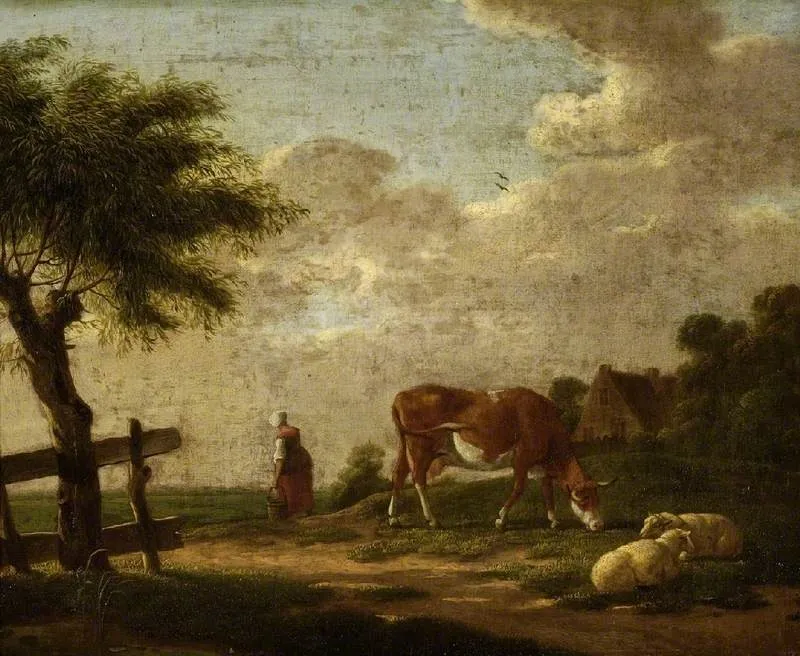
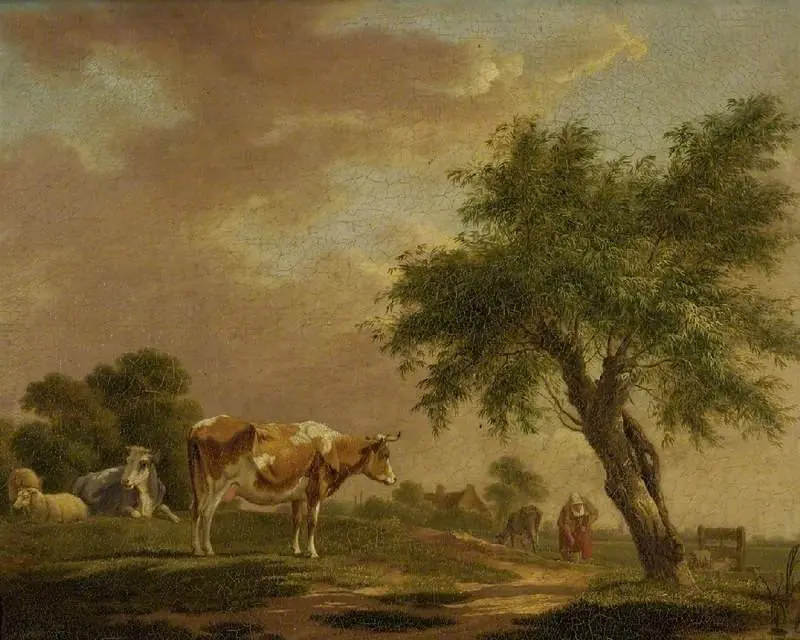
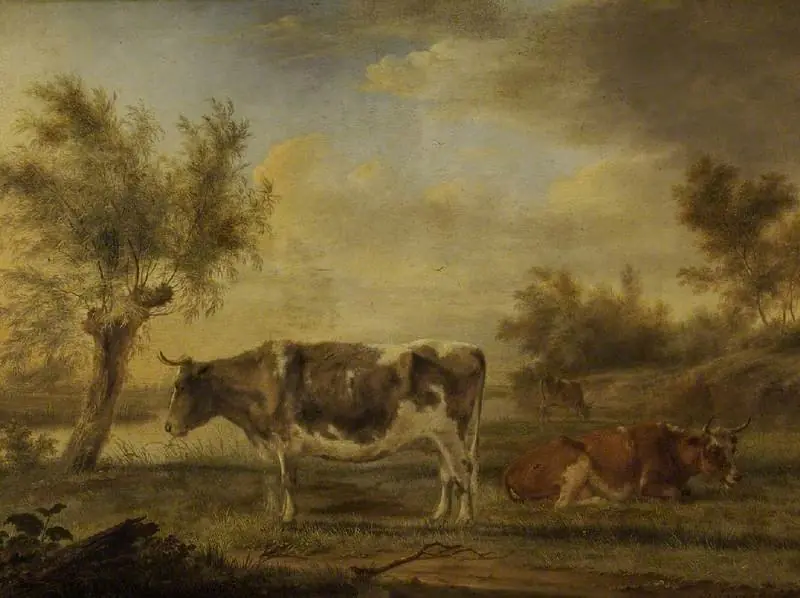
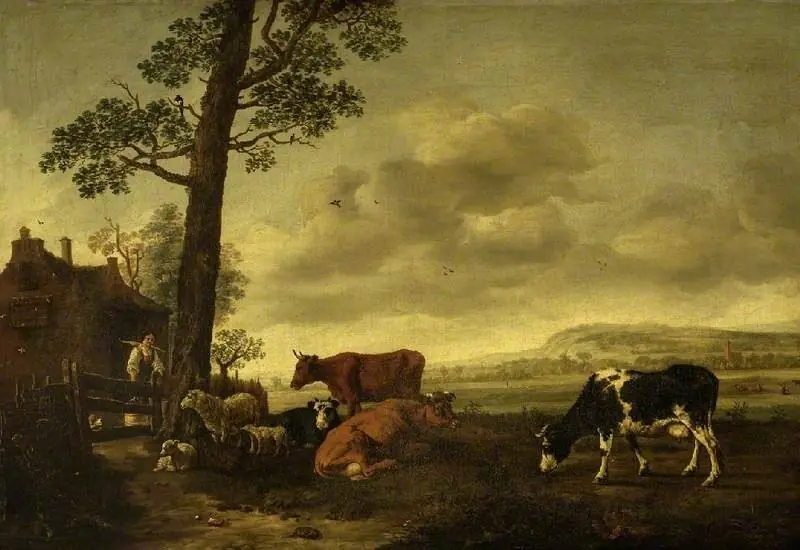
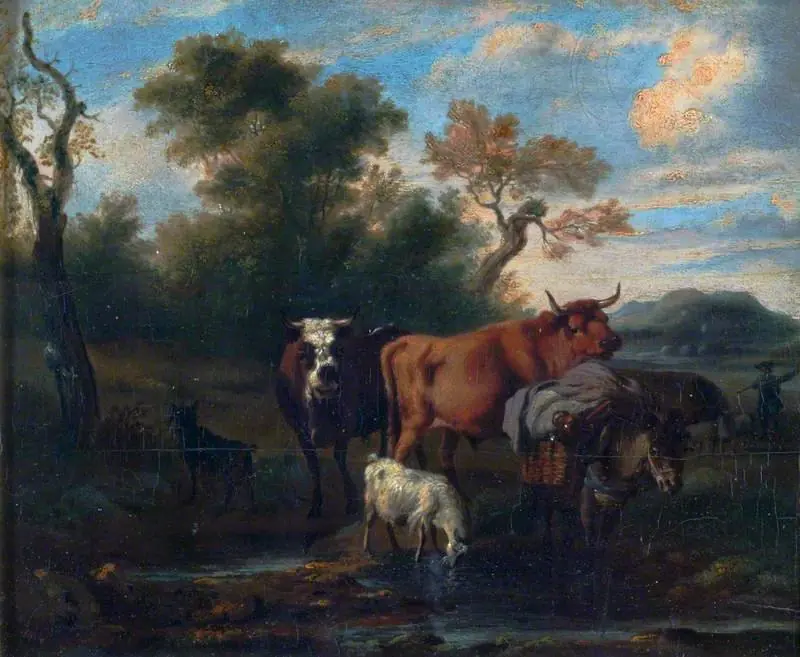
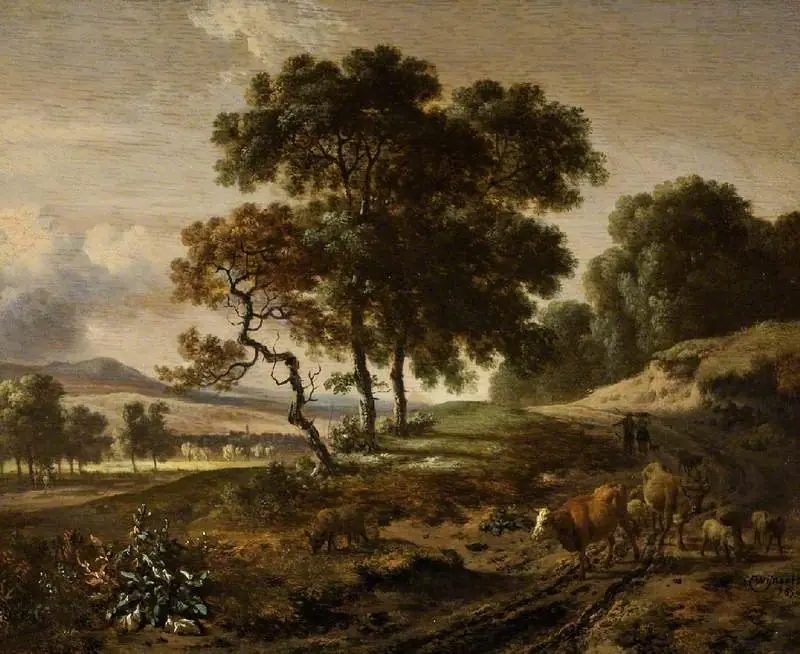
Cattle-piece is an oil painting by the Rococo painting artist Johannes Janson. It is held in the collection of the Fitzwilliam Museum.
About this work
Overview
Its modest scale and unassuming subject reflect a focus on everyday rural life rather than grand narrative.
Cattle-piece is an oil painting dated to around 1790, attributed to Johannes Janson. It portrays a quiet rural scene with grazing livestock and minimal human presence. The work is part of the collection at the Fitzwilliam Museum in Cambridge, where it is preserved as an example of late 18th-century Dutch-influenced landscape painting. Its modest scale and unassuming subject reflect a focus on everyday rural life rather than grand narrative.
Subject & Meaning
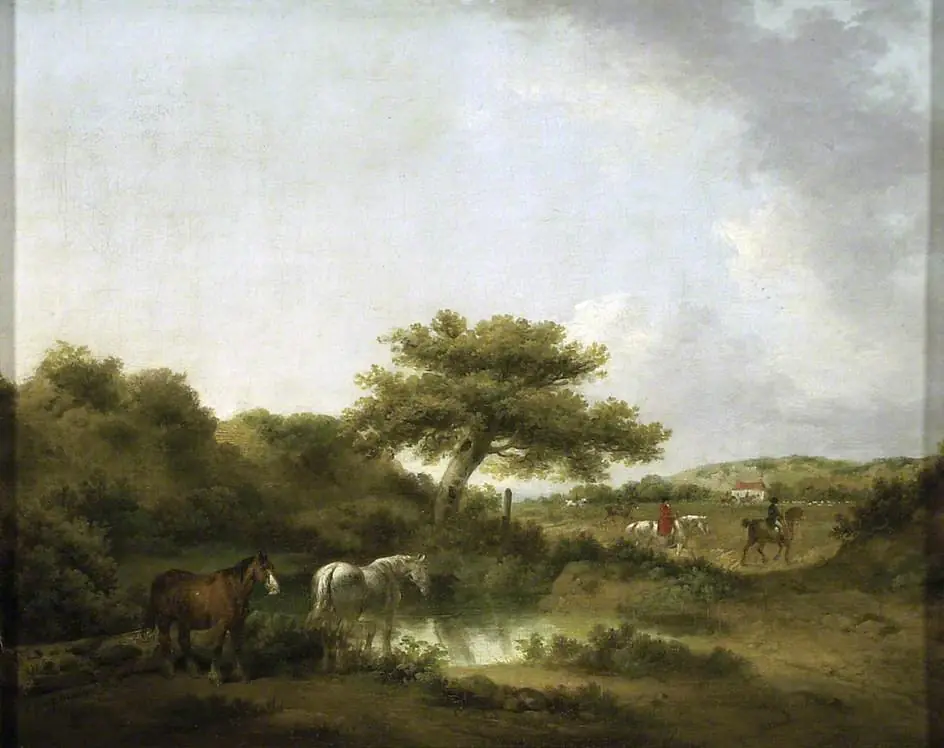
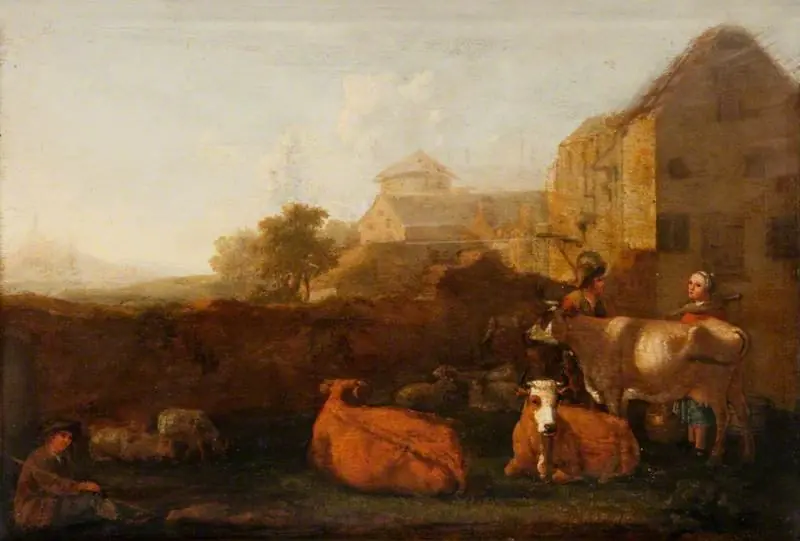
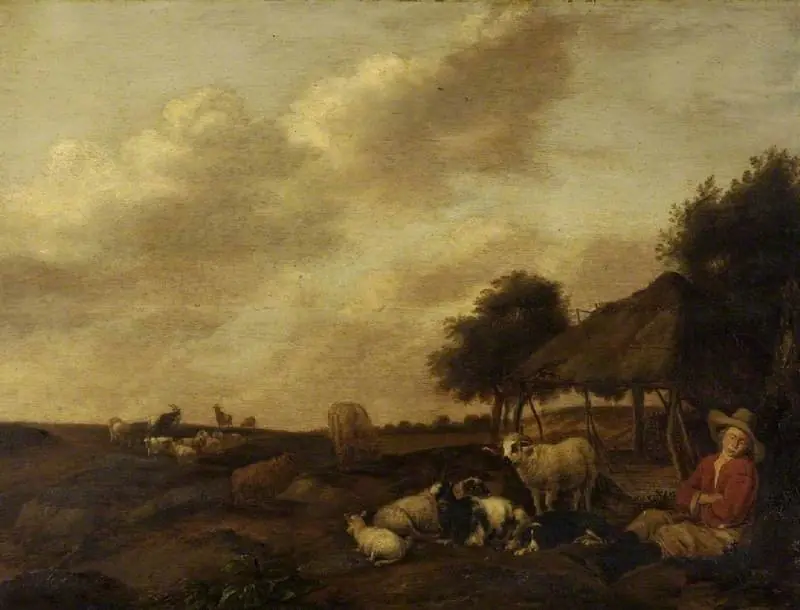
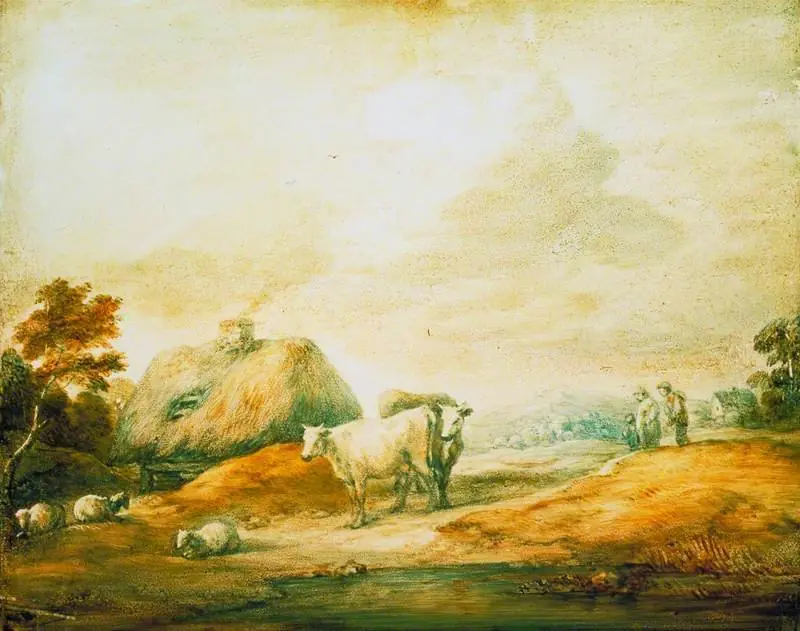
The painting centers on a brown cow and a small group of sheep in the foreground, engaged in quiet grazing. A solitary figure in red stands near a tree in the middle distance, while a distant building suggests a working farm. The absence of dramatic action or symbolic elements points to a contemplative observation of pastoral routine. The scene conveys stillness and continuity, emphasizing harmony between animals, land, and human presence.
Technique & Style
Janson employed oil paint to render textures with subtle realism—fur and wool are rendered with soft, layered brushwork that suggests volume without overt detail. The cloudy sky is painted with loose, atmospheric strokes, creating a sense of depth and shifting light. While not overtly dramatic, the composition uses tonal gradations to guide the eye from foreground to background, hinting at chiaroscuro principles without strong contrasts.
History & Provenance
The painting entered the Fitzwilliam Museum’s collection in the 19th century, though its earlier ownership remains undocumented. It was likely acquired as part of a broader interest in Dutch and Flemish pastoral traditions. No records indicate significant exhibition history prior to its inclusion in the museum’s holdings, suggesting it was valued more for its quiet craftsmanship than for public recognition during its time.
Context
Created in the late 1700s, the work aligns with a European tradition of rural landscape painting that emphasized observation over idealization. While larger-scale agricultural scenes were common in the Netherlands, Janson’s version reflects a more intimate, localized approach. The painting’s simplicity places it within a broader trend of quiet, non-narrative depictions of farm life that gained traction among collectors seeking authenticity over grandeur.
Legacy
Cattle-piece remains a quiet example of 18th-century pastoral painting, valued for its restraint and attention to natural detail. It contributes to scholarly understanding of lesser-known artists working within regional traditions outside major urban centers. Though not widely reproduced or studied, it serves as a representative work of its time, offering insight into how ordinary rural scenes were visually preserved in the pre-industrial era.
Artist & collection