Artwork
Bacchanal
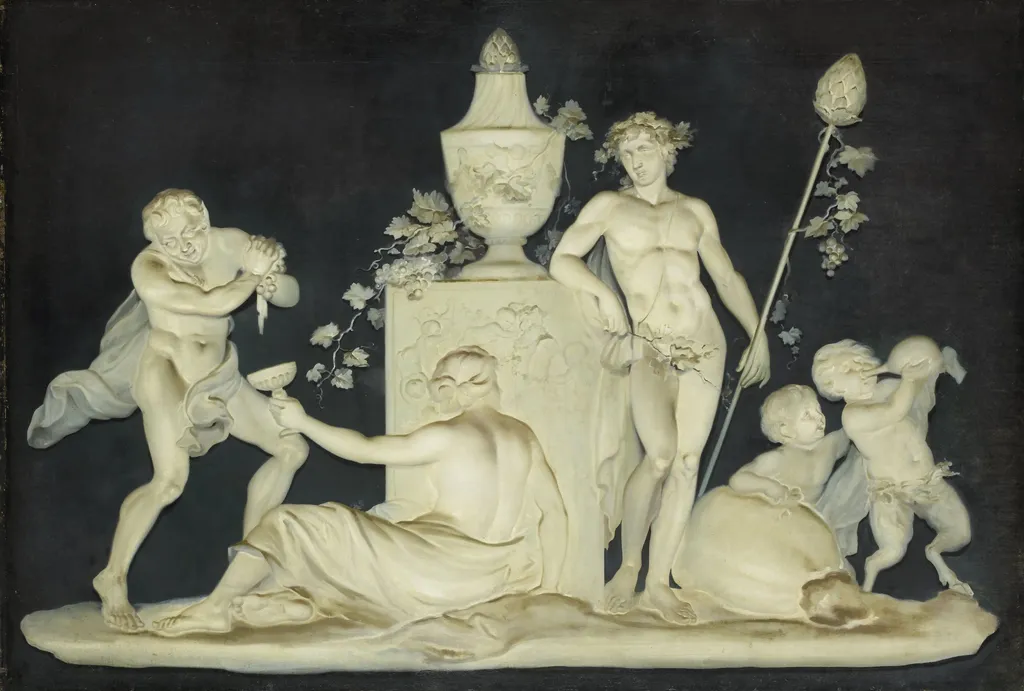
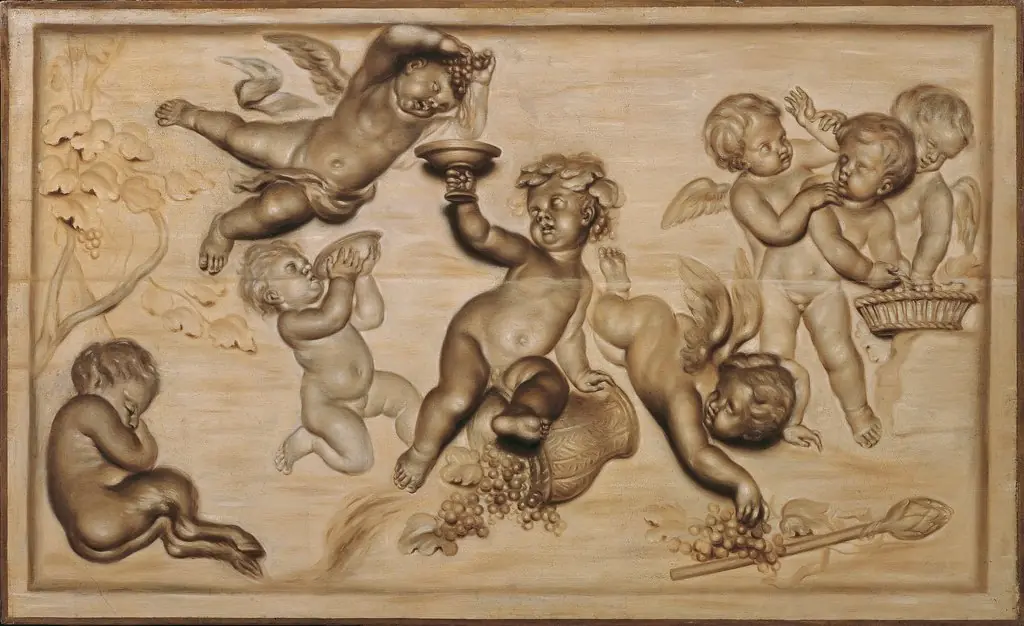
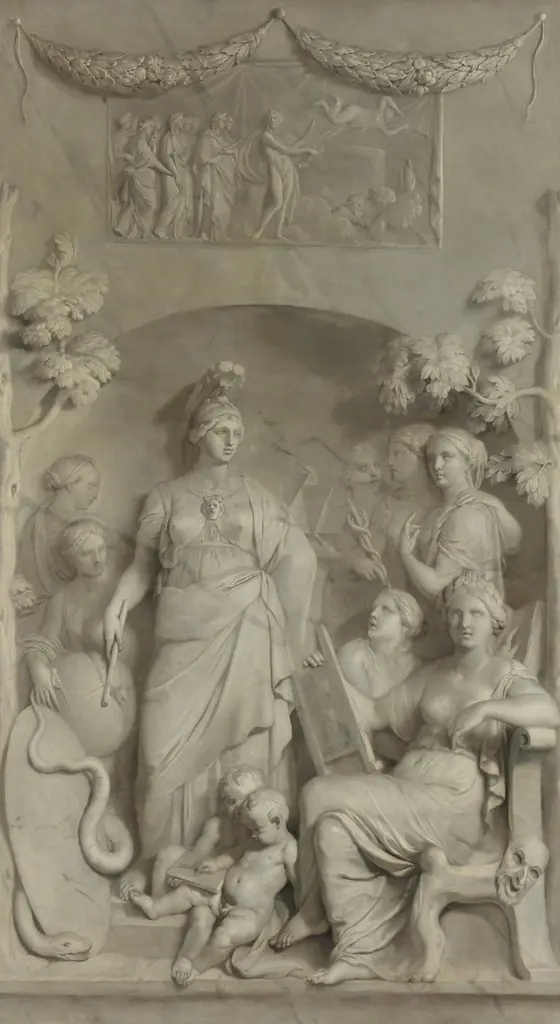
Bacchanal is an oil painting by the Rococo painting artist Johannes van Dreght. It dates from 1797 and is held in the collection of the Rijksmuseum.
About this work
Overview
Johannes van Dreght, a Dutch decorative painter active in late‑18th‑century Amsterdam, completed the oil painting *Bacbachal* in 1797. Executed in the Rococo idiom, the work presents a mythological gathering rendered in a subdued palette of browns and beiges. It is part of the Rijksmuseum’s permanent collection and exemplifies the artist’s interest in festive, allegorical subjects.
Subject & Meaning
The canvas portrays a bacchanalian revel, a traditional theme drawn from the Roman god of wine, Bacchus. Figures are shown nude amid foliage, with a standing man holding a staff and a seated companion, while children frolic nearby. The composition suggests a celebration of nature’s abundance and the carefree spirit associated with wine‑driven festivities.
Technique & Style
Van Dreght employs a restrained chiaroscuro, using light and shadow to model the bodies against a muted background of leaves and vines. The brushwork is smooth, characteristic of decorative painting, and the limited tonal range emphasizes form over color, aligning the piece with the softer, intimate qualities of late Rococo art.
History & Provenance
Created in 1797, *Bacchanal* entered the Rijksmuseum’s holdings as part of its Dutch decorative arts collection. The painting has remained in the museum’s inventory since its acquisition, providing scholars with a rare example of van Dreght’s larger‑scale mythological work within a public institution.
Own this work as a print
Artist & collection
Artist
Johannes van Dreght (11 November 1737, Amsterdam - 7 October 1807, Amsterdam) was a Dutch decorative painter; known for his work on fireplaces, carriages, yachts, sleds and fans.

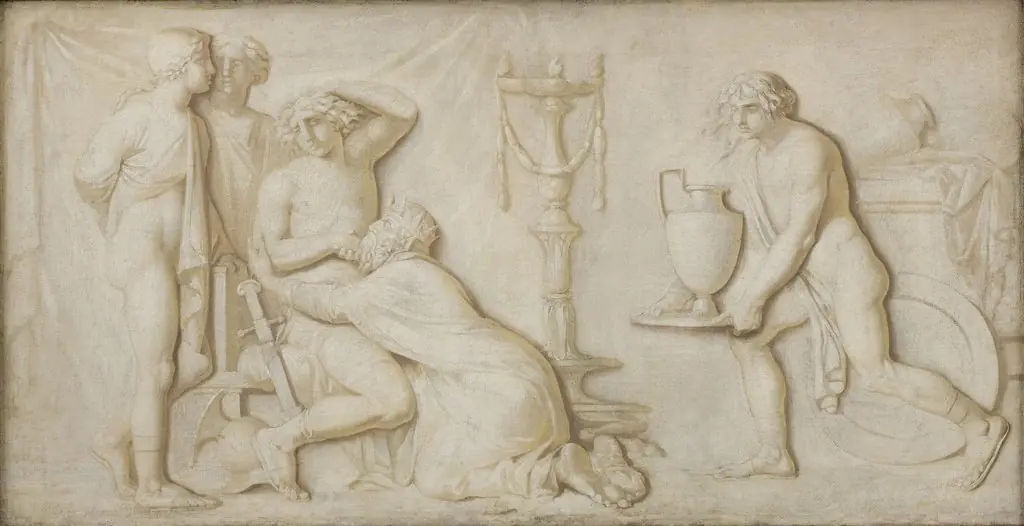 King Priam Pleading with Achilles for the Corpse of Hector
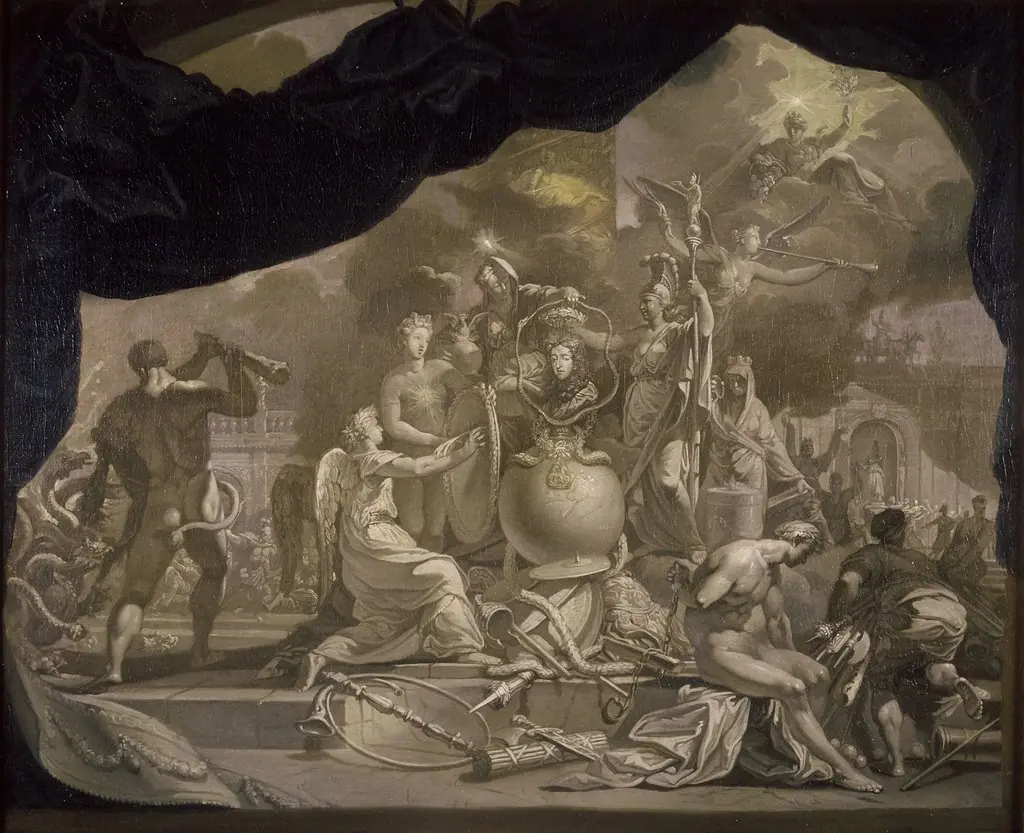 The Glorification of Stadholder-King William III (1650-1702)
 King Priam Pleading with Achilles for the Corpse of Hector
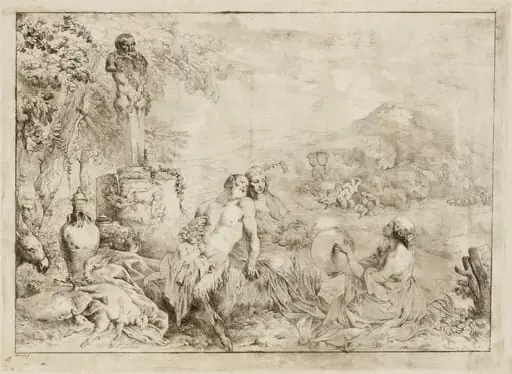 Landscape with a Satyr Family and Classical Sculpture
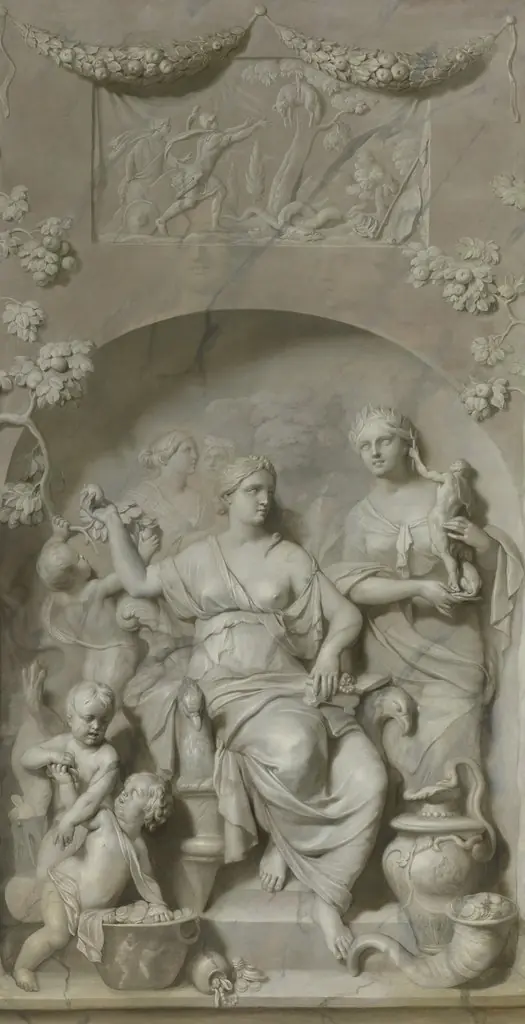 Allegory of riches
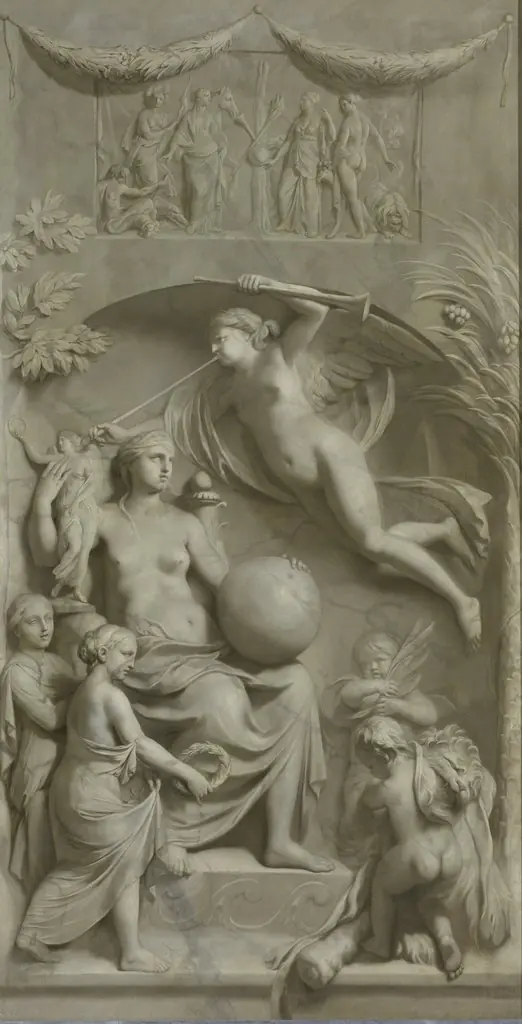 Allegory of fame
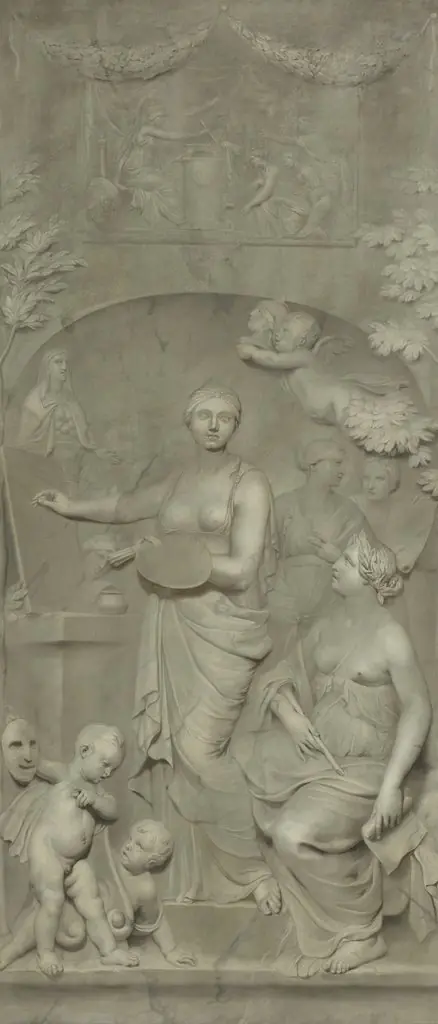 Allegory of the arts
 Allegory of the sciences