Artwork
Untitled
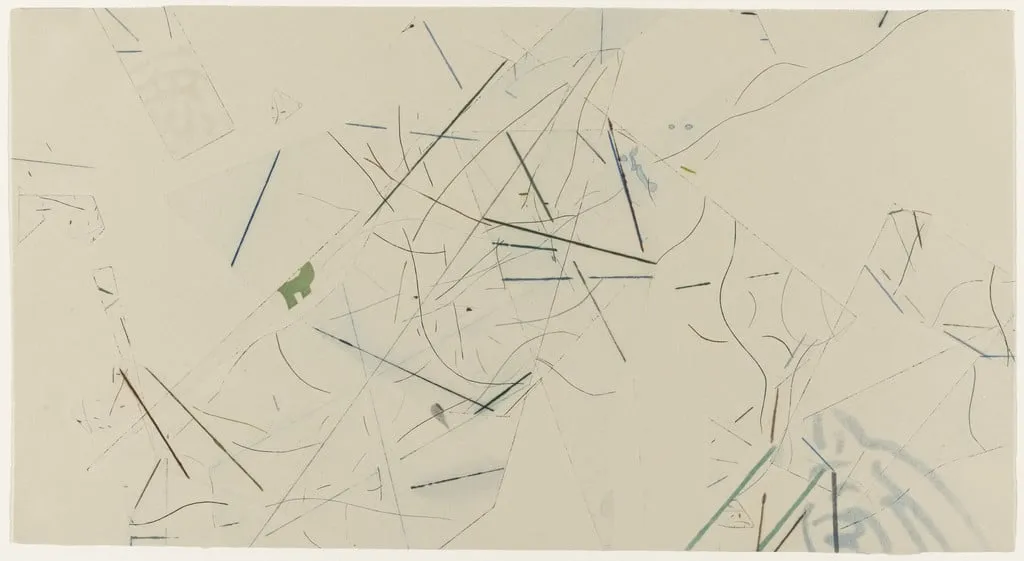
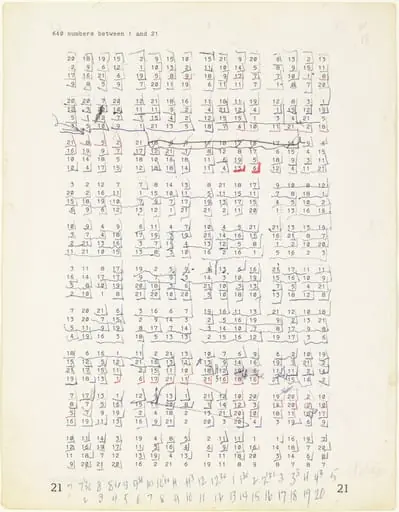
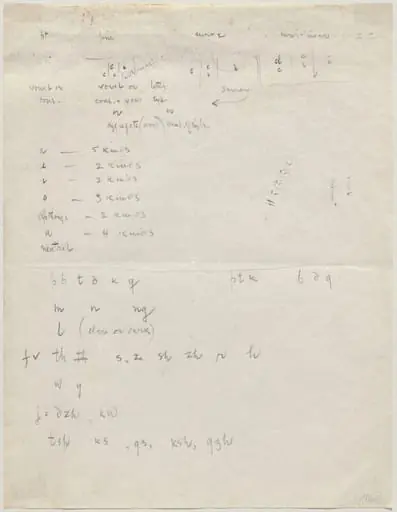
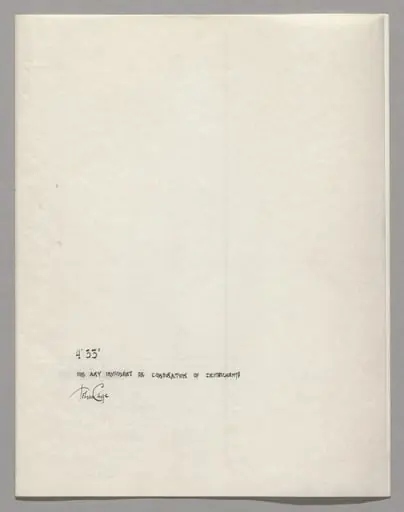
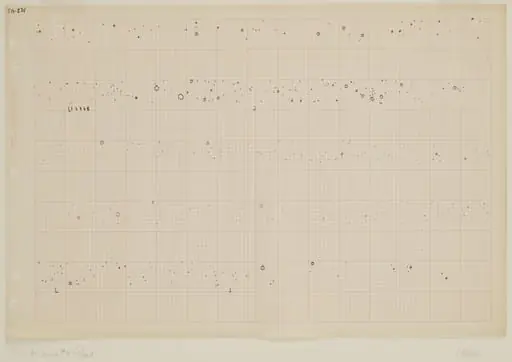
Untitled is an ink print by John Cage. It dates from 1982 and is held in the collection of the Museum of Modern Art.
About this work
Overview
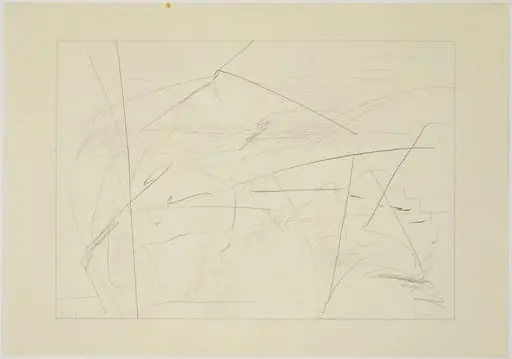
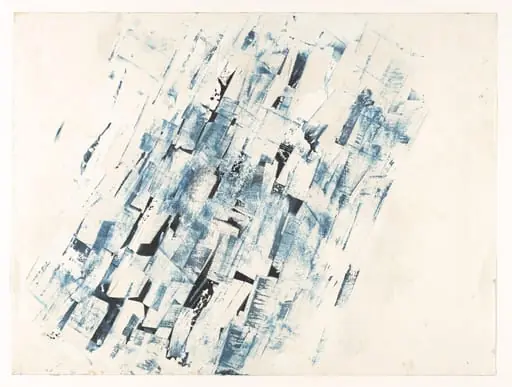
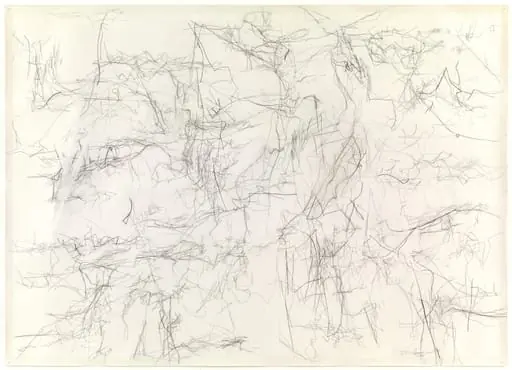
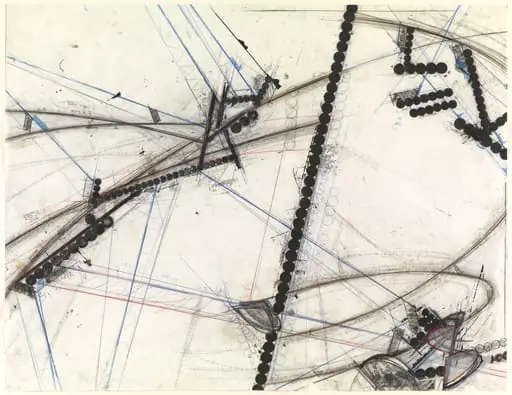
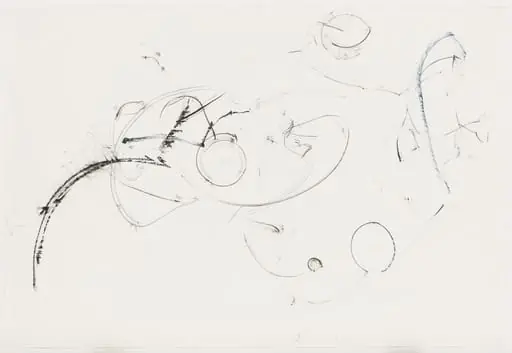
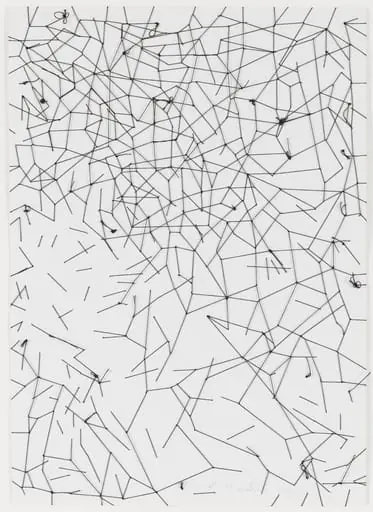
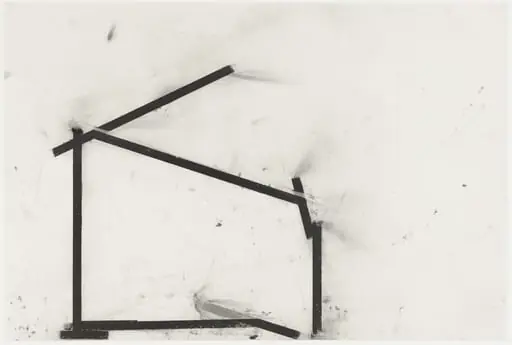
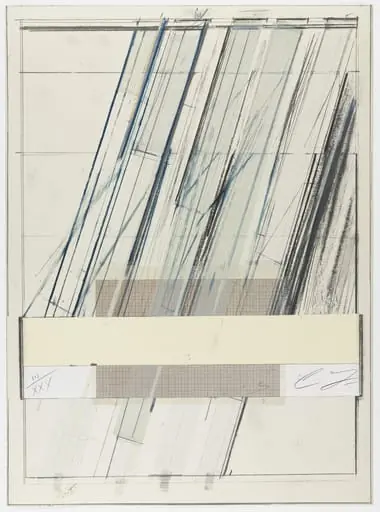
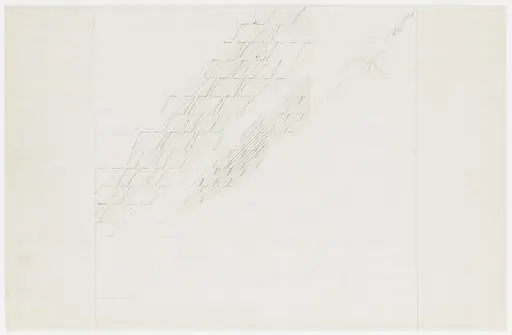
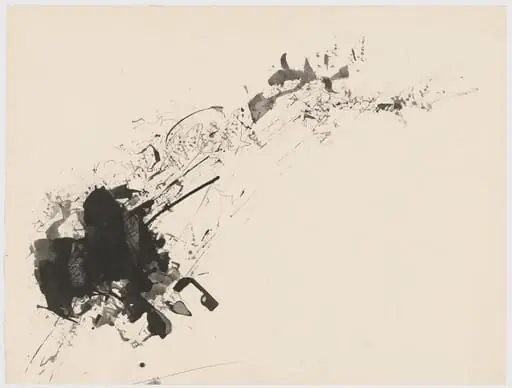
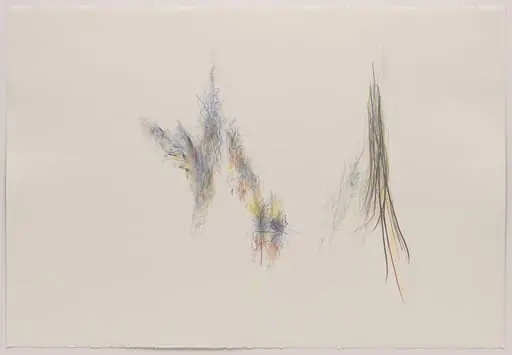
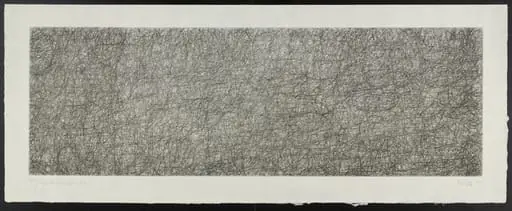
Created in 1982, this print by John Cage combines drypoint, engraving, and aquatint techniques to produce a composition of delicate, intersecting lines.
Created in 1982, this print by John Cage combines drypoint, engraving, and aquatint techniques to produce a composition of delicate, intersecting lines. It resides in the collection of The Museum of Modern Art. The work lacks representational forms, instead emphasizing the physical presence of mark-making. The surface is dominated by fine, irregular strokes on a pale ground, with minimal color accents scattered sparingly across the field.
Subject & Meaning
The work does not depict a recognizable subject. Its significance lies in the autonomy of the line—each stroke is a record of gesture and process rather than a symbol. Cage, known for his experimental approach to sound and structure, extends this philosophy here: the image is an event of creation, not a representation. Meaning emerges from the act of making, not from narrative or imagery.
Technique & Style
Cage employed intaglio methods—drypoint for its scratchy texture, engraving for precise incisions, and aquatint for subtle tonal gradations. The result is a layered surface where sharp, angular lines coexist with loose, organic scribbles. Color is restrained: faint blues, browns, and a single greenish form introduce minimal chromatic variation without disrupting the monochromatic rhythm of the lines.
History & Provenance
The print was produced in 1982 and entered The Museum of Modern Art’s collection shortly thereafter. It belongs to a series of graphic works Cage made during a period when he increasingly turned to visual art as an extension of his compositional thinking. No prior ownership or exhibition history beyond MoMA’s acquisition is widely documented.
Context
Cage’s prints from this era reflect his engagement with chance operations and indeterminacy, principles central to his musical compositions. In visual form, these ideas manifest as non-hierarchical arrangements of marks, rejecting traditional composition. The work aligns with postwar avant-garde practices that valued process over product and questioned the boundaries between art and life.
Legacy
This print contributes to Cage’s broader legacy as an artist who blurred disciplinary lines. It exemplifies how his conceptual frameworks translated into visual media, influencing later generations interested in performative mark-making and non-representational art. Though not widely exhibited, it remains a quiet but significant artifact of his interdisciplinary practice.
Artist & collection

Artist
John Milton Cage Jr. was an American composer, artist, and music theorist. A pioneer of indeterminacy in music, electroacoustic music, and non-standard use of musical instruments, Cage was one of the leading figures of…