Artwork
Untitled
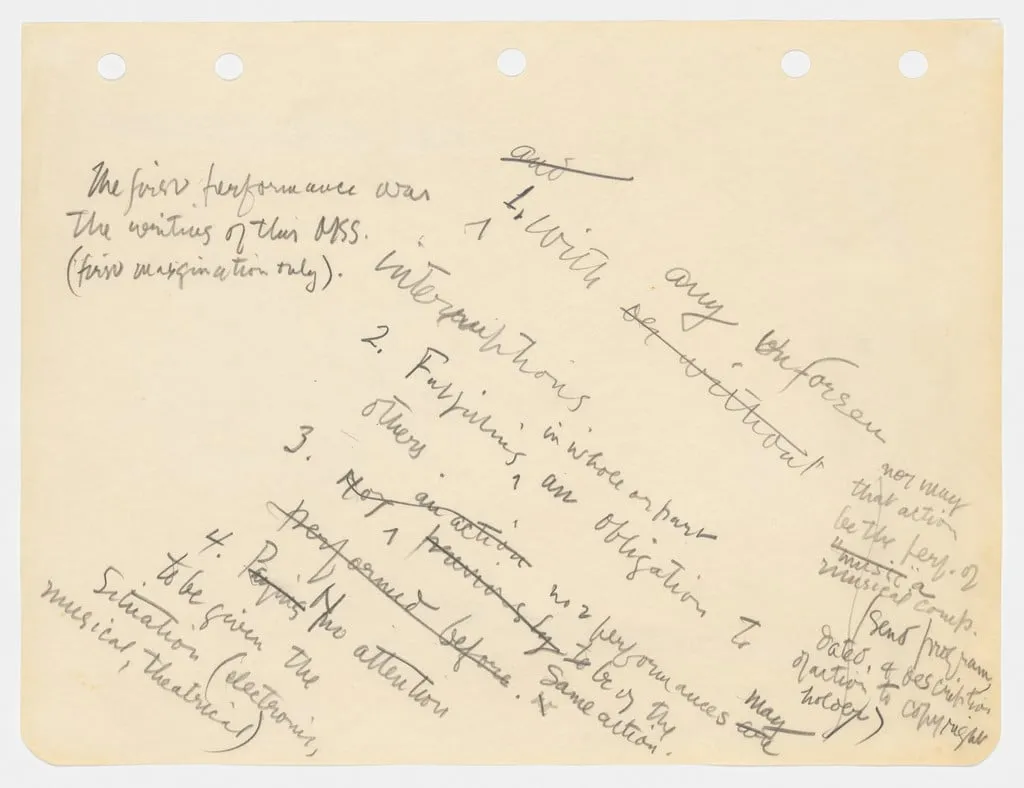
Untitled is a graphite drawing by John Cage. It dates from 1962 and is held in the collection of the Museum of Modern Art.
About this work
Overview
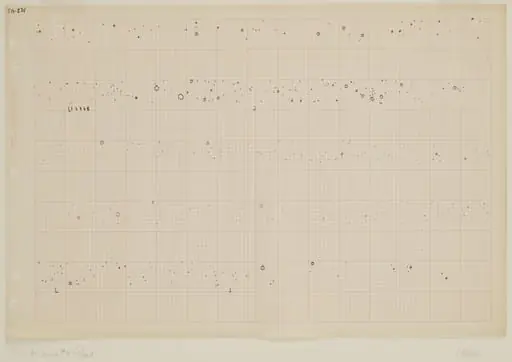
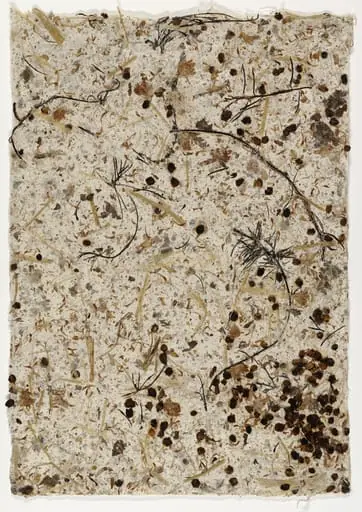
Created in 1962, this pencil drawing on paper is attributed to John Cage, primarily known as a composer. It resides in the collection of The Museum of Modern Art. The work is minimal in form, consisting of abstract marks and lines without representational intent. Its existence as a visual artifact by a musician challenges conventional boundaries between artistic disciplines.
Subject & Meaning
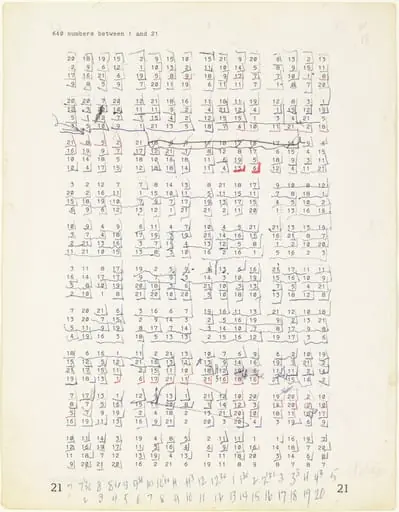
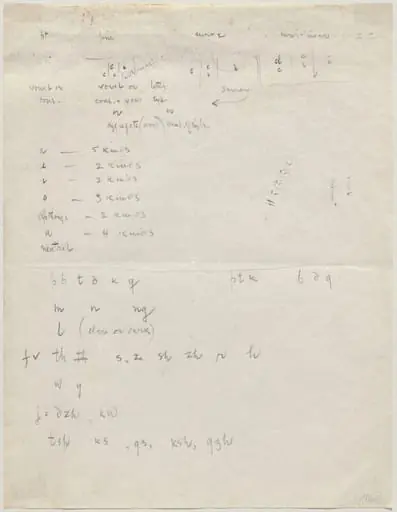
The drawing holds no explicit subject or narrative. Its significance lies in its process rather than its imagery, reflecting Cage’s interest in chance operations and non-intentional creation. It invites consideration of art as an act of inquiry rather than expression, aligning with his broader philosophical approach to creativity.
Technique & Style
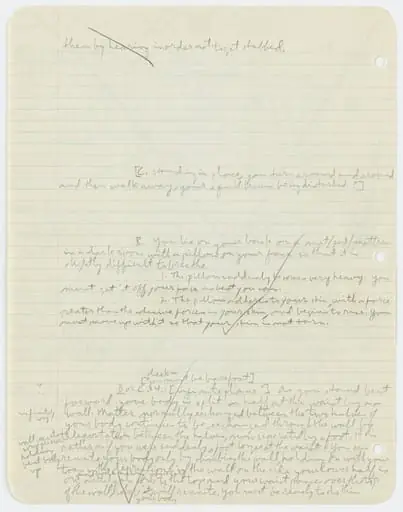
Executed in pencil, the work features a dense accumulation of small, irregular marks. These suggest a method akin to stippling, though not applied systematically. The absence of predetermined structure reflects Cage’s use of indeterminacy, where the artist relinquishes control to allow spontaneous or random outcomes to shape the final form.
History & Provenance
The drawing was produced during a period when Cage was actively engaging with visual art, often collaborating with contemporaries in experimental circles. It entered The Museum of Modern Art’s collection in the decades following its creation, recognized as part of a broader shift in postwar art toward interdisciplinary practices.
Context
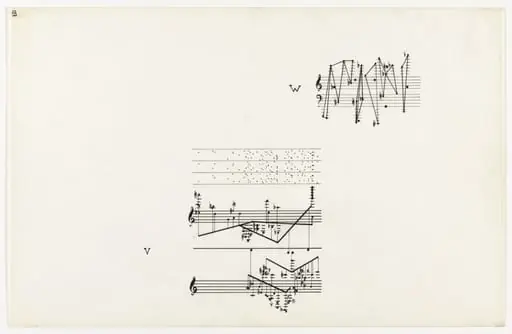
In the early 1960s, Cage was exploring parallels between musical composition and visual production, influenced by Zen Buddhism and the ideas of Marcel Duchamp. This drawing emerged alongside his scores using graphic notation and performances involving everyday sounds, positioning visual mark-making as an extension of his sonic experiments.
Legacy
The work contributes to a redefinition of artistic authorship, demonstrating that non-traditional practitioners could generate meaningful visual forms. It remains a touchstone in discussions of cross-medium experimentation, illustrating how conceptual frameworks from one art form can inform and transform another.
Artist & collection

Artist
John Milton Cage Jr. was an American composer, artist, and music theorist. A pioneer of indeterminacy in music, electroacoustic music, and non-standard use of musical instruments, Cage was one of the leading figures of…