Artwork
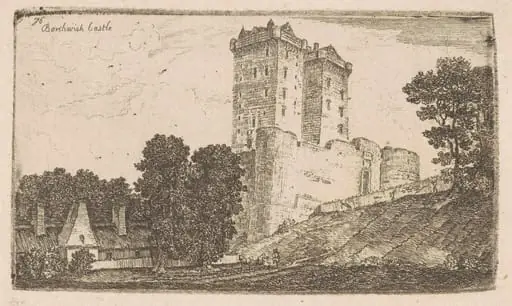
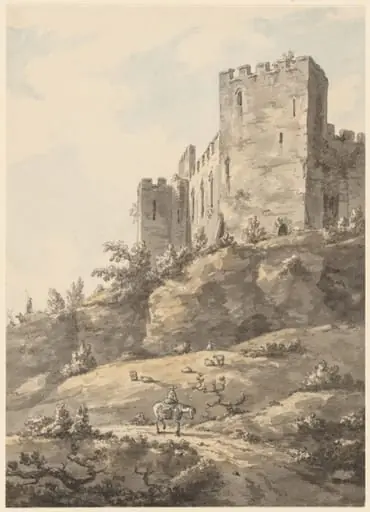
Borthwick Castle from the East
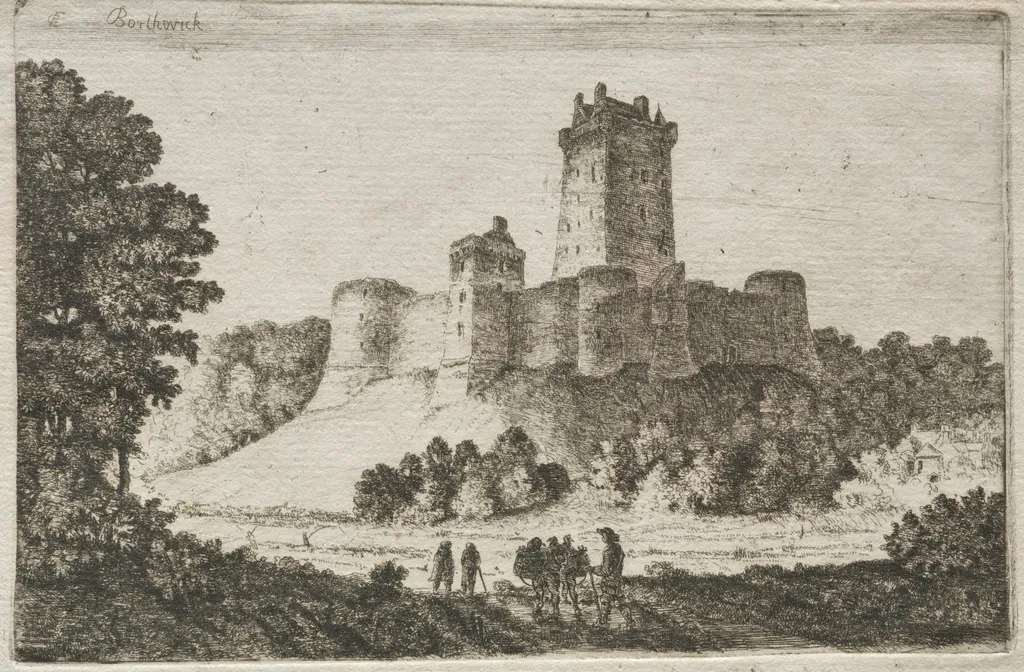
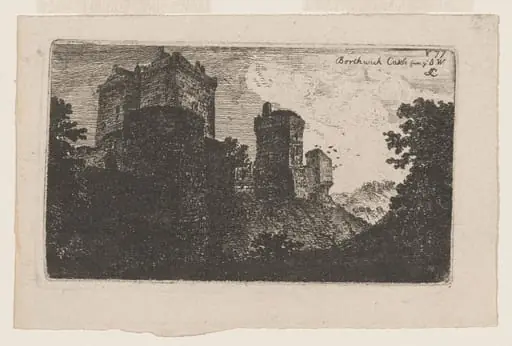
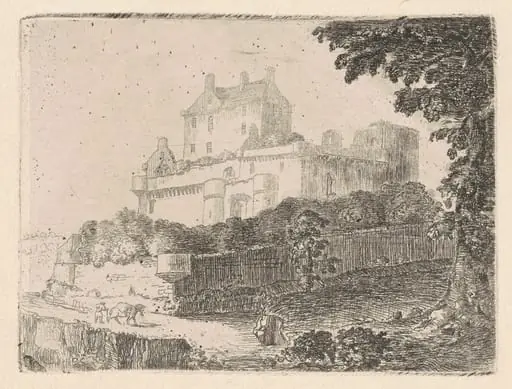
Borthwick Castle from the East is a print by the Romanticist artist John Clerk of Eldin. It dates from 1770 and is held in the collection of the Cleveland Museum of Art.
About this work
He used simple colors—browns, greens, and a pale sky—to show the castle’s age and strength.
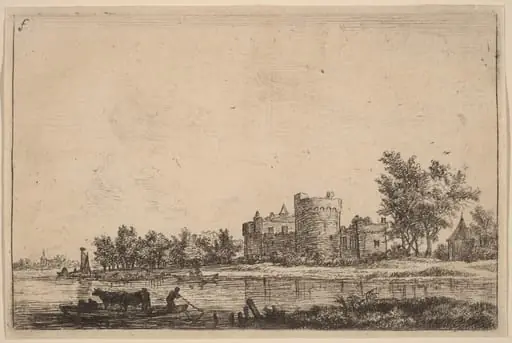
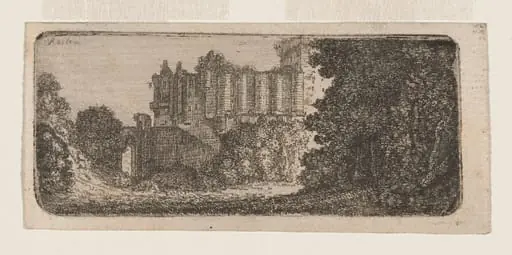
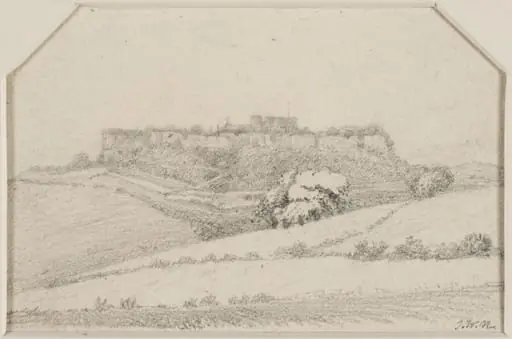
John Clerk of Eldin painted Borthwick Castle from the East around 1770. The castle stands tall on a green hill, its stone walls dark against the sky. A winding road leads up to its gates beneath a cloudy sky.
This isn’t a flashy scene. It’s a quiet study of light on rough stone. Clerk of Eldin cared more about mood than drama. He used simple colors—browns, greens, and a pale sky—to show the castle’s age and strength.
Want to see more like this? Look up John Clerk of Eldin (British, 1728–1812).
Overview
John Clerk of Eldin, a Scottish landowner and intellectual active during the Scottish Enlightenment, created a pencil and wash drawing of Borthwick Castle around 1770. Though known for his scientific work in geology and naval architecture, he also engaged in topographical drawing as a means of recording the built environment. This work exemplifies his interest in precise observation and quiet documentation rather than dramatic embellishment.
Subject & Meaning
The drawing presents Borthwick Castle as a solitary, weathered structure rising from a gentle slope, approached by a narrow path. Its medieval masonry is rendered without idealization, emphasizing endurance over grandeur. The absence of human figures and the subdued atmosphere suggest a contemplative engagement with time and decay, reflecting an 18th-century shift toward valuing historical authenticity in landscape representation.
Technique & Style
Clerk employed a restrained palette of earth tones and pale washes to convey the castle’s stone texture and the overcast sky. Linear precision in the walls contrasts with soft, atmospheric gradients in the landscape, creating a sense of depth without theatrical lighting. His method prioritizes structural clarity and tonal harmony over expressive brushwork, aligning with the empirical ethos of his scientific pursuits.
History & Provenance
The drawing originates from Clerk’s personal collection, likely made during his travels through southern Scotland. It was not publicly exhibited in his lifetime but remained among his papers, later preserved by descendants. Its survival reflects the private, scholarly nature of his artistic output, distinct from commercial or institutional art practices of the period.
Context
In the late 18th century, Scottish antiquarians and natural philosophers increasingly documented historic sites as part of broader efforts to record national heritage. Clerk’s work aligns with contemporaries like James Hutton and Robert Adam, who sought to understand the past through systematic observation. His drawing contributes to a growing genre of topographical studies that valued accuracy over romanticism.
Legacy
Clerk’s drawings, including this one, are now held in institutional archives as records of both architectural form and Enlightenment-era intellectual culture. While not widely known in mainstream art history, they offer insight into how scientific minds engaged with landscape and heritage. His approach influenced later topographical practices in Scotland, particularly among those blending empirical study with visual documentation.
Artist & collection
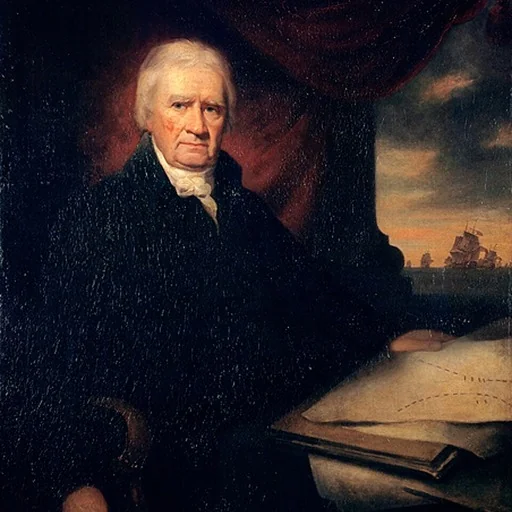
Artist
John Clerk of Eldin FRSE FSAScot (10 December 1728 – 10 May 1812) was a Scottish merchant, author, artist, geologist and landowner.