Artwork
Six Views of Heidelberg Castle: Towards Northeast
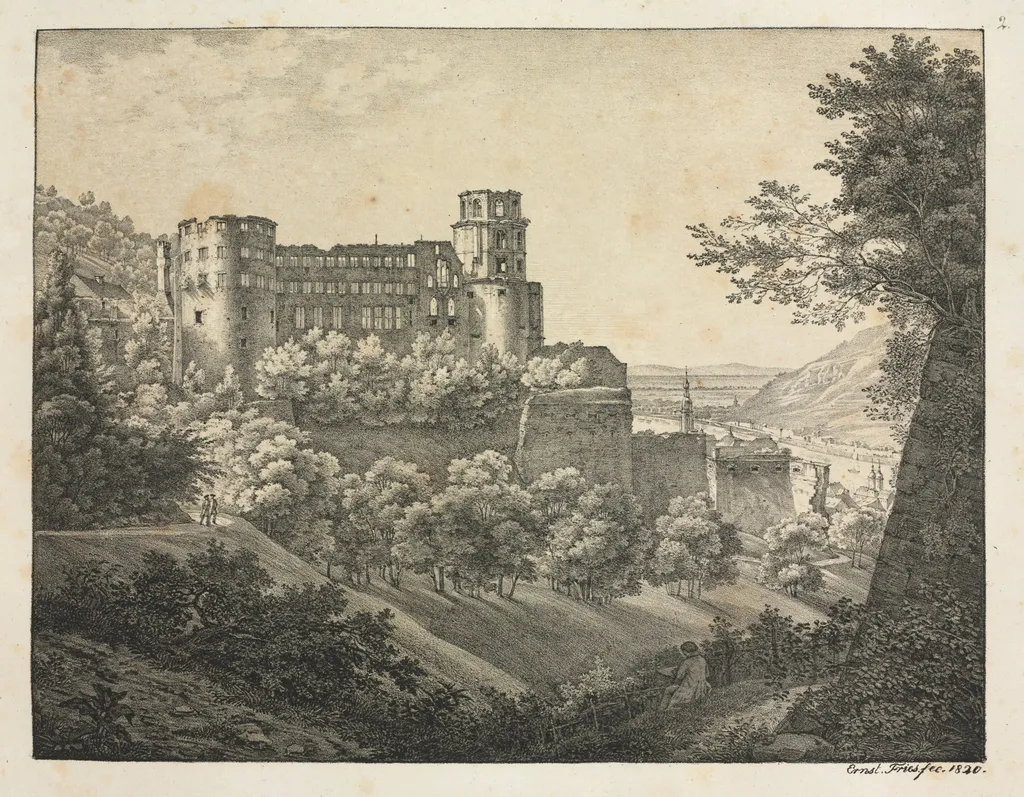
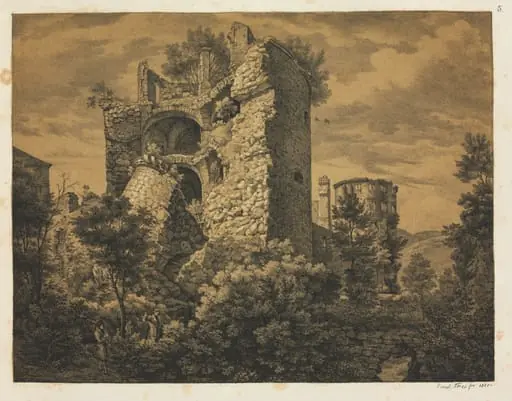
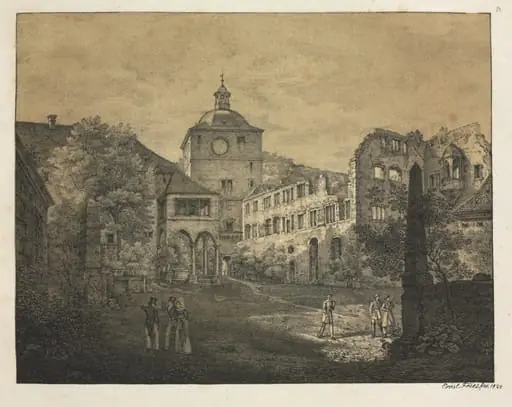
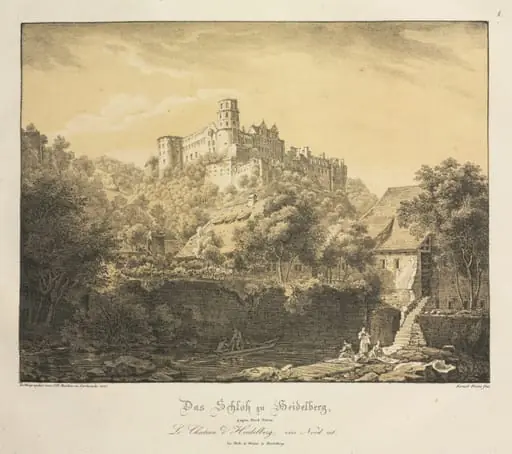
Six Views of Heidelberg Castle: Towards Northeast is a print by the Romanticist artist Ernst Fries. It dates from 1820 and is held in the collection of the Cleveland Museum of Art.
About this work
Overview
Ernst Fries, a German artist active in the early 19th century, produced this detailed lithograph in 1820 as part of a series documenting Heidelberg Castle.
Ernst Fries, a German artist active in the early 19th century, produced this detailed lithograph in 1820 as part of a series documenting Heidelberg Castle. Associated with the regional Romantic movement, Fries focused on capturing the emotional resonance of decayed architecture within natural landscapes. This print presents a specific vantage point from the northeast, emphasizing the castle’s ruinous state against a quiet, wooded terrain.
Subject & Meaning
The scene centers on the fragmented remains of Heidelberg Castle, its towers and walls worn by time and weather. A winding path descends from the ruins toward a distant town nestled beside the Neckar River, with two small figures suggesting quiet human presence. The composition invites contemplation of transience, aligning with Romantic ideals that found beauty in decay and the passage of history through landscape.
Technique & Style
Fries employed fine linear detail to render the castle’s stonework and the texture of foliage, while softening distant hills and trees with delicate gradations of tone. The lithographic medium allowed for subtle contrasts between sharp architectural edges and hazy atmospheric perspective. This balance of precision and ambiguity creates a meditative mood, characteristic of his approach to Romantic topography.
History & Provenance
Created during Fries’s early career, this print emerged from a period when Heidelberg’s ruins were increasingly viewed as cultural symbols rather than mere relics. The work was likely produced for local patrons and collectors interested in regional heritage. Though not widely published, it reflects a growing interest in documenting historic sites through printmaking in the German states during the 1820s.
Context
In the early 19th century, German artists turned to regional landscapes and medieval ruins as subjects that evoked national identity and emotional depth. Heidelberg Castle, damaged during the Thirty Years’ War and later conflicts, became a focal point for this sentiment. Fries’s work aligns with broader Romantic trends that valued nature’s reclamation of human history over idealized classical forms.
Legacy
Fries’s series contributed to a localized tradition of topographical printmaking that preserved the visual character of Heidelberg’s ruins before later restorations. While not influential on a national scale, his careful observations informed subsequent regional artists and helped sustain public interest in the castle’s historical presence through the 19th century.
Artist & collection
Artist
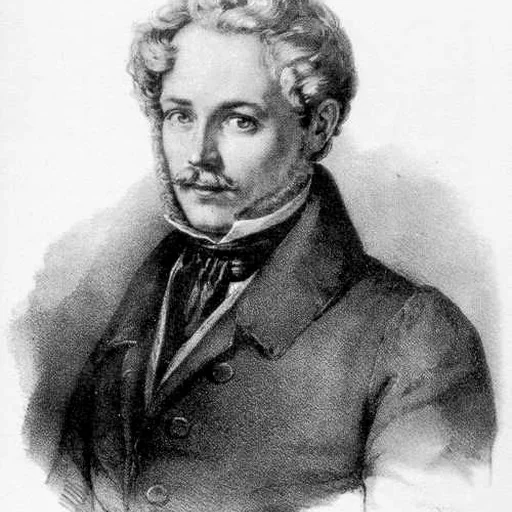
Ernst Fries (22 June 1801, Heidelberg – 11 October 1833, Karlsruhe) was a German painter, draftsman, watercolourist, etcher, printmaker, and lithograph.

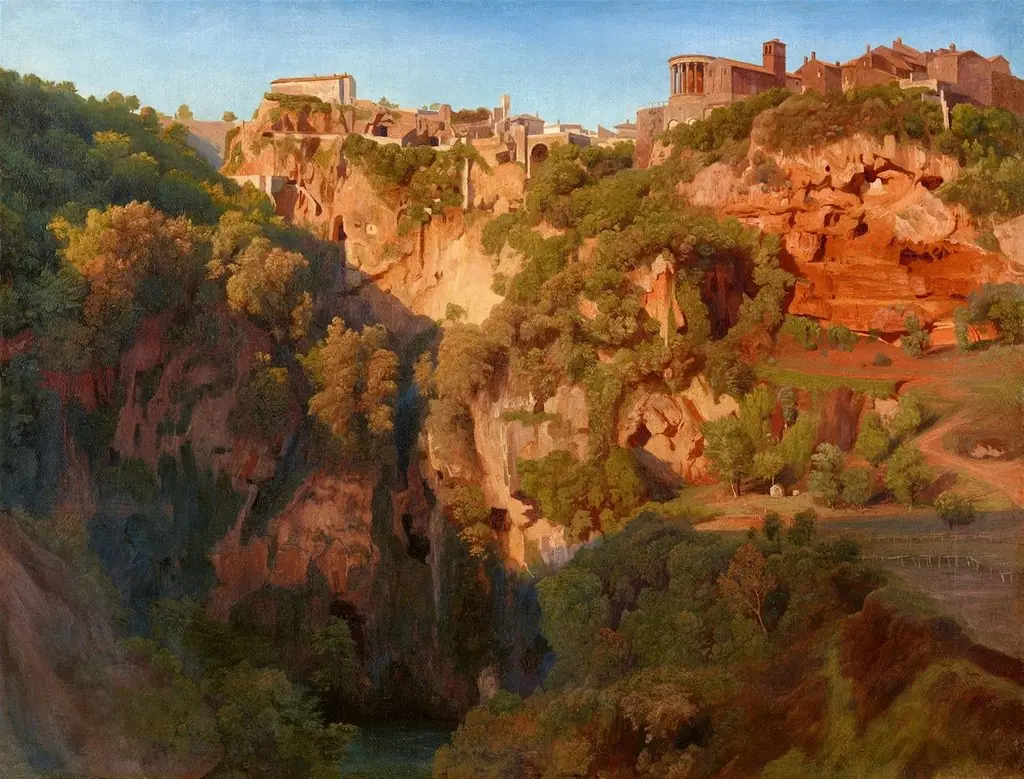 The Waterfalls at Tivoli with the Ponte Lupo, Temple of Vesta, and Temple of Sibyl The Waterfalls at Tivoli with the Ponte Lupo, Temple of Vesta, and Temple of Sibyl
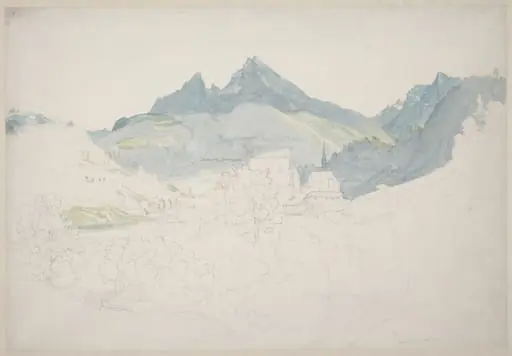 Berchtesgaden with the Watzmann Peak in the Distance
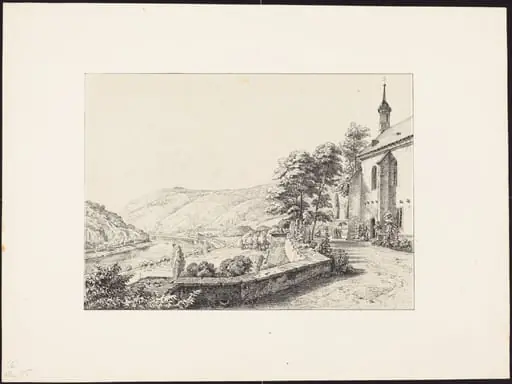 The Convent Terrace
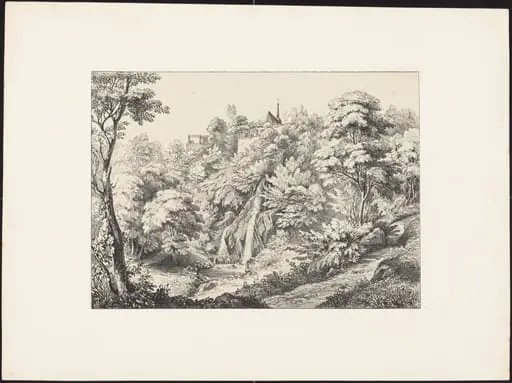 Rear View of the Convent with Waterfall
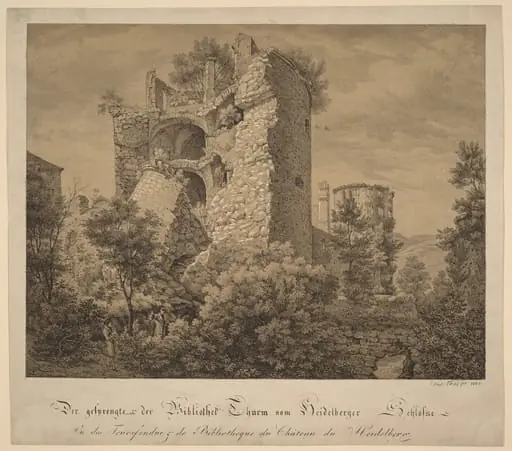 Der Gesprengte und der Bibliotheke Thurm von Heidelberger Schloß (The Exploded Tower and the Library of Heidelberg Castle)
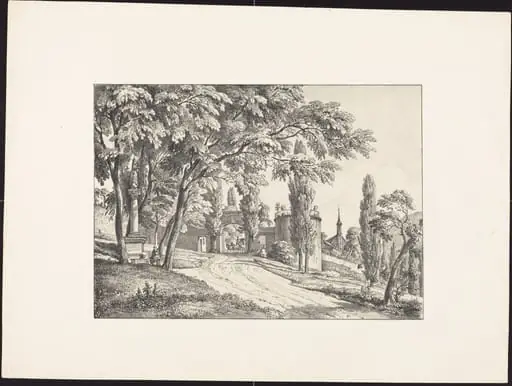 Entrance to the Convent Courtyard
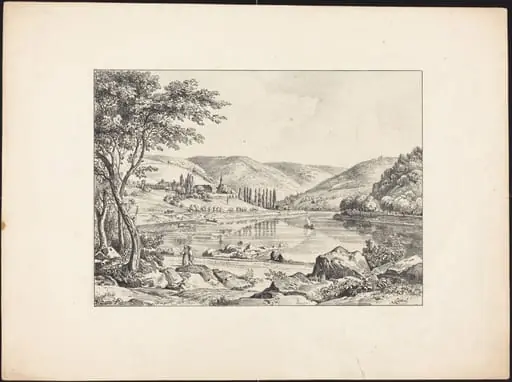 The Convent of Neuburg from Haarlass
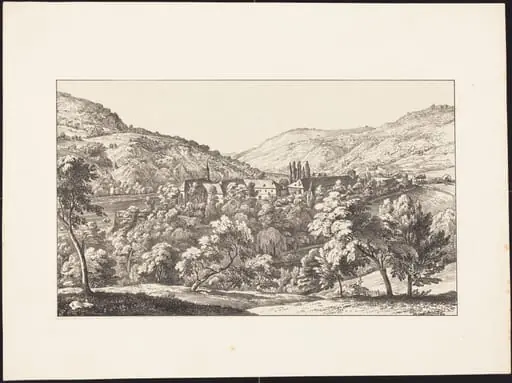 View of the Convent of Neuberg from the Summit