Artwork
Angus Og, God of Love and Courtesy, Putting a Spell of Summer Calm on the Sea
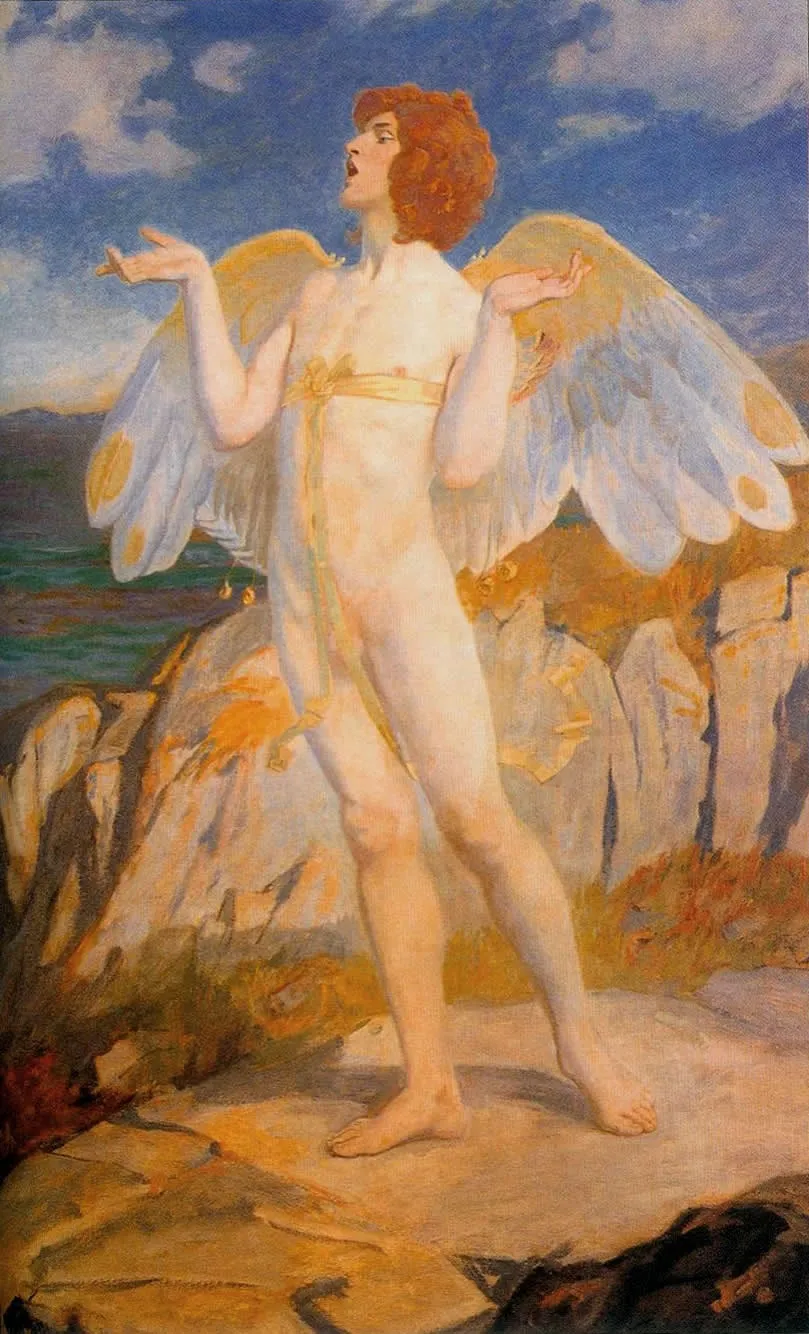
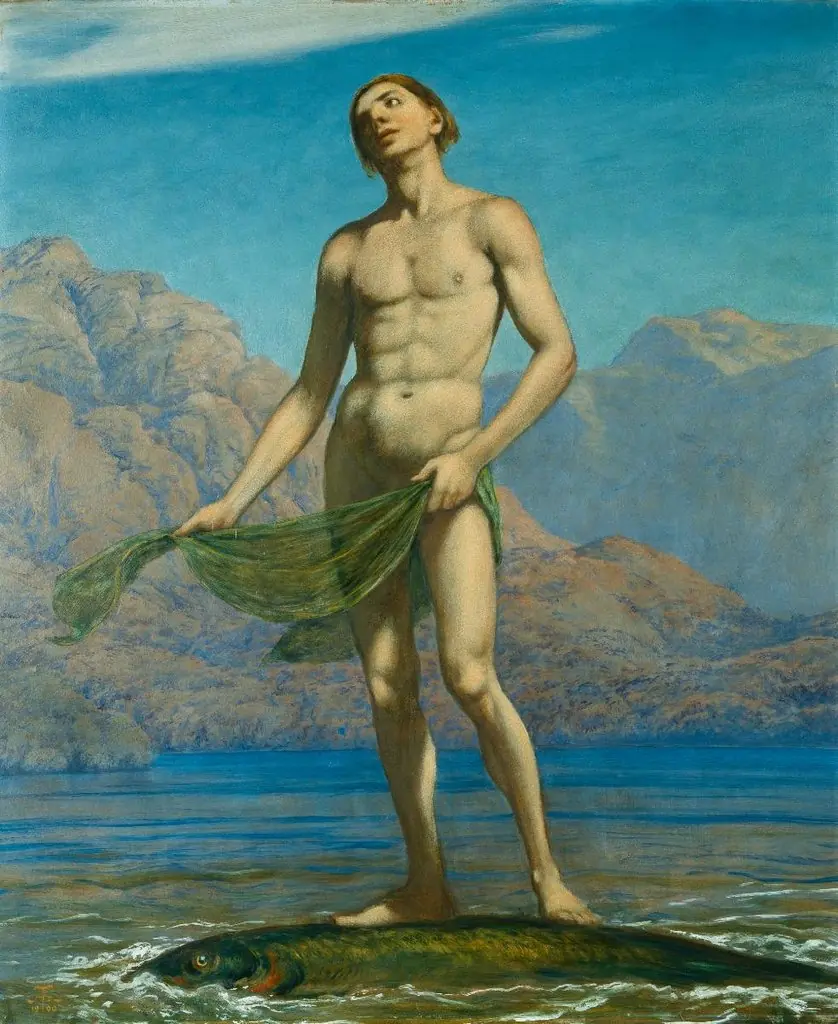
Angus Og, God of Love and Courtesy, Putting a Spell of Summer Calm on the Sea is an oil painting by the Post-Impressionist artist John Duncan. It dates from 1908 and is held in the collection of the National Galleries Scotland.
About this work
Overview
Though associated with Symbolist and Post-Impressionist tendencies, the painting prioritizes narrative and spiritual resonance over formal innovation.
John Duncan painted *Angus Og, God of Love and Courtesy, Putting a Spell of Summer Calm on the Sea* in 1908 using oil on canvas. The work is part of the Scottish National Gallery’s collection and reflects Duncan’s sustained engagement with mythological subjects drawn from Celtic tradition. Though associated with Symbolist and Post-Impressionist tendencies, the painting prioritizes narrative and spiritual resonance over formal innovation.
Subject & Meaning
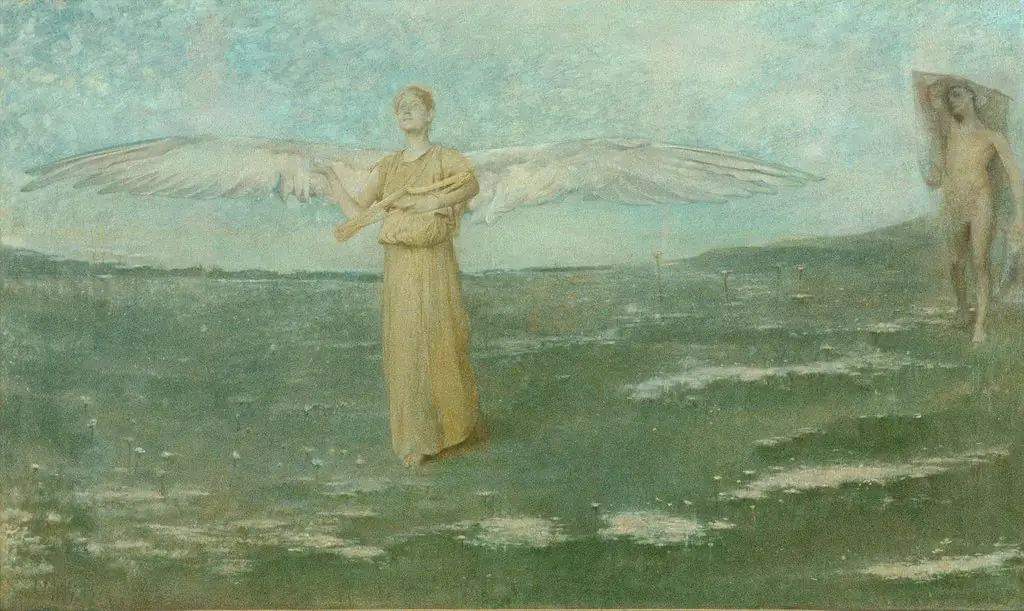
The figure represents Angus Og, a Celtic god linked to love, youth, and poetic inspiration. Depicted mid-action, he stands on a coastal rock, arms raised and head tilted skyward, as if summoning stillness over the sea. His serene expression and outstretched form suggest a ritual invocation rather than a display of power. The scene conveys harmony between divine presence and natural order, aligning with Celtic ideals of sacred nature.
Technique & Style
Duncan employed rich, luminous pigments to render the figure’s golden skin and feathery wings, creating a luminous contrast against the muted blues of sea and sky. The brushwork is deliberate, with soft transitions in the clouds and crisp definition in the figure’s form. The composition is frontal and symmetrical, emphasizing ritual stillness. The palette favors warm tones against cool backgrounds, enhancing the sense of calm.
History & Provenance
Painted in 1908, the work entered the Scottish National Gallery’s collection shortly after its completion. Duncan, a central figure in the Scottish Celtic Revival, produced this piece during a period of renewed interest in indigenous mythologies. It was exhibited in Scotland and later acquired by the national institution as part of its mission to preserve culturally significant Scottish art.
Context
In early 20th-century Scotland, artists like Duncan sought to revive national identity through pre-Christian legends. This painting emerged alongside broader cultural movements that reimagined Celtic heritage in visual form. While European modernism moved toward abstraction, Duncan retained figurative storytelling, grounding his work in mythic continuity rather than stylistic rupture.
Legacy
The painting remains a key example of Duncan’s symbolic approach and the Celtic Revival’s visual language. Though not widely known outside Scotland, it continues to inform interpretations of how myth was adapted in modern Scottish art. Its presence in the national collection affirms its role as a cultural artifact tied to regional identity and spiritual symbolism.
Artist & collection
Artist
John Duncan (1866–1945) was a Scottish Symbolist painter. Much of his work, apart from portraits, depicted Arthurian legends, Celtic folklore, and other mythological subjects.