Artwork
Der Bergsee
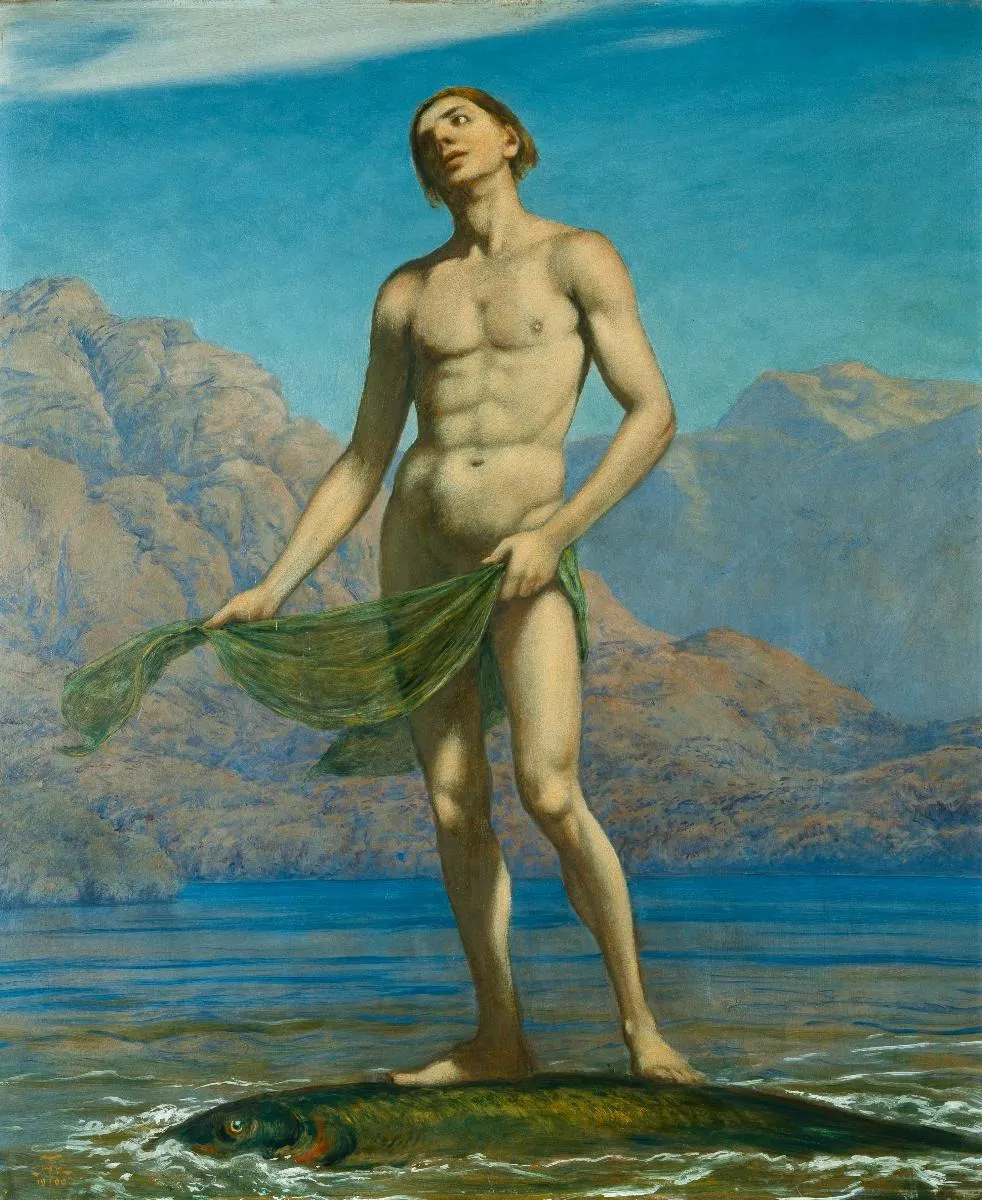
Der Bergsee is an unspecified painting by the Post-Impressionist artist Hans Thoma. It dates from 1900 and is held in the collection of the Kunsthaus Zürich.
About this work
Overview
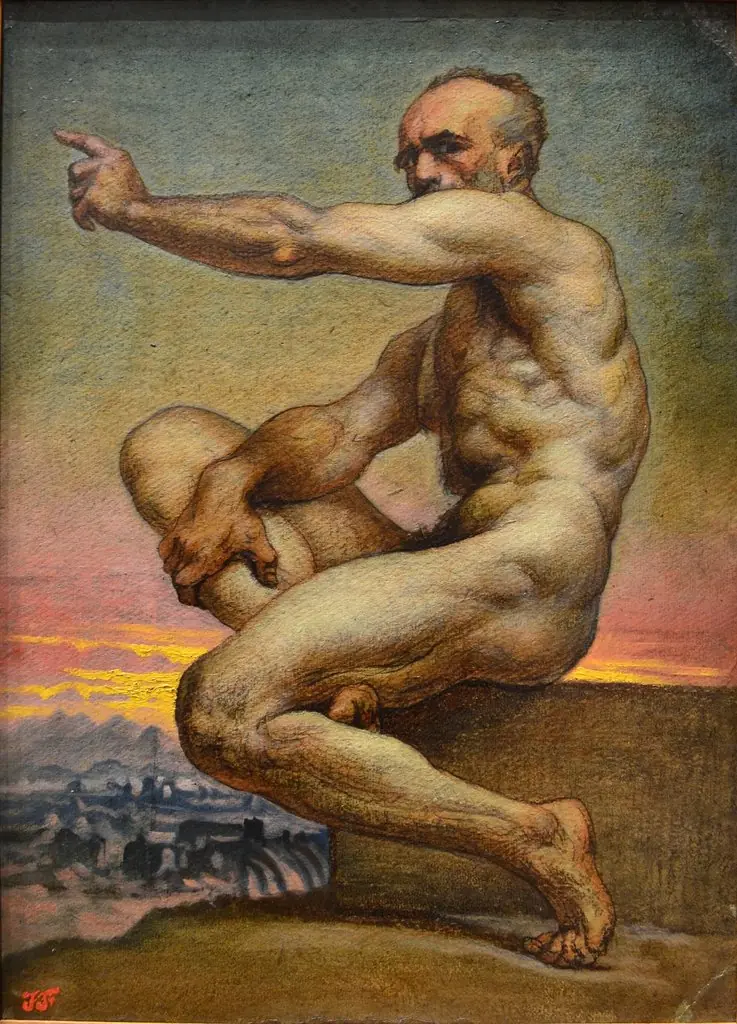
Der Bergsee, a 1900 painting by German post-impressionist Hans Thoma, depicts a serene natural scene with a nude figure. Characteristic of Thoma's regional landscape focus, the work combines elements of nature and the human form.
Subject & Meaning
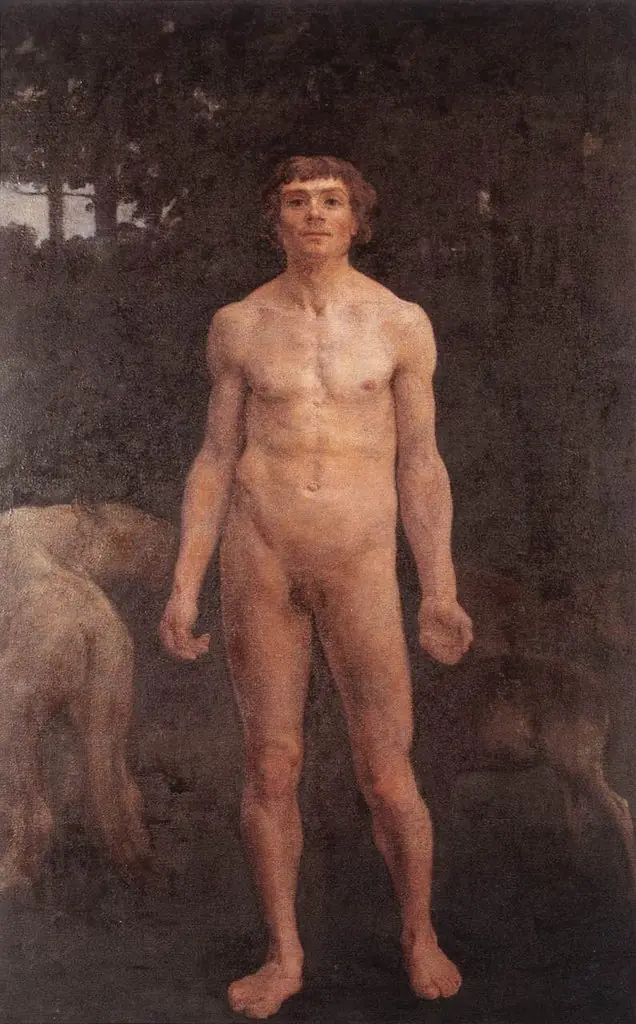
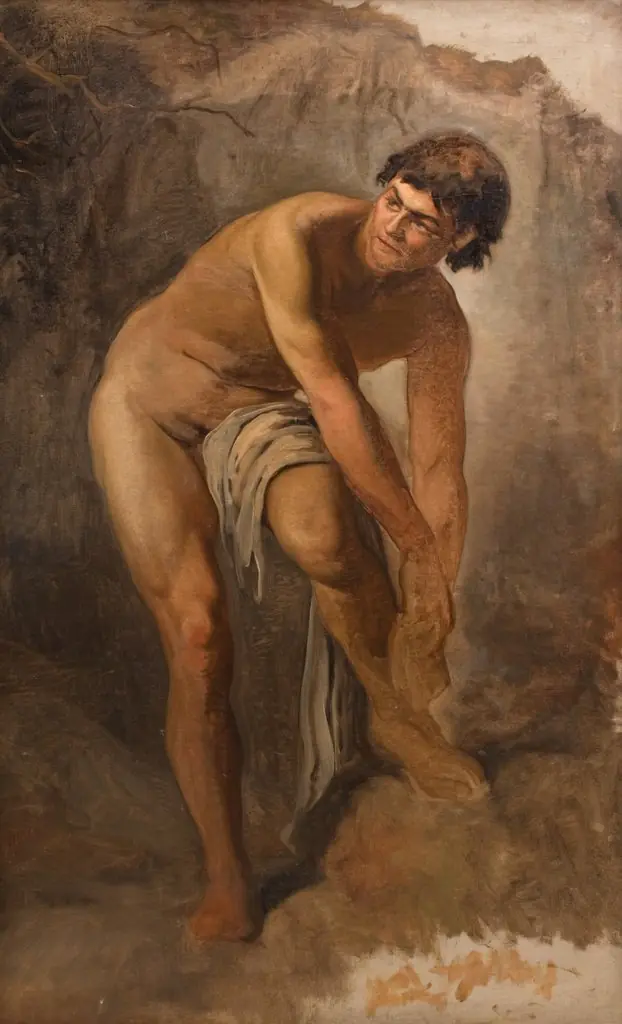
A young, short-haired man stands on a rocky outcrop in a mountain lake, gazing upwards while holding a green cloth. The subject's contemplative pose and the surrounding landscape may suggest a moment of introspection or harmony with nature.
Technique & Style
Thoma employs muted blues and greens to dominate the palette, enhancing the sense of calm. The use of light and shadow creates depth and volume, particularly in the figure, showcasing Thoma's skill in capturing three-dimensionality.
History & Provenance
Created in 1900, Der Bergsee is part of the Kunsthaus Zürich collection. Thoma's background includes studies and later teaching at the Karlsruhe Academy, influencing his distinct post-impressionist approach to German landscapes.
Context
Der Bergsee reflects Thoma's association with post-impressionism while maintaining a unique focus on German regional themes, blending natural beauty with human presence in a subdued, contemplative manner.
Legacy
As part of Thoma's oeuvre, Der Bergsee contributes to the broader understanding of late 19th and early 20th-century European painting, particularly in how German artists interpreted post-impressionist tendencies in landscape painting.
Artist & collection
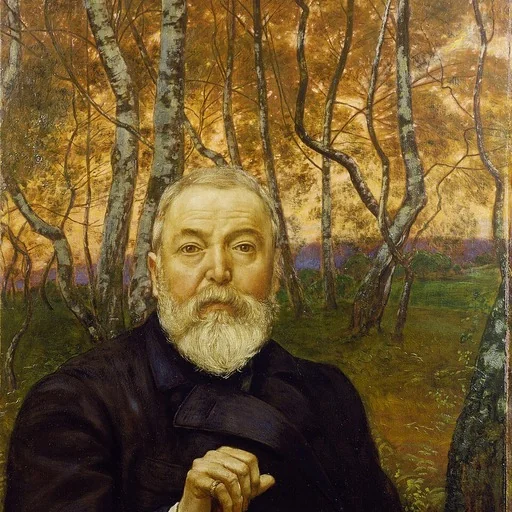
Artist
Hans Thoma (2 October 1839 – 7 November 1924) was a German painter. An alumnus and later professor of Karlsruhe Academy, he is known for his landscapes, portraits, and symbolic works rooted in German regional life and…