Artwork
Niagara
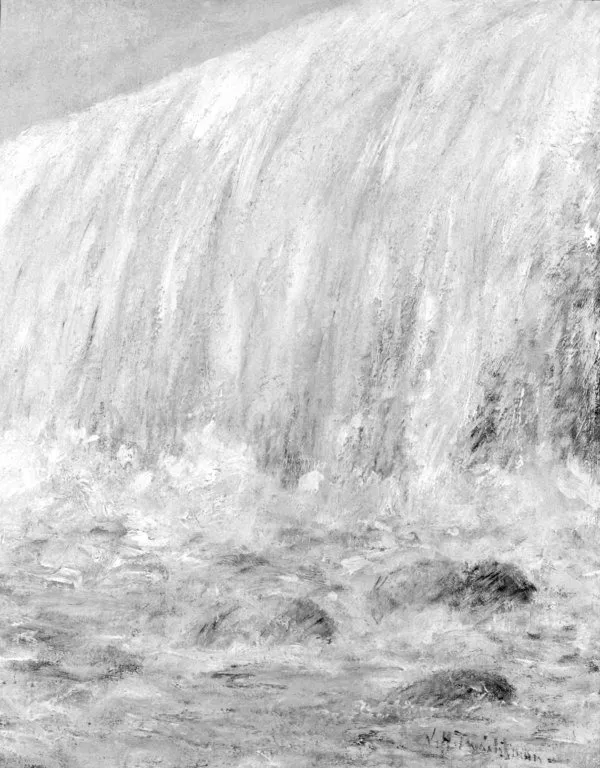
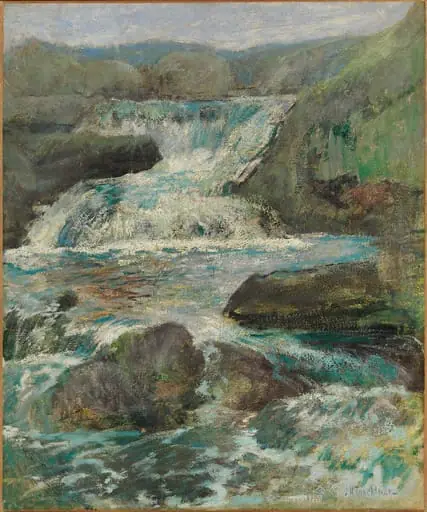
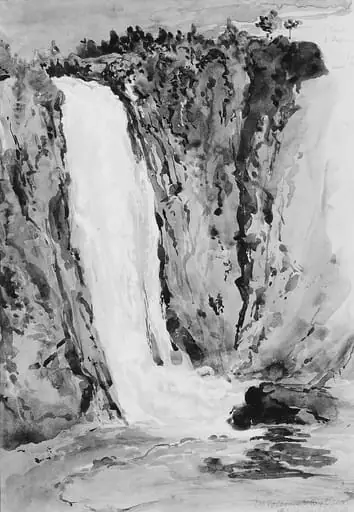
Niagara is an oil painting by the American Impressionist artist John Henry Twachtman. It dates from 1897 and is held in the collection of the Brooklyn Museum.
About this work
Overview
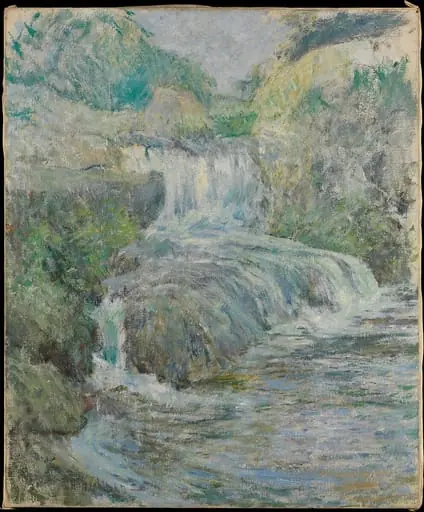
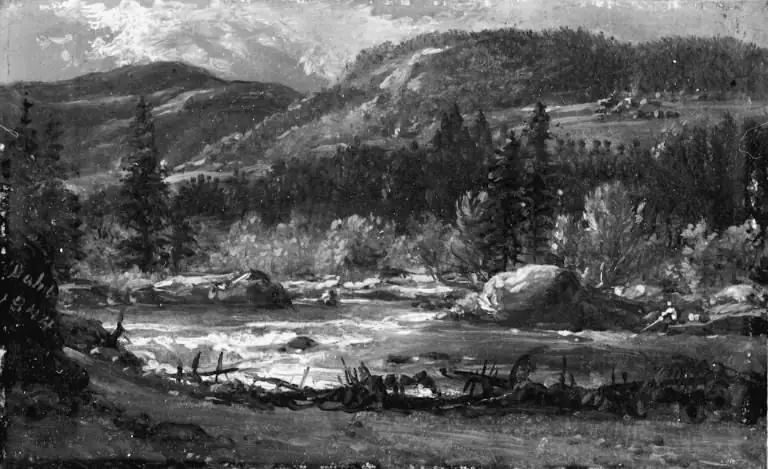
Niagara is an 1897 oil painting by American artist John Henry Twachtman, depicting a waterfall, likely Niagara Falls, in a soft, impressionist manner. The composition features white, foamy water, foreground rocks, and a light gray background with darker shadows. Loose, expressive brushstrokes convey dynamic movement, yet the overall atmosphere is calm and serene.
Subject & Meaning
The subject, likely Niagara Falls, is rendered not for its grandeur or drama, but to evoke a sense of peacefulness. The focus on serene, natural beauty reflects Twachtman's impressionist approach, prioritizing emotional resonance over literal representation.
Technique & Style
Twachtman employed loose, expressive brushstrokes and a muted color palette (white, light gray, darker shadows) to capture the play of light on water and convey the waterfall's energy. The impressionist style emphasizes the fleeting moment and sensory experience.
History & Provenance
Created in 1897, Niagara is part of the Brooklyn Museum's collection. While specific exhibition history or ownership prior to the museum is not detailed here, the work represents Twachtman's late 19th-century contribution to American impressionism.
Context
Niagara reflects the late 19th-century American impressionist movement, which sought to capture modern life and natural beauty through innovative, light-focused techniques. Twachtman's work, in particular, often emphasized serene, natural subjects.
Legacy
As part of Twachtman's oeuvre, Niagara contributes to the understanding of American impressionism's development. Its calm, naturalistic depiction of a iconic landmark continues to resonate with audiences interested in the intersection of impressionist technique and American natural beauty.
Artist & collection