Artwork
Napoleon's Logement, Quai Conti
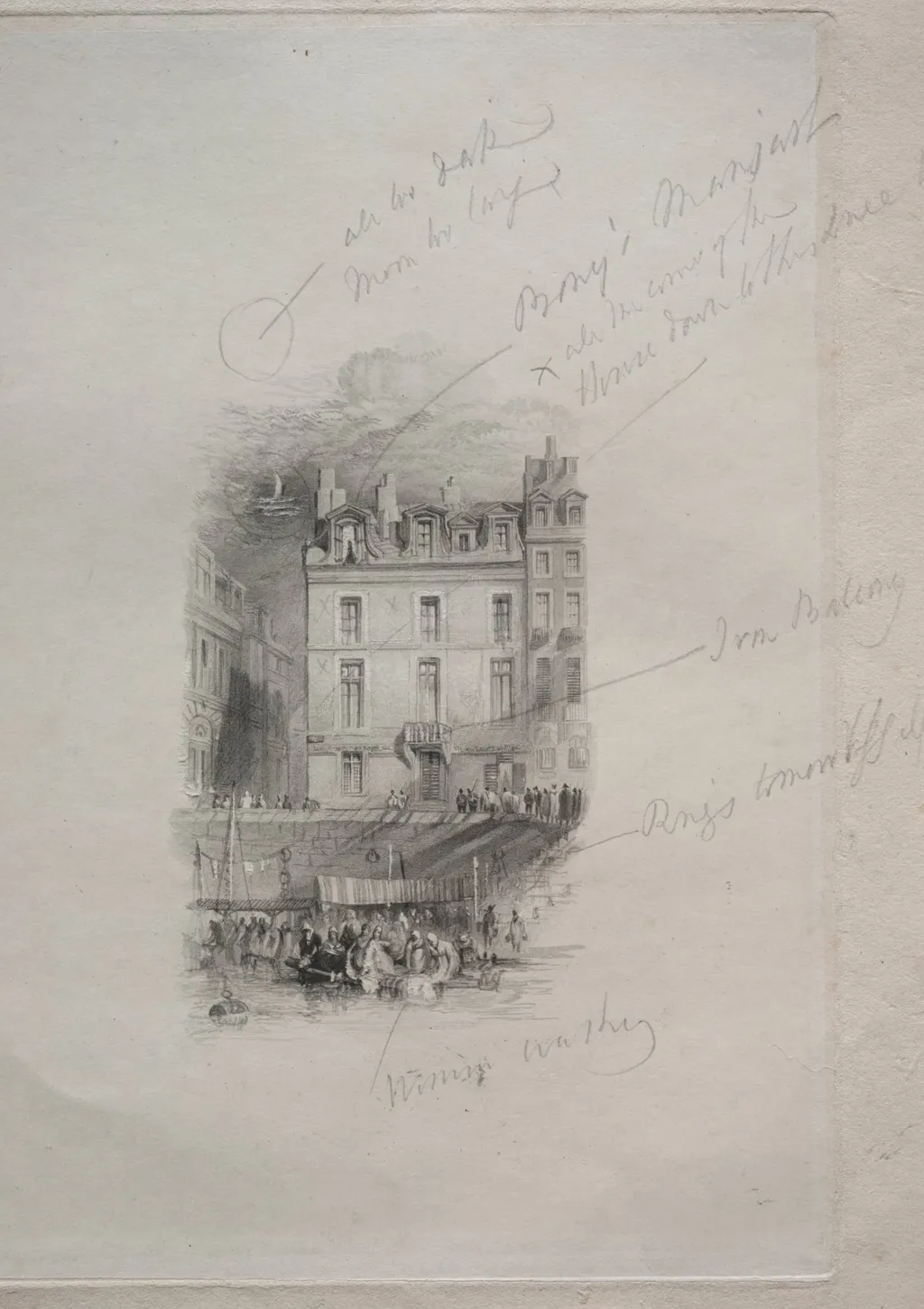
Napoleon's Logement, Quai Conti is a print by the Romanticist artist John Horsburgh. It dates from 1836 and is held in the collection of the Cleveland Museum of Art.
About this work
Overview
Created in 1836 by Scottish artist John Horsburgh, this print depicts a moment in Paris near the Quai Conti, capturing the daily rhythm of urban life.
Created in 1836 by Scottish artist John Horsburgh, this print depicts a moment in Paris near the Quai Conti, capturing the daily rhythm of urban life. The scene centers on a residential building associated with Napoleon’s former lodging, rendered with attention to architectural detail and the movement of ordinary citizens. The work is part of the collection at The Cleveland Museum of Art, preserved as a record of early 19th-century French street culture.
Subject & Meaning
The image portrays a modest yet vibrant public space where residents interact around a street vendor’s cart, filled with produce and household goods. While the building’s association with Napoleon lends historical weight, the focus remains on civilian life—people conversing, observing, and transacting. The scene suggests continuity beyond political figures, emphasizing the persistence of everyday commerce and community in post-revolutionary Paris.
Technique & Style
Horsburgh employed fine-line engraving to render textures and spatial depth, with careful attention to the play of light across stone facades and the varied postures of the crowd. The composition directs the eye from the bustling foreground to the layered windows of the building above, creating a sense of vertical density. While detailed, the work avoids theatricality, favoring observational clarity over dramatic flourish.
History & Provenance
The print was produced during a period of renewed public interest in Napoleon’s legacy, though Horsburgh chose not to depict the emperor himself. Instead, he focused on the building that once housed him, now integrated into ordinary urban life. The work entered The Cleveland Museum of Art’s collection in the 20th century, valued for its documentation of Parisian street culture rather than its political associations.
Context
In the 1830s, Paris was transforming under urban renewal and rising middle-class visibility. Artists like Horsburgh documented these changes with quiet realism, contrasting the grand narratives of Romantic painting. His focus on vendors, balconies, and narrow alleys reflects a broader European trend toward observing the social fabric, not just its monuments or heroes.
Legacy
Horsburgh’s print contributes to a genre of urban observation that influenced later documentary art and photography. Its restrained tone and emphasis on ordinary activity distinguish it from more sensationalized depictions of the era. Today, it remains a valuable artifact for understanding how ordinary citizens inhabited spaces once marked by imperial presence.
Artist & collection

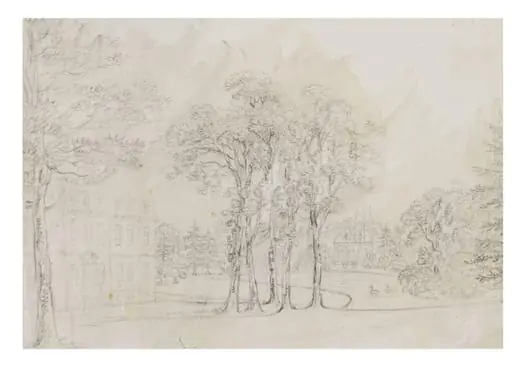 Carshalton House, Surrey.
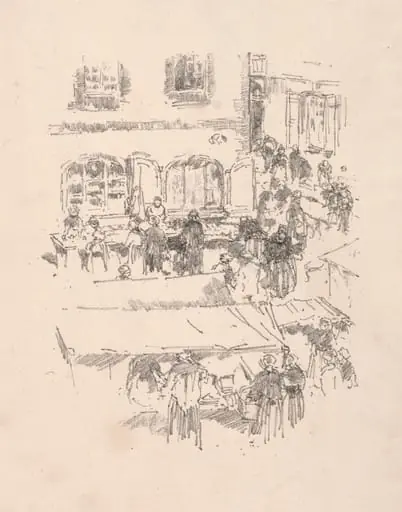 The Market Place, Vitre
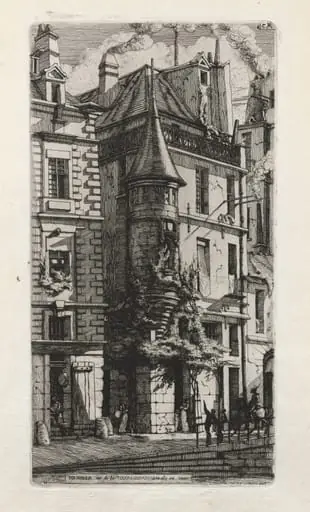 House with a Turret, rue de la Tixéranderie, Paris
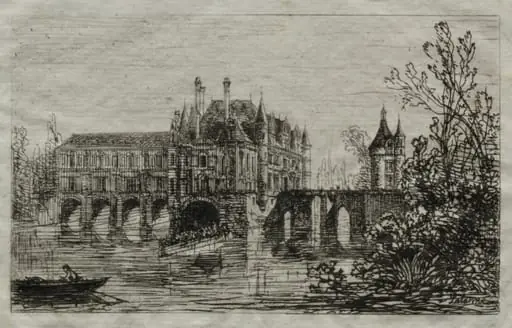 Château de Chenonceau
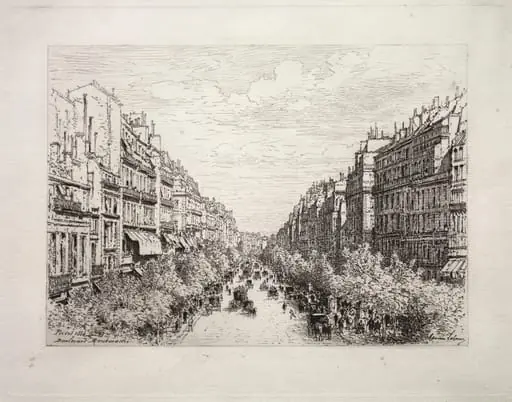 Boulevard Montmartre
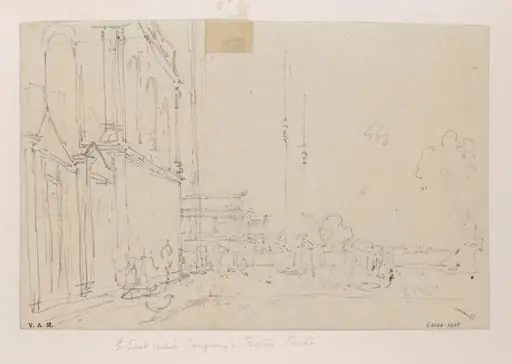 The East India Company's 'factory' in Canton (Guangzhou)
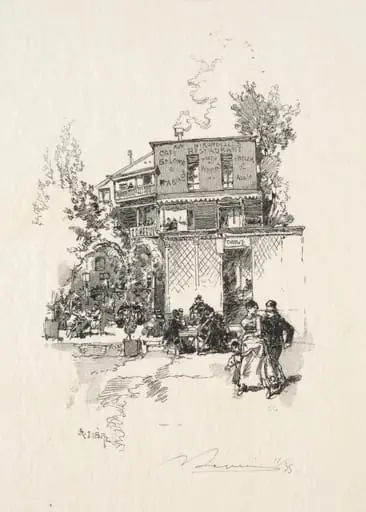 Une Guinguette
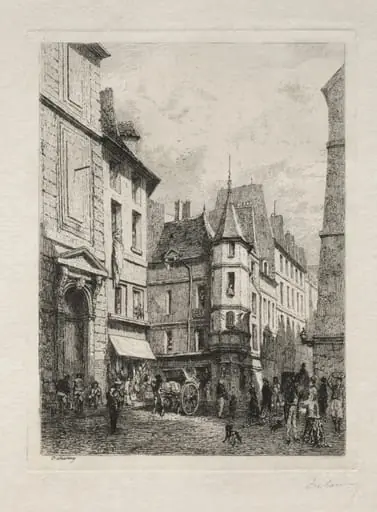 Tourelle en Fontaine Rue d'Ecole de Medicines demolies en 1877
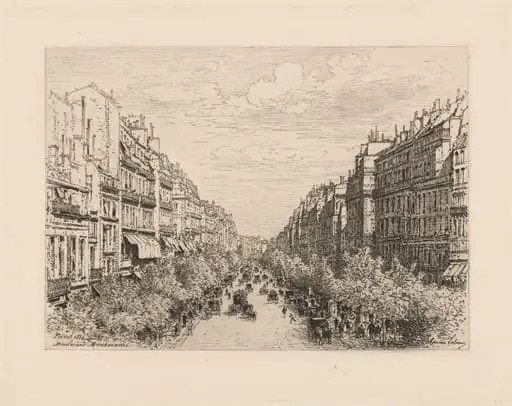 Boulevard Montmartre
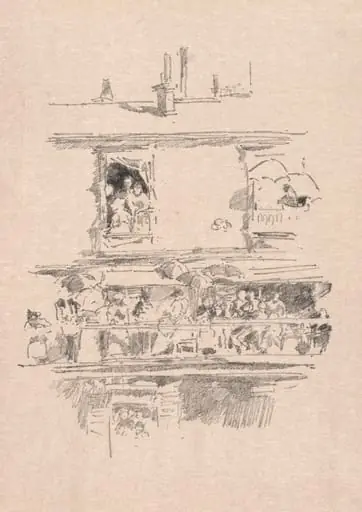 The Long Balcony