Artwork
Portrait of Mr. Gambier
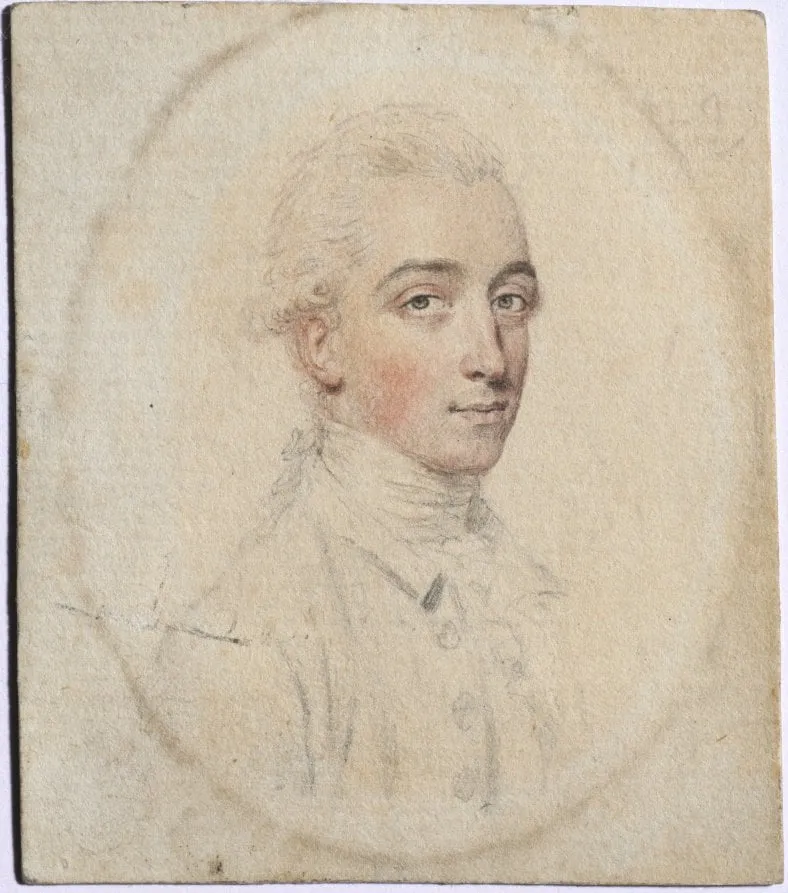
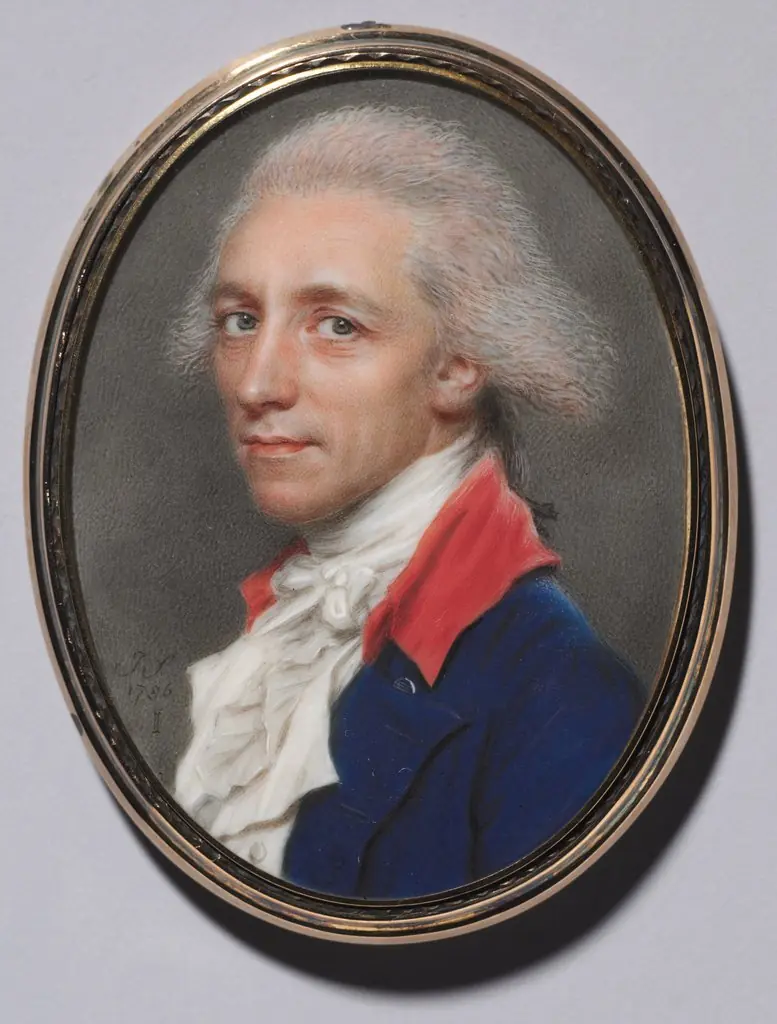
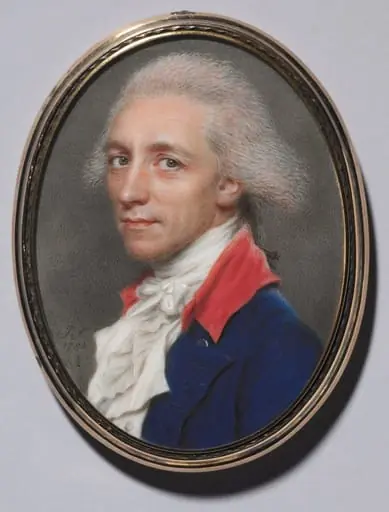
Portrait of Mr. Gambier is an unspecified portrait miniature by the Rococo painting artist John Smart. It dates from 1776 and is held in the collection of the Cleveland Museum of Art.
About this work
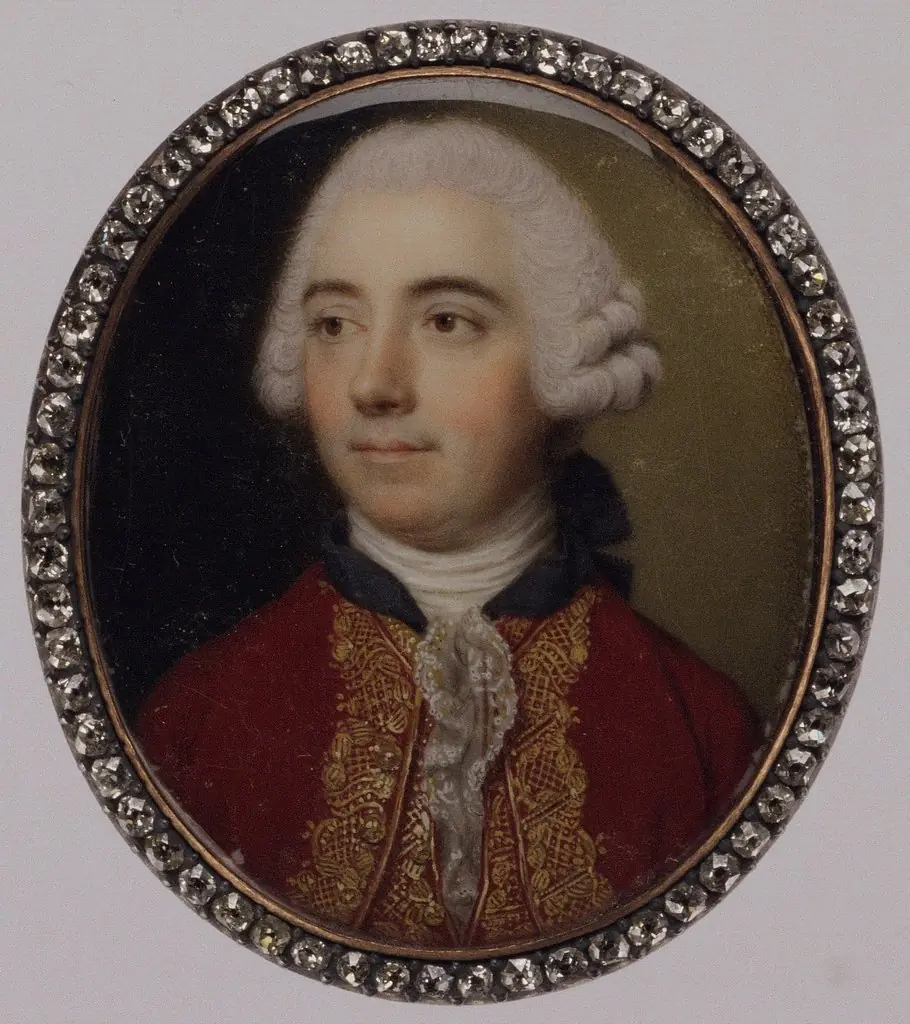
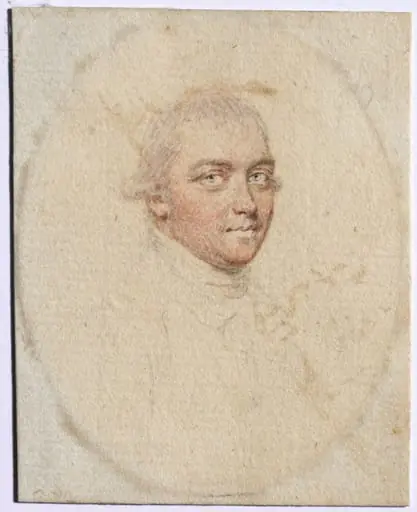
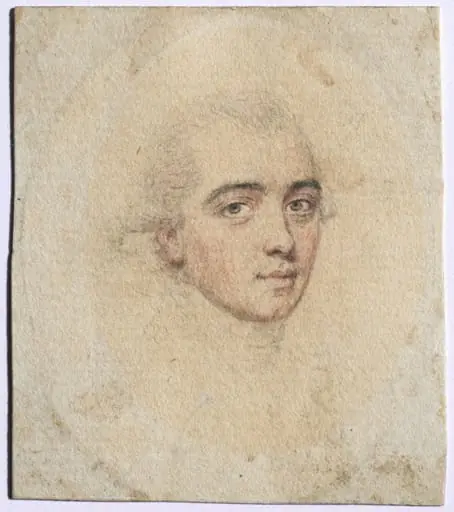
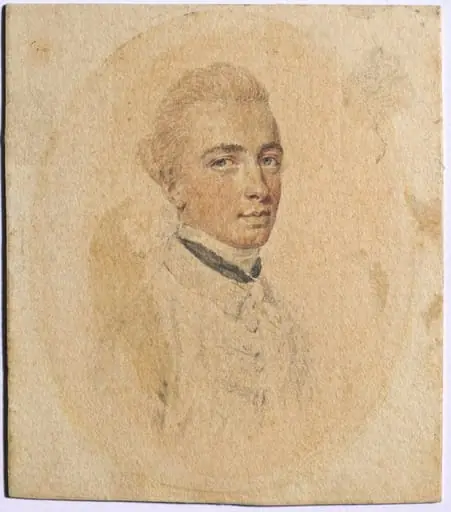
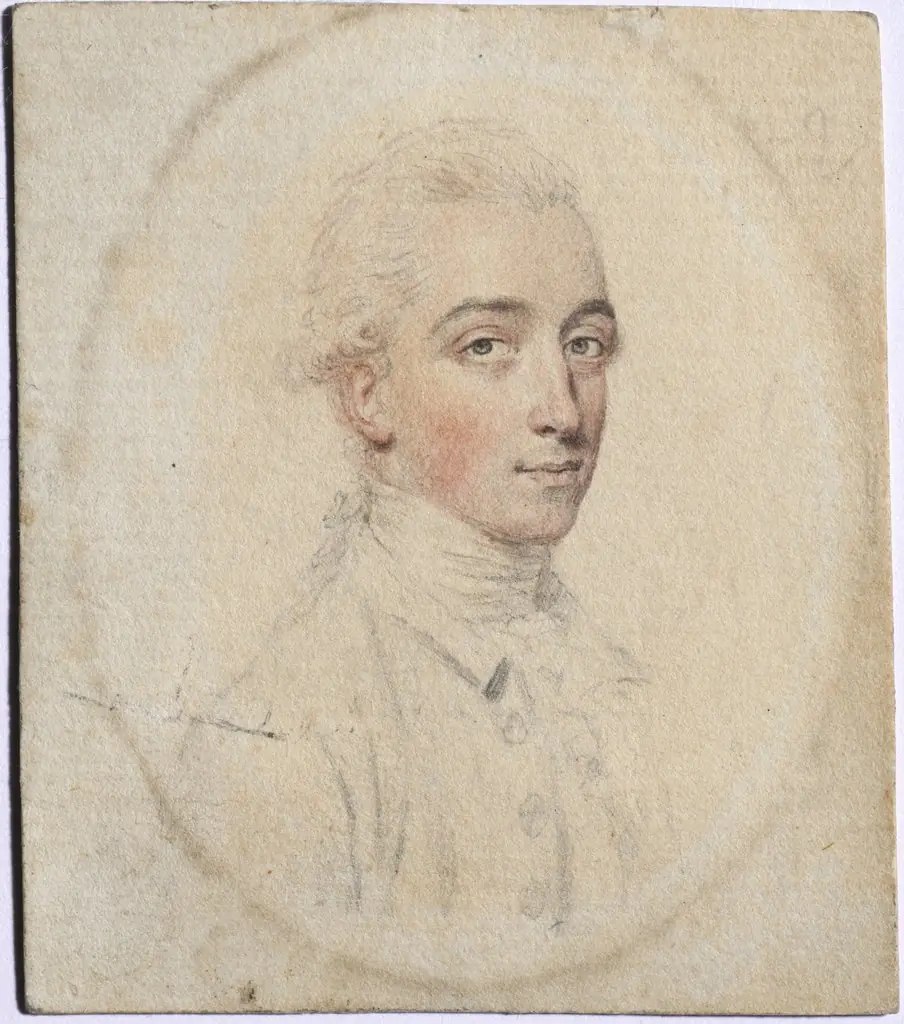
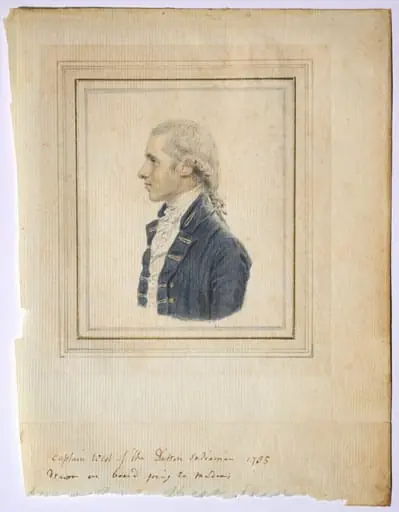
This is a tiny portrait of a man in a powdered wig, painted on a slip of ivory no bigger than a credit card.
This is a tiny portrait of a man in a powdered wig, painted on a slip of ivory no bigger than a credit card. His face is smooth, his coat a soft gray-blue.
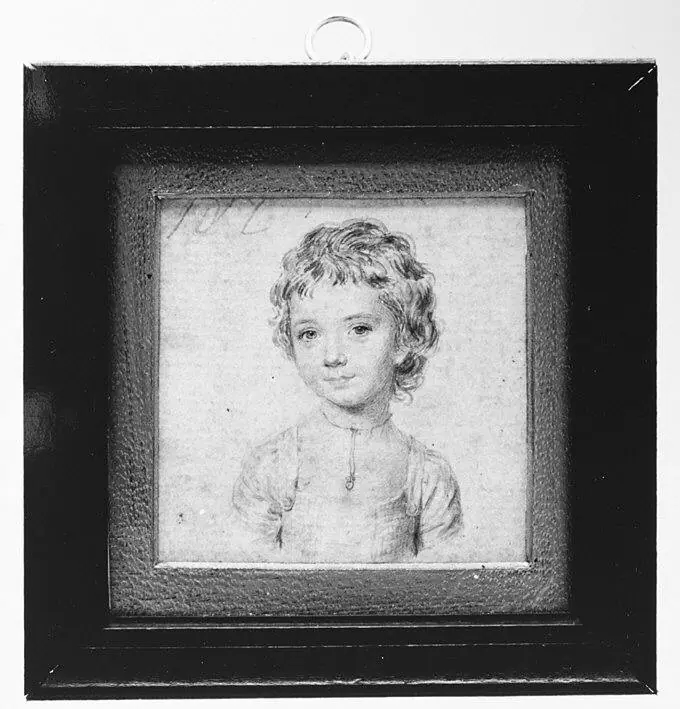
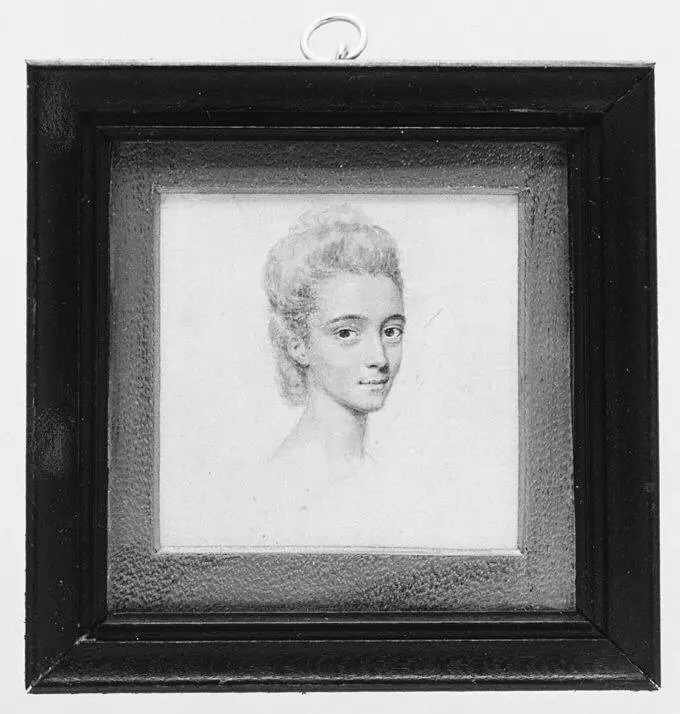
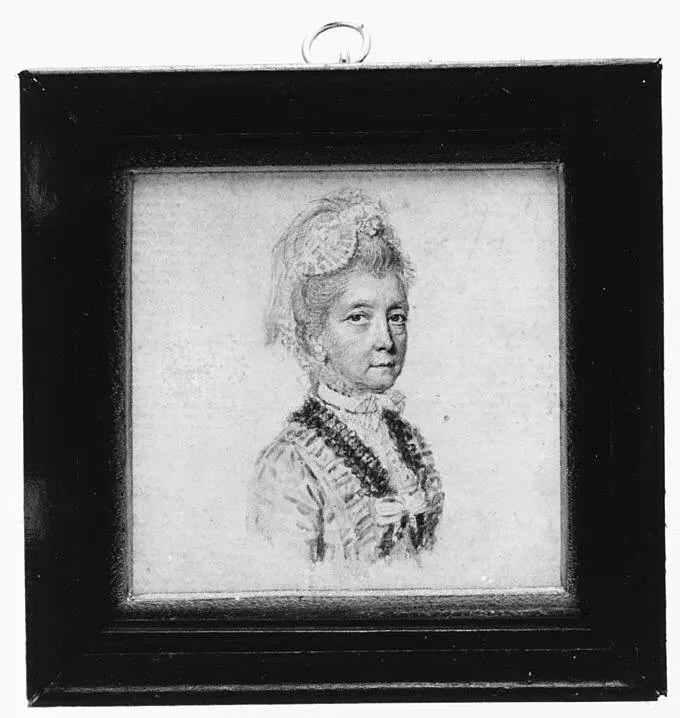
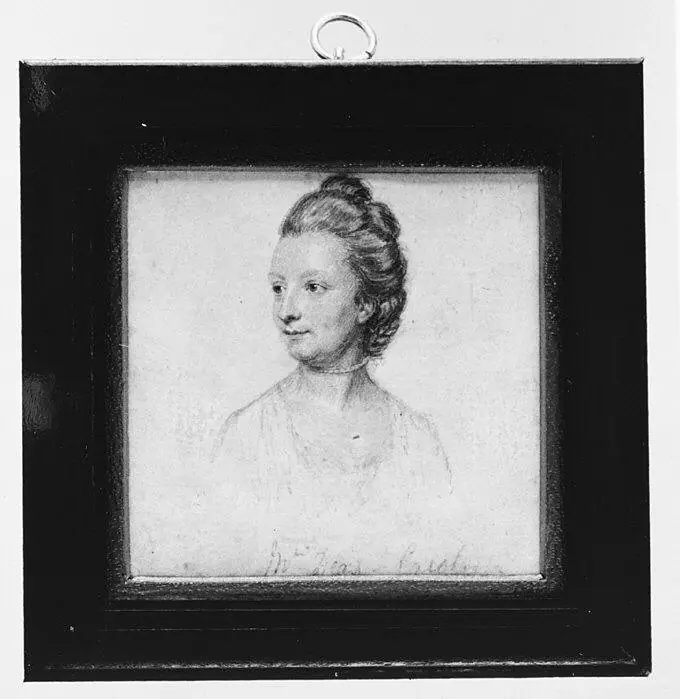
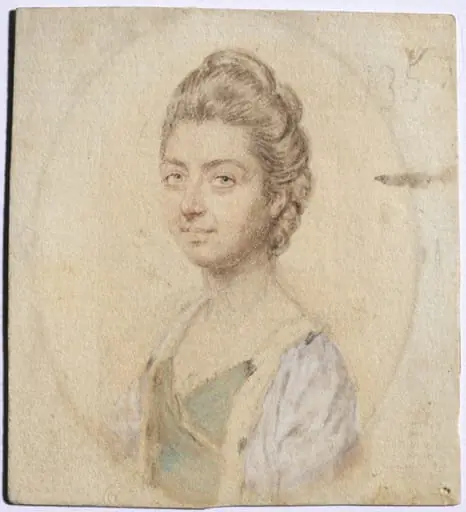
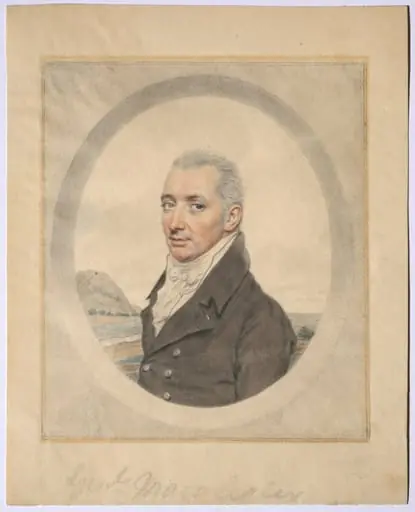
Smart made hundreds of these miniatures—small enough to tuck into a locket or carry in a pocket. Many were finished paintings, but this one is a quick sketch, kept in a private book. You can still see the faint pencil lines he used to map the face before adding color.
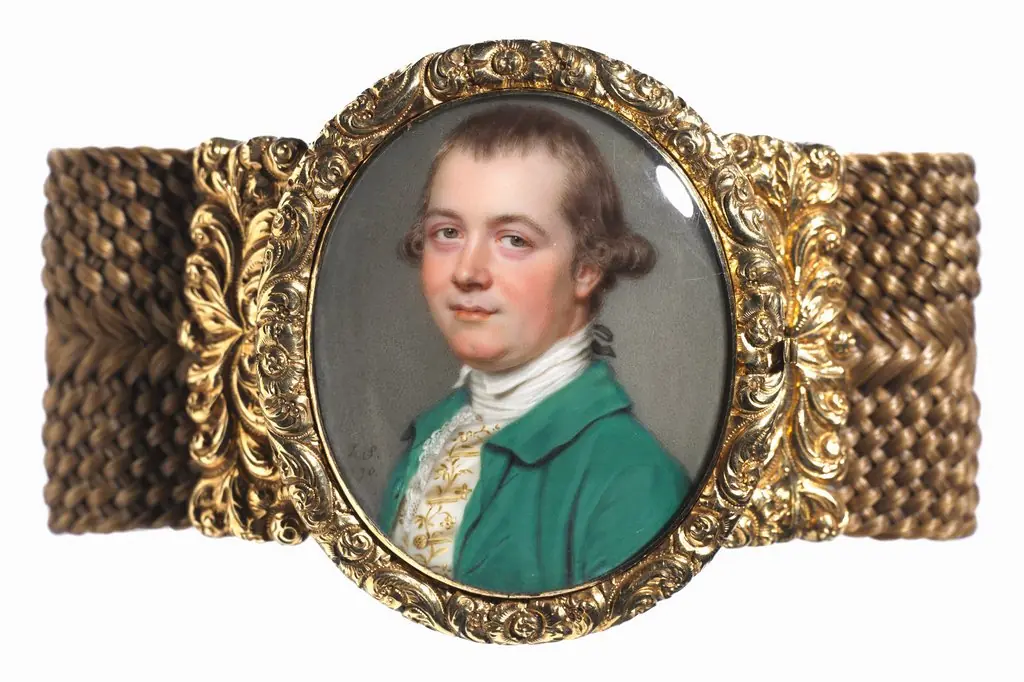
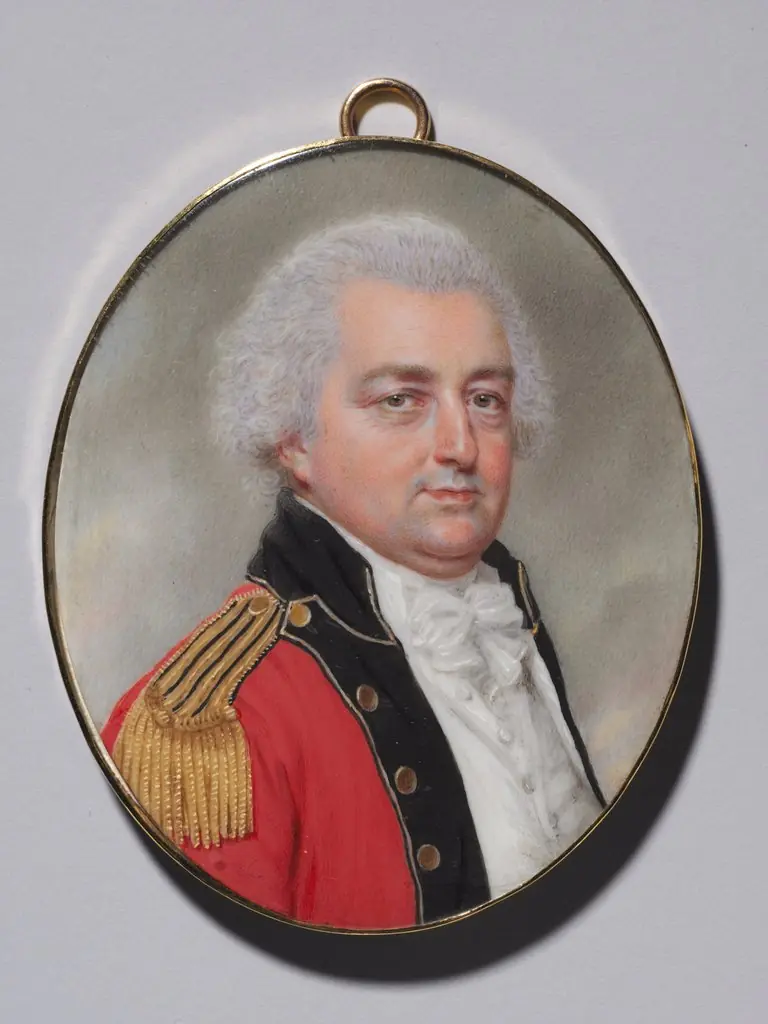
To see more of these pocket-sized portraits, look up John I Smart (British, 1741–1811).
Overview
This small portrait on ivory is one of hundreds of preparatory sketches by John Smart, created as studies for finished miniature portraits. Unlike completed works, it lacks full color and background, revealing only the foundational pencil outlines and light washes. Its intimate scale—roughly the size of a credit card—suggests it was meant for personal use, possibly kept in a sketchbook rather than displayed. The piece offers insight into Smart’s working method, capturing a moment of transition between planning and execution.
Subject & Meaning
The sitter is a man with powdered hair styled en queue, wearing a high stock collar and frilled vest, typical of late 18th-century male fashion. His gaze is directed left, with subtle modeling of the face suggesting a quiet, composed demeanor. Once misidentified as Mr. Fitzherbert, the attribution is now considered uncertain due to confusion among multiple portraits bearing that name. The identity remains unconfirmed, emphasizing the sketch’s role as a study rather than a commissioned portrait with documented provenance.
Technique & Style
Smart employed fine pencil lines to map facial structure before applying delicate watercolor washes, leaving areas like the coat and background intentionally unworked. The palette is restrained, with soft gray-blue tones suggesting fabric without defining it fully. The ivory support, thin and smooth, allowed for precise detail, while the unfinished state reveals his process: rapid, observational, and focused on capturing likeness over finish. This technique distinguishes his studies from polished miniatures intended for display.
History & Provenance
The sketch originated in a bound volume of preparatory studies owned by Smart, later given to Mary Smirke by his daughter Sarah. Around 1877, the book was disassembled and its contents divided between Mary’s daughters. In 1928, these portions were sold at auction, dispersing the studies into private hands. G. C. Williamson, an early scholar, identified several sitters from these sketches, though many attributions, including this one, have since been questioned due to incomplete records and overlapping identities.
Context
In the late 18th century, portrait miniatures were both personal mementos and status objects, often carried in lockets or cases. Smart, among the most prolific practitioners, produced hundreds of these works, balancing commissioned portraits with informal studies. His sketches, rarely intended for public view, reflect a private artistic practice—part documentation, part experimentation. The survival of such studies is rare, making this piece a valuable record of how artists refined likeness before committing to final versions.
Legacy
Smart’s preparatory sketches, once overlooked, are now recognized as essential to understanding his artistic process. This portrait, like others from the Smirke collection, contributes to scholarly efforts to reconstruct his working methods and identify sitters across his oeuvre. Though unfinished, it preserves the immediacy of his hand and the quiet discipline behind his miniature portraits. These studies remain among the few surviving glimpses into the private rituals of an artist whose public works were widely admired.
Artist & collection
Artist
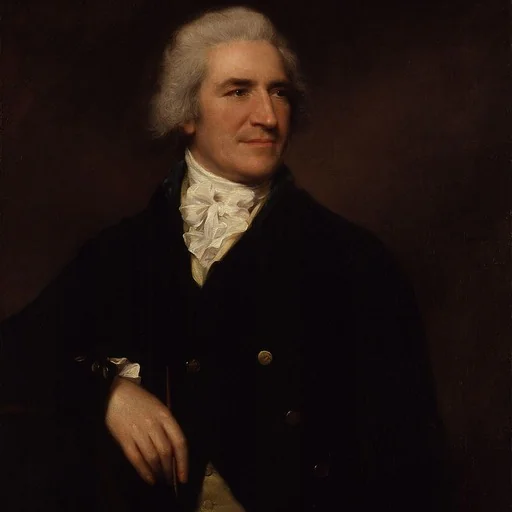
John Smart (1 May 1741 – 1 May 1811) was an English painter who specialised in portrait miniatures. He was a contemporary of Richard Cosway, George Engleheart, William Wood and Richard Crosse.