Artwork
Design for Stained Glass
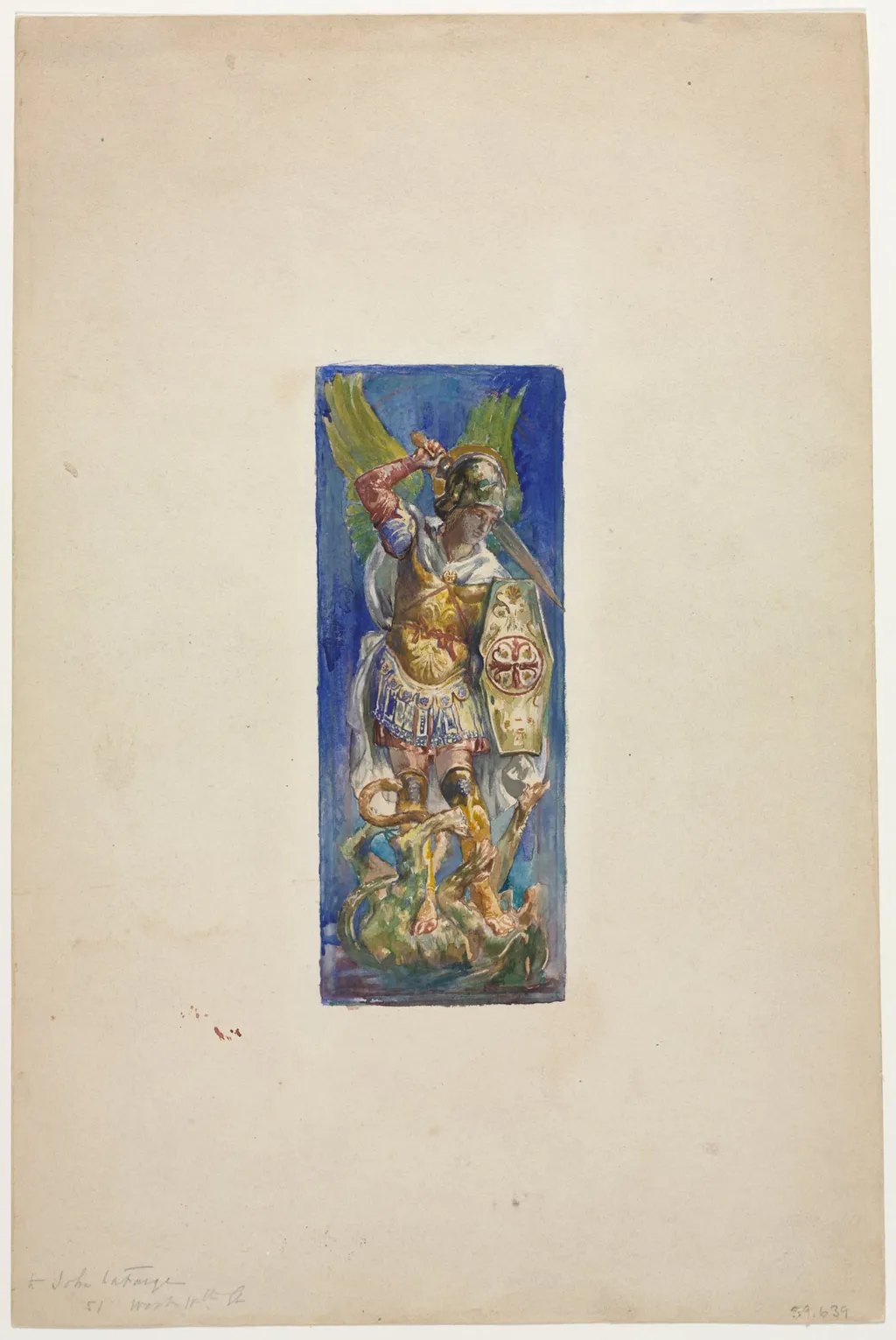
Design for Stained Glass is a drawing by the Romanticist artist John La Farge. It dates from 1878 and is held in the collection of the Cleveland Museum of Art.
About this work
Overview
Design for Stained Glass (1878) is a drawing by American artist John La Farge, showcasing his dual role as a designer and innovator in the stained glass medium.
Subject & Meaning
The drawing depicts a winged warrior in armor, standing over a fallen enemy, amidst a deep blue background with a golden glow. The imagery suggests a blend of martial and divine themes, characteristic of Romanticism's emphasis on emotion and symbolism.
Technique & Style
Executed with loose, expressive brushstrokes, the piece exhibits a sketchy quality typical of early stained glass designs. This approach contrasts with the precision often associated with the final stained glass product, highlighting the creative stage of La Farge's process.
History & Provenance
Created in 1878, the same year La Farge received a major commission for Trinity Church in Boston, this design reflects his burgeoning expertise in stained glass. His innovations in the field would soon lead to a patent in 1880 for his layered glass technique.
Context
This work aligns with the Romantic movement, evident in its dramatic, emotionally charged scene and the use of light (golden glow) to evoke mood. La Farge's experimentation with stained glass also situates the piece within the broader context of late 19th-century artistic and technical innovation.
Artist & collection

Artist
John La Farge (March 31, 1835 – November 14, 1910) was an American artist whose career spanned illustration, murals, interior design, painting, and popular books on his Asian travels and other art-related topics.

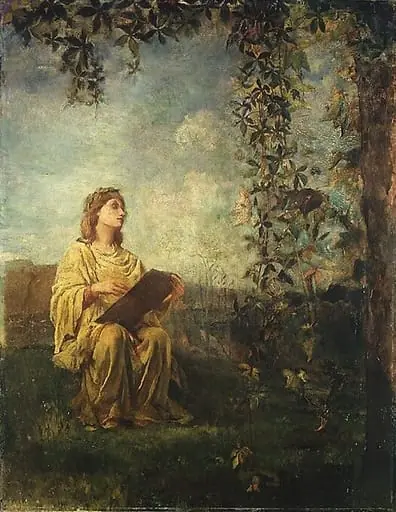 The Muse of Painting
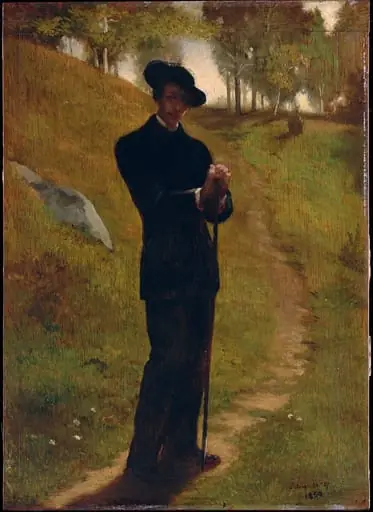 Portrait of the Painter
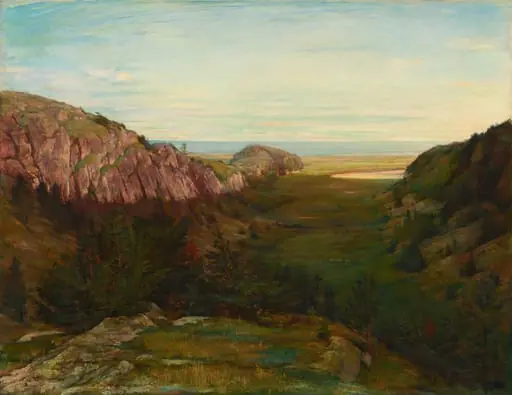 The Last Valley - Paradise Rocks
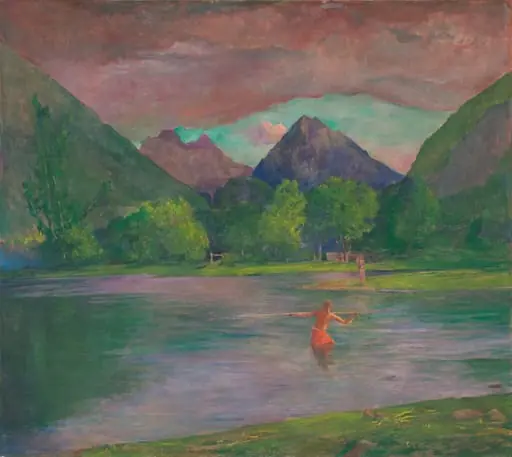 The Entrance to the Tautira River, Tahiti. Fisherman Spearing a Fish
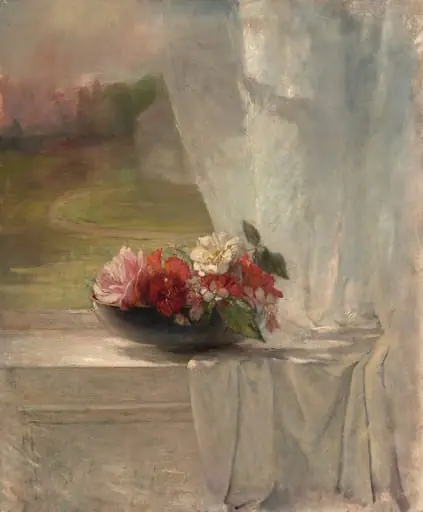 Flowers on a Window Ledge
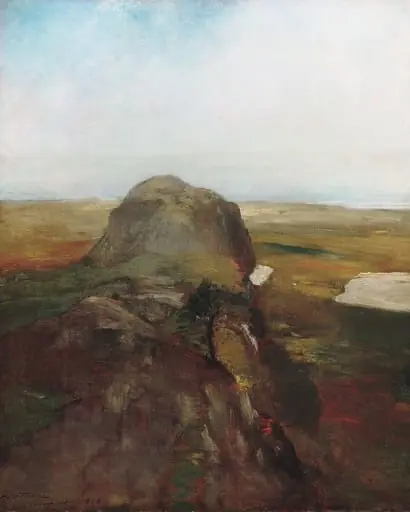 Autumn Study, View over Hanging Rock, Newport, R.I.
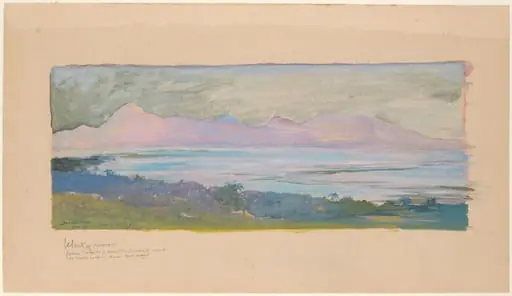 The Island of Moorea Looking across the Strait from Tahiti, January 1891
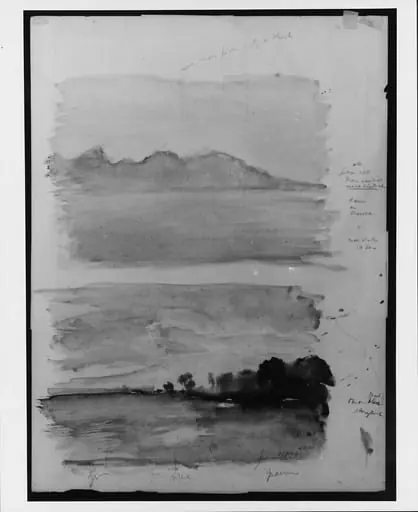 Double Study of Dawn, Moorea Seen across the Water, Tahiti
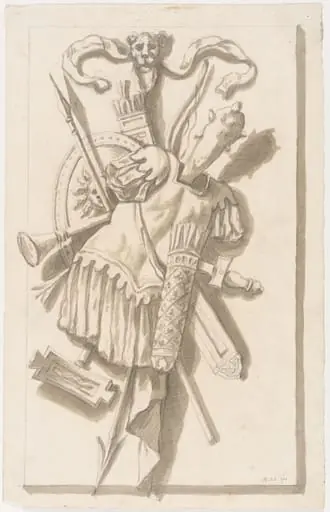 Design for an illusionistic panel in the Great Hall at Blenheim Palace
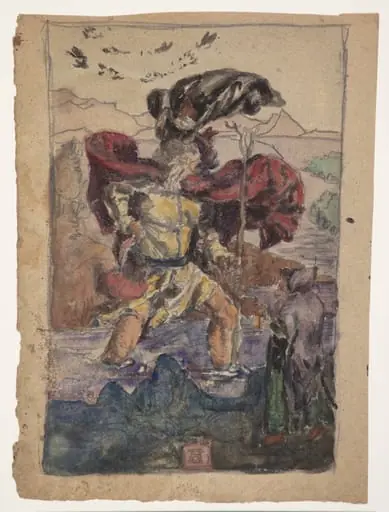 Studie efter Dürer: Den Hellige Christoforus II
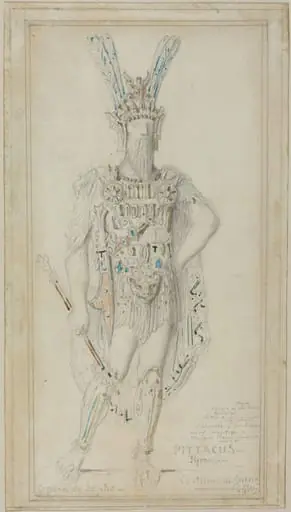 Pittacus the Tyrant in War Costume
 Print from Drawing Book
 Allegory of Painting under the House of Habsburg
 Untitled
 A Fallen Warrior
 Figure Studies
 Study for "Casts from Antique Sculpture: The Parthenon"
 Bacchus
 Job's Sons and Daughters Overwhelmed by Satan
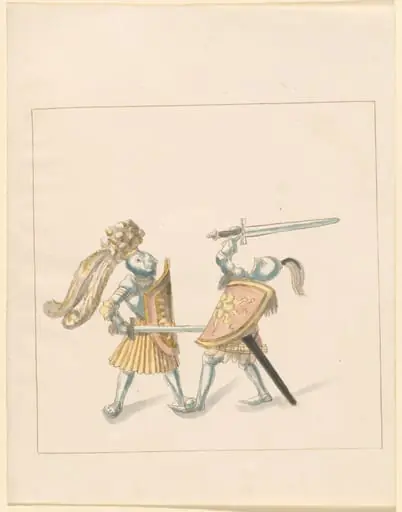 Foot Combat with Longswords and Shields