Artwork
Lady Lavery in an Evening Cloak
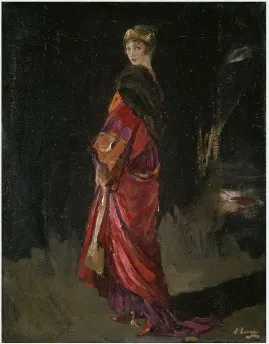
Lady Lavery in an Evening Cloak is an oil painting by John Lavery. It dates from 1906 and is held in the collection of the National Gallery of Ireland.
About this work
Overview
Painted around 1906, this oil portrait by John Lavery depicts his wife, Hazel, dressed for an evening occasion. It resides in the National Gallery of Ireland and exemplifies Lavery’s focus on intimate, elegantly composed portraits of the era. The work captures a quiet moment of poise, emphasizing texture and tone over narrative detail.
Subject & Meaning
Hazel Lavery, a prominent social figure and muse to her husband, is portrayed in a moment of composed stillness. Her turned gaze suggests awareness of the viewer without direct engagement, reinforcing a sense of private elegance. The formal attire and refined setting reflect her status and the cultural expectations of upper-class women at the time.
Technique & Style
Lavery employs rich, layered brushwork to render the dress’s intricate pattern of red, orange, and purple, contrasting with the deep shadows of the background. A dark brown shawl is loosely draped, adding movement. Subtle chiaroscuro defines form without harsh contrasts, while the gold headband and blonde updo catch ambient light, enhancing the portrait’s quiet luminosity.
History & Provenance
The painting entered the National Gallery of Ireland’s collection as part of the artist’s broader legacy. John Lavery, a leading Irish portraitist, frequently painted Hazel across his career; this piece is one of several that document her presence in his artistic life. Its provenance remains unbroken since its creation, with no record of public sale prior to institutional acquisition.
Context
Created during the Edwardian era, the portrait aligns with contemporary portraiture that valued grace and material detail over psychological depth. Lavery’s approach reflects the influence of French Impressionism and academic tradition, blending loose brushwork with careful attention to costume and setting, characteristic of elite portraiture in Britain and Ireland at the time.
Legacy
This portrait contributes to the understanding of Hazel Lavery’s role as both muse and cultural figure. While not widely exhibited, it remains a key example of Lavery’s domestic portraiture, illustrating his ability to convey dignity through subtle lighting and textile detail. It continues to inform studies of early 20th-century Irish art and gendered representation.
Artist & collection
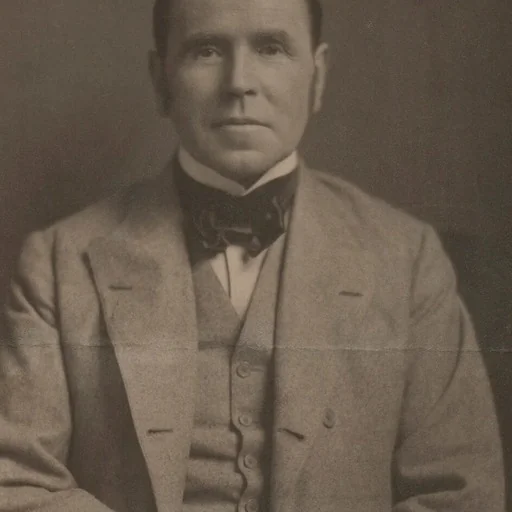
Artist
Sir John Lavery (20 March 1856 – 10 January 1941) was an Irish painter best known for his portraits and wartime depictions.

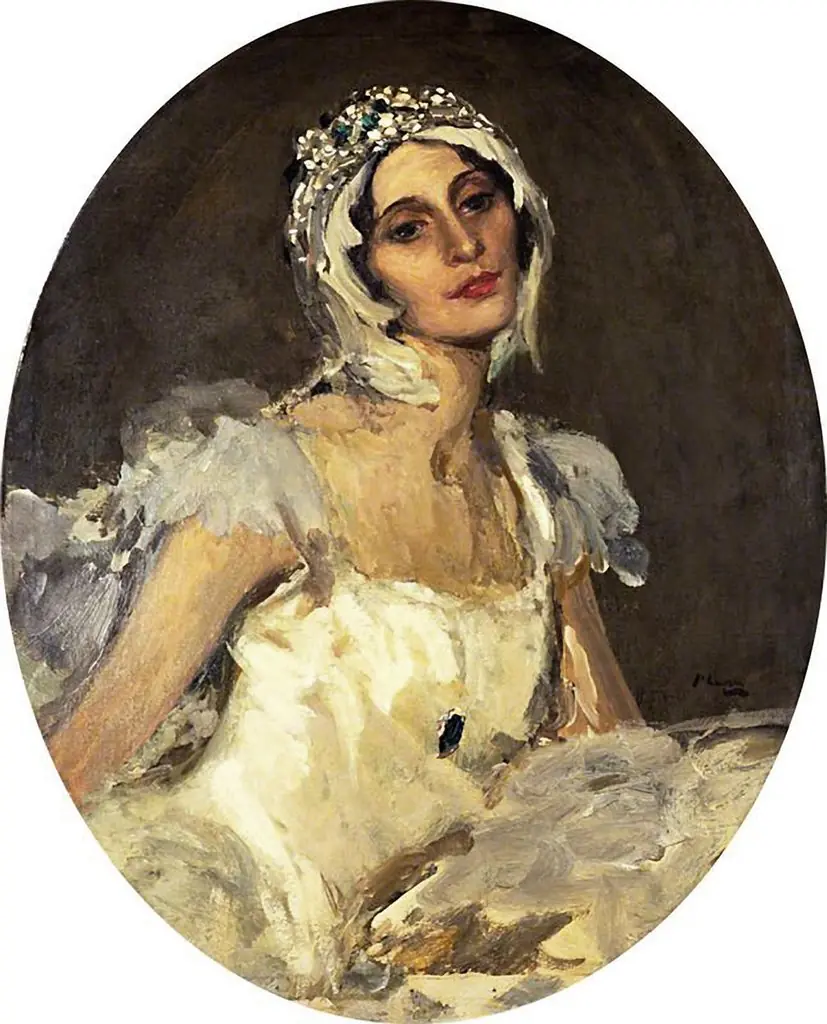 Anna Pavlova (1881–1931), as 'The Dying Swan'
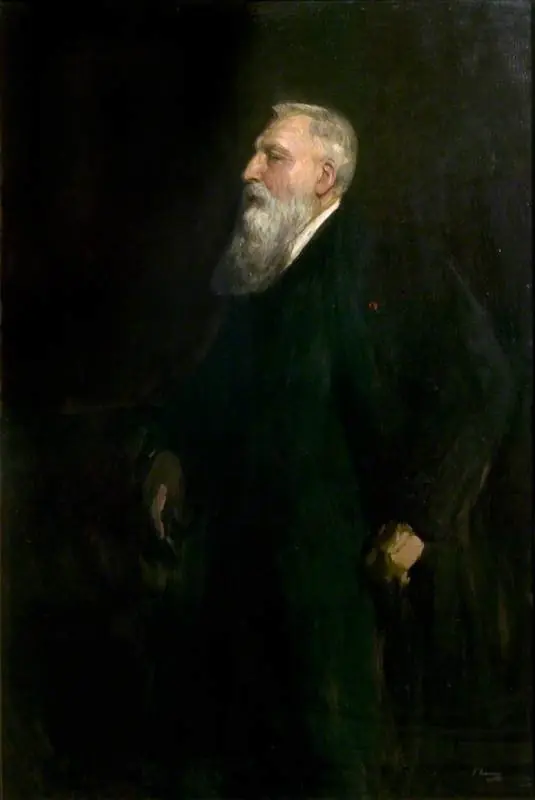 Auguste Rodin (1840–1917)
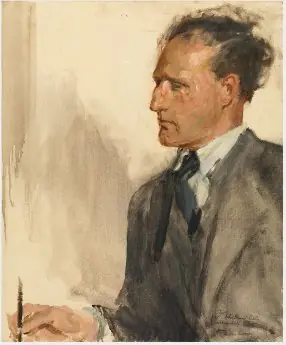 Portrait of John Stewart Collis (1900-1984), Author
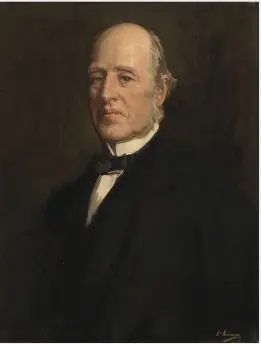 Portrait of W.E.H. Lecky (1838-1903), Historian
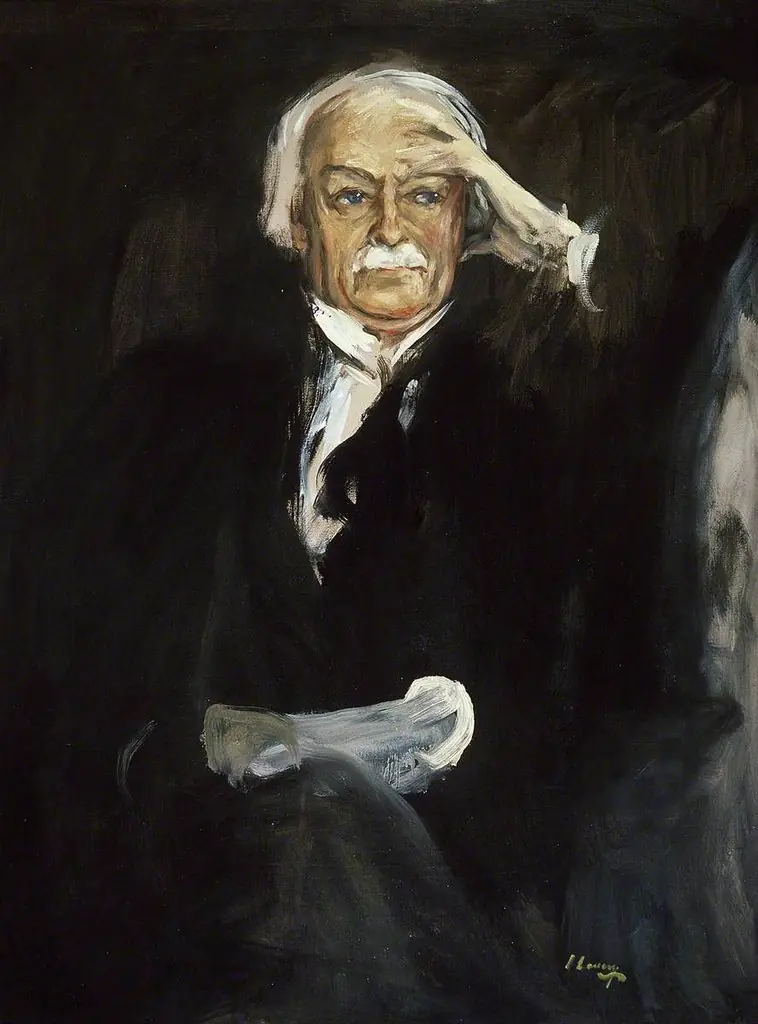 David Lloyd George (1863–1945)
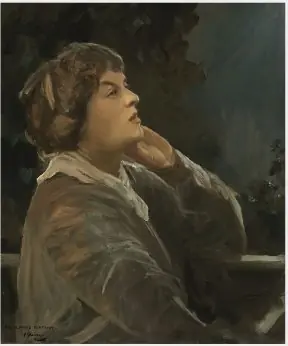 Portrait of Dora Sigerson (Mrs Shorter) (c.1870-1918), Poet
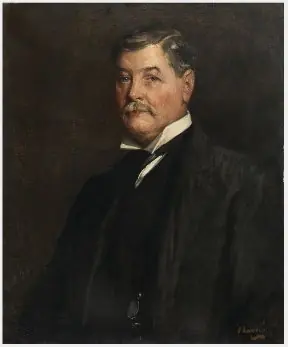 Portrait of T.P. O'Connor, Parliamentarian and Journalist
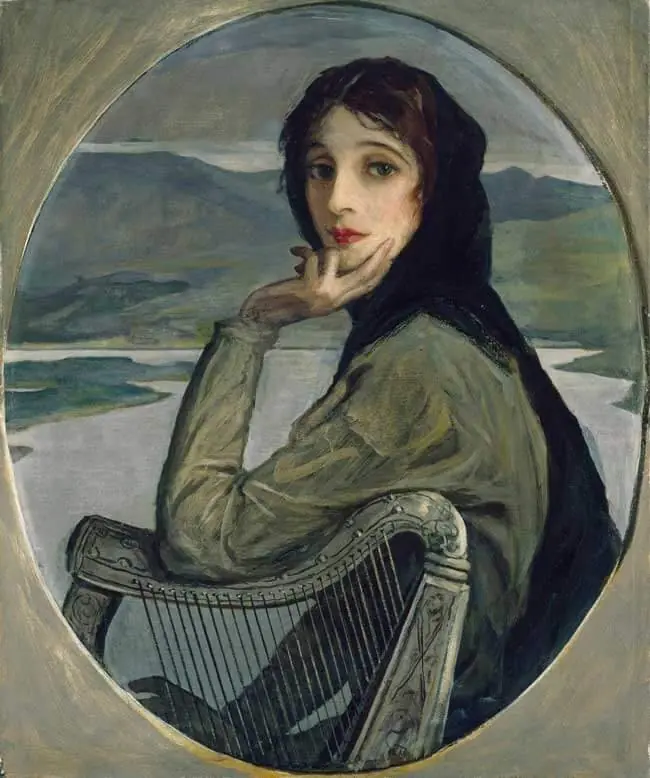 Portrait of Lady Lavery as Kathleen Ni Houlihan
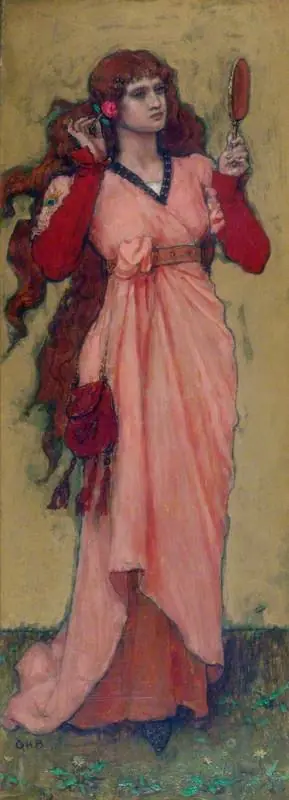 A Girl Holding a Mirror and a Rose
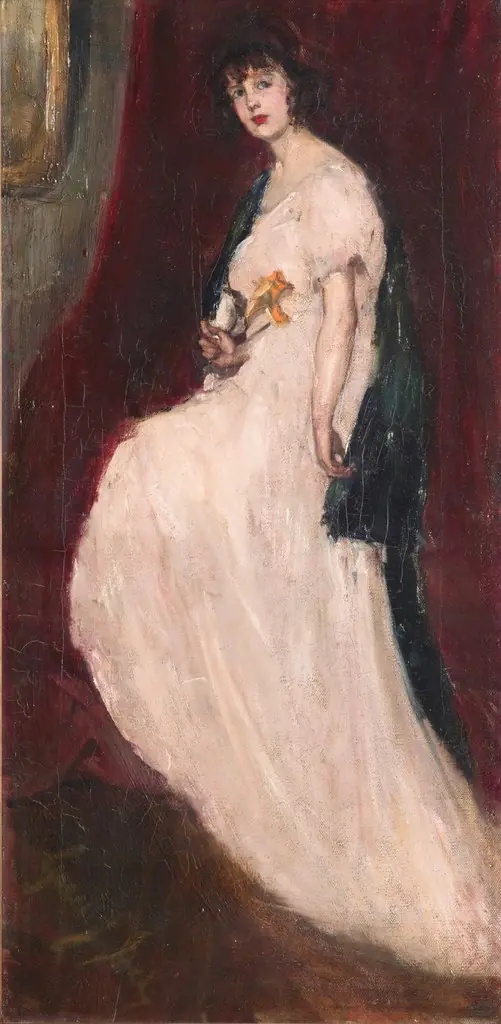 Girl in a pink dress
 A Lady Seen in Profile, Holding a Fan
 A Man Wearing a Red Coat
 The Artist's Wife, Constance, Comtesse de Markievicz (1868-1927), Irish Painter and Revolutionary
 A Lady Holding a Fan
 Judith with the head of Holofernes
 Japanese woman
 Girl. From the journey to Crimea
 Mrs Fitzroy Bell