Artwork
Classical Ruins and Mountains
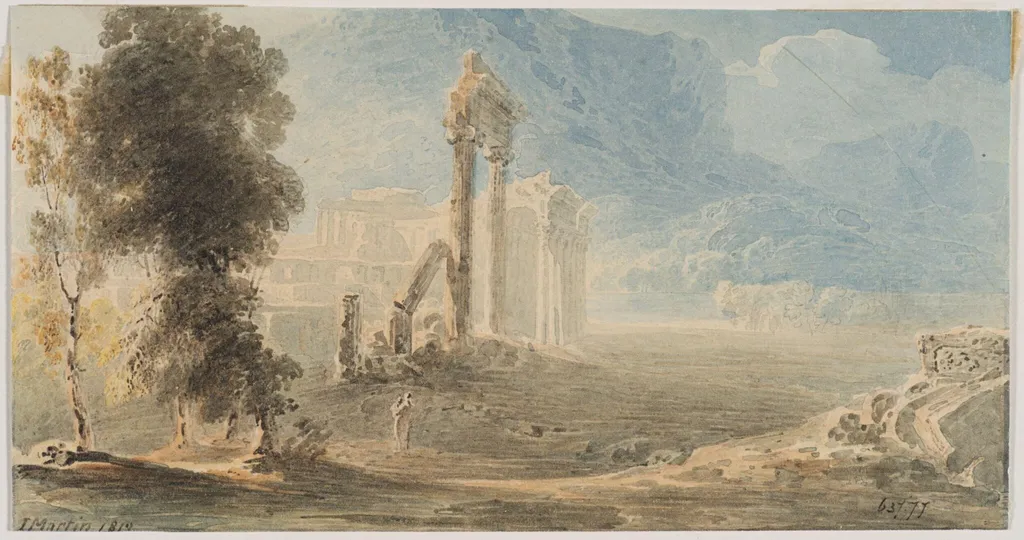
Classical Ruins and Mountains is a watercolor work on paper by the British Romanticist artist John Martin. It dates from 1812 and is held in the collection of the Victoria and Albert Museum.
About this work
Overview
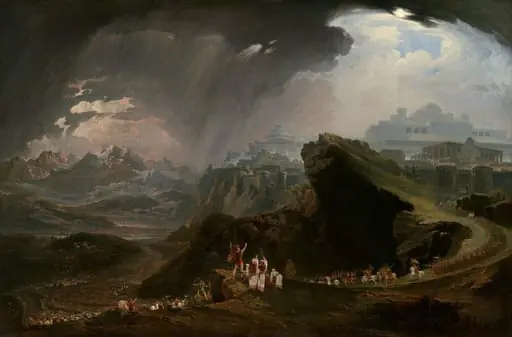
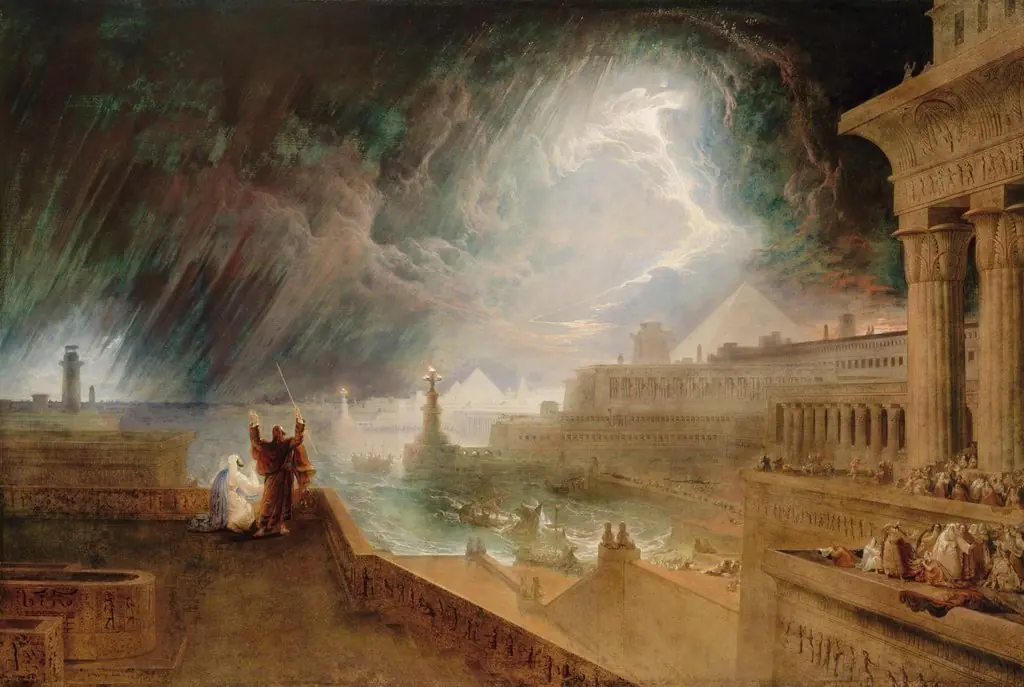
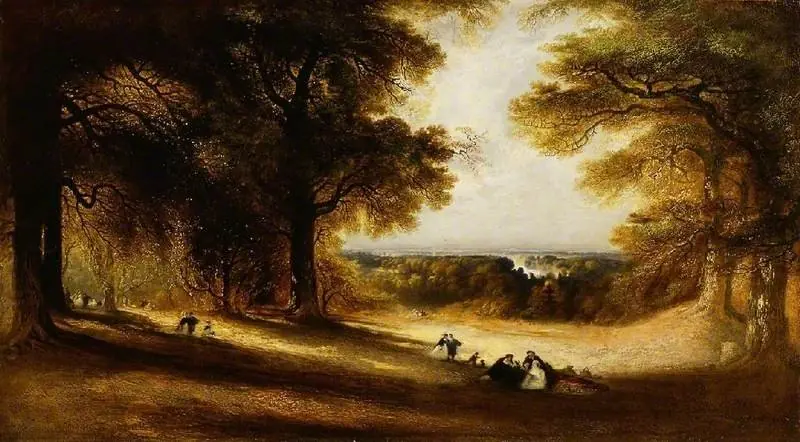
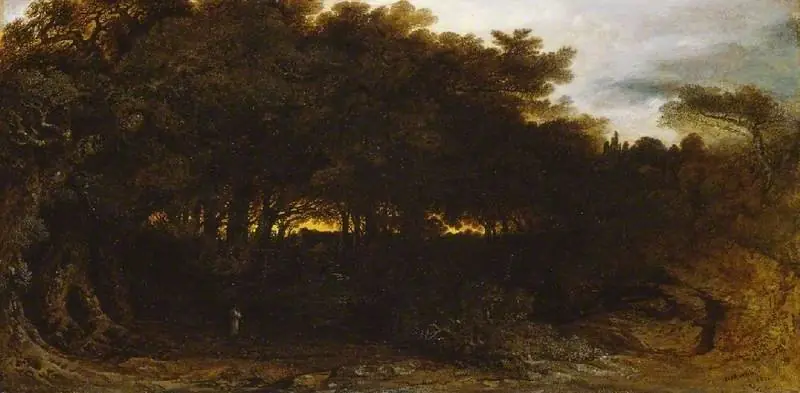
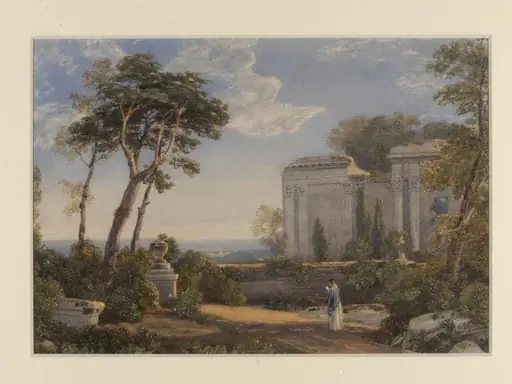
Created in 1812, this watercolour by John Martin depicts a tranquil landscape blending classical architecture with natural terrain. Signed and dated by the artist, the work exemplifies his early engagement with ruins as symbols of time’s passage. Rendered in delicate washes, the composition balances human-made remnants with the enduring presence of mountains and trees.
Subject & Meaning
The scene centers on weathered stone columns and fragmented structures, suggesting the decay of ancient civilizations. A solitary figure stands near the ruins, evoking quiet contemplation rather than narrative action. The hazy blue peaks in the distance reinforce a sense of scale and timelessness, positioning human history as one element within a vast, unchanging natural order.
Technique & Style
Martin employed transparent watercolour washes to achieve subtle gradations of tone, particularly in the atmospheric mountains and soft foliage. Delicate brushwork defines the crumbling architecture without sharp detail, allowing the medium’s fluidity to enhance the mood of quiet erosion. The palette remains muted, favoring earth tones and pale blues to sustain a serene, introspective atmosphere.
History & Provenance
Painted during Martin’s formative years, this work predates his more dramatic biblical and apocalyptic scenes. It reflects his early interest in classical antiquity and landscape, likely influenced by contemporary travel accounts and engravings of Roman ruins. The piece remains in private hands, with no public exhibition history recorded prior to the 20th century.
Context
In early 19th-century Britain, interest in classical ruins flourished alongside Romanticism’s fascination with nature and antiquity. Martin’s approach here aligns with contemporaries who viewed ruins not as mere relics, but as meditations on impermanence. Unlike theatrical interpretations of the era, this work favors stillness over spectacle, aligning with quieter strands of Romantic sensibility.
Legacy
Though less known than Martin’s later large-scale works, this watercolour reveals the foundations of his visual language: the interplay of human history and natural forces. Its restrained tone influenced later artists exploring melancholy landscapes, contributing to a broader tradition of British watercolour that valued subtlety over grandeur.
Artist & collection
Artist
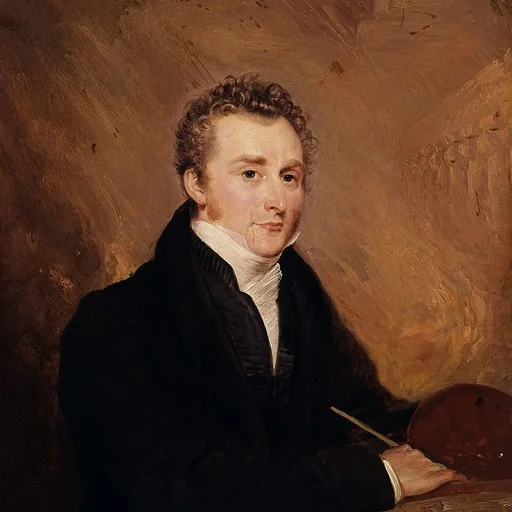
John Martin (19 July 1789 – 17 February 1854) was an English Romanticist painter, engraver, and illustrator.