Artwork
The Burn near Milngavie
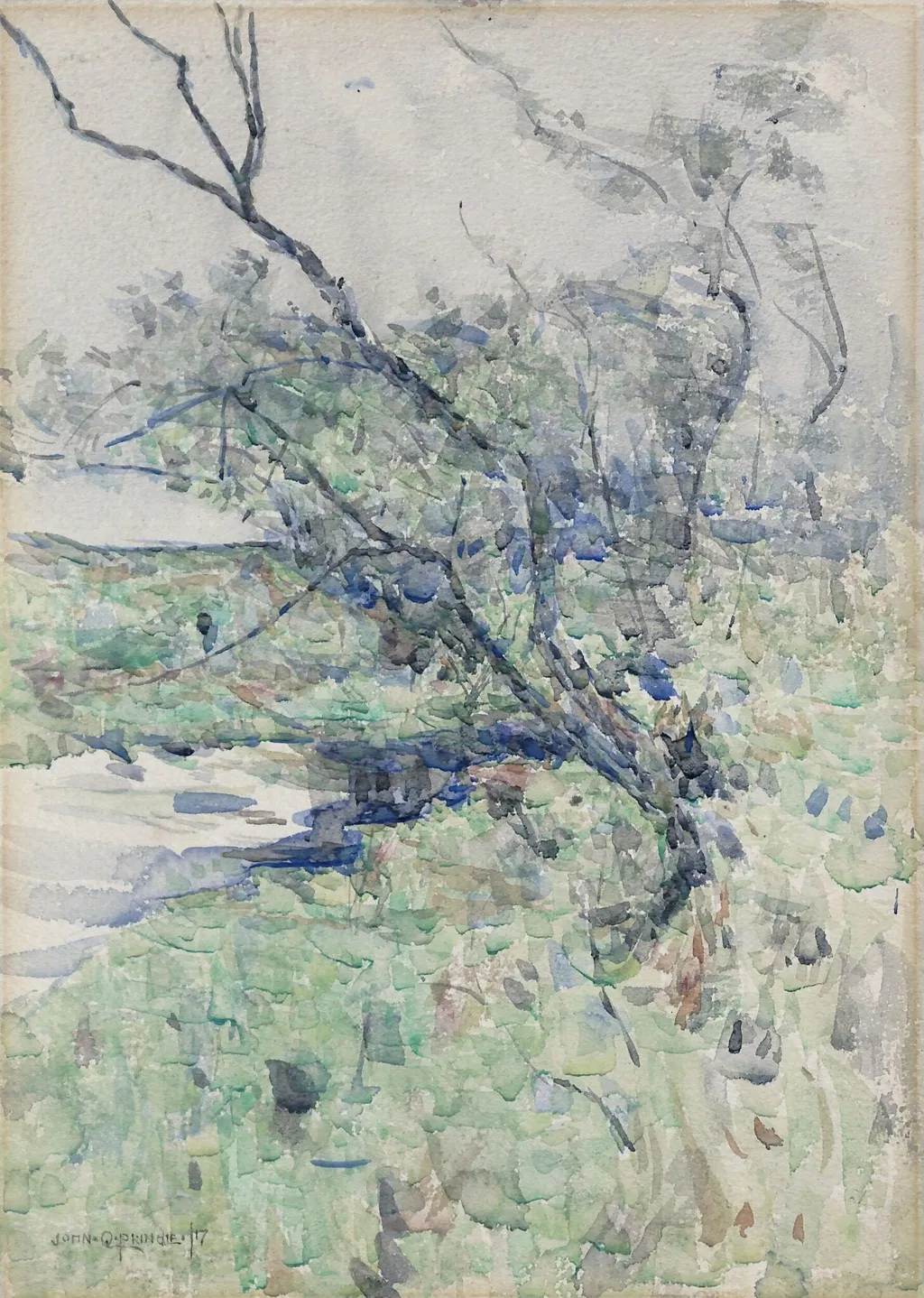
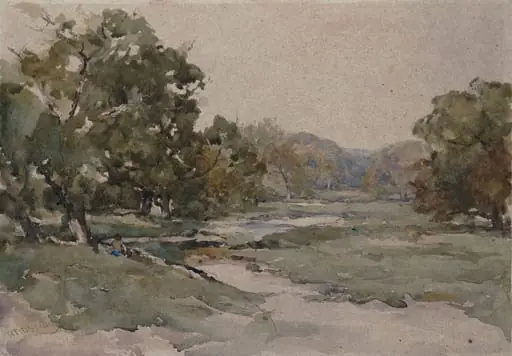
The Burn near Milngavie is a watercolor work on paper by the Impressionist artist John Pringle. It dates from 1917 and is held in the collection of the Victoria and Albert Museum.
About this work
Overview
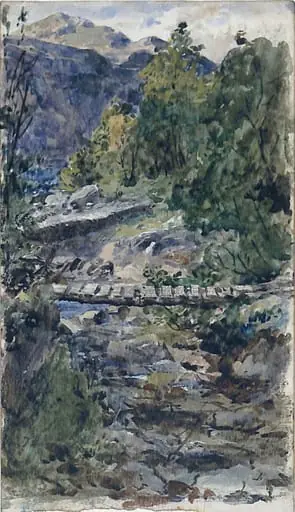
Created in 1917, this watercolour by John Pringle captures a quiet landscape near Milngavie, likely the Allander Water adjacent to a local golf course. Executed on white wove paper, the work is signed and dated by the artist, reflecting a personal, observational approach. Its subdued palette and loose brushwork convey a sense of stillness, as if the scene has just settled after disturbance.
Subject & Meaning
The dark streaks across the ground may indicate charred earth or deep shadow, evoking a landscape in transition—neither fully destroyed nor fully recovered.
The scene portrays a burn-affected stretch of land, with patches of dry grass and earth suggesting recent fire or seasonal desiccation. Bare tree branches arch across the upper register, their skeletal forms contrasting with the hazy, pale sky. The dark streaks across the ground may indicate charred earth or deep shadow, evoking a landscape in transition—neither fully destroyed nor fully recovered.
Technique & Style
Pringle employed rapid, fluid brushstrokes to suggest drifting smoke and wind-worn terrain. The watercolour is applied thinly, allowing the paper’s texture to show through, enhancing the sense of fragility. Muted blues, greys, and earth tones blend seamlessly, avoiding sharp contrasts. The lack of detail in the background reinforces atmospheric haze, emphasizing mood over topographical precision.
History & Provenance
The work remains in private or institutional hands, with no documented public exhibition history prior to its inclusion in the Victoria and Albert Museum’s collection. Its modest scale and intimate subject suggest it was not commissioned but rather a personal study, possibly made during a walk near the artist’s residence. The signature and date confirm its origin and timing.
Context
Painted during the final year of the First World War, the image’s stillness and muted tones may reflect a broader cultural mood of exhaustion and quiet reflection. Though not overtly political, its depiction of a scarred, quiet landscape resonates with contemporary themes of loss and endurance, common in British art of the period.
Legacy
Pringle’s watercolour stands as a quiet example of early 20th-century Scottish landscape observation. It contributes to a lesser-known body of work that records regional environments with sensitivity rather than grandeur. Its preservation in the Victoria and Albert Museum ensures its place within the broader narrative of British watercolour practice.
Artist & collection
Artist
John Pringle kept a tiny studio above a Glasgow teashop, painting on his lunch break between sips of tea.

![Mont Sainte-Victoire [recto], by Paul Cezanne](https://artifactworldgallery.com/img/paul-cezanne--mont-sainte-victoire-recto--ac2b35e7d8893d5c-w320.webp)