Artwork
Christ taking leave of his Mother
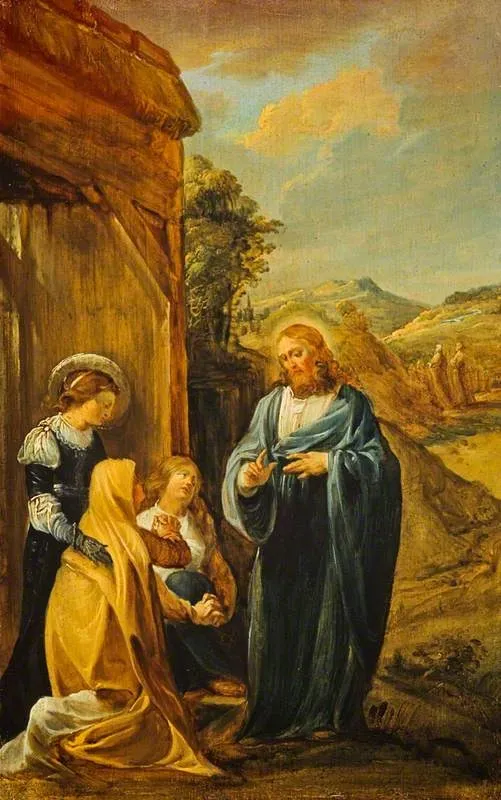
Christ taking leave of his Mother is an unspecified painting by John Runciman. It dates from 1765 and is held in the collection of the National Galleries Scotland.
About this work
Overview
John Runciman’s oil painting *Christ taking leave of his Mother*, executed around 1765, portrays a tender biblical episode in which the risen Christ bids farewell to his mother. The work measures modestly in size and reflects the artist’s limited but focused oeuvre, which centered on scriptural and literary narratives.
Subject & Meaning
The composition captures the moment of parting between Christ, garbed in a blue mantle, and a kneeling woman in a yellow robe, presumed to be Mary. A second female figure stands nearby, while a distant onlooker observes, suggesting a communal awareness of the impending sacrifice. The scene emphasizes filial affection and the human dimension of the divine narrative.
Technique & Style
Runciman employs a warm palette and soft illumination to create an intimate atmosphere. Subtle chiaroscuro models the figures, giving them volume against a gently rolling countryside of hills and trees. The brushwork is restrained, allowing the emotional exchange to dominate rather than decorative detail.
History & Provenance
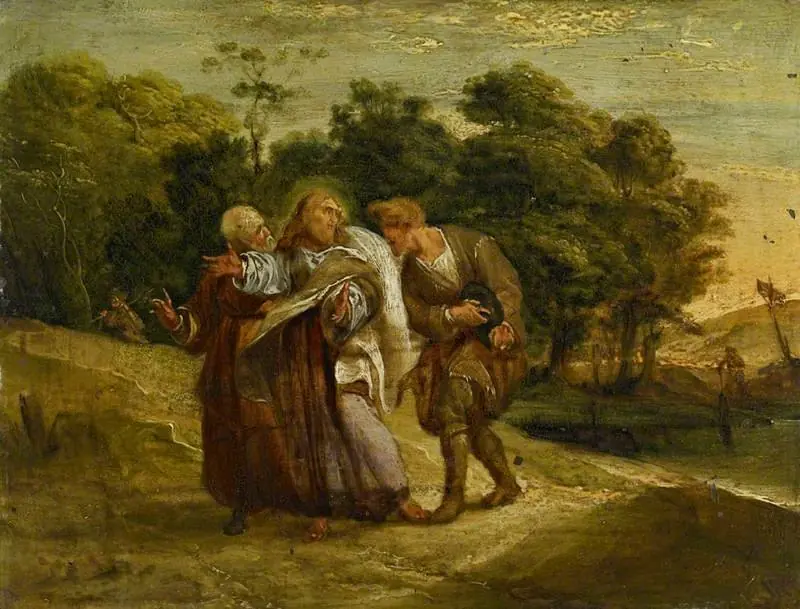
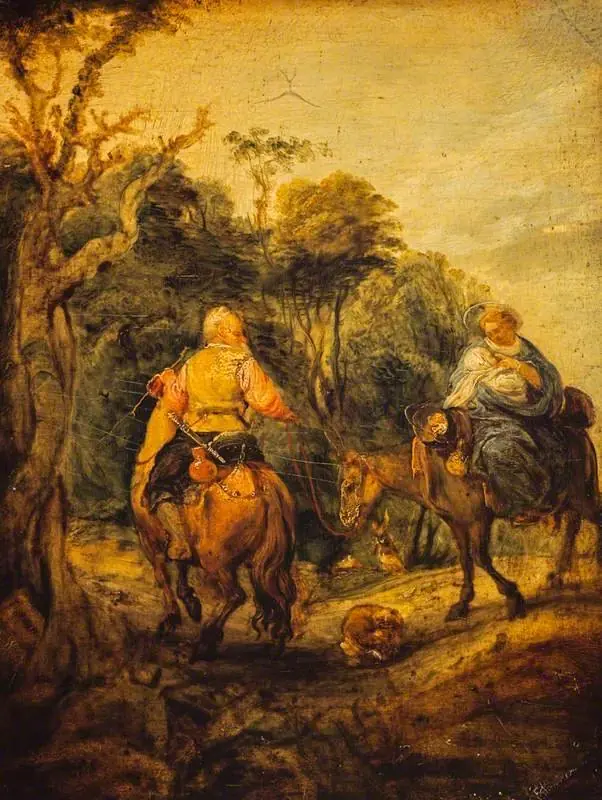
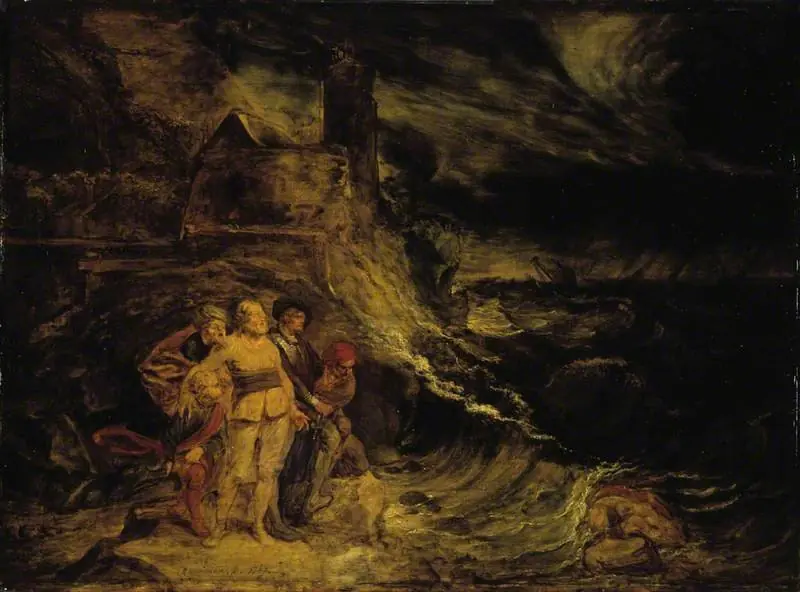
Created late in Runciman’s brief career—he died in his mid‑twenties, either in 1768 or 1769—the painting belongs to a small corpus that includes *Flight into Egypt* and *King Lear in the Storm*, both now in the National Gallery of Scotland. Its subsequent ownership record is limited, reflecting the artist’s modest contemporary reputation.
Context
Runciman worked in a period when Scottish artists were increasingly engaging with continental Baroque and Rococo influences while maintaining a focus on narrative content. His choice of a New Testament farewell scene aligns with the 18th‑century devotional trend of emphasizing personal piety through emotionally resonant moments.
Artist & collection
Artist
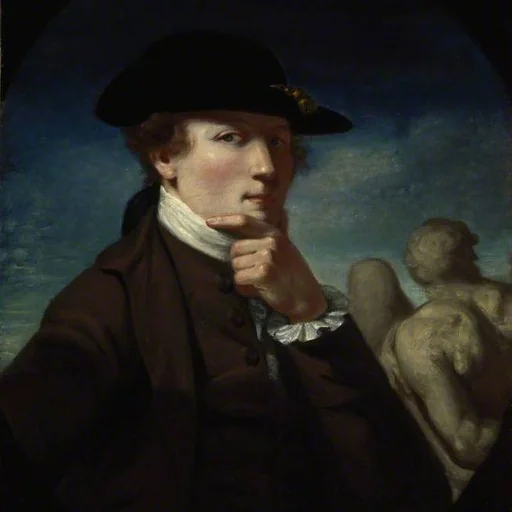
John Runciman (1744 – 1768 or 1769) was a Scottish painter known for Biblical and literary scenes. His works include Flight into Egypt and King Lear in the Storm, both in the National Gallery of Scotland.

 The fifteen secrets of the rosary: the Visitation
 Dismissal of Hagar
 The Visitation
 Mary Meeting Elizabeth
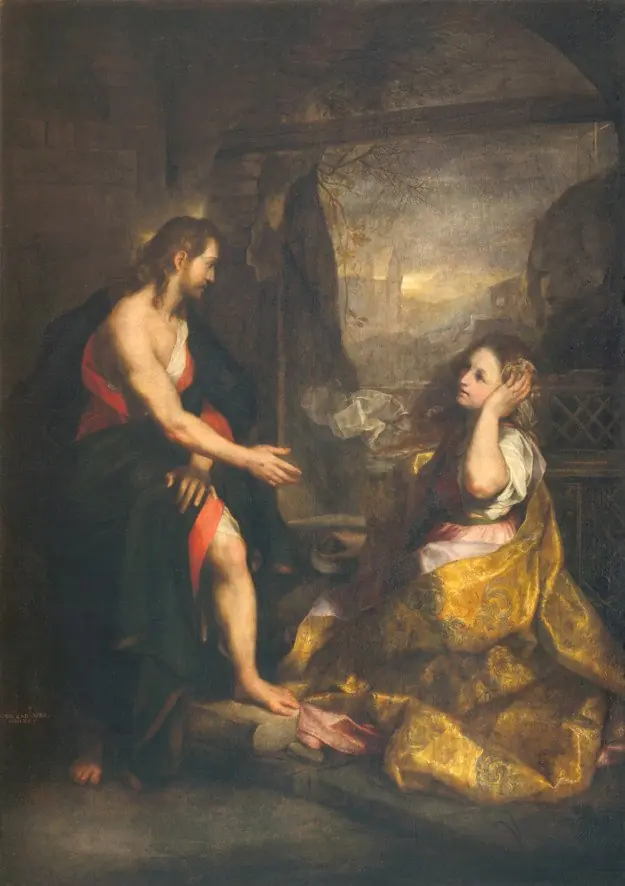 Cristo e la Maddalena
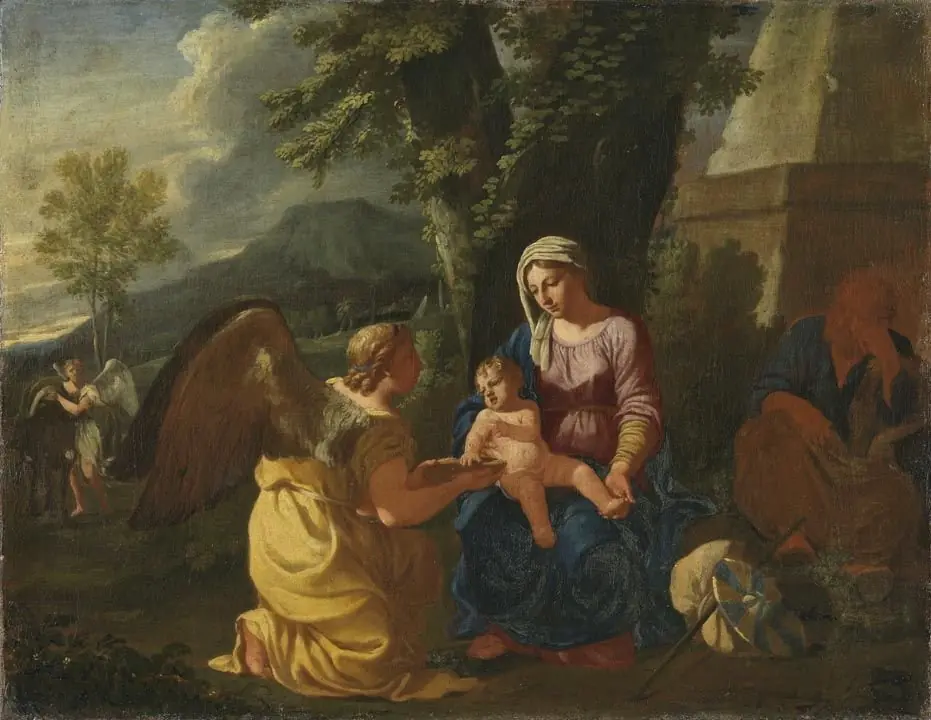 The Flight into Egypt
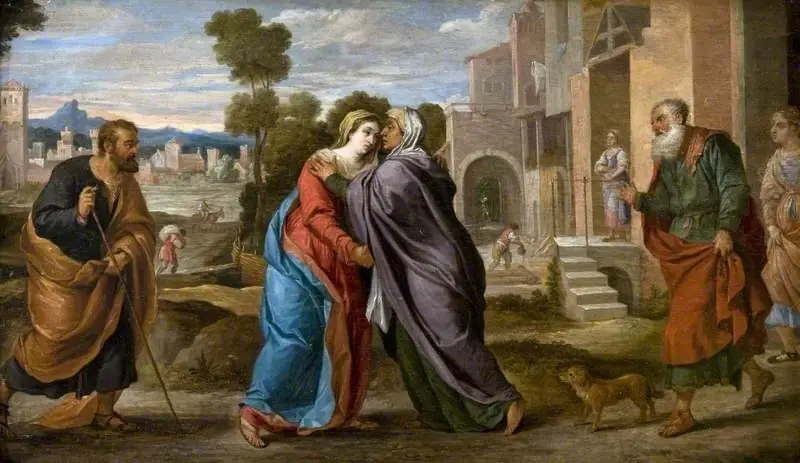 The Visitation (after Jacopo Palma il Vecchio)
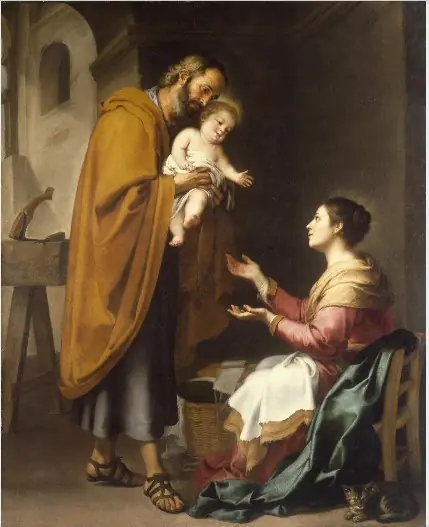 The Holy Family
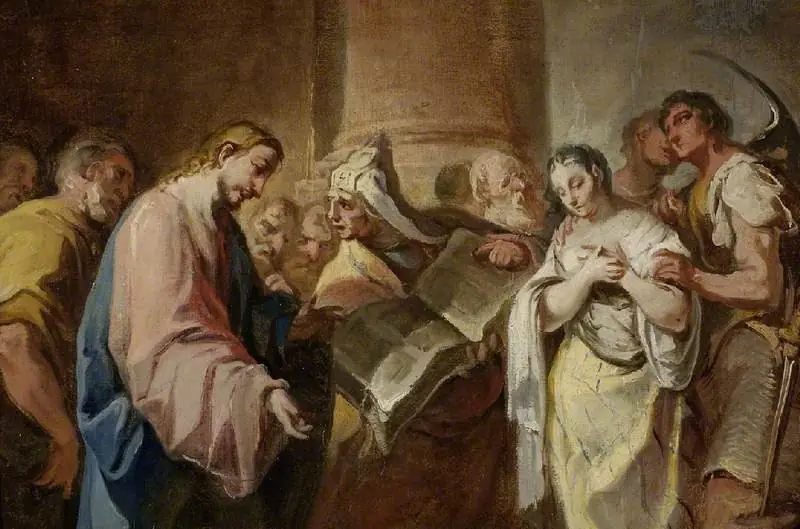 The Woman Taken in Adultery
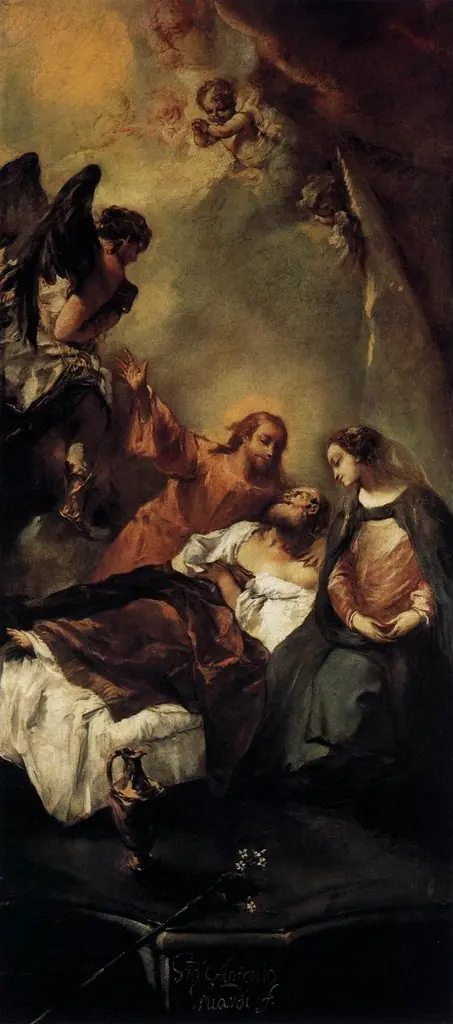 Death of Saint Joseph
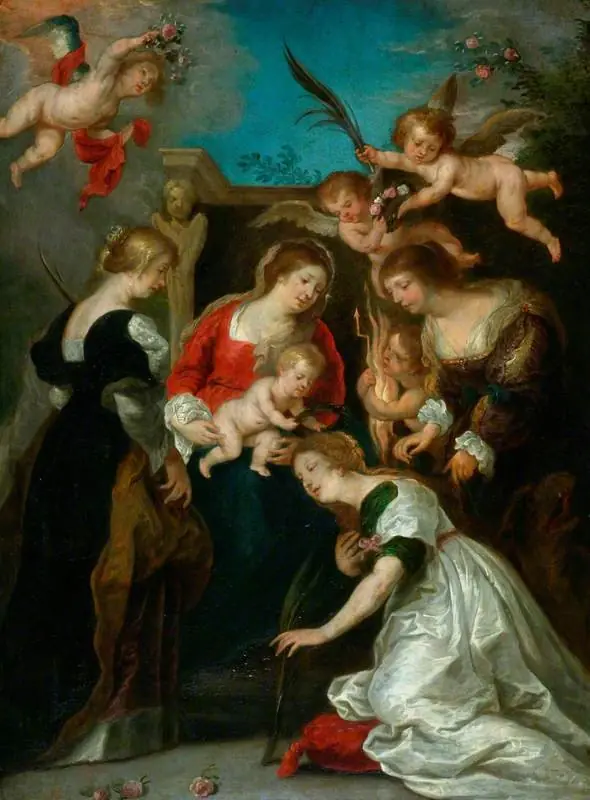 The Mystic Marriage of Saint Catherine
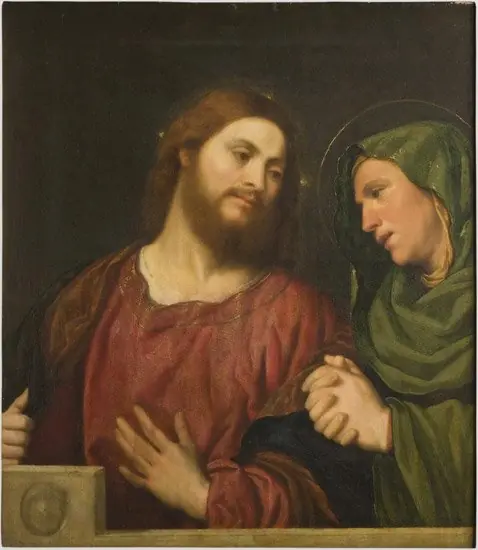 Christ Taking Leave of His Mother